
• Welcome to Photrio!
    Registration is fast and free. Join today to unlock search, see fewer ads, and access all forum features.
    Click here to sign up

The quest for glorious midtones

Barney's Bargain Shop

A
Barney's Bargain Shop

  • 0
  • 0
  • 0
Coburg Street

A
Coburg Street

  • 1
  • 1
  • 62

Recent Classifieds

Forum statistics

Threads
201,738
Messages
2,829,391
Members
100,923
Latest member
GB-A2
Recent bookmarks
0

srmcnamara

Member
Allowing Ads
Joined
Mar 30, 2008
Messages
141
Location
Baltimore
Format
4x5 Format
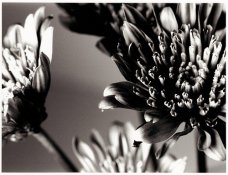
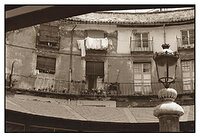
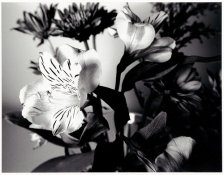
So I guess you can say I'm relatively new at this. I've been doing it for about two years and I'm taking all sorts of classes (I'm a photo major at a major art school so I've got all the opportunity in the world to play around). I mostly use Tmax 100 as that is what I started with and at my old school we used tmax or sprint developer and now I'm using d-76 but everyone else around me uses x-tol.

But anyways, last fall I used Pan-F for some unknown reason and developed it in d-76 and made really really nice 11 x 14s (two are attached). I have figured out that the T-grain films are somewhat lacking in tonality, am I right? I also recently tried Pan-F on a 6x9 camera and was surprised at how difficult it was to get those same creamy tones. This was a detailed landscape though.

I have never really tried any of the traditional films like tri-x or fp4 or anything like that. I'm rambling so I'll get to the point now.
Are the tones that I got that one fateful day related to the developer or film or just simply subject matter? Would a larger format help (I'm taking 4x5 next fall)? Should I try the traditional films? Should I mix new chemistry? It seems like everyone around me likes to set the enlarger filters on 4 or 4.5 and screw the middle but that's not really the vision I have for my work.


I'll bet nobody read all that but thanks to anyone who did
-Steven
 

Attachments

  • 2096849950_462a4dc790.jpg
    2096849950_462a4dc790.jpg
    95.6 KB · Views: 606
  • 2096073817_c6da6f0f20.jpg
    2096073817_c6da6f0f20.jpg
    107.9 KB · Views: 553

dpurdy

Member
Joined
Jun 24, 2006
Messages
2,688
Location
Portland OR
Format
8x10 Format
Is it just my monitor or do those two examples look extremely contrasty and harsh to anyone else? All the elements have a bearing on the tonality, including your own understanding of them. Think of that thigh bone song. The low tones connect to the ..mid tones, the mid tones connected to the ..high tones. If you want to stretch out the mid tones, I have best luck doing that with a dilute developer like Rodinal or Beutlers. but now someone will come along and say no no that is all wrong.
Dennis
 
OP
OP

srmcnamara

Member
Allowing Ads
Joined
Mar 30, 2008
Messages
141
Location
Baltimore
Format
4x5 Format
yeah, forgive the scans, I made them at kinkos and then I think flickr made them worse It's really the backgrounds I want to reproduce. but it's not like I don't want any darks or lights...I just kind of feel like I need to either have my prints really contrasty or they get muddy.
 

MikeSeb

Subscriber
Allowing Ads
Joined
Jun 12, 2005
Messages
1,104
Location
Denver, CO
Format
Medium Format
Steven, I did indeed slog through your post. :smile: Good questions all.

Perceived "tonality" is a function of film, subject contrast, and development. Slower films are generally more contrasty (ie, have fewer apparent gradations of tone between the extremes of black and white); faster ones are generally less so. Very contrasty subjects will appear to have little in the way of midtones, those being overwhelmed by tones at either end. And more dilute developers are better at delivering smooth creamy tones than more concentrated ones, because they tend to allow development in shadow areas to "catch up" to development in highlight areas without "blowing" the highlights out.

Pan-F is an inherently very fine grain, high-contrast film. To tame its contrast you have to reduce development time, or dilute the developer, or both. Really, though, it's contrasty by nature and may not be the best film for you to learn with.

T-grain films are not "lacking in tonality", but they are very sensitive to minute changes in development time, temperature, or agitation. They are unforgiving of sloppy processing technique. Again, they may not be the best films for someone just starting out, but if you can nail them, you can shoot and develop anything.

D-76 is the reference standard for developers, and the most-used developer worldwide. No film manufacturer would risk making a film that doesn't look good in D76, so it's a fine choice of developer for most purposes. Xtol is also excellent--in fact, after a period of experimentation I'm returning to D76 (mixed myself from scratch, always fresh, dirt cheap) as my standard developer, with HC-110 and maybe Xtol/Mytol as backups for special situations. Likewise with films.

I'd suggest two avenues for you by which to improve your understanding of films and developers: reading, and standardization. Anchell and Troop's Film Development Cookbook is a must-read, and I'm sure others here will chime in with others.

Pick one or two films, like Tri-X or Plus-X or their Ilford cousins FP-4 and HP-5. (I'm fond of Kodak films and those two are classics.) Pick one developer--either D76 or Xtol would be fine--and stick with it for a while until you've learned what that combination will do under various lighting / contrast conditions. Try those developers straight or diluted 1+1. Don't skip around among a lot of developers and films at first until you've really learned the first ones well.

Hope this helps.
 

keithwms

Member
Allowing Ads
Joined
Oct 14, 2006
Messages
6,220
Location
Charlottesvi
Format
Multi Format
Steven, don't take this as a criticism, it's actually a kind of compliment. I have seen similarly snappy tonality in... low speed b&w polaroid and b&w slide film. By "snap" I mean there is very little in the midtones i.e. the highlights and shadows are well separated and the ambiguous greys are few. To use the prevailing digispeak, there is a well defined whitepoint and a well defined blackpoint anchoring the tone scale.

When I first started with type 55 and some of the fuji materials fp100b material, I thought, geez, why can't I get my normal prints to look that crisp and snappy. I don't have the answer for you, I am still working on it, but pan f and 1+1 ID11/D76 sounds like a good path to investigate. Personally, I've gone the agfa scala or colour chrome -> b&w route, but I intend to start playing with pan f now that scala and 55 are no more.

It must be possible to get the snap in the print phase from multi/split grade printing of a flat neg, but building the snap into the negative (or positive) seems to be the best way to start.

Snap... bite... what else do I like... bling! Haven't figured that out yet either, but I think Volquartz is on to something with the bleach.
 

Richard Jepsen

Member
Allowing Ads
Joined
Jul 1, 2006
Messages
875
Location
Oklahoma, US
Format
Multi Format
Buy the Film Developing Cookbook. Stick to one or two traditional films such as Tri-X or FP-4. Consider derating Tri-X to 200 and FP-4 to 80. Use one general purpose developer such as D-76 or XTOL. Medium format will improve tonal separation. It is critical to develop your film to match the paper curve and your enlarger light source. Paper makes a big difference but it often relates to how your negative was developed. I never got the great results friends did on Ilford's MGIV Fiber until I increased negative density. Glossy paper has a longer tonal range.:smile:
 

CBG

Member
Allowing Ads
Joined
Nov 21, 2004
Messages
889
Format
Multi Format
I have figured out that the T-grain films are somewhat lacking in tonality, am I right?
Tonality is rather a vague word so ... I'll just say that if Jong Sexton can make TMax films sing, maybe they do have "tonality".

I have never really tried any of the traditional films like tri-x or fp4 or anything like that. I'm rambling so I'll get to the point now.
Not a bad time to find out why millions of photographers used and use Tri-X / Fp4 etc. They have a different feel from TMax films.

Are the tones that I got that one fateful day related to the developer or film or just simply subject matter?
All of the above, especially film and subject / lighting.

Would a larger format help (I'm taking 4x5 next fall)?
LF can add a creamy smooth rendition, but the subject and light and film characteristic curve will do a lot by themselves. That said, LF is special unto itself and is worth trying.

Should I try the traditional films?
Yes. You have some sense of the response of modern emulsions. The Tri-X generation of films seets the world just a bit differently. Try them.

Should I mix new chemistry?
Any time you think its old. You can do a clip test with a bit of a corner of film leared to be sure your existing batch is still active.

Consider one shot usage of D-76 diluted 1 to 1 or a similar scheme. Mix your gallon of stock solution and store it in quart bottles, filled right to the cap so there's virtually no air. That will leave one bottle not quite full. Use that bottle first, since it would be more exposed to degradation from oxygen.

D-76 is said by Kodak to be safe for 6 months in a full tightly closed bottle, and only 2 months in a half full bottle. Don't use a bottle wirh a metal cap.

C
 

Early Riser

Subscriber
Allowing Ads
Joined
Feb 10, 2005
Messages
1,748
Location
USA
Format
Multi Format
Steven, you ask some good questions, and there have been some excellent replies (especially Mike's, well done). However asking advice can at best only put you on a road, and a road that is of someone else's preference. Ultimately what you need to do is test, a lot. You can find out about the basic qualities of a film by asking, fine grain? High contrast? Extended tonal range? Etc. Slower speed films usually have finer grain, which helps for smoother tonality, but are also inherently contrasty. Higher speed films tend to have smoother tones but are grainier which hurts tonality. You then have to try out the film that has your basic requirements with different developers and under different conditions. You also have to match your film/dev combo to your paper, and if you really want to get anal, to even your lenses. There are contrasty lenses, and less contrasty lenses.

The suggestion of working in a larger format to achieve smoother tones is a very good one. Especially as it allows the use of faster film but with less affect from grain. You'll see a huge increase in the smoothness of gradation going from 35mm to MF, and MF to LF. Subject matter and the lighting in the scene play a major role as well when it comes to tonal range. I think your earlier success with Pan F may have been subject related.

Don't give up on T-max 100 it is an excellent film but has a steeper learning curve and requires greater consistency in it's processing. Nearly all of my work is shot with it and if there's one consistent comment I get from other photographers about my work it's about the smoothness of tones.
 

jmcd

Member
Allowing Ads
Joined
Sep 10, 2002
Messages
710
I would start with the traditional films first because I think they are easier to get great results with consistently. One has to be very exacting with the super modern films—of course, many accomplished photographers use this to their advantage.

My personal recommendation for improved overall tone is to shoot FP4+ at 50 speed and process accordingly. I shot it for years at 80-100, and finally tried it at 50, where I like it much better. Develop in D-76. I would stick to one film, possibly two if it helps work in different lighting conditions. I find HP5+ very good for handling light with high contrast.
 

c6h6o3

Member
Allowing Ads
Joined
Oct 16, 2002
Messages
3,215
Format
Large Format
Try exposing more and developing less. I call that "compressing the scale from the bottom up". I get much better separation in the midtones that way. I use 400TMax in 120, 4x5, 5x7 and 8x10. I think it's the finest black and white film made, but Pan F is also a great film. If they made it in a sheet film I'd use it a lot.
 

jmcd

Member
Allowing Ads
Joined
Sep 10, 2002
Messages
710
I do think large format helps. One part is the larger negative. Another is the ability to process individual negatives to ideal development times to control the contrast.
 

Bob Carnie

Subscriber
Allowing Ads
Joined
Apr 18, 2004
Messages
7,735
Location
toronto
Format
Med. Format RF
Hi Steven

FWIW I like Tmax films but only with Tmax dev, I really do not like this film in D76.

For the ultimate in mid tone smoothness I will use a lower filter to extend the tonality range and split in a pop of grade 5 to add a good black and local contrast on top of the mids.

I have three of Les Mcleans prints hanging in my dining room , they are three of the nicest 35mm to print images I have seen in a long time. He is the Master of smooth transition and his book may help, as well he has lots of info here on APUG of his techniques.
 

gainer

Subscriber
Allowing Ads
Joined
Sep 20, 2002
Messages
3,699
I held off saying this because it may hurt. The place to start is with chiarroscura (I should look up the spelling). Once you get an interesting distribution of light and dark in mind, which you should do as you're framing the subject in the viewfinder or on the ground glass, you can start working out how you're going to put it on the negative and the print. What YOU see in the scene may not be the literal truth, but in order to show what led you to want to make the picture, you will have to lead the viewer's eye to it.

It may be that the examples you showed were small parts of more interesting compositions, in which case I apologise profusely. If you are only learning photography as a technique, you should study art in general, or find a friend who knows artistic painting. It may help to make pencil tracings of the outlines in your photos. It won't hurt, while you are practising making the tones you want to use, to practise placing them so that tones will not make the major difference. As you can see, I am not in favor of the "works of art" consisting of panels of a single solid color that hang in some museums.
 
OP
OP

srmcnamara

Member
Allowing Ads
Joined
Mar 30, 2008
Messages
141
Location
Baltimore
Format
4x5 Format
Thanks for the advice, everyone. It all seems helpful.

Specifically in response to gainer: I am not entirely sure what you are saying. Are you saying my examples are not interesting or balanced or what? If that's the case then I reserve the right to disagree but that is not the question here. You may not have read that I am attending a major art school (Maryland Institute) but I think that has and will continue to give me a basis in Art History and graphic principals and the like. I am familiar with chiaro scuro and I thought these were nice examples of a good range from dark to light.


Another rebuttal: Many of those "works of art" that you deride are simply exercises in the very practice you describe, placing the darks and lights and in many cases colors in the exact right spot. Thank you for your time. I'd love to discuss this some more.
 

gainer

Subscriber
Allowing Ads
Joined
Sep 20, 2002
Messages
3,699
Surely, but range is not all there is to it.

The panels I refer to are those which had only one color. An artist who expects big bucks for showing how good he is at making a large panel be a uniform color is, I think, more of a con artist. Abstract arrangements of colored patches are a different matter, though some of them seem to be simply exploitations of the value of a recognizable name.

Maybe we could have a duel: flower arrangements at 3 paces.

If you believe your illustrative photos are artistically interesting, that's fine. Perhaps you should show them to one of the teachers. I'm not convinced that one of them would find an empty hole surrounded by vegetation very attracting. Vegetation surrounded by an empty hole would be better.
 

John Bond

Member
Allowing Ads
Joined
May 23, 2006
Messages
47
Format
Medium Format
I know this is about exploring tonality as a function of film and developer, but I think the largest influence of tonality is lighting. It is hard to make generalities as there may be differences in subject matter, but most of the time, I think the range of acceptable contrast with respect to film development of paper grade is less than we might expect especially in the mid values. This is why finding some optimal contrast and then burning and dodging may be preferable to simply increasing or decreasing the contrast of the whole print. To get the most pleasing separation of tones starts with lighting. Direct lighting producing prominent shadows may produce a full range grays. But, in order to capture shadow detail and/or avoid blown highlights, the contrast may have to be lowered to such an extent that the picture generally appears muddy. Soft, diffuse lighting, on the other hand, produces a narrower subject/ brightness range. In order to capture the full tonal range on the print, the contrast must be increased resulting in exaggerated or augmented separation of the values that I think is aesthetically appealing if not done to excess.

Do an experiment, compose a photograph of flowers similar to those above and take two pictures identical in composition, but differing in lighting, one in bright sunlight, the other with clouds or in the shade. Then develop and print to get the full tonal range of each. I bet the one taken in diffuse light will give a more pleasing separation of tones than the one taken in bright sun light.
 

craigclu

Subscriber
Joined
Sep 8, 2002
Messages
1,326
Location
Rice Lake, Wisconsin
Format
Multi Format
Skin tones and middle tone separation has been much easier for me with my materials and techniques after I started using PyroCat and PyroCat style film developers. It seems especially effective at this in HP5+ in medium format. It also seems easier to get the effect when scanning the negatives, too. With some simple metering techniques in the darkroom, I'm seeming to get a very high percentage of prints that require very little burning/dodging and initial test prints that are keepers, too. Its ability to control highlights makes it especially versatile for contrasty lighting, getting good shadow separation without blown highlights.

As others have suggested, the developers you're using are somewhat industry standards and have a solid trail of information. They are capable of doing most everything that you might need by tuning your processes to them. The PyroCat idea is one that I wish I had tried before I did and I am mentioning it for that reason to you.

In the last week, I took a few test rolls of the new TMY-2 and was using XTOL to provide some baselines. The few people shots that I had in there gave me very pleasant and smooth skin tones that printed easily. I was getting full emulsion speed of 400 in this combination and I think I'll be pursuing this a bit (PyroCat tends to function best for me at typically about 1/2 of box speed with most films).
 

Michael Kadillak

Subscriber
Joined
Nov 16, 2003
Messages
630
Try exposing more and developing less. I call that "compressing the scale from the bottom up". I get much better separation in the midtones that way. I use 400TMax in 120, 4x5, 5x7 and 8x10. I think it's the finest black and white film made, but Pan F is also a great film. If they made it in a sheet film I'd use it a lot.

I will second Jim's ascertion that T Max 400 is the best film made from an ascethic and a technical perspective. I have seen some samples of Jim's prints and I was blown away with his ability to extract marvelous mid tones with considerable visual separation from this modern film. It is refreshing to have one amongst us that is as uncompromising as Jim. I know that it added a new gear in my transmission and that I have to continue to work hard to attain the optimal from the photographic materials that I use and not accept anything less than the best that can be attained.

Concurrently it points out some of the lesser quality B&W work that is passed around as "fine art" that is highly lacking in this regard.

The technical side of TMY(2) is that it is still the cream of the crop with quality control, density building character (I have yet to see the curve even show a hint of doing anything but go straight up) and the best reciprocity correction possible. You can go to nearly 2 seconds of exposure before a correction is necessary. It is the only film I use. T Max 100 is a horse of another color and is far less foregiving and because of this reason I do not even bother with it. When I see people rag on T grain emulsions and toss everything into the same adverse category based upon their experience with T Max 100 I cringe. Nothing could be further from the truth.

Cheers!
 

CBG

Member
Allowing Ads
Joined
Nov 21, 2004
Messages
889
Format
Multi Format
... An artist who expects big bucks for showing how good he is at making a large panel be a uniform color is, I think, more of a con artist....

Maybe art should be seen as a big tent. Lots of art that was hard to look at, seemed empty, or was hard to understand, when first introduced, is now mainstream. Witness the kind of photography Weston and Co. espoused. It was raw and uncomfortable in it's day. Now we take it for granted that photography can just look like photographs.

C
 

gainer

Subscriber
Allowing Ads
Joined
Sep 20, 2002
Messages
3,699
There are two aspects of any style of art and each work of art that I think about the most. What is it trying to show, and how is it trying to show it. The "What" of it has the most leeway and is often the most difficult for the observer to decipher, especially if the observer is one whose first question is "What is this a picture of?" The artist who is trying to show only that the medium is indeed the message has the greatest problem. I don't think I should be particularly happy if the first comment about one of my pictures is "Look at those edges. What happened to the Mackie lines?" or worse, "Look at those great edge effects!"

It is true that there are times when the "How" is the purpose of the "What", as penmanship excercises show the use of a pen. Now I have to quit before I get in over my hip pockets.
 

c6h6o3

Member
Allowing Ads
Joined
Oct 16, 2002
Messages
3,215
Format
Large Format
I know this is about exploring tonality as a function of film and developer, but I think the largest influence of tonality is lighting.

I've made beautiful full range prints with plenty of midtone separation in bright sunlight, at sunset with 20 minute exposures, indoors under ambient tungsten light and outdoors under overcast skies. In other words, under every possible lighting condition.

I believe that the quality of one's prints has nothing to do with the quality of the light under which their negatives are made. It has everything to do with what the photographer does in relation to that quality of light. If the scene is flat and I want to accentuate micro contrast in the middle tones, I'll use semi-stand development in tubes. If the scene is full range I'll use tray development and go for smoothness. I can adjust development in trays over a five stop range to achieve desired tonal range.

As Stieglitz said: "Wherever there is light, one may photograph".
 

Alex Hawley

Member
Allowing Ads
Joined
Jul 17, 2003
Messages
2,892
Location
Kansas, USA
Format
Large Format
Try exposing more and developing less. I call that "compressing the scale from the bottom up". I get much better separation in the midtones that way. I use 400TMax in 120, 4x5, 5x7 and 8x10. I think it's the finest black and white film made, but Pan F is also a great film. If they made it in a sheet film I'd use it a lot.

Add a third vote from me for exposing more and developing less. Two ways to approach it that I know of (there may be more). Use half the box film speed as others have suggested or, set your shadows in zone 4. Either method amounts to about the same effect. Then develop for an approximate "normal" time or a little less. Works on just about any B&W film whether its a T-grain or traditional emulsion.
 

Doug Webb

Member
Allowing Ads
Joined
Jul 10, 2005
Messages
105
Format
Large Format
If your prints are muddy at times, and if you want better tonality in your prints, then your negatives may be underexposed or overdeveloped. You could stay with either TMAX 100 or Pan F and D76 and probably get what you are looking for. Do a simple test. It sounds like you are using roll film. Pick a subject and meter and expose it the way that you have been doing. Take one frame at that exposure, then another frame at one stop more exposure, then another frame at 2 stops more exposure, then another frame at 3 stops more exposure. Then repeat the process throughout the roll so that you have 3 or more sets of 4 consecutive frames with increasing exposure. Then in the darkroom cut off something that feels like about 4 frames and wind it onto a reel. Develop it the way that you have been developing. Then wind on a second 4 frames and develop that in fresh developer but decrease the developing time by about 15 to 20%. Keep going in that progression, the next 4 frames developed 30 to 40% less time, etc. If you keep your developer the same temperature for all of the different strips, you will see the effect of decreased development on each set of 4 frames. One frame out of the 4 at one of the developing times will probably give you the tonality you want with a subject of that brighness range. If you make negatives of subjects with different brightness ranges always using the same EI and developing time, sooner or later you will stumble onto a subect that has the correct brightness range for your exposure and development time and that photo will come out the way you want, but if you don't figure out how to determine brightness range and how to adjust exposure and development to fit that, you won't be able to repeat your success.
Good luck
 

c6h6o3

Member
Allowing Ads
Joined
Oct 16, 2002
Messages
3,215
Format
Large Format
Add a third vote from me for exposing more and developing less. Two ways to approach it that I know of (there may be more). Use half the box film speed as others have suggested or, set your shadows in zone 4.

Or, as I do, one can do both of these things. I rate my TMY at 200 and place the darkest shadow on Zone IV. If I'm using an incident meter (for studio strobe lighting) I rate the TMY at 100.
 
OP
OP

srmcnamara

Member
Allowing Ads
Joined
Mar 30, 2008
Messages
141
Location
Baltimore
Format
4x5 Format
I think this underexposed and overdeveloped thing holds the most water. I think light, detail, and format are minor participants. I will definitely try Doug Webb's test whenever I get a chance (finals crunch). I read the Ansel Adams books and understood them pretty well but I don't have a spot meter so I kind of read them just for entertainment and never read the appendices on film testing and such. I am grateful for all the advice. Thanks!
 
Photrio.com contains affiliate links to products. We may receive a commission for purchases made through these links.
To read our full affiliate disclosure statement please click Here.

PHOTRIO PARTNERS EQUALLY FUNDING OUR COMMUNITY:


Ilford ADOX Freestyle Photographic Stearman Press Weldon Color Lab Blue Moon Camera & Machine
Top Bottom