
• Welcome to Photrio!
    Registration is fast and free. Join today to unlock search, see fewer ads, and access all forum features.
    Click here to sign up

The old Motor Sport car "Leaning Forward" effect

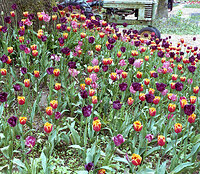
Tractor & Tulips

A
Tractor & Tulips

  • 0
  • 0
  • 19
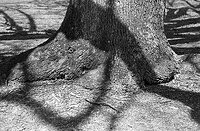
Tree with Big Shadows

Tree with Big Shadows

  • 2
  • 0
  • 75

Forum statistics

Threads
203,456
Messages
2,855,031
Members
101,853
Latest member
Expert Graphics Int.
Recent bookmarks
0

hoffy

Member
Allowing Ads
Joined
Jan 21, 2009
Messages
3,073
Location
Adelaide, Au
Format
Multi Format
Howdy,

Firstly, I am not trying to get this kind of effect, I am just curious on what may cause it.

I have seen many motor sport pictures from the first few decades of the 20th century, where the cars appear to be leaning forward and have often wondered what causes that effect:

http://crashingthegoalie.files.wordpress.com/2008/08/2335460135_558a93fa1a_d.jpg

Now, my guess is its due to the slow nature of the actual shutter movement. Am I correct? Does anyone know what causes this?

Thanks
 
Focalplaneshutter with "slow" movement. In other words Yes you are right
Best regards
 
And if the photographer panned, the buildings will lean backwards too, wierd looking :smile:
 
I think it was caused by vertically moving shutters and (compared to today) relatively slow shutter speeds.
 
The focal plane shutters in press cameras traveled vertically...in fact, they still do! :wink: At slow enough curtain speeds (correction by Soeren), the car in motion was in a different spot when the shutter slit ended its travel as when it began it.
 
Last edited by a moderator:
just to add onto 2f's post
a lot of the focal plane shutters were slots in a fabric
that traveled from top to bottom on the film plane.

this can be done easily today with a press camera ( like a speed graphic )
or a graflex slr type camera ..

john
 
The focal plane shutters in press cameras traveled vertically...in fact, they still do! :wink: At slow enough shutter speeds, the car in motion was in a different spot when the shutter slit ended its travel as when it began it.

Hmm Im sure you mean the speed of the curtains (which is constant) cause the "shutter speed" is made from the width of the gap between the curtains. So you can have "high shutterspeeds" using slow curtains.
Best regards
 
Hmm Im sure you mean the speed of the curtains (which is constant) cause the "shutter speed" is made from the width of the gap between the curtains. So you can have "high shutterspeeds" using slow curtains.
Best regards

I agree with that. If you look at the picture of the Marmon Wasp, you can see that there is a clear stopping of the action, but the car is still leaning. This suggests to me that the shutter speed was relatively quick, but the actual shutter movement was slow.

Thanks guys for your responses!
 
Hmm Im sure you mean the speed of the curtains (which is constant) cause the "shutter speed" is made from the width of the gap between the curtains. So you can have "high shutterspeeds" using slow curtains.
Best regards

Yes, you are right. Sloppy and incorrect use of terminology on my part. I should have added that the curtain moving slowly combined with the fast shutter from a tiny slit is what causes it. I assumed it was common knowledge that the width of the slit on a shutter is used to control the quote-unquote "speed" (the exposure time), even though it is not technically changing the speed of the curtain by definition of the word speed.

I also hinted at exactly what John said: This can, of course, still be done today. Any Speed Graphic or similarly featured camera will do it.
 
Last edited by a moderator:
So, one could achieve this affect even with a camera having horizontal shutter curtains by rotating the camera from landscape to portrait orientation?

Yes. However, as the one fellow mentioned, the curtain moving slowly is a necessity.
 
On old Graflex shutters, there's a tension setting that controls the speed of the curtain travel and a slit width setting that controls the amount of light let in by the shutter. Some of these shutters had a set of fixed slits on a long single curtain, and some had a single adjustable slit with two curtains, which was a bit less reliable, being more complex.

On my 5x7 Press Graflex (a camera much like the one Lartigue used in his famous racing photo), it takes up to about 1/5 sec for the shutter to travel the height of the film gate, depending on the tension setting, but there are four slit widths, so at the highest tension with the smallest slit, I can have a shutter speed of 1/1500 sec.
 
Really! And all this time I thought that the old cars leaned forward, just as the old cars leaned into the turn! :surprised:

I always knew that I could never get my car to do that.

Steve
 
I use this effect and its really easy.
I use my KOWA6 MM which has a 't' setting on the shutter. I have a piece of cardboard cut with a slot in it about 1-2mm wide and edged with fogged sheet film.
Place the cardboard so that it covers the lens. Open the shutter and then draw the slot across the lens, then shut the shutter. There. Sorted. see here and here .
 
Ha Ha!!! My old car still does leans in the turns, and when going fast (if I can peddle fast enough) it actually leans back, if it wasn't for the gum and duct tape well.... that's another story.

Mike
 
I use this effect and its really easy.
I use my KOWA6 MM which has a 't' setting on the shutter. I have a piece of cardboard cut with a slot in it about 1-2mm wide and edged with fogged sheet film.
Place the cardboard so that it covers the lens. Open the shutter and then draw the slot across the lens, then shut the shutter. There. Sorted. see here and here .

very nice!
the only times i do it is
with my graflex &C cameras
it is good to know there are other techniques :smile:
 
Taking photographs showing a vehicle leaning forward is part of my fascination with getting a Speed Graphic or equivalent.

Steve
 
Interesting. I've often wondered about this effect being possible but never really paid attention to real world examples.
 
this effect is still visible in current-model high-performance SLRs: you just need faster-moving subjects like propellers to make it visible.

edit: "Hi, Hoffy!"... I ain't stalking you, only noticed whose thread it was after I posted :smile:

Howdy Poly. Nice to see you over here.

To be honest, I have never really noticed it with the props. I suppose when ever I have taken aviation pics, I have tried to blur the props, so you can't tell. I also suppose that you would just about need to be face on to get the same effect in that scenario (& of course, we are talking high performance current FILM slr's :wink: )
 
Photrio.com contains affiliate links to products. We may receive a commission for purchases made through these links.
To read our full affiliate disclosure statement please click Here.

PHOTRIO PARTNERS EQUALLY FUNDING OUR COMMUNITY:


Ilford ADOX Freestyle Photographic Stearman Press Weldon Color Lab Blue Moon Camera & Machine
Top Bottom
