• Welcome to Photrio!
    Registration is fast and free. Join today to unlock search, see fewer ads, and access all forum features.
    Click here to sign up

The importance of forms, composition, muscle memory

Recent Classifieds

Forum statistics

Threads
202,670
Messages
2,843,844
Members
101,452
Latest member
LookThroughTheLens
Recent bookmarks
0

NB23

Member
Allowing Ads
Joined
Jul 26, 2009
Messages
4,307
Format
35mm
After having shot professionally for a few decades, intensely, and having been passionate about street photography for more than 3 decades now, and equally having spent those 3 decades in the darkroom, I have acquired many chronic physical ailments directly linked to my life with cameras: a lower left shoulder thanks to my camera bag filled with gear.
A kyphosis, with a misplaced disk thanks to wearing cameras around my next (a thing one should ALWAYS avoid at all Cost! Please listen to this!), and also because of the required posture in the darkroom, always looking down. Text neck doesn’t help in this regard. A slightly squinting eye, and a few more. Many here will relate to the above, I’m sure.

But there are many positives to this, which I would call visual muscle memory, which mainly consists of seeing things without seeing them. Understanding scenes without knowing why.

Here is a good example. When I walk I often find myself gazing to a scene, a wall, a door, a street, a window. And falling in love, shortly, irrationally.

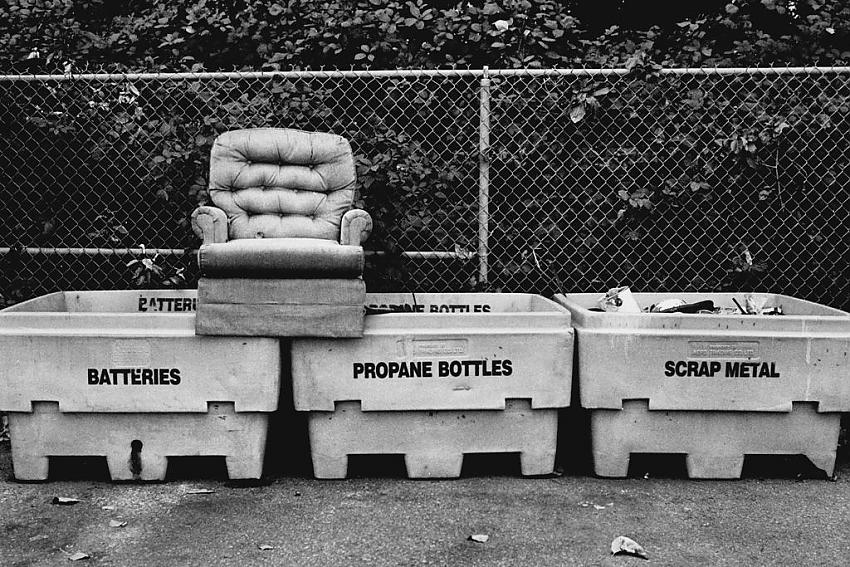
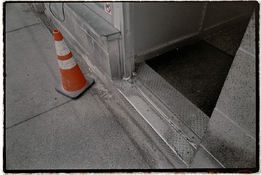
Take this photo for example. The scene was strongly appealing, strangely. Thus, I composed and took a photo. I never crop, therefore I was careful. People passing by were looking at me as if I was a bit deranged, and I couldn’t blame them. But it is only once developed and scanned that it jumped at me, what was fully subconscious was full blown conscious on my screen. It was about repetitions of triangles. I can see about a dozen triangles.

How many do you see?

How’s your compositional third eye? This happens to all of us to varying degrees, depending on days and mood.
 

Attachments

  • 0D6AFF96-9573-42F5-A3F1-B612FECDBC3B.jpeg
    0D6AFF96-9573-42F5-A3F1-B612FECDBC3B.jpeg
    438.3 KB · Views: 233
I started shooting slide film and I learned to compose in the viewfinder to avoid most cropping. When I walk into an area I take time to look around and pick out the compositions. Finding the best compositions is almost automatic. Only then do I pick up the camera.

I noticed that my back was bothered by using a shoulder bag years ago and I switched to photo backpacks, preferring top loading if the amount of equipment is small to medium and only use a large backpack for a large group of lenses. Even then I leave the large backpack in the car and draw out only the camera and the lens that I want.
 
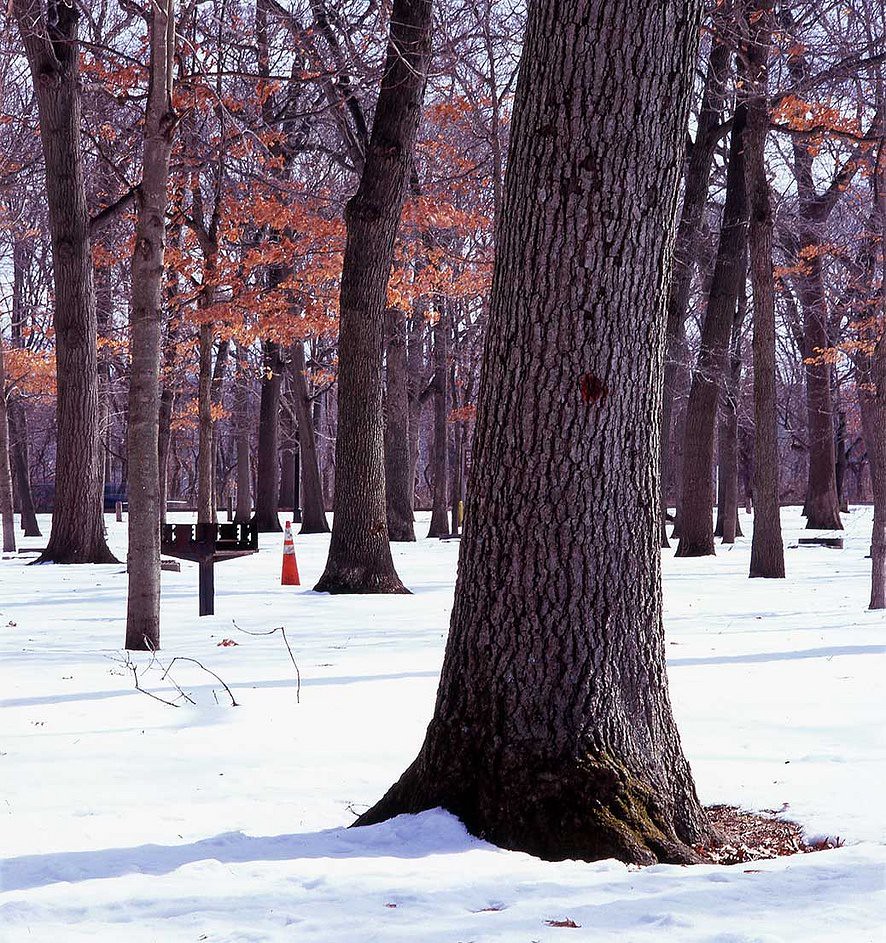
Nice shot. My take on cones, only I saw color, not triangles. I think people were looking at me strangely as well shooting MF film at the time.

Cone by Alan Klein, on Flickr
 
I have spent a good amount of my life backpacking, playing full-on basketball until I was 42, spent ten years packing mules, building and maintaining trails in a wilderness with hand tools, fought wildland fires and raised triplet boys. And somewhere in there I hand-planted several tens of thousands of trees. Carrying and using camera gear is pretty mellow...except for the repetitive motions if one does not change things up occasionally.

Visually - repetition of vision when dealing with one subject -- the light on the landscape in my case -- is an issue. Breaking out of that repetition is a challenge. At some point, that third eye can just be one's comfort zone.
 
Adding to my thoughts yesterday...

"Carrying and using camera gear is pretty mellow." I can write some pretty silly things. For my level of fitness and size, it was mellow to carry around 60 pounds of 8x10 equipment off trail. Fortunately, the 11x14 is about the same weight...but the pack is not as comfortable. At 68, though, things are not as mellow...as my backpack trips this summer carrying a 60 pound pack up the Creek demonstrated to me. It helps I have lost 60 pounds in excess body weight, but the weight on the back still feels heavy.

I need to get off the computer, have breakfast and start framing -- I have a show that goes up in a week. I decided to challenge myself by making a short series of 4x5 carbon prints. Visually, I am enjoying the challenge of creating small images...it throws that 'third eye' all out of whack. Physically, I challenged myself to make the solo trips up the Creek. The place (the Emerald Mile of Redwood Creek) is very important to me on many levels.

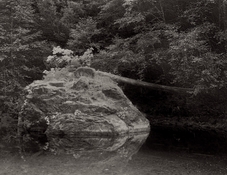
This image (Island Rock, Redwood Creek) was taken in 2012, but printed for the first time for this project. On 4x5 Tech Pan film developed in D-76. A 150mm lens. If you can adjust the size of the image to 4x5, that may give you an idea about the print --- except the print has a raised relief. The images this year are on Kodak Professional Copy Film.

When were were fighting to get the National Park expanded in the early 70s, this rock was almost covered with gravels from flood events in heavy damaged watersheds (due to logging/logging roads). Only the grassy part on top showed above the gravels. The young Big-leaf maples growing on top of the rock are about 6 feet tall.
 

Attachments

  • IslandRk2a.jpg
    IslandRk2a.jpg
    1.1 MB · Views: 186
Amigos, thanks for your excellent contributions.
 
Translating what you see into the photographic medium is also a honed skill. I have difficulty with this, since about half the time my prints do not give me the satisfaction I had when at the scene. I cannot tell if my expectations are too high, or if my skills are too wanting...

Often, the "extra" photo I took on a whim, as a side note, makes me much happier. Always take the extra photos while you're out.
 
Here is a good example. When I walk I often find myself gazing to a scene, a wall, a door, a street, a window. And falling in love, shortly, irrationally.
This is a beautiful description and it happens to me too. It's light that catches my attention and now, with fall/winter light arriving, I'm in heaven. I love the softness of it. Just the other day, I was mesmerized by a log floating in the river. It was late afternoon, the water looked like mercury and little sparkles appeared and disappeared continuously. I would have stayed there for a while, but some guy had to interrupt the moment with a joke...something like "don't worry, it's not a crocodile"...way to kill the mood... but well, it was good while it lasted, and it certainly stays in my mind when I'm out shooting and looking for it again.
 
When I walk into an area I take time to look around and pick out the compositions. Finding the best compositions is almost automatic. Only then do I pick up the camera.
Taking time to observe makes all the difference, doesn't it? I'm taking a pottery class and decided to make a piece with Manuel Alvarez Bravo's quote: "Hay tiempo" (There's time) as a reminder to slow down, observe and make sure that the shot I take is meaningful in some way. Like for you, it is then that the camera/the lens cap comes out. :smile:

Translating what you see into the photographic medium is also a honed skill. I have difficulty with this, since about half the time my prints do not give me the satisfaction I had when at the scene. I cannot tell if my expectations are too high, or if my skills are too wanting...

Often, the "extra" photo I took on a whim, as a side note, makes me much happier. Always take the extra photos while you're out.
I think that with art in general, translating what we physically or imaginatively see into a print can be a challenge, and chances are that we will rarely be able to fully translate what we see into a physical image. I remember reading a passage about this in the book "Art and fear", which I highly recommend. Having said that, we shouldn't stop looking for that elusive "perfect" translation, because when it happens, it's heaven.
I've also had the experience of being happy with a photo that I didn't particularly plan or shot without knowing exactly why...my motto is: if it catches my attention, I shoot it. I can figure out the why afterwards.
 
Taking time to observe makes all the difference, doesn't it? I'm taking a pottery class and decided to make a piece with Manuel Alvarez Bravo's quote: "Hay tiempo" (There's time) as a reminder to slow down, observe and make sure that the shot I take is meaningful in some way. Like for you, it is then that the camera/the lens cap comes out. :smile:


I think that with art in general, translating what we physically or imaginatively see into a print can be a challenge, and chances are that we will rarely be able to fully translate what we see into a physical image. I remember reading a passage about this in the book "Art and fear", which I highly recommend. Having said that, we shouldn't stop looking for that elusive "perfect" translation, because when it happens, it's heaven.
I've also had the experience of being happy with a photo that I didn't particularly plan or shot without knowing exactly why...my motto is: if it catches my attention, I shoot it. I can figure out the why afterwards.

After I have finished taking photographs, I point out to my long time girl friend the compositions I choose, then she shows me several more great compositions that I did not see.
 
After I have finished taking photographs, I point out to my long time girl friend the compositions I choose, then she shows me several more great compositions that I did not see.
That's a great strategy. I think that we can become "blind" to certain shots due to paying more attention to others, being influenced by not having gotten what we expected, etc. Getting a fresh set of eyes can be really helpful. By the way, that's one of the suggestions in the book "Visual intelligence", another super recommendable book! I also like to look at prints upside down and, sometimes, just let time pass and look at the shots with "new eyes".
 
Translating what you see into the photographic medium is also a honed skill. I have difficulty with this, since about half the time my prints do not give me the satisfaction I had when at the scene. I cannot tell if my expectations are too high, or if my skills are too wanting...

Often, the "extra" photo I took on a whim, as a side note, makes me much happier. Always take the extra photos while you're out.

The more prints you reject could, and probably does, mean that you are just getting better!nPhotography is not like painting or drawing. Photographers work with found objects and must figure out how to put them into a frame. A painter can move a mountain or a cottage to make a pleasing and dynamic picture. Good color is even harder. Budweiser cans seem to be ubiquitous intruders. If photography were easier, it wouldn’t be fun.
As for the extra photo being a keeper, perhaps because not trying too hard. There are no rules. Rossini was known for composing while partying, others need absolute solitude.
From my viewpoint, 68 years old is a teenybopper.
 
Often, the "extra" photo I took on a whim, as a side note, makes me much happier. Always take the extra photos while you're out.

This. Happy Accidents are one of the joys of photography for me.
 
It can be a bit different using LF cameras...happy accidents are harder to come by. But there have been a few times that after taking the image I wanted, I have spun the camera around on the tripod and found another image behind me.
 
It can be a bit different using LF cameras...happy accidents are harder to come by. But there have been a few times that after taking the image I wanted, I have spun the camera around on the tripod and found another image behind me.

Given how often you photograph in the woods, I would say: "as long as the source of that image isn't growling and covered with fur!" 😄
 
Often, the "extra" photo I took on a whim, as a side note, makes me much happier. Always take the extra photos while you're out.

I did a shoot with a young man a while back and he'd never modeled or anything. Very uncomfortable, but he needed a variety of photos and was willing to try things.

Just out of silliness I got SUPER close with a wide angle lens. Really super uncomfortable, but we were laughing and joking about it. He's gone now, but that was the photo his girlfriend chose to put on the obituary and memorial doc.

I would never, ever, in a million years plan on using a superwide for a portrait of someone like that.

We got a real winner from the shoot, but it was one of the extras where we were just screwing around to kill the last few frames on the roll that struck the emotional note.


After I have finished taking photographs, I point out to my long time girl friend the compositions I choose, then she shows me several more great compositions that I did not see.

I think you've said this to me before Sirius. I shared a bunch with friends when I was on a composition binge a few years ago. I'd take a page from a composition book and go out and try and find shots that fit. For a month or two every single thing I produced had a subject strictly on a rule of third cross. Then I was looking for S curves, then diagonal lines, etc.

After a while they'd see it too and point out things I hadn't noticed or pointed out. I was doing steelyards for a couple of weeks, took one of picnic tables and one of my friends says "Ohh, and the trees and the trashcans..."

I should do that again. It was a fun and productive few months.
 
Visually - repetition of vision when dealing with one subject -- the light on the landscape in my case -- is an issue. Breaking out of that repetition is a challenge. At some point, that third eye can just be one's comfort zone.

Well said, and made me think.
Thanks.
 
Given how often you photograph in the woods, I would say: "as long as the source of that image isn't growling and covered with fur!" 😄
I had the 8x10 set up along Prairie Creek for a 10-minute exposure in a small rare open area. About a couple minutes into the exposure, some elk gals showed up and started to slowly eating their way into 'my' scene. I packed the smaller stuff away and in the last minutes of the exposure the bull arrived and started to make un-friendly noises. I broke my record for tear-down and packing of the 8x10, and made off slowly in the opposite direction of the ladies and over a couple fallen redwoods until the fellow seemed okay with the situation. I took a piss and went on my way. Dang elk never showed up in the image -- moving too much.

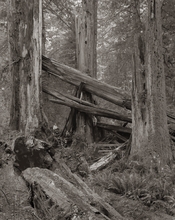
On the other had...these three beasties kept showing up in my 8x10 images...
 

Attachments

  • 3Boys_3Snags_PC_Platinum.jpg
    3Boys_3Snags_PC_Platinum.jpg
    804.3 KB · Views: 183
All I know is that if I don't shoot photographs for a while, the first roll or two gets sorta wasted. After that I'm back in the flow. It did no good to pretend there was film in the camera and practice, my brain knew there was no film in the camera, so it was smarter than my mind.

It's about seeing, vs looking or observing. All day long we look, but when we see, there is no time lag due to thoughts, mostly because one thing isn't weighed against the other. We're in the moment, and operate intuitively and off the cuff.

It's a skill that needs to be practiced like a musician needs to do their scales, and I need to sketch daily to make a decent drawing. Time can change how we view things too. Many, many times I've been ready to throw away an image that didn't work, only to see it differently a few weeks later. Or even later in the day, our minds are seldom stationary or stuck on one thing.
 
Last edited:
If people who aren't your friends respond positively to your photos, you're doing something right. If they don't respond positively it means what it appears to mean.
 
If people who aren't your friends respond positively to your photos, you're doing something right. If they don't respond positively it means what it appears to mean.

Or you could just be presenting them to the wrong audience. No matter how good an opera singer might be, if they get up on stage at a heavy metal concert and start belting out "O mio babbino caro", they're probably not going to get a lot of positive feedback.
 
If people who aren't your friends respond positively to your photos, you're doing something right. If they don't respond positively it means what it appears to mean.

There is real validity in wanting your work to speak to others. Having said that, I primarily shoot stuff for my own enjoyment, not others'. It works out well for everyone, since I don't like what others like, and they would not like what I like.

Everyone has their own goals.
 
Before street photography I did drawings and charcoals, went to museums any chance I could. I prefer my found photos tied together like it was planned out in a sketch.
 

Attachments

  • F150C1E7-492E-4191-991B-F308BC8A7634.jpeg
    F150C1E7-492E-4191-991B-F308BC8A7634.jpeg
    1.1 MB · Views: 183
Photrio.com contains affiliate links to products. We may receive a commission for purchases made through these links.
To read our full affiliate disclosure statement please click Here.

PHOTRIO PARTNERS EQUALLY FUNDING OUR COMMUNITY:


Ilford ADOX Freestyle Photographic Stearman Press Weldon Color Lab Blue Moon Camera & Machine
Top Bottom