• Welcome to Photrio!
    Registration is fast and free. Join today to unlock search, see fewer ads, and access all forum features.
    Click here to sign up

Testing scene recommendation

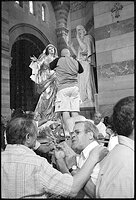
Procession

A
Procession

  • 0
  • 0
  • 0
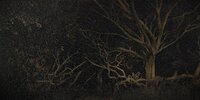
Millers Lane

A
Millers Lane

  • 1
  • 2
  • 35

Recent Classifieds

Forum statistics

Threads
202,891
Messages
2,847,142
Members
101,531
Latest member
F2_User
Recent bookmarks
0

sagai

Member
Allowing Ads
Joined
Oct 29, 2014
Messages
309
Location
Hungary
Format
Multi Format
Hi World!
I am planning to test black and white panchromatic films and their response to different developers to find my personal favorites.

I would do it indoor to ensure some stability for the comparison, the only headache I have is to what to shoot on to have as much as possible grayscale tonalities.

I am thinking of an egg and a plant, might be a steal knife, might be milk too, I do not know if there is any advise you may have.

Thanks!
 
IMO the best test is always the type of scene you intend to shoot as a normal thing. The worst test is a "test target" in a fully controlled situation, unless that's how you will normally be shooting.

So, what subjects and settings do you intend to shoot in the real world?

Your film and developer need to deal with the instabilities of the real world.
 
Jones used a large color transparency for consistency.
 
Filter have different response to daylight and tungsten spectrums so the results indoors will be
invalid outdoors.
 
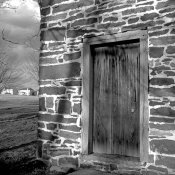
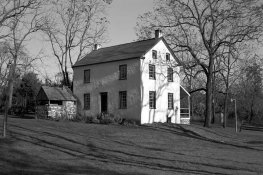
In regard to shooting the sort of subjects you like to shoot -- one of my favorite test subjects is a local historical site, one of the original farmsteads in the township. It dates back to around 1760, so it is a pretty consistent target. Lots of weathered wood, stone, etc. for all sorts of tones, contrasts, and textures. It's usually about the first place I go (5 minutes or so away) with either a new-to-me camera or a new film.

From the Perkeo II:
attachment.php


From the Ercona II:
attachment.php


That gives me a good starting point to assess what I've acquired.
 

Attachments

  • 93201517.jpg
    93201517.jpg
    96.3 KB · Views: 199
  • 118601924.jpg
    118601924.jpg
    118.2 KB · Views: 190
If you want to test various films and their response to different developers, you should try your best to control other variables. Shooting the same subject tones and under the same lighting is critical for the results (about films and developers) to be valid. I don't think you can get that control outside.
 
You can get that control if you shoot each scene with every film for every developer at one time. That means multiple film backs. Multiple cameras would add a whole set of variables.
 
If you want to test various films and their response to different developers, you should try your best to control other variables. Shooting the same subject tones and under the same lighting is critical for the results (about films and developers) to be valid. I don't think you can get that control outside.

Actually, using my Bronica, I have swapped backs between shots to shoot two different films seconds apart, same scene, same view, etc. But you're right, consistency is a good idea. One could always buy or put together a graphic with a color chart, some sort of stepped gray scale, and maybe some sharp detailed line images as a sort of test graphic for indoor use -- maybe as a background for some 3-D objects -- eggs, tomatoes, potatoes -- (mmm -- making me hungry!) But unless one primarily does product shots, that might show differences but not translate that obviously for practical use.

(What was that old saying about the first 10,000 shots?!)
 
If you want to test various films and their response to different developers, you should try your best to control other variables. Shooting the same subject tones and under the same lighting is critical for the results (about films and developers) to be valid. I don't think you can get that control outside.

While technically true, the practicality lacks.

Sure you can judge the difference between numbers, but what can't be judged in the lab is how the materials interact with your subjects in the real world.
 
While technically true, the practicality lacks.

Sure you can judge the difference between numbers, but what can't be judged in the lab is how the materials interact with your subjects in the real world.

I agree, but how are you going to collect valid/useful information about film/developer results when uncontrolled variables are mixed in. If a particular combination is say, excessively grainy or contrasty, during a controlled indoor test, it will likely be so outside as well.

Personally I work more intuitively and would not be the guy to test 3 or 4 films with 3 or 4 different developers, but I can see how it would be a useful exercise to do for someone so inclined. I do understand that there may be a difference between indoor controlled results and outdoor results with different subject matter, but the controlled indoor testing would help one gain a grasp on what's what.

I don't have an emotional investment in this, it's not something I'm going to do indoors or out, just throwing out my opinion which I think is valid/useful.
 
It is a reasonable thought Frank.
 
So many great ideas, thank you guys really.

I do understand and like the concept of going out if my target environment is outside, however I see a chance of introducing by that more uncertainty for the consistency rather than doing it indoor.

I think I will do some in and outdoor tests too.

I am looking at 2 films actually Foma Retropan that has no recommended developer other than Foma special, and the all mighty HP5.

Loved those gorgeous images!

Thanks
 
Hi World!
I am planning to test black and white panchromatic films and their response to different developers to find my personal favorites.

I would do it indoor to ensure some stability for the comparison, the only headache I have is to what to shoot on to have as much as possible grayscale tonalities.

I am thinking of an egg and a plant, might be a steal knife, might be milk too, I do not know if there is any advise you may have.

Thanks!
shoot a scene that best reflects your typical type of photography.If you shoot indoors, include a gray card and a piece of white and black cloth, possibly using flash for consistency of color temperature:smile:
 
Photrio.com contains affiliate links to products. We may receive a commission for purchases made through these links.
To read our full affiliate disclosure statement please click Here.

PHOTRIO PARTNERS EQUALLY FUNDING OUR COMMUNITY:


Ilford ADOX Freestyle Photographic Stearman Press Weldon Color Lab Blue Moon Camera & Machine
Top Bottom