• Welcome to Photrio!
    Registration is fast and free. Join today to unlock search, see fewer ads, and access all forum features.
    Click here to sign up

'Technical Excellence' vs 'Mythical Look'

Ecstatic Roundabout

A
Ecstatic Roundabout

  • 0
  • 0
  • 37
MIT. 25:35

MIT. 25:35

  • 1
  • 0
  • 76

Recent Classifieds

Forum statistics

Threads
202,958
Messages
2,848,119
Members
101,553
Latest member
JasonGoh
Recent bookmarks
0
Some lenses reproduce what the eye sees brilliantly, while others show the scene in the mind's eye. Technically, they're uncorrected aberrations, but pictures only show the results, not the theory.

Post of the day!! Excellent post!!
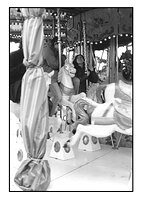
 
80mm f/2.8 Mamiya Sekor (TLR) - this was the Hassleblad substitute for me. Its slightly longer brother, the 105mm f/3.5 Mamiya-Sekor is even better...but harder to focus.

Agree with you!! The 105/3.5 Mamiya TLR lens (mine is chrome-nosed) gives me really pleasing images!
 
Agree with you!! The 105/3.5 Mamiya TLR lens (mine is chrome-nosed) gives me really pleasing images!
I've never owned the 105mm lens pair because it's too close in focal length I.M.O. to the 80mm that I already have to be a worthwhile purchase, but the 135mm and 180 lenses are wonderful portrait lenses.
 
We've all read about or perhaps, even owned one of those super expensive lenses that are purported to produce results with mythical qualities. You know what I'm talking about, the Leica small format lenses, the Hassleblad medium format lenses, the Cooke large format and cine lenses...there are probably others(*).

I do not deny that these lenses have some pretty special qualities. However, I'm not really even interested in them. (I don't think I could ever spend $2500 on a single optic)

Let's talk about the technically excellent (not necessarily superior) optics that are not generally thought of as having mythical properties.

I'm specifically thinking of what keeps these great lenses from achieving the mythical status?

Some obvious choices...the Nikon 28mm f/2.8 AIS...absolutely fantastic lens, one of my all time favorites in small format...no mythical properties...why?
What other lenses are excellent but not poseesed of mythical properties...and, if possible why?

Are there some that could go either way? I'm thinking here of the 50mm Super-Takumar or pre-AI Nikkor...super lens, seeminly pedestrian but, described by some as "having a special look', etc...


*note: although, this is posted in a 35mm sub category, let's not limit the discussion to small format only.

I have had 10-11 copies of the Takumar 50mm now, and on film it's got that something extra, surprisingly (to me), I've found better copies in the Super variant than either of the later versions. I have one of the 8-element versions and it's not going to be sold. Fantastic lens and unless you're looking at fairly large prints fairly close up, you wouldn't see any of the magic.
 
I don't know if any of these should be mythical or not, but they have produced excellent images for me for years. In no particular order;

1. SMC Pentax M 50/2.0
2. SMC Pentax 35/3.5
3. Minolta Rokkor MD 40/2.0
4. Leitz Elmar 50/3.5

There are others I enjoy but this is my personal collection of underdogs that have always produced excellent photographs for me.
 
I've never owned the 105mm lens pair because it's too close in focal length I.M.O. to the 80mm that I already have to be a worthwhile purchase, but the 135mm and 180 lenses are wonderful portrait lenses.

That's what I thought too until I happened to acquire a 105mm with a 220F I wanted. Like the 65mm, it is close to the 80mm but oh, so worth it. Really, if I were going get back into the Mamiya TLR system (and my eyes were 30 years younger), I'd get all three....65mm, 80mm and 105mm. I think I'd like the 180mm too but, never had one. Had the 55mm and a 135mm...did not care for either. The 55mm would flare at the slightest hint of sun light and the shutter on the 135 was screwed up (the lens was actually fine).
 
No not really. That may be reading too much into it. By 'mythical', I'm just referring to those relatively few, relatively expensive lenses that people always seem to descibe as "having a special look" or some similar non-specific goodness that (it seems) is not or cannot be achieved by any other lens. The Leica Summicron and the Cooke XVa are the two prototypical examples (in my mind). I'm definitely thinking sharp...and absurdly expensive.

As I said, I'm not knocking anybody's preference or experience. Just trying to explore the space of excellent optics that don't cost a fortune.


There are some great posts already....keep 'em coming.

The Kern Swissair 50MM 1.9 has the rep as the finest 50mm ever made, in the 50mm range that don't cost a fortune, in my book is the Konica 50mm 1.7, and still a bargain the 1.2.
 
I've never owned the 105mm lens pair because it's too close in focal length I.M.O. to the 80mm that I already have to be a worthwhile purchase, but the 135mm and 180 lenses are wonderful portrait lenses.

They are very different in perspective and in bokeh.
 
If you ask around here, you will get as many answers as there are grains of sand on Miami beach.
That is partially because there are many different reasons to like a lens. Sharp? like it. Soft? Like it. Price: expensive? like it. Price: inexpensive? Like it.

Here are some things to think about.. Various tests show that those mythical german rangefinder lenses outclass just about every other lens.
But, do the tiny details resolved in those tests ever make a dull image better? of course not.

Now think about something else. What are all the other factors that will obliterate advantage of those expensive lenses?
Shooting handheld? Money wasted. Using 400+ speed film? money wasted. shooting wide-open? Money wasted. Using expired film? Money wasted.
Scanning film on a flatbed? Money wasted. Saving to JPG? Money wasted. Downsizing? Money wasted. Printing to 8x10s? Money wasted
 
The Kern Swissair 50MM 1.9 has the rep as the finest 50mm ever made, in the 50mm range that don't cost a fortune, in my book is the Konica 50mm 1.7, and still a bargain the 1.2.

Do you mean the switars made for alpa? The 1.8 and the macro 1.9 are really up there and perfect for this list. I wish I had the pleasure to use them on their alpa bodies. The digi guys seem to be snapping them up online and using adapters driving the price up.

One of my favorite 50mm lenses is the canon 50mm 3.5 collapsable serenar. It's got a beautiful draw to it with pleasing contrast that seems to be great with these older lenses. I think it's single coated which probably adds to this.

Other lenses I really like in no particular order: 28mm F2 CV in M mount which is great to handle and is very sharp across the full range of apertures. Great for color work too.

Olympus OM 85mm f2, an amazing portrait lens (I'm not even sure I should post this as prices on ebay recently have been so low, it's an amazing gem and tiny too)

Nikon 105mm 2.5 ais, also another kick ass lens that's unbelievably cheap. You cannot go wrong with this one.

Olympus OM 50mm 1.4, another beautiful and compact lens anyone shooting with an OM camera should have. Very smooth out of focus areas as well.

I've also been shooting a lot with my 210mm 5.6 symmar s which has been pretty fantastic for portraits. I've also been swapping in 180mm caltar ii N elements onto that same copal 1 shutter and that lens has been quite nice too. Most large format lenses have been pretty nice, but I also think its in part to the larger film and tonality that it can offer especially with individual development of sheet film.
 
If you ask around here, you will get as many answers as there are grains of sand on Miami beach.
That is partially because there are many different reasons to like a lens. Sharp? like it. Soft? Like it. Price: expensive? like it. Price: inexpensive? Like it.

Here are some things to think about.. Various tests show that those mythical german rangefinder lenses outclass just about every other lens.
But, do the tiny details resolved in those tests ever make a dull image better? of course not.

Now think about something else. What are all the other factors that will obliterate advantage of those expensive lenses?
Shooting handheld? Money wasted. Using 400+ speed film? money wasted. shooting wide-open? Money wasted. Using expired film? Money wasted.
Scanning film on a flatbed? Money wasted. Saving to JPG? Money wasted. Downsizing? Money wasted. Printing to 8x10s? Money wasted

Very good points, photography is a money pit and gas drives us to throw money away into it. But you would think there's too much variation between what a person considers is excellent or a dog, but it seems that over the years people have done a pretty good job sorting all these lenses out and this rings true if you look at the economics behind lens sales. Some lenses people wouldn't even want if you gave them away, others many would pay a small fortune to have. We will probably see a more narrow selection of film lenses as these lenses start to break down more and more over time, be it focusing problems, speration of elements, soft coatings, bad grease, etc.
 
Purists may want to look away now...

One of the most useful ways of testing a lens is to put it on a digital body, in movie mode. Try it at a variety of apertures, into the sun and in low light. If the results are interesting, it shows its potential on a film camera without the distraction of film types, grain or print variations. I also use the method to reveal whether scratched, cheap lenses are user's or ready for landfill. For the price of a Hong Kong adapter, the method has shown all kind of sharp, cool or so-so lenses without the associated mythology.
 
They are very different in perspective and in bokeh.

Perspective will be exactly the same as long as you don't move your feet :tongue:oliceman:
 
The Kern Swissair 50MM 1.9 has the rep as the finest 50mm ever made
Unless it's an aerial lens, I think it's a Switar. :wink:
 
a couple more that I've enjoyed.

Small format:
135mm f/2.5 Asahi Pentax (original K series bayonet mount) - The 105 gets all the love. The 135 is the one I have and love.

A bit more info for you about that lens:
I had the SMC Takumar 135mm f/2.5 screw mount once. I found out in a book about the Pentax screw mount that there were 2 versions of this lens. The optical formula was changed very near to the change over to K mount. I was very fortunate to find the last version. I believe it is optically the same as yours in K mount.
There was also a Takumar 120mm f/2.8 in M42 that is reported to be excellent. I only ever saw it once in a shop.
 
I often wonder if some of the "mythical look" stuff comes from people trying to justify why they've just spent a huge sum on a luxury (unless you're a pro and need it for a job) item.

It usually seems to be attached to comparatively rare lenses, which makes it harder to pin down either way. Certainly standard primes never seem to build that level of hype, despite the fact that most of the 50/55mm lenses of the '70s and '80s were seriously sharp.

There was also a Takumar 120mm f/2.8 in M42 that is reported to be excellent. I only ever saw it once in a shop.

I have its K-series progeny, and it's a great little lens. I much prefer it to the 135mm as you can shoot handheld at 1/125, try that with the 135mm and you have more problems with shake. Also f2.8 makes for a bright viewfinder and easy manual focus.
 
Purists may want to look away now...

One of the most useful ways of testing a lens is to put it on a digital body, in movie mode. Try it at a variety of apertures, into the sun and in low light. If the results are interesting, it shows its potential on a film camera without the distraction of film types, grain or print variations. I also use the method to reveal whether scratched, cheap lenses are user's or ready for landfill. For the price of a Hong Kong adapter, the method has shown all kind of sharp, cool or so-so lenses without the associated mythology.

That's a good tip there. Even better if you shoot the occasional video.
 
I don't worry about "mythical lenses", I have always bought marque lenses from the major manufacturers and always found them better lenses than I'm a photographer, people should worry more about if their work has any meaning, or says anything about the human condition than the line pairs per millimetre, or M.T.F. of their lenses, nobody ever want's to know what brushes or what pallet Rembrandt used.
 
I don't ascribe much magic to lenses, films and such, honestly. I used to be interested in it, and remember being blown away by a 50mm Summarit on a Leica. I went ga-ga because of the 'swirly bokeh'.... Ugh. I almost puke even thinking about the word 'bokeh' today. Such a terrible distraction.

Since I stopped caring I have focused more on the pictures themselves, and whether I make the photograph with Canon, Pentax, Voigtlander, Hasselblad, or Leica lenses are of absolutely zero significance.

Instead, I try to make a difference in the darkroom when I print the pictures. To me that is where 95% of the magic happens.
 
I don't believe in mythological differences in lenses (I know the OP isn't being literal) but I do believe lenses have their strengths and weaknesses and we pick/choose those lenses that fit our specific needs/desires. My problem is I want the best imaging qualities of lenses, both technical and artistic, to be all in one lens. That simply isn't practicable. So... I guess I'll be adding extensively to my lens collection IF AND WHEN I can afford to. Right now, I'm selling my beloved lenses just to stay afloat.:wink:
 
I have its K-series progeny, and it's a great little lens. I much prefer it to the 135mm as you can shoot handheld at 1/125, try that with the 135mm and you have more problems with shake. Also f2.8 makes for a bright viewfinder and easy manual focus.

Thanks!
I agree with the shake at 1/125, although the f/2.5 version as it is heavier, it is slightly better for handdheld.
 
One of my favourite lenses currently is the Canon EOS 40mm 2.8 pancake. Although it's designed for digital cameras, it works perfectly well on EOS film cameras, contains the very latest in lens coatings, and covers a great focal length for those undecided whether they are wide or standard "people". The downside is a lack of focus scale and fly by wire focusing - it goes to sleep if you haven't half pressed the shutter for a while but wakes up with a tap. Those aside, the lens is a stellar performer in tests, nicely built, and sells new for around £100.

Not cult by any means, but very small and practical.
 
That's what I thought too until I happened to acquire a 105mm with a 220F I wanted. Like the 65mm, it is close to the 80mm but oh, so worth it. Really, if I were going get back into the Mamiya TLR system (and my eyes were 30 years younger), I'd get all three....65mm, 80mm and 105mm. I think I'd like the 180mm too but, never had one. Had the 55mm and a 135mm...did not care for either. The 55mm would flare at the slightest hint of sun light and the shutter on the 135 was screwed up (the lens was actually fine).
The 55mm lenses are of variable quality Brad I had to try four new ones when they were current before I got a good one, and the dedicated Mamiya hood http://www.ebay.co.uk/itm/like/2314...4543&item=231400405016&lgeo=1&vectorid=229508 is essential to deal with the flare problems it's prone to, the 135 is a wonderful portrait lens I love mine.
 
Photrio.com contains affiliate links to products. We may receive a commission for purchases made through these links.
To read our full affiliate disclosure statement please click Here.

PHOTRIO PARTNERS EQUALLY FUNDING OUR COMMUNITY:



Ilford ADOX Freestyle Photographic Stearman Press Weldon Color Lab Blue Moon Camera & Machine
Top Bottom