• Welcome to Photrio!
    Registration is fast and free. Join today to unlock search, see fewer ads, and access all forum features.
    Click here to sign up

Talk me into /out of a Texas Leica

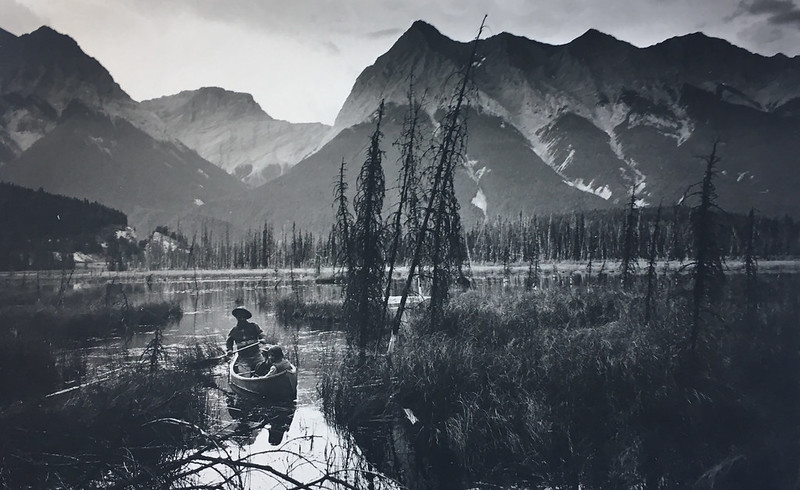
Flooded woodland

Flooded woodland

  • 4
  • 0
  • 29
Babylon

D
Babylon

  • 2
  • 1
  • 42

Recent Classifieds

Forum statistics

Threads
202,833
Messages
2,846,197
Members
101,556
Latest member
vk12
Recent bookmarks
0

Attachments

  • Screenshot_20240529-171233_Chrome~2.jpg
    Screenshot_20240529-171233_Chrome~2.jpg
    229.9 KB · Views: 63
I remember I did not want to put sticky stuff in my camera. I can care less how many frames I have.
 
Yeah, I thought about this. I'm not going to put tape on the roller. I wonder if a piece of silicone or latex tubing, slit, could be made to work 🤔????
 
Yeah, I thought about this. I'm not going to put tape on the roller. I wonder if a piece of silicone or latex tubing, slit, could be made to work 🤔????

So, I don't understand the point. If you want 35mm, shoot 35mm. If you want 6x9, shoot 6x9. If you want panoramic, shoot 6x9 with panoramic cropping in mind.

Not criticizing here, just wondering ...
 
This begins to feel a little like the Monty Python "But I came in here for an argument" sketch. You already have a medium format system camera, right? Maybe you don't need or want a TL Fuji 6x9 rf. It's ok to simply not want something. One doesn't have to make an argument that it's bad, just that one doesn't want it. It doesn't mean that other people who do want or use it are misguided.

I don't think "rangefinder" needs to be associated with street photography just because many prominent street photographers used the 35mm rf. There are places where a big RF seems not the ideal tool, for ex if I were going to do a lot of studio portraits. On the other hand, there are many stories on Photrio of people who shot weddings in the 70s using a 6x7 Koni-Omega RF. I suspect the Fujica 6x9 RFs were less common in the US back then, compared to the Koni-Omega and Mamiya medium format cameras. All of these were quite expensive professional tools at the time, and people probably did not flit between systems.

Although not any of those RFs, Bill Owens took many of the shots in "Suburbia" with a Brooks Veriwide, which is a 6x9 viewfinder camera with a (slow) 47mm lens. He used a bare bulb flash for the interiors. I think he also used some other camera, perhaps a Pentax 6x7.

Well, you just mentioned several current-times use cases for which a MF RF is not first choice, and then you mention a (great) book from 50 years ago, which was partly taken with an ancient camera that even at that time resembled some old-fogey penny-farthing.

If, as some people said here, it is a rather niche camera, what is that niche? Looking at the argument that it is almost a portable LF camera, how many people with a Linhof have ever taken a TL as an alternative?
 
Well, you just mentioned several current-times use cases for which a MF RF is not first choice, and then you mention a (great) book from 50 years ago, which was partly taken with an ancient camera that even at that time resembled some old-fogey penny-farthing.

If, as some people said here, it is a rather niche camera, what is that niche? Looking at the argument that it is almost a portable LF camera, how many people with a Linhof have ever taken a TL as an alternative?

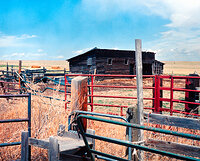
As they say "i have no dog in the fight." I have no interest in convincing anyone which camera they should use. I've used a number of Fuji rangefinders (wide & normal lenses, 6x7,6x8,6x9)...... everyone of the four colleagues that uses a Fuji GW 6x*, owns and uses one (or several) LF cameras, Linhof, Deardorff, Canham. It's been said before, they're simple, light, versatile & reliable. The results speak for themselves.IMG_3273 2.jpg
 
Last edited:
A slightly different view:
 
If, as some people said here, it is a rather niche camera, what is that niche? Looking at the argument that it is almost a portable LF camera, how many people with a Linhof have ever taken a TL as an alternative?
I acquired mine analagous to considerations of caliber and barrel length for a rifle. Those two should be primary in choosing an arm dependent on what you hunt and terrain. I acquired mine specifically. A 6x9 for most crop-ability; a sharp lens; for lightness; and for utter simplicity and holdability. And I chose it for walking in the field (mostly only when hunting… but while stalking). So when it’s quiet and between the dawn dusk activity, I’ve plenty time to stop and take grander images at infinity focus to crop later, all while not worrying/fiddling with a more complex camera which I can drop in the swamp.

My 6x9 folders are hell to play with when im loaded w a rifle, backpack, chest pack, loads of gear thundering about in 2’ of muck water. I don’t desire the square format for that, and while I tried once, I’m not taking my Mamiya RB67 out again. Bellows no bueno. Stroke and go is good. Hand held but braced. Hood is dealable, and only once got caught with buckled film plane; last, the viewfinder is a bit tough time to time, but infinity-&-go makes that moot for my purposes. It does feel a bit like my daughter‘s boxy pink plastic insta-camera, or like a Glock in use. But It’s a keeper for this user. Great but not fast lens.
 
Yes, the Glock analogy is very good.

But a TL is not a folder, but mostly fixed lenses.

And - for these action-packed, in-the-field use cases, how do you rate the lack of an integrated exposure meter against the crop-able 6x9 format? And wouldnt be a faster lens - 2.8 Planar springs to mind? - be much more useful for your use case?
 
So, I don't understand the point. If you want 35mm, shoot 35mm. If you want 6x9, shoot 6x9. If you want panoramic, shoot 6x9 with panoramic cropping in mind.

Not criticizing here, just wondering ...
I would just say, like at work, that is not a native function so it's not supported 😁 I haven't tried such mask and spool adapter solutions, it's however interesting if one has a 35mm along so that film format can be used and shared with other cameras
Mostly doing crop from 6x9 however.

And - for these action-packed, in-the-field use cases, how do you rate the lack of an integrated exposure meter against the crop-able 6x9 format? And wouldnt be a faster lens - 2.8 Planar springs to mind? - be much more useful for your use case?
But that doesn't exist. Integrated exposure meter in Medium format? Rather limited to high tier cameras and/or modern. f2,8 you might be able to get the Xenotar 80mm and use it in a Press camera. At 6x6+ there aren't that many practical fast lenses.
Consider a hotshoe meter, many have popped up recently and hit the ballpark for exposure. A leica M3 DS does not have an integrated meter either, I do consider the camera relatively good to its format.

TL:DR:
Don't buy this quirky camera, it pings when triggering the shutter, so renders the leaf shutter silence as moot. Plasticky and ridiculously large. Double stroke and no meter. The 6x9 format gives you only 8 shots, which is too little. The Mamiya 7 has many of the missing features and will give you kudos if wearing a beanie out in SoCal. Don't forget Portra 800! /s
 
Worst of all, Fuji never offered these cameras in a Collector Edition with an alligator skin covering and gold-plated shutter release button.
 
Worst of all, Fuji never offered these cameras in a Collector Edition with an alligator skin covering and gold-plated shutter release button.

Or in black paint, or in a 50 Jahre edition, or in a boxed limited edition presentation case ...

And THAT is the central problem here more important than anything else.

Full Disclosure: I do own a 50 Jahre "Jubilee" M5 but I didn't pay nosebleed prices for it...
 
You mean they are so bland and boring that not even these marketing ploys would have helped to make it at least a bit desirable?
That's rough. But if you believe so, ok.
 
You mean they are so bland and boring that not even these marketing ploys would have helped to make it at least a bit desirable?
That's rough. But if you believe so, ok.

I don't think Fuji ever targeted the Fanboi crowd of consumers. Having owned a couple of their cameras for years, it always seemed to me that they were targeting very narrow niches for whom marketing a lot was unnecessary.

I currently own a 645Zi a GW690II and a two body/six lens Hasselblad system. Each of those has a place, none are inherently and objectively "better". They're just each better at some specific things. cf updthread: Paint Brushes
 
I don't think Fuji ever targeted the Fanboi crowd of consumers. Having owned a couple of their cameras for years, it always seemed to me that they were targeting very narrow niches for whom marketing a lot was unnecessary.

I currently own a 645Zi a GW690II and a two body/six lens Hasselblad system. Each of those has a place, none are inherently and objectively "better". They're just each better at some specific things. cf updthread: Paint Brushes

Well put Chuck. Sometimes the image calls for a rectangular negative....& then the Fuji is the ticket!
IMG_4319.jpg
 
When these cameras were in current production, their target market couldn't have cared less what the "decoration" on the outside looked like.
And if any of the users had needs that other cameras would better fulfill, and the users could make money using them, those users would buy a different camera and divide their camera use between the two: use the big Fuji rangefinders for the clients whose business needs suited the big Fuji RF cameras, and using the other cameras for the clients whose business needs suited those other cameras.
Today, decide if the large Fuji rangefinders suit your current needs, and if so, decide whether you want to spend the money.
I expect your current needs will be different than the "photographing busloads of tourists" use that these cameras were apparently initially used commonly for.
 
Yeah ok
I still think the golden Texas Leica comments were a bit too much...but each to their own
 
Worst of all, Fuji never offered these cameras in a Collector Edition with an alligator skin covering and gold-plated shutter release button.

Fuji is the master of making truly ugly cameras. Compared to their entire line of Instax blobs, my wonderfully rectangular G690 is beautiful. I've been considering reskinning it with chinchilla. Make it a bit warmer to the touch.
 
Well put Chuck. Sometimes the image calls for a rectangular negative....& then the Fuji is the ticket! View attachment 371304

If you look upthread, you'll see I picture I took on the Kenai river in Alaska last summer. I grew up in AK and everything is "remote". Getting to that location took a 2 hour car drive plus another 90min boat ride ... IOW it was really remote.

I cannot imagine jumping in and out of the boat in waders with a huge backpack of 'Blad or view camera stuff plus a big tripod. Instead, I took a small backpack with a digi SLR and the GW690II, and a small carbon fiber tripod. I don't think that image was diminished in any way by those choices ...
 
Don't know if this was covered on this thread, but I had heard that the 6x9 versions especially were designed rather specifically for Japan tour leaders to take photos of their groups. The wide especially will capture the entire tour group standing in front of its bus. It's pretty much a fool-proof camera even for the non-skilled.
 
Don't know if this was covered on this thread, but I had heard that the 6x9 versions especially were designed rather specifically for Japan tour leaders to take photos of their groups. The wide especially will capture the entire tour group standing in front of its bus. It's pretty much a fool-proof camera even for the non-skilled.

That sounds right, but I have to say, both the 645Zi and the 690GWII have really good lenses which makes them useful in a wide range of shooting situations. No, they're not fast, but they are sharp and contrasty when used in their sweet spots. More to the point, they are better than any Mamiya lens I ever used - 645, Universal Press, or TLR of any vintage.

The only comparable Mamiya optics I ever used were the Mamiya 7 family which were uniformly excellent. But they should be, since one of those lenses alone cost more than a GW690, let alone lens and body.
 
That sounds right, but I have to say, both the 645Zi and the 690GWII have really good lenses which makes them useful in a wide range of shooting situations. No, they're not fast, but they are sharp and contrasty when used in their sweet spots. More to the point, they are better than any Mamiya lens I ever used - 645, Universal Press, or TLR of any vintage.

The only comparable Mamiya optics I ever used were the Mamiya 7 family which were uniformly excellent. But they should be, since one of those lenses alone cost more than a GW690, let alone lens and body.

And here we go!
 
If you look upthread, you'll see I picture I took on the Kenai river in Alaska last summer. I grew up in AK and everything is "remote". Getting to that location took a 2 hour car drive plus another 90min boat ride ... IOW it was really remote.

I cannot imagine jumping in and out of the boat in waders with a huge backpack of 'Blad or view camera stuff plus a big tripod. Instead, I took a small backpack with a digi SLR and the GW690II, and a small carbon fiber tripod. I don't think that image was diminished in any way by those choices ...

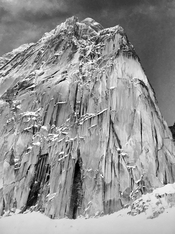
Chuck if i do a quick mental calculation, I've got easily a thousand hours of carrying the big Fuji. I cut the waist belt off a Lowepro camera fanny pack and added a shoulder strap to carry it cross body, since i was already carrying a backpack. I worked as professional ski & mountain guide and carried it remote places, back country skiing, heli-skiing and climbing.
* Added a fishing photo for you as well*

I only work in black and white and the big negative (no surprise to you) yielded superb 16x20 and 20x24" prints. I've likely sold more large prints from Fuji negatives than any other system i used. As a matter of fact a photo from the very first roll paid 3x the price of the camera. IMO the Fuji 690 series had a pretty robust production from 1968-2003.


46811044455_9d1f7e3d3b_c.jpg
[/url]


lowepro - 1.jpeg
IMG_4022.JPEG
 
Last edited:
And here we go!

No, we're cool. I have both the Fuji wide and the Mamiya 7. I think the Mamiya 43mm might be a bit sharper. The only Mamiya lens I don't have is the 50mm, which people also seem to love and is closer in focal lenght to the Fuji 65mm. That would be a nice comparison too.

My point about the tourism is just intended design, since it is about as simple a camera as there is. But I value a couple of my landscape photos with it about as highly as any I've taken with the Mamiya or the Blad.
 
Don't know if this was covered on this thread, but I had heard that the 6x9 versions especially were designed rather specifically for Japan tour leaders to take photos of their groups. The wide especially will capture the entire tour group standing in front of its bus. It's pretty much a fool-proof camera even for the non-skilled.

That's the story.... from camera-wiki

"The idea for the G690 came to Fuji from its discussions in Japan with commercial photographers, who were doing a brisk business in color photographs of tour groups that the tourists would buy as mementoes. Medium or large format was preferred over 35mm, for which emulsion quality was not always satisfactory and which had an unneeded number of frames per roll. However, the photographers envied the ease of handling of 35mm rangefinder cameras.[1]

Fuji determined to produce a camera for 120 roll film whose handling would approach that of a Leica. It took the 70mm Combat Graphic as a model for what could be done, and put Yamamoto Katsuhiko (山本勝彦)[2] at the head of the design team. While Yamamoto acknowledged that the new camera would not need the weatherproofing or degree of ruggedness of the Combat Graphic, he thought it should still be designed for hard use, and that the goals of durability and ease of handling should take priority over frills such as an exposure meter.[3]

The G690 was exhibited in prototype form as early as the March 1968 Tokyo Camera Show. The prototype has a dial on the front (close to the front shutter release of the much later GL690) for switching between 6×9 and 4.5×6; this feature was dropped before the camera was produced, and the number of brightlines shown in the viewfinder reduced to the two for 100mm and 150mm, thus avoiding both the low magnification needed for inclusion of a 65mm brightline and an irritatingly small brightline for 180mm.[4] "
 
Photrio.com contains affiliate links to products. We may receive a commission for purchases made through these links.
To read our full affiliate disclosure statement please click Here.

PHOTRIO PARTNERS EQUALLY FUNDING OUR COMMUNITY:


Ilford ADOX Freestyle Photographic Stearman Press Weldon Color Lab Blue Moon Camera & Machine
Top Bottom