• Welcome to Photrio!
    Registration is fast and free. Join today to unlock search, see fewer ads, and access all forum features.
    Click here to sign up

Switching from RC to FB Paper...

Recent Classifieds

Forum statistics

Threads
201,977
Messages
2,833,183
Members
101,043
Latest member
Obla
Recent bookmarks
1

gmfotografie

Member
Allowing Ads
Joined
Feb 6, 2013
Messages
61
Location
Austria
Format
Medium Format
hi my friends,
i would like to switch from rc to fb paper :smile:

because fb paper is quit expensive; how is you workflow minimizing fb usage before achieving the final print.

do you print teststrips on rc paper?

or

do you buy a smaller fb papers for testing?

..
.
.

best michael
 

Ghostman

Member
Allowing Ads
Joined
Dec 5, 2011
Messages
504
Location
Switzerland
Format
Multi Format
There is no point in doing test strips on RC if you are using fiber and there is also little point in doing test strips on smaller papers. You need to make test strips from the same batch of papers that you have and will make your final prints on.
 

jp498

Member
Allowing Ads
Joined
Oct 5, 2009
Messages
1,525
Location
Owls Head ME
Format
Multi Format
Drydown is slightly more obvious in FB paper compared to the RC papers I've used.

I use both. RC has some advantages beside price. It's quick to fix/wash/dry. Its thinner than medium/double weight FB. It's flatter. I use it for contact printing my printfile pages of negatives and for some printing. Other printing I think sometimes looks better on FB paper and is worth the extra work and cost.
 

Rick A

Subscriber
Allowing Ads
Joined
Mar 31, 2009
Messages
10,035
Location
Laurel Highlands
Format
8x10 Format
There is no way to avoid running tests on any paper, RC or FB, bite the bullet and do proper testing, there are different methods of running tests, my method is to cut a sheet into two inch wide strips to verify exposure time. I run a full test for every batch of new paper to establish base time then use the strip to dial in optimum time and contrast.
 
Joined
Jan 21, 2003
Messages
15,715
Location
Switzerland
Format
Multi Format
I normally print on 11x14 or 16x20 paper. When I put the negative in my enlarger, I usually end up using a smaller 8x10 piece (of the exact same type of paper) in the area of most importance to the image, and make a test strip there, which I then base my first work print exposure on.

After I make my first work print I study it, and figure out how much exposure (or tone) I need to add or subtract in various portions of the image, and make my second print. Usually I am able to get a print that I'm happy with on this second sheet of larger paper, but sometimes it takes a third sheet.

Even though fiber paper is more expensive, I think it's better to have a few prints that I'm really happy with, than lots of prints that I feel I'm making compromises with. If you take great care and really pay attention to what you're doing, it's easier to keep costs down in the darkroom.

A few tricks are:

1. Use the same film and film developer, so that you know what to expect when you print. This takes a LOT of the guess work and darkroom gymnastics out of the process. Some people don't believe me, but after you learn how to make really good negatives, things just seem to fall into place when you print. Of course a little bit of hard work is required, but you get my drift, I hope.
2. Use fresh paper of the same kind, and a dedicated print developer. Because if you really want to try to maximize the potential of your film, you must also consider the qualities of your paper and paper developer. The whole process actually starts with the paper, because everything else you do, in exposing and processing your film, serves the purpose of being printed on your paper.

The whole system comes full circle when you start to really grasp and manipulate all of these parameters to suit your pictures. The more different materials you use, the more confusing it will be. Good pictures don't care if you shoot Ilford or Kodak film, and whether you print on ADOX or Foma paper, using Moersch or Photographer's Formulary chemicals. Pick something and run with it, and learn how to be good at working your materials so that they harmonize, and your darkroom waste will significantly drop. Initial cost will be higher, though, during the time you come to grips with everything.

 
Last edited by a moderator:

Gerald C Koch

Member
Allowing Ads
Joined
Jul 12, 2010
Messages
8,131
Location
Southern USA
Format
Multi Format
The quality of RC papers has reached the point where, unless your prints are intended for sale or gallery display, there is little advantage in using FB papers. Printing on FB papers is more bothersome, time consuming and costly then RC papers. If you doubt the quality of RC papers you should contact manufacturers like Ilford for more information.
 
Last edited by a moderator:

Roger Cole

Member
Allowing Ads
Joined
Jan 20, 2011
Messages
6,069
Location
Atlanta GA
Format
Multi Format
The quality of RC papers has reached the point where, unless your prints are intended for sale or gallery display, there is little advantage in using FB papers. Printing on FB papers is more bothersome, time consuming and costly then RC papers. If you doubt the quality of RC papers you should contact Ilford or Kodak for more information.

Even though I print final prints on FB I tend to agree with this.

The biggest reason I use FB, aside from being something of a traditionalist, is that I've never found an RC surface I like as much as FB glossy air dried. The closest is Ilford Pearl or the Adox MCP comparable. It's good, but not AS good to me. If you frame under glass that really doesn't matter.

There is also a tactile quality to unmounted FB prints that RC lacks. Simply put, RC feels like a thin sheet of plastic, while FB feels like a heavy sheet of paper. That may or may not matter to you.
 

Roger Cole

Member
Allowing Ads
Joined
Jan 20, 2011
Messages
6,069
Location
Atlanta GA
Format
Multi Format
do you buy a smaller fb papers for testing?

..
.
.

best michael

No, one cuts or tears the same paper they're using into smaller pieces for testing.

This is the conventional answer, but with modern papers not always necessary. I don't buy smaller paper for specifically this purpose, but I do stock papers I use in 8x10, 11x14 and 16x20, because I print on all those sizes. Ilford papers, for example, are so amazingly consistent that I find I can make test strips and prints on any size of MGWTFB from any batch and use the data to print on paper from a different size and batch with absolute consistency. Not recommended but I've found it works. Modern Ilford paper is just THAT good and consistent.

I've not actually tried this with the Adox MCC I also use so that may be as consistent too, I just don't know.
 

miha

Member
Allowing Ads
Joined
Feb 15, 2007
Messages
3,045
Location
Slovenia
Format
Multi Format
No, one cuts or tears the same paper they're using into smaller pieces for testing.

I also start with a piece of paper, then after I get an idea of the correct exposure I move to a whole sheet and further refine the exposure. It's difficult to get an idea of dodging and burning on a small piece of paper.
 

Vaughn

Subscriber
Allowing Ads
Joined
Dec 13, 2006
Messages
10,286
Location
Humboldt Co.
Format
Large Format
One possibility is to print the negative first on RC paper to get a work print and to get the contrast you like and to consider your burning and dodging patterns and times (in percentage of the original exposure -- such as burning in the sky 2 times the original exposure). Make a final RC print. Live with the final RC 'work print' for awhile -- pin it on the wall -- to see if it is worth printing again on FB paper.

Cut strips of FB paper for a test strip to get basic exposure time, use another strip as a partial work print to fine-tune exposure and contrast, then expose a full sheet of FB using the dodging and burning schedule from the RC print. You might be able to nail it in one to three full sheets of FB paper.

You will also be able to compare the RC and the FB prints of t he same image printed to their best, and be able to compare their qualities. (IMO, the surface qualities of FB is far superior to RC papers in most cases -- yes, even behind glass).

With some experience and consistent negatives, you'll be able to skip the RC paper and go straight to the FB.
 
OP
OP
gmfotografie

gmfotografie

Member
Allowing Ads
Joined
Feb 6, 2013
Messages
61
Location
Austria
Format
Medium Format
great tipps my friends, perfect!

@vaughn
that was the workflow i was thnking about early in the morning:

doing small rc prints for first visual approch. making a fine rc print and kepp records of the base time and all additional exposures.

for fb printing i will determine the base exposure for the fb paper with fb teststrips( same batch)

the ratio of further exposures on the rc print will be the same on the fb print.....
 
Last edited by a moderator:

Roger Cole

Member
Allowing Ads
Joined
Jan 20, 2011
Messages
6,069
Location
Atlanta GA
Format
Multi Format
You will also be able to compare the RC and the FB prints of t he same image printed to their best, and be able to compare their qualities. (IMO, the surface qualities of FB is far superior to RC papers in most cases -- yes, even behind glass)..

Depends on the glass and the viewing distance. Up close with regular glass I can certainly still see the difference though it is lessened.

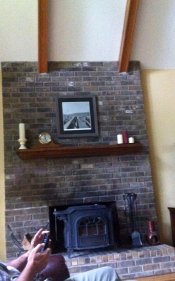
I was thinking of a print I gave my MIL and FIL for Christmas. It was about 15" square printed on 16x20 paper (Adox MCC 110) and I had it professionally mounted and custom framed. I went with anti-glare glass though I know it reduces detail some, because I didn't know where they would hang it. They hung it over their mantle. They are very pleased with it and it pleases me to see it displayed when I visit, but where it is over the fireplace (which they use for that only rarely for special occasions - not much worry about heat damage but in any case it's theirs to hang where they wish) every time I see it I also think I might as well have printed it on RC paper and saved time, water and hassle. There's no way you can get close enough to see the difference without a ladder.

This is a quick iPhone shot of it, cropped to remove a person's face.
 

Attachments

  • PhotoMantle_Cropped.jpg
    PhotoMantle_Cropped.jpg
    182.4 KB · Views: 180

Mike Crawford

Member
Allowing Ads
Joined
Aug 20, 2006
Messages
614
Location
London, UK
Format
Medium Format
Working on RC prints the same size as the final FB prints can work very well as long as they are very similar emulsions such as Ilford Multigrade FB and RC. The emulsions will of course always vary, usually only slightly, but if lots of dodging and experimenting to do, will be quicker and cheaper on RC to get the feel of the print. You then have to work out what changes to be made when switching papers but it can be enough to give you a good head start once you start on the FB. Just finished printing 20 16x20s for a client using this method and in this instance I had to add 12% to all the different exposures. However, when I opened a new box of 16x20 with a different batch number, had to work out a new percentage!
 

Vaughn

Subscriber
Allowing Ads
Joined
Dec 13, 2006
Messages
10,286
Location
Humboldt Co.
Format
Large Format
Yes, Roger, there are always exceptions. :smile:
 

cliveh

Subscriber
Allowing Ads
Joined
Oct 9, 2010
Messages
7,808
Format
35mm RF
May I ask why the OP wishes to switch to FB from RC? I have always found RC easier to work with.
 

tkamiya

Member
Allowing Ads
Joined
Oct 3, 2009
Messages
4,284
Location
Central Flor
Format
Multi Format
I struggled with this for a while, and here's what I do now.

I typically print on 11x14 FB Matte paper. To make test prints, I use cut-up version of the same paper. I make several 5x7 like size papers out of one large ones and print key areas of the image. Once I know the approximate exposure, I make one full sheet. The result is, then after 2 full sheets worth of paper, I have approximate print. I find any smaller test print didn't help me much, and without a full print at the final size, I can't plan what to do next.

It makes no sense to make test prints on RC for me because sensitivity of emulsion is different, and surface texture affects how the image will look.

There's no other way for me. It just cost more to work with FB. I like the result, so I do it.

Also, buying smaller paper makes no sense either because you'd pay more. It's more economical to buy a large sheet and cut it up for testing.
 

Pasto

Subscriber
Allowing Ads
Joined
Dec 15, 2004
Messages
865
Location
Montreal
Format
Multi Format
I use a quick FB development workflow (no washing agent and a quick 1 minute water rinse) for test sheets and strips. This brings the total time very close to that for RC prints. Once I'm happy with what I have, I'll print and develop using archival process. I typically get a print I like in 3-5 sheets, more often 5 than 3 :smile:
 

NB23

Member
Allowing Ads
Joined
Jul 26, 2009
Messages
4,307
Format
35mm
I've come to the point where one single try is perfect.
Over time you will start to see the image and what needs to
be dodged and burned by just looking at the projected negative
onto the easel. A tiny test strip will be enough for understanting the whole exposure.
 

Roger Cole

Member
Allowing Ads
Joined
Jan 20, 2011
Messages
6,069
Location
Atlanta GA
Format
Multi Format
I use a quick FB development workflow (no washing agent and a quick 1 minute water rinse) for test sheets and strips. This brings the total time very close to that for RC prints. Once I'm happy with what I have, I'll print and develop using archival process. I typically get a print I like in 3-5 sheets, more often 5 than 3 :smile:

Well yes, I do pretty much the same. There is zero reason to wash test prints and strips. In fact since I don't have running water in the darkroom I often just let prints soak in the holding bath then come back and wash them as much as a week later with no problems at all. I only use wash aid and full wash for final prints. Even so, those are a PITA. If you think it's bad in a "normal" darkroom try it without running water and with no sink large enough upstairs. I use the successive changes of still water method which works well and saves water but is a huge PITA for very many prints. Going through that for 14 prints on 11x14 paper for the Large Format Print Exchange was not an experience I hope to repeat.

Fortunately my sink is already bought and I was talking to my buddy today who is building out the basement. He's been too busy but is ready to start knocking it out again. By the end of the year if not a lot sooner I should have a full, proper, dedicated darkroom with running water again. Woohoo!
 

MattKing

Moderator
Moderator
Joined
Apr 24, 2005
Messages
55,291
Location
Delta, BC Canada
Format
Medium Format
Well yes, I do pretty much the same. There is zero reason to wash test prints and strips.

I split-tone a lot of my prints, so I do keep the test prints and strips - to be used for further testing of the split -toning.

In my mind, the biggest practical advantage of RC is the ease of drying.

I also really like the Ilford RC Cooltone - there is no Ilford FB Cooltone.
 

Roger Cole

Member
Allowing Ads
Joined
Jan 20, 2011
Messages
6,069
Location
Atlanta GA
Format
Multi Format
I also really like the Ilford RC Cooltone - there is no Ilford FB Cooltone.

Yes, I know. Sigh. I've been meaning to try Cooltone but reluctant for that reason, and also because it isn't available larger than 11x14 as far as I've seen, and I'm afraid I'd like it too much and then couldn't get it for my largest prints or in FB.

:sad:

Simon, are you listening?
 

Bill Burk

Subscriber
Allowing Ads
Joined
Feb 9, 2010
Messages
9,477
Format
4x5 Format
I've come to the point where one single try is perfect.
Over time you will start to see the image and what needs to
be dodged and burned by just looking at the projected negative
onto the easel. A tiny test strip will be enough for understanting the whole exposure.

I understand you are not joking, but are talking about what happens when you gain enough experience.

When you have very many negatives to print, you get efficient at working out what each needs.

I also try hard to conserve paper. I am sometimes lucky to get what I consider a good print from 1 sheet of paper and 1 test strip. More often it's 2 test strips and 1 sheet of paper. Occasionally 2 test strips and 2 sheets of paper. Only rarely do I put in more effort than that. Because if a particular negative is fighting me, there is always another negative more deserving of my time.
 

NB23

Member
Allowing Ads
Joined
Jul 26, 2009
Messages
4,307
Format
35mm
I understand you are not joking, but are talking about what happens when you gain enough experience.

When you have very many negatives to print, you get efficient at working out what each needs.

I also try hard to conserve paper. I am sometimes lucky to get what I consider a good print from 1 sheet of paper and 1 test strip. More often it's 2 test strips and 1 sheet of paper. Occasionally 2 test strips and 2 sheets of paper. Only rarely do I put in more effort than that. Because if a particular negative is fighting me, there is always another negative more deserving of my time.

Oh! I've had my fair share of lost hours and huge trial and error mistakes. Like when I woke up and I realized that the 20 16x20 FB prints that have dried overnight were all Garbage, thanks to the drydown that I didn't account for. A whole day lost, 200$ worth of papers lost. But with time, it got better and better. I am now at the point where printing a dozen of 20x24 takes me an evening. The road wasn't easy, though...
 
OP
OP
gmfotografie

gmfotografie

Member
Allowing Ads
Joined
Feb 6, 2013
Messages
61
Location
Austria
Format
Medium Format
gentelman, today i developed my first fb paper :smile:
i just cut a sheet into half and take the same exposure parameteres of the rc development. just to see how diffrent it is.

and it is different :smile:

my imaginary workflow for 8x10 papers:
i will do first prints on 5x7 rc papers to see how does the negative looks like on paper.
store them over the week!

at weekend i will grap out the photos and watch them a second time.

if i like a print i will enlarge it on fb paper using conventional workflow with tests strips form the same fb batch...


lets give it a try...

best michael and thank you for your great advice
 
Photrio.com contains affiliate links to products. We may receive a commission for purchases made through these links.
To read our full affiliate disclosure statement please click Here.

PHOTRIO PARTNERS EQUALLY FUNDING OUR COMMUNITY:


Ilford ADOX Freestyle Photographic Stearman Press Weldon Color Lab Blue Moon Camera & Machine
Top Bottom