
• Welcome to Photrio!
    Registration is fast and free. Join today to unlock search, see fewer ads, and access all forum features.
    Click here to sign up

Susan Sontag

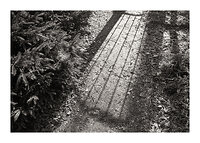
Grill

H
Grill

  • 0
  • 0
  • 26
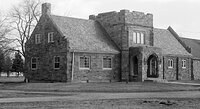
Cemetery Chapel

H
Cemetery Chapel

  • 2
  • 0
  • 53

Recent Classifieds

Forum statistics

Threads
202,775
Messages
2,845,393
Members
101,516
Latest member
DDX
Recent bookmarks
0
On the topic of photography I would choose to read both. But I would assign greater credibility to the writings of the one who had actually practiced the topic about which they were philosophizing. In general, that person's insights will be deeper and more meaningful because they are closer to the actual topic itself.

Ken


In Pandora's Camera, Joan Fontcuberta talks about optical distance in reference to how a topic is presented. When you are optically close to a subject you are able to see all sorts of different possible angles and are capable of deep insight but also blindness (eg where you aren't looking, lack of overall context). When you are optically distant there is less bias, the subject is more balanced and the context is clearer, but it is also flatter, there is less detail.

I think he would agree that a person who is closer to the actual topic may have "deeper", more nuanced insights, but that does not necessarily mean more meaningful. Distance from a topic can perhaps lend to a different kind of helpful meaning and clarity.

This thread was started saying where are Sontag's great photographs, as if one must identify oneself with that which one critiques. Must the OP publish a successful book on photography criticism before they can start a topic on Sontag?
 
Very nicely played, sir. You have my attention...

:smile:

Ken
 
I think he would agree that a person who is closer to the actual topic may have "deeper", more nuanced insights, but that does not necessarily mean more meaningful. Distance from a topic can perhaps lend to a different kind of helpful meaning and clarity.

He may be correct in the sense that ignorance (in its non-pejorative sense) may to a certain extent inoculate one from the disease of group-think. If one is ignorant of what the herd is seeing and thinking, one may be more free to seek what they are not seeing and thinking.

Of course, this then implies that shallower, more distant, and less nuanced knowledge of a subject leads to better insights into that subject. I'm not sure that can or will ever be the general rule. But I could see it occasionally being a valid exception to the rule.

Ken
 
I would much prefer to have had a conversation about photography with someone like Eugene Atget than Susan Sontag.
 
I don't think I'd like to have a conversation with Sontag at all. Her style and approach left me cold. What could be gained? Would anything help your photography? Or would it be like asking a millipede how it can walk without tangling up its legs, causing it to think about it, and never walk again?
 
Of course, this then implies that shallower, more distant, and less nuanced knowledge of a subject leads to better insights into that subject. Ken

I'd say different insights. Just to go back to the original analogy, a surgeon is the one you want doing surgery. But doing is a different skill from writing, writing is a different skill from teaching, teaching is a different skill from critiquing, critiquing is a different skill from persuading, persuading is a different skill from comforting. You have all these different types of "distance" to the topic of surgery and they each come with different (potentially) valuable perspectives on it.
 
Of course, this then implies that shallower, more distant, and less nuanced knowledge of a subject leads to better insights into that subject. I'm not sure that can or will ever be the general rule. But I could see it occasionally being a valid exception to the rule.

Ken

Hence the occupation of "consultant".
 
Or would it be like asking a millipede how it can walk without tangling up its legs, causing it to think about it, and never walk again?

I've never heard that phrase. Very interesting.

To piggy-back on my last post, would it be helpful to ask a surgeon to think deeply on the philosophical implications of brain surgery? If he tried doing them at the same time perhaps it would be like the millipede. But otherwise I think you would just have a philosopher in addition to having a surgeon (both hats having very different insights on the same topic, different "distances").
 
Last edited by a moderator:
They only seemed a majority because of their propensity to be aggressive and activist. In actuality, the reason they are so militant is because they are quietly avoided, which isolates them to inbreed their views amongst themselves, which makes them even more as they are.


That is characteristic of so many areas and issues in society today and we are not better for it. The tail wags the dog.

As for photography, the first photographer I admired and paid attention to was Andreas Feininger.
 
Besides "On Photography", another book where the title was so much better than the content, was "Zen and the Art of Motorcycle Maintenance".

Kind of a spooky book that I also read as a teenager. There were about 30 pages midway where his spiral of madness about "quality" and "rhetoric" took the reader down with him. Surprised I didn't just toss the book then and there - especially because I actually hoped it was about motorcycle maintenance.

Quality is pride of workmanship.
 
I would much prefer to have had a conversation about photography with someone like Eugene Atget than Susan Sontag.

Then buy his book.

If someone reads a book and doesn't like it, maybe just move on.

Pick the opinions we like and discard the rest.
 
The best film critics and art critics are not filmmakers and artists themselves. Why in the world would anyone insist otherwise for photography?
 
Google books is fairly generous in the preview.

On Photography (preview)

My immediate reaction is that she may be right - about other photographers but... she's misread me.

She says all photographs are memento mori.

Maybe the last dozen years I may have been taking photographs to capture subjects I consider fleeting. Or if they themselves are not fleeting, I might be...

But I know that had nothing to do with the photography I did when I was younger. I had no feeling of mortality. The world I was part of seemed like it would go on forever. I did a lot of stupid things, like I didn't take enough pictures...
 
Haa APUGuser19, Before this thread, I thought she was blonde...
 
CropDusterMan,

Actually, I think you have a good idea for a new thread... Who would you want to talk with about photography...
 
Funny you should asked...I got to talk to Apollo 13 Commander Jim Lovell about lunar photography
and the Hassies they used on the moon. It was a great experience.Notice the avatar?
 
CropDusterMan,

Actually, I think you have a good idea for a new thread... Who would you want to talk with about photography...

I can see it now: Susan Sontag on one end and Ken Rockwell on the other.
 
Must have been fun... in my work I occasionally get to talk with the author of this book... Always fun when we get sidebar conversations while waiting for other tasks to get done...

Apollo Guidance Computer
 
Looks like a good read. Another is "Moon Lander" by Tom Kelly, lead Grumman engineer.
 
Photrio.com contains affiliate links to products. We may receive a commission for purchases made through these links.
To read our full affiliate disclosure statement please click Here.

PHOTRIO PARTNERS EQUALLY FUNDING OUR COMMUNITY:


Ilford ADOX Freestyle Photographic Stearman Press Weldon Color Lab Blue Moon Camera & Machine
Top Bottom
