
-
Welcome to Photrio!Registration is fast and free. Join today to unlock search, see fewer ads, and access all forum features.Click here to sign up
You are using an out of date browser. It may not display this or other websites correctly.
You should upgrade or use an alternative browser.
You should upgrade or use an alternative browser.
Susan Sontag
-
A
- Thread starter cliveh
- Start date
Recent Classifieds
-
For Sale Graflex Speed Graphic 4x5
- Started by braxus
-
Sold GONE! Goerz 6" Apochromatic Artar lens in Rapax Shutter.
- Started by AnselMortensen
-
Sold GONE! : Wollensak 3.5" Extra Wide Angle 4x5 lens in Alphax Shutter.
- Started by AnselMortensen
-
For Sale Leica M4 Chrome Camera Body ***MINT***
- Started by samuelphoto
-
Sold GONE! RolleiMagic TLR Camera
- Started by AnselMortensen
Forum statistics

OP
OP

- Joined
- Oct 9, 2010
- Messages
- 7,864
- Format
- 35mm RF
Ah the stale fallacy of "you can only talk it if you've done it" rears up once again ...
Please explain why you think this is a stale fallacy.
Search for her name at Amazon or any other online bookseller.

It's not usually required to have written a novel in order to talk about one, only that you have read it. Likewise movies and music and on and on.

Where can I find a book of images by Susan Sontag? She must have done one to make such a critique of images by others!
What are you referring to?

Almost anyone can write a book on almost anything. Sontag, for example. Since she had already established a following for previous writing, she could not only write on photography, but sell those books. I had to read her On Photography in a college class 45 years ago, and haven't forgiven her to this day.
- Joined
- Mar 20, 2011
- Messages
- 402
- Format
- Med. Format RF
Excuse me for being obtuse, but i thought Apug is only a technical chat room. I would never think that here at apug we would discuss various theories or different conceptual models of what photography is, let alone what art is. Apug is set up for time/temp/ chemistry and how to fix your cameta or how to use a camera.
W
W
Well half way through one of her writings I stopped.
I realised she was vomiting food she had just eaten with no 'taste'.
I'm not saying she had or might not have taken fine art photos either...
Or that it was badly written.
The clue is I read abnormally
The text
Excuse me for being obtuse
I read as
Excuse me for being deliberately obtuse as I don't read text left to right cause I'm profoundly dyslexic.
I realised she was vomiting food she had just eaten with no 'taste'.
I'm not saying she had or might not have taken fine art photos either...
Or that it was badly written.
The clue is I read abnormally
The text
Excuse me for being obtuse
I read as
Excuse me for being deliberately obtuse as I don't read text left to right cause I'm profoundly dyslexic.
Last edited by a moderator:


- Joined
- Feb 9, 2010
- Messages
- 9,525
- Format
- 4x5 Format
Excuse me for being obtuse, but i thought Apug is only a technical chat room.
gzinsel,
You're funny.
- Joined
- Feb 9, 2010
- Messages
- 9,525
- Format
- 4x5 Format
Pretty sure Susan only wrote about photography mate.
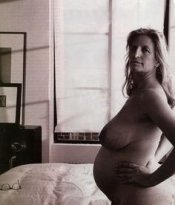
She did take this one though...it was her partner, Annie L.
We should all have partnerships like that... One who writes about photography and one who does it... This was one relationship I could see being great for photography.
- Joined
- Feb 9, 2010
- Messages
- 9,525
- Format
- 4x5 Format
thats pretty good,,xmas!! i'm impressed, for real ( no sarcasm) honestly. well played. IF you ever come to Milwaukee, I will buy ya a beer!!!
I keep meaning to make a pilgrimage to Wisconsin, the hub of humanity...
Society of Milwaukee Artists

Pioneer
Member
We have so much trouble agreeing about gear and development that it would become a huge mess if we even considered philosophy or art.
We just leave that to philosophers and artists!

We just leave that to philosophers and artists!
We should all have partnerships like that... One who writes about photography and one who does it... This was one relationship I could see being great for photography.
Apparently Susan had a big impact on her and her work...Leibovitz once said she made her a better photographer.

I read On Photography last year. All I recall is it seemed dated and stodgy. Nothing memorable. I was very disappointed. I was expecting more. Threw the book out when done.

- Joined
- Jul 31, 2012
- Messages
- 3,452
- Format
- 35mm RF
Apparently Susan had a big impact on her and her work...Leibovitz once said she made her a better photographer.
The wind could make Leibowitz a better photographer.
Never cared much for Sontag either.
Please explain why you think this is a stale fallacy.
Stale because so often repeated, despite the fallacious nature of the beast.
A fallacy, because ... well, consider the following absurd statement: "Clive's opinions of Susan Sontag have no value, interest or validity because he has never written a book called 'On Photography' authored by Susan Sontag"
Or perhaps, this one: "pdeeh's opinions of Clive's book of photographs have no value, interest or validity because he has never published a book of photographs"
Or perhaps "No one who makes a value or critical judgment of a human endeavour has any right to do so unless they themselves have practised that same endeavour, and unless they have done so, any opinions they express are without value, interest or validity".
As for the book itself, I thought it was as lively as you could expect a 1970s "academic" text to be, I thoroughly enjoyed reading it, and I thought she was spot on about many things. Her comments in the later chapters regarding public scrutiny look remarkably prescient in the light of the amount of camera surveillance we are al subject to in the UK.
I disagreed with a few things she had to say, and thought some others were plain wrong.
But, frankly, anyone who reads a book and thinks it bad because they disagree with it in some way would be suffering from a failure of critical insight on their own part.
Every time the subject of Sontag comes up, the same reactionary bollocks is trotted out, but then APUG is the home of photographic orthodoxy so perhaps that is to be expected.

Or perhaps "No one who makes a value or critical judgment of a human endeavour has any right to do so unless they themselves have practised that same endeavour, and unless they have done so, any opinions they express are without value, interest or validity".
However, if one simply substitutes the phrase "credibility" for "value, interest or validity", then the statement is no longer absurd. The difference in credibility between talking about what it might be like to do something and actually doing it can be vast.
They have the right to say whatever they want to say. But they don't have the right to demand that everyone listening believes what they say. Credibility is an audience judgment call that is completely out of their hands.
I pose a question to two individuals standing before me. What is it like to be incarcerated in prison?
One of those individuals is an academic whose field of expertise is to study incarceration in prisons. He is considered an expert in his field, having devoted his life to researching the subject.
The other individual was just released after serving a 25-year sentence in a maximum security penitentiary, including several years in solitary confinement.
Listening to their respective observations, to whom would you afford the greater level of credibility?
Ken
Thanks for offer if you are in London...thats pretty good,,xmas!! i'm impressed, for real ( no sarcasm) honestly. well played. IF you ever come to Milwaukee, I will buy ya a beer!!!
I think it is really Annie's book and Susan was a ghost that explains why I stopped, Annie has a personality defect, rather than Susan...
- Joined
- Jan 8, 2011
- Messages
- 3
- Format
- 35mm
Prison is a 'black box', photography is not. So your hypothesis is not perfect analogical thus faulty.However, if one simply substitutes the phrase "credibility" for "value, interest or validity", then the statement is no longer absurd. The difference in credibility between talking about what it might be like to do something and actually doing it can be vast.
They have the right to say whatever they want to say. But they don't have the right to demand that everyone listening believes what they say. Credibility is an audience judgment call that is completely out of their hands.
I pose a question to two individuals standing before me. What is it like to be incarcerated in prison?
One of those individuals is an academic whose field of expertise is to study incarceration in prisons. He is considered an expert in his field, having devoted his life to researching the subject.
The other individual was just released after serving a 25-year sentence in a maximum security penitentiary, including several years in solitary confinement.
Listening to their respective observations, to whom would you afford the greater level of credibility?
Ken
I don't think that writing a book on the philosophy of photography is something that a photographer by default can do, only because he can take a well composed and exposed photograph. In many cases photographers cannot conceive the impact of their work, let alone have an opinion on the large scale meaning of what they do.
For example is Terry Richardson more capable than Sontag in writing on the philosophy of photography just because he is a photographer? I think not.

If I was a student of yours Clive I'd be a bit worried that a tutor in photography didn't know the answer already!
Where can I find a book of images by Susan Sontag? She must have done one to make such a critique of images by others!

At the time that it was published, On Photography (which is a collection of essays she wrote for the New York Review of Books) offered a new way to consider photography. One key element of her many interrelated arguments was that the proliferation of photography was causing people to replace participation in, or appreciation of, an event with the act of photographing. Given that (according to Facebooks statistics for 2013) Facebook users have uploaded more than 250 billion photos, and are uploading 350 million new photos each day, she surely had a point and foresaw this development before the arrival of digital and smart phones.
That her writings have become dated is clear and understandable given that they were published nearly 40 years ago. Susan Sontag herself refuted many of her opinions in the last book she published Regarding the Pain of Others in 2003 shortly before her death. The two books together do give an interesting way to interpret photography and, as such, remain worthwhile reads in my opinion.
Another book written by a non-photographer that is a very interesting read and alternative journey through photographys history is The Ongoing Moment by Geoff Dyer. Well worth reading as a fresh way to interpret well known images by established photographers.
Whilst the books of Sontag, Dyer, Barthes, Szarkowski, Barrett, Shore, Adams (Robert), Benjamin, Goldberg, Hershberger, etc probably havent influenced how and what I photograph, they have definitely had an influence on how I think about photography as a medium.
Clive's implication that Susan Sontag was not qualified to comment on photography because she wasn't a photographer is wrong simply because there are many people who can bring a fresh interpretation of the role of many activities in the world (photography included) despite not being active in the medium that they comment on. Also, even when people (such as John Szarkowski and Robert Adams) do practice the medium, it is often the case that their insights on the medium have far more value to me than the photographs that they produce. Suggesting that you need to be a photographer to comment on photography is a bit like signing up for the old statement that "those who can do, those who can't teach". There have been many great teachers of photography who were also excellent photographers. When I studied at the Polytechnic of London, there was a teacher of photographic chemistry and technique who could not take a decent photograph to save his life. Nevertheless, we all appreciated his extensive knowledge and ability to simply explain how to use liquid emulsion, vary processing procedures, make bromoils, carbon transfers or just make plain straight forward silver gelatine prints with as little waste as possible.
Bests,
David.
www.dsallen.de
That her writings have become dated is clear and understandable given that they were published nearly 40 years ago. Susan Sontag herself refuted many of her opinions in the last book she published Regarding the Pain of Others in 2003 shortly before her death. The two books together do give an interesting way to interpret photography and, as such, remain worthwhile reads in my opinion.
Another book written by a non-photographer that is a very interesting read and alternative journey through photographys history is The Ongoing Moment by Geoff Dyer. Well worth reading as a fresh way to interpret well known images by established photographers.
Whilst the books of Sontag, Dyer, Barthes, Szarkowski, Barrett, Shore, Adams (Robert), Benjamin, Goldberg, Hershberger, etc probably havent influenced how and what I photograph, they have definitely had an influence on how I think about photography as a medium.
Clive's implication that Susan Sontag was not qualified to comment on photography because she wasn't a photographer is wrong simply because there are many people who can bring a fresh interpretation of the role of many activities in the world (photography included) despite not being active in the medium that they comment on. Also, even when people (such as John Szarkowski and Robert Adams) do practice the medium, it is often the case that their insights on the medium have far more value to me than the photographs that they produce. Suggesting that you need to be a photographer to comment on photography is a bit like signing up for the old statement that "those who can do, those who can't teach". There have been many great teachers of photography who were also excellent photographers. When I studied at the Polytechnic of London, there was a teacher of photographic chemistry and technique who could not take a decent photograph to save his life. Nevertheless, we all appreciated his extensive knowledge and ability to simply explain how to use liquid emulsion, vary processing procedures, make bromoils, carbon transfers or just make plain straight forward silver gelatine prints with as little waste as possible.
Bests,
David.
www.dsallen.de
| Photrio.com contains affiliate links to products. We may receive a commission for purchases made through these links. To read our full affiliate disclosure statement please click Here. |
PHOTRIO PARTNERS EQUALLY FUNDING OUR COMMUNITY:  |