
• Welcome to Photrio!
    Registration is fast and free. Join today to unlock search, see fewer ads, and access all forum features.
    Click here to sign up

Strange washed out effect on a pulled TMax

Recent Classifieds

Forum statistics

Threads
201,769
Messages
2,829,844
Members
100,936
Latest member
rdbirt
Recent bookmarks
0

macfly

Member
Allowing Ads
Joined
Nov 20, 2017
Messages
4
Location
Austria
Format
35mm
Hello guys,
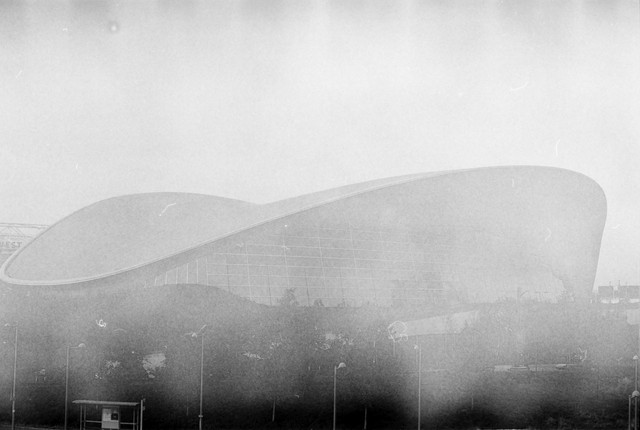
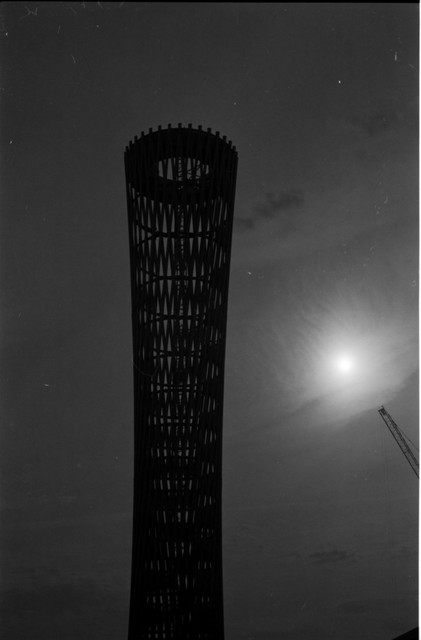
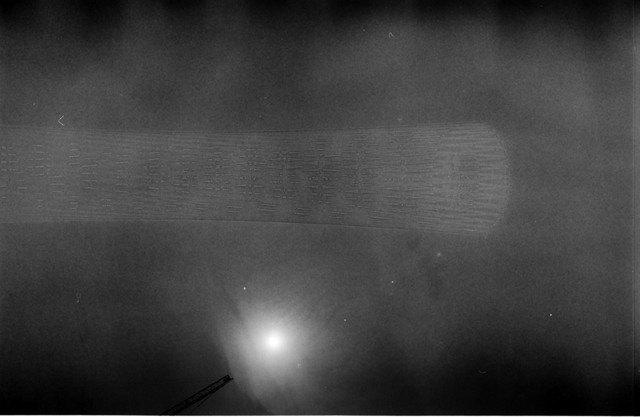
I recently received my B&W developer kit (Rodinal), and I tested it yesterday successfully with a Tri-X 400. Everything was perfect. Today however when I tried to develop a roll of T-Max 400 which was accidentally shot at 100, I got some strange results. (See the pictures)
I followed the instruction by Digitaltruth, which says 3.75 mins at 20C.
Now here are the things where I suppose I could have caused this effect:
1. The water I used was different, the Tri-X was developed at my pal's
2. I couldn't set the temperatures precisely, especially when rinsing.
3. I reused my ADOFIX PLUS rapid fixer from yesterday
4. Agitation was different, 60secs at the beginning after that 10sec every 30sec (yesterday 60sec at the beginning after that 10sec every minute)
5. Maybe the film was exposed when I opened the cartridge? I did it in darkness but it wasn't the same room, however I am 100% sure that it was absolutely dark in there

I fixed the film for 5 minutes
Please help me, I have absolutely no I idea how I got here. Ask me if you need more details.
Thanks
Tamas
040.jpg

041.jpg

045.jpg
 

Anon Ymous

Member
Allowing Ads
Joined
Feb 7, 2008
Messages
3,679
Location
Greece
Format
35mm
I'd say insufficient fixing. Refix your film and you'll probably be fine.
 

winger

Subscriber
Allowing Ads
Joined
Jan 13, 2005
Messages
3,980
Location
southwest PA
Format
Multi Format
With a short development time (any under about 6 minutes), you're at more of a risk of uneven development. That could be what happened. It also might need to be refixed for longer. The T grain films need longer fix times. 5 minutes might have been ok, but I don't know what the usual times are for Adofix - I use Ilford rapid fixer and I fix non T grain films for 3-4 minutes and T grain films for 6-7 minutes. With 35mm, you could have used the piece of the leader you cut off to get it on the reel and dipped that in the fixer, timed it to clear and then used double that.
 
OP
OP

macfly

Member
Allowing Ads
Joined
Nov 20, 2017
Messages
4
Location
Austria
Format
35mm
Thank you for your answers. I'll try tomorrow to fix it again. I'll do the test with the leader, thanks for the advice. Am I right that Adofix is reusable? I mixed it 1:9
 

Anon Ymous

Member
Allowing Ads
Joined
Feb 7, 2008
Messages
3,679
Location
Greece
Format
35mm
Let me elaborate a bit more why I think it's a fixer problem. Judging from your images, the lightest parts of the positive image are towards the center of the film. Lightest means denser at the negative. Development, as well as fixing, progresses from the edge towards the center of the film. The pattern at your photos is typical for underfixed film, you can notice it yourself if you fix a film clip in a graduate. So, if the center of the film is denser, then it's probably fixed for too little time. And it can get even worse if your fixer is also too cold.

Now, regarding development time, 3:45 is low. It's not only that it can lead to uneven development, but it's just unreasonably low. The massive dev chart page for this combination lists several times and the one for EI400, Rodinal 1+50 is 12'. The one for EI200 is 8'. If 12' is correct, then 8' is a 33% reduction for a 1 stop pull, probably a bit on the low side. 3:45 for a two stop pull sounds just weird. Seriously, don't take the times in the massive dev chart as necessarily correct, anyone can submit his own and they're not necessarily verified. Regardless of that, I'd also have to say that a 2 stop overexposure isn't a disaster, especially with this film. You could process it normally and get away with it. Cutting down development by 25% would probably be the best approach.

Adofix, and fixers in general, are reusable, but the 1+9 dilution might be weak, with 1+4 being best suited for film. If you use the 1+9 dilution, fixing time will be greater, but I have no idea what it should be.
 

Old-N-Feeble

Member
Allowing Ads
Joined
Feb 22, 2012
Messages
6,805
Location
South Texas
Format
Multi Format
re-fix
 

Gerald C Koch

Member
Allowing Ads
Joined
Jul 12, 2010
Messages
8,131
Location
Southern USA
Format
Multi Format
The title of the thread says everything. You pulled the film! In case you missed the thread of a few days ago the latitude of most B&W film is from 4-1/2 stops over-exposed to 1 stop under-exposed. Exposing Tmax 400 at an EI of 100 means that it is over-exposed by two stops. You should have developed the film normally. The negatives are a bit denser than usually but will still print correctly when given more exposure. Pulling a film reduces its contrast and leads to dull negatives.
 
Last edited:

Sirius Glass

Subscriber
Joined
Jan 18, 2007
Messages
50,814
Location
Southern California
Format
Multi Format
Refix and next time do not shorten development below four minutes for black & white ever unless you wan to match this roll.
 

jimjm

Subscriber
Allowing Ads
Joined
May 2, 2007
Messages
1,239
Location
San Diego CA
Format
Multi Format
As others have mentioned, a few different things probably contributed to your results:
- Too short a development time: anything under 5 mins will often be uneven and unpredictable, especially if the developer temp is inaccurate. User a higher dilution to lengthen the time.
- 10 sec every 30 sec is waaaaay too much agitation. This will contribute to the surge marks that you see, especially in the last 2 shots. I agitate TMax400 in Rodinal (Adox) 1+50 for the first 30 sec, then 5 sec each min.
- As long as you know your developer temp, it's not hugely critical for the stop, fix and wash to be exactly the same (for B/W). I try to keep them all within a few degrees of each other, but with B/W film you could probably get away with 5 degrees (F) or more variation.
- TMax films are especially tough on your fixer, and will exhaust it quicker than other films. 5 min fix time sounds too short, even with fresh fixer. It's OK to re-use fixer, just keep track of how many rolls have been processed and lengthen your fixing times as you process more film.

B/W film can handle 1 or 2 stops overexposure very easily. I routinely shoot TMax400 at ISO 200 and use the normal development times. The negatives are a bit denser, but I like the way they print. At ISO 100, I would probably shorten dev time by no more than 10%.

Your development time also seems too short. I normally develop TMax400 in Rodinal (1+50) @ 20c for 11 min. Never trust times recommended by online resources like Digitaltruth (Digital?). MassiveDevChart is another one that is next to worthless. Use the manufacturer's recommended times, which are available both from Adox and Kodak.

Don't get frustrated though, just use consistent processes and follow proper times/temps and you'll get good results 99% of the time.
 
Last edited:

bernard_L

Member
Allowing Ads
Joined
Feb 17, 2008
Messages
2,132
Format
Multi Format
Exposing Tmax 400 at an EI of 100 means that it is over-exposed by two stops. You should have developed the film normally.
+1 !!
So many people are confused about the relation between reduced dev time and over exposure.
IF the scene dynamic range is large THEN you need to reduce dev contrast and therefore time AND to compensate for reduced shadow sensitivity by increased exposure. That is correct.
Repeatedly this reasoning is flipped around, and, when the film has received more than nominal exposure, people think they must reduce dev time. But the same issue will keep coming up.
 
OP
OP

macfly

Member
Allowing Ads
Joined
Nov 20, 2017
Messages
4
Location
Austria
Format
35mm
Thank you so much for your answers and explanations. I lernt so much, and next time I’ll follow these suggestions. As soon as I get home I’ll try to re-fix, and I’ll update the results (fingers crossed)
 

bernard_L

Member
Allowing Ads
Joined
Feb 17, 2008
Messages
2,132
Format
Multi Format
2. I couldn't set the temperatures precisely, especially when rinsing.
Temperature is important. Developer temperature should be controlled to (in round numbers) 1°F or 0.5°C. To within a few degrees for subsequent steps, as modern films are more resistant to reticulation than it used to be.
For development, a 4°C increase is (roughly) equivalent to +50% dev time.
Eliminate variables, for example but not only, keep the same agitation schedule.
 

Sirius Glass

Subscriber
Joined
Jan 18, 2007
Messages
50,814
Location
Southern California
Format
Multi Format
For color work the temperature of the developer has an effect on the colors. If the developer temperature of off even a few degrees that colors get messed up.
 

MattKing

Moderator
Moderator
Joined
Apr 24, 2005
Messages
55,143
Location
Delta, BC Canada
Format
Medium Format
online resources like Digitaltruth (Digital?). MassiveDevChart is another one that is next to worthless.
To the OP: These two originate from the same organization. And you have to understand them very well to get good use from them.
More importantly though, I'm guessing that you posted is a scan from the negatives. When you post scans, what we see is often the scanner and the scanning software as much as the negatives themselves.
It is much better to post backlit photos of the negatives themselves.
 
OP
OP

macfly

Member
Allowing Ads
Joined
Nov 20, 2017
Messages
4
Location
Austria
Format
35mm
Guys,
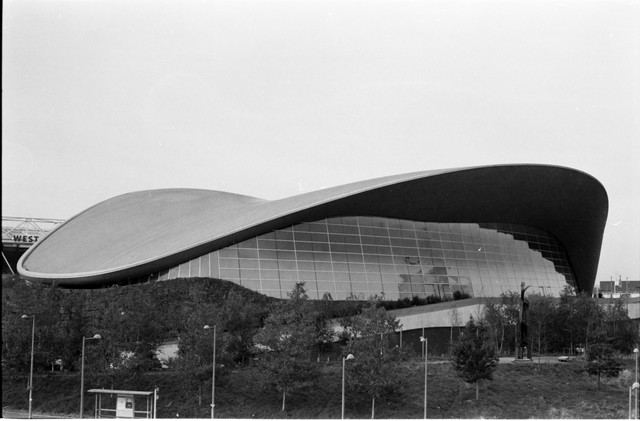
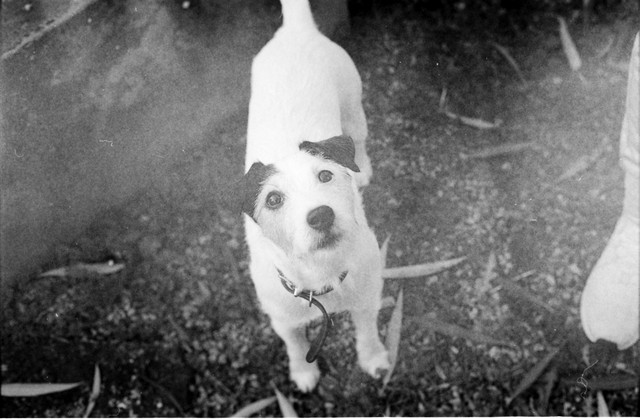
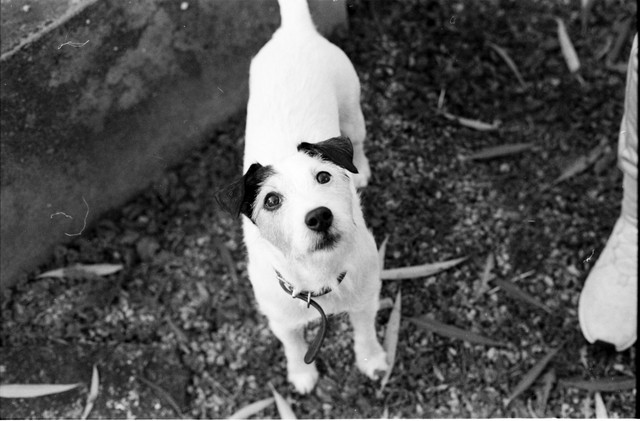
You saved my photos. Thanks again for the knowledge and the tips, I think I've learned a lot. I put the negs into the fixer for 10 mins (same fixer, the 1+9 one I mixed on sunday, but this is probably the end of its career :smile: ) and it worked like a charm. I noticed the negative had lost its purple hue, it's pretty clear now. (Sorry for the dirty scans, getting clean results is my new challenge :smile: )
Thanks!

001.jpg

002.jpg

006.jpg
 

Sirius Glass

Subscriber
Joined
Jan 18, 2007
Messages
50,814
Location
Southern California
Format
Multi Format
Fixer can be used more than one or a few times. Look at the instructions and it will tell you the fixer [hypo] film or paper capacity.
 
Photrio.com contains affiliate links to products. We may receive a commission for purchases made through these links.
To read our full affiliate disclosure statement please click Here.

PHOTRIO PARTNERS EQUALLY FUNDING OUR COMMUNITY:


Ilford ADOX Freestyle Photographic Stearman Press Weldon Color Lab Blue Moon Camera & Machine
Top Bottom