• Welcome to Photrio!
    Registration is fast and free. Join today to unlock search, see fewer ads, and access all forum features.
    Click here to sign up

Strange line across negative

Synchronized pool cleaners

A
Synchronized pool cleaners

  • 0
  • 0
  • 0
Dog

A
Dog

  • 4
  • 3
  • 36

Recent Classifieds

Forum statistics

Threads
202,988
Messages
2,848,472
Members
101,583
Latest member
Hendrik
Recent bookmarks
0

Joel_L

Subscriber
Joined
Mar 12, 2011
Messages
584
Location
Colorado
Format
Multi Format
Hi,

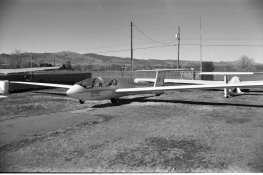
I was out shooting with an F1 I recently got and noticed this strange light line across my negatives near the top ( fairly faint ). I use a squeegee on my film and have never scratched a negative Though this would not be a scratch, is it possible to smear emulsion and not scratch it ( not sure that makes clear what I'm thinking ). When I look at the negative with a loupe, I can see the very fine dark line going across the frame. This shows up on many of the frames. The only thing I'm doing different from the past is I have been trying XTOL instead of HC110 with my FP4+. Any ideas?

Thanks

Joel
 

Attachments

  • Grob.jpg
    Grob.jpg
    222.7 KB · Views: 290
It almost looks like a water mark, were water has dried on the film surface and left some mineral deposit of some sort.


Mike
 
If you look close, one end is at an angle and the other is straight up and down. I doubt this is a scratch. It is very strange. I am gobsmacked.
 
I think its a drying mark too.
 
Rewash or photo-flo your film. I actually prefer a lower dilution of photo-flo, something like 8ml to 2000ml.
 
I second the drying mark theory. I find this a problem if you use recommended concentrations for wetting agents in the final rinse, or the stabilizer solution for C41 that comes in various kits. I also use much lower concentrations.
 
Looks like a drying mark to me as well. I am guessing that it could possibly have been complicated by the squeegee if it left a "ridge" of water.
Even though you've never scratched a neg with it, it's inviting trouble, especially for 35mm.
As for smearing the emulsion, I've never seen that happen, it could if your wash temp is very high, I suppose, but it's unlikely at normal temps for products like Ilford and Kodak.
 
I agree with water marks. Rewash using distilled water and just a few drops of Photo-flo concentrate per roll of film. If you see foam, there's too much.
Sometimes it helps to make sure they don't dry too fast. The water needs time to roll down and off, but if they're in a dry place (typical in winter), then it might not roll off quickly enough and you get marks because it dries in place. I also agree that a squeegee is asking for problems. I let mine dry hanging in a shower right after I run hot water to make some steam in it. It helps to get the dust out of the air as well as letting the film dry more slowly.
 
Hi,

I went back and rewashed the film using my tank and the line was still there. I washed it again using my fingers and some soap ( seems a bit aggressive but I wasn't too concerned with potentially losing the negative ). Anyway, after washing it this way, I stuck it back into the photo flow and let it dry ( no squeegee last two times ) and all is well, the line is gone. I do as many suggest and not use too much photo flow, typically a few drops into my tub which is 500ml or so. Anyway, good call, it seems it was a drying mark that I was able to remove. I'll have to rethink the squeegee, I have always used it because it seems to reduce such issues. In Colorado it is very dry and I have gotten large water spots before. Maybe I'll revisit building a film drying cabinet where I can better control the drying.

Thanks

Joel
 

Attachments

  • clean.png
    clean.png
    816.4 KB · Views: 158
Without doubt water spots have been my biggest PITA with any darkroom activity. I've tried every damn thing, now I just use distilled water for a final rinse and no Photo Flo at all.
 
Rewash in PhotFlo and ditch the squeegee.
 
second photo is also missing a dust spot or two. I am rather nervous about using a squeegee as it is so easy for C.R.U.D.* to become trapped on the surface that touches the film.

(* AKA Chalk River Unidentified Deposits - Our water supply is downriver from the Chalk River Laboratories) ( http://en.wikipedia.org/wiki/Crud )
 
Dust is a big problem for me when I scan. I use an Epson V700. I can see the dust floating right for the negs as I close the lid. Very hard for me to get a dust free scan.

Joel
 
Yep, 1:400 for photo-flo is more appropriate in my opinion. Do not fast dry film, heat dry film, squeegee it etc. Just use the water+pflo and let it be.
 
When I got my Mamiya RB67 medium format camera years ago, I was really excited after taking my first roll of 120 color film. When the negatives and contact print came back from the lab, there was this light, curved red line that extended rather obliquely from the left top to the bottom right. On every shot! Revealing my disgust to my wife, it suddenly hit me. So I grabbed the camera, remove the film holder on the back and slide off the dark slide. And there, stuck between the top and bottom opening was one of my wife's beautiful red hairs!
 
I used to use a squeegee, but after a while the inevitable happened - a long scratch. Now I used a well laundered quality micro-fibre cloth, and carfully wipe in one slow motion down the length of the film. No scratches and rarely any dust.

Some people use a chamois leather, but I found the one I tried left heaps of dirt on the negs.
 
Imho all wetting agents are not born equal :
if you replace your Photoflo with Ilford's Ilfotol you might notice a spectacular improvement in the cleanness of your negs... :whistling:
 
I've found that mixing photo-flow by drops can be very hit or miss, it's not very precise for the small quantities and very easy to get too much.
My preference is to take a gallon of distilled, and put in 1/200 gal (19 ml) (or less) of photo flow concentrate and use it from the mixed stock solution. Just make sure to mark the jug.
 
Adding single drops of liquids is simple with a tapered-tip squeeze-bulb medicine dropper. These are inexpensive and stocked at most drug stores.
 
I've found that mixing photo-flow by drops can be very hit or miss, it's not very precise for the small quantities and very easy to get too much.
My preference is to take a gallon of distilled, and put in 1/200 gal (19 ml) (or less) of photo flow concentrate and use it from the mixed stock solution. Just make sure to mark the jug.

Bingo, the man understands how to properly mix chemicals rather than play with a dropper.
 
Or you can use a plastic syringe : a 1 ml one for small tanks (2 reels / 600 ml) or a 10 ml one if you have one of these big (8 reels / 2400 ml) Paterson plastic tanks.

With Ilfotol 1:200 you need 3 ml of the stuff for a small tank, 12 ml if like me you use a big one. A syringe will give an exact measure every time.
 
I've found that mixing photo-flow by drops can be very hit or miss, it's not very precise for the small quantities and very easy to get too much.
My preference is to take a gallon of distilled, and put in 1/200 gal (19 ml) (or less) of photo flow concentrate and use it from the mixed stock solution. Just make sure to mark the jug.

This works even better if you replace some of the distilled water with isopropyl alcohol.

Stops mould growth.

My approach is to make up a stock solution of 30 ml of Photoflo concentrate plus 210 ml of 70% isopropyl alcohol.

I then dilute the stock solution 1 + 24 with tap water immediately before use (use distilled water if you wish).

Both dilutions are relatively easily done to a reasonable level of accuracy.

And the highly diluted alcohol helps the negatives dry quickly.
 
But not as quickly as dipping the film in methalayted spirits and setting fire to it as they used to do in Fleet street when they needed a print sharpish....

I do not recommend this method of film drying on any level !

Simon ILFORD Photo / HARMAN technology Limited :
 
Photrio.com contains affiliate links to products. We may receive a commission for purchases made through these links.
To read our full affiliate disclosure statement please click Here.

PHOTRIO PARTNERS EQUALLY FUNDING OUR COMMUNITY:


Ilford ADOX Freestyle Photographic Stearman Press Weldon Color Lab Blue Moon Camera & Machine
Top Bottom