• Welcome to Photrio!
    Registration is fast and free. Join today to unlock search, see fewer ads, and access all forum features.
    Click here to sign up

Strange Light Leaks, Ilford HP5

Recent Classifieds

Forum statistics

Threads
202,944
Messages
2,847,902
Members
101,549
Latest member
mennojim
Recent bookmarks
0

Nikanon

Member
Allowing Ads
Joined
Jul 11, 2009
Messages
433
Location
Chugwater, Wyoming
Format
35mm RF
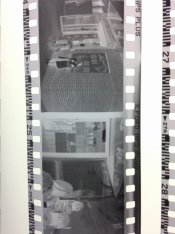
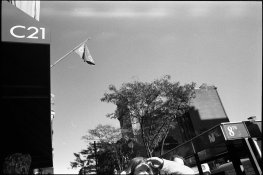
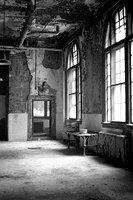
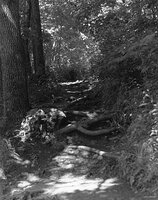
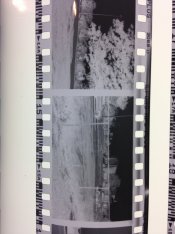
I recently developed a roll of Ilford HP5 from my Leica M4-P which has NEVER had a problem with light leaks and by design I would not expect it to, that had strange light leaks mostly in the margin, but did leak in to the frame on many frames and has ruined most of the roll this way. I was wondering if anyone could help me identify the source or if they have seen this issue. Part of me thinks it was possibly from the canister or maybe even when the film was being handled in the factory. The most dense parts of the exposure occur towards the end of the roll, which would be consistent with an in-camera leak occuring before the film was rewound but after it was all shot. Take a look and see what you think.
 

Attachments

  • IMG_5863.JPG
    IMG_5863.JPG
    199.3 KB · Views: 515
  • IMG_5865.JPG
    IMG_5865.JPG
    188.4 KB · Views: 418
  • IMG_5864.JPG
    IMG_5864.JPG
    171 KB · Views: 544
  • PPD020.jpg
    PPD020.jpg
    310.5 KB · Views: 358
  • PPD021.jpg
    PPD021.jpg
    321.2 KB · Views: 404
My guess is it's the seals on the camera.
 
Wish I could answer this. I have the M2, which is similar, and have used a fair share of HP-5 and never had or seen this problem. Hopefully, someone will be able to nail the problem. Off the cuff, I almost think it could be the camera.

In retrospect, perhaps not the camera. Had the dark streaks on the negative been at the bottom I'd be more inclined to think camera-perhaps with the base not securely locked.
 
Looking at my M2 there are no seals where those leaks are at the top of the negative. The only seals I see when you have the back up as to load film are to the right and left-vertical strips of foam.
 
They are on the bottom. (that is, the image is inverted in the camera). Checking that the base was fitted correctly and that there is no distortion or obstruction in the film door would be a good place to start.
 
It seems I've read within the last month or so someone else having problems with HP-5 and leaks but I can't if it was this forum or another. I do recall once a mistake I made with the initial loading and didn't notice I had the bottom flap(for lack of a better word) on the outside of the base plate instead of inside. I didn't notice it until the 6th shot. Of course, after that I took it into the dark, took base plate off and reinserted properly. Still, after I developed the film the first 6-7 shots were light struck even more than what's shown.
 
It's obviously a light leak fogging the film, from where is difficult to say. One edge of the film cassette, camera light seal, leaky shutter edge, whatever it is is bouncing light off the sprocket holes. It's a case of eliminating one factor at a time.
 
You would get slightly different effects if you did not secure the lid of a Patterson tank...
 
FWIW, I've had a very strange case of light leaks years ago that wasn't camera related. I had left the tank loaded, but without the lid on for many hours. I got worried when I noticed what I had done and - sure enough - the film was fogged. It did have sprocket hole shaped marks as you'd expect. Anyway, just shoot another film with this camera, but put some black electrician's tape over any joints where a leak can happen.
 
FWIW, I've had a very strange case of light leaks years ago that wasn't camera related. I had left the tank loaded, but without the lid on for many hours. I got worried when I noticed what I had done and - sure enough - the film was fogged. It did have sprocket hole shaped marks as you'd expect. Anyway, just shoot another film with this camera, but put some black electrician's tape over any joints where a leak can happen.

So I've ruled out many of these factors, specifically it wasnt development as it was with many other rolls and its too localized to one part of the film, and all other rolls had no issues whatsoever. There is somewhat of a pattern to the upper sprocket hole region with parallel lines and there are sprocket hole exposures on the images itself probably from the light going through them to the next layer of rolled film. I used a metal tank, the lid has never had an issue. The bottom was properly sealed on the camera and the Leicas are basically foolproof with light leaks, the door or any other part is seated normally. If it were the door it would be on every single frame across the film because it would expose everything as it went by in the same spot, but this occurs every couple frames so it must have been when it was rolled. I have had exposure in the sprocket holes before on HP5 in all of my Leica cameras, but that was something that came on the film at times, but it has never gone into the image area. Im still afraid this happened during manufacturing.
 
Im still afraid this happened during manufacturing.

If you think it is the case, please send it to Ilford's Technical Department for them to have a look and improve manufacturing.
But, I very much doubt that is the case.

Would you please state how did you get the film from cassette to the tank, what is your fixer and times and temperatures and how long and how did you wash the film, please?
Specifically if you open the cassette and where did you do so or if you didn't open, how did the film ended up in the tank.
Thanks.
 
If you think it is the case, please send it to Ilford's Technical Department for them to have a look and improve manufacturing.
But, I very much doubt that is the case.

Would you please state how did you get the film from cassette to the tank, what is your fixer and times and temperatures and how long and how did you wash the film, please?
Specifically if you open the cassette and where did you do so or if you didn't open, how did the film ended up in the tank.
Thanks.

I did send them an email, im waiting for a response in order to send along images.

I use a light tight closet specfically designed to baffle light, and I have inspected that it does not let light in after standing in it to adjust to the light. None of my other 7 films loaded at the same time exhibited this problem, or any fogging at all. In complete darkness I use a can opener and open the canister and directly spool the film on metal reels by hand. All the reels are identical, and none have ever caused this issue, al films were HP5. Fixer is a normal Sodium Thiosulfate based mixture that lasts for 7 minutes. The film is rinsed for 1-2 minutes between each step and final washed for ten minutes. As I said, none of the other 7 films in my two 4 reel tanks had an issue, so for me this rules out processing entirely.
 
So I've ruled out many of these factors, specifically it wasnt development as it was with many other rolls and its too localized to one part of the film, and all other rolls had no issues whatsoever. There is somewhat of a pattern to the upper sprocket hole region with parallel lines and there are sprocket hole exposures on the images itself probably from the light going through them to the next layer of rolled film. I used a metal tank, the lid has never had an issue. The bottom was properly sealed on the camera and the Leicas are basically foolproof with light leaks, the door or any other part is seated normally. If it were the door it would be on every single frame across the film because it would expose everything as it went by in the same spot, but this occurs every couple frames so it must have been when it was rolled. I have had exposure in the sprocket holes before on HP5 in all of my Leica cameras, but that was something that came on the film at times, but it has never gone into the image area. Im still afraid this happened during manufacturing.

It is only at the end of your cassette load.
That is your 1st clue
The second is that the film between the sprocket holes has been shielded to a degree.
Could be shielded by your stainless spiral wire?
Load it back into spiral see if there is a pattern.
 
It is only at the end of your cassette load.
That is your 1st clue
The second is that the film between the sprocket holes has been shielded to a degree.
Could be shielded by your stainless spiral wire?
Load it back into spiral see if there is a pattern.

The film is already cut, but I can probably do this to see to an extent, that is a great idea. What do you mean it is only at the end of my cassette load?
 
I seriously doubt that its a manufacturing defect. If it was, and if all the films were HP5+ (same batch I suppose), then you'd probably have more ruined rolls in that tank. By the way, in my case, only the lower part* of the film was affected, the rest was just fine. Perhaps you can try developing some film (50cm?) that has never been used in a camera. Process in very, very dim light, in order to rule out a leaky tank. If you still get anything more that frame numbers, then you can start getting suspicious.

* Near the bottom of the tank. Mine was a plastic Jobo, I assume the roll closer to the top of a metal tank is closer to the light trap.
 
Last edited by a moderator:
Maybe I misread I thought you said it was frame 24 and on?

If it was the top reel of a multi tank you would only get one film damaged...

I need to cap a patterson if I load and leave in daylight for several days before processing...
 
Maybe I misread I thought you said it was frame 24 and on?

If it was the top reel of a multi tank you would only get one film damaged...

I need to cap a patterson if I load and leave in daylight for several days before processing...

oh I might've said that its more intense towards the end, but occurs along the entire roll of film. It was loaded and processed immediately, the cap was on as well. I highly doubt it was the tank, but its worth a look to see how it spools
 
I did send them an email, im waiting for a response in order to send along images.

I use a light tight closet specfically designed to baffle light, and I have inspected that it does not let light in after standing in it to adjust to the light. None of my other 7 films loaded at the same time exhibited this problem, or any fogging at all. In complete darkness I use a can opener and open the canister and directly spool the film on metal reels by hand. All the reels are identical, and none have ever caused this issue, al films were HP5. Fixer is a normal Sodium Thiosulfate based mixture that lasts for 7 minutes. The film is rinsed for 1-2 minutes between each step and final washed for ten minutes. As I said, none of the other 7 films in my two 4 reel tanks had an issue, so for me this rules out processing entirely.

Hi!
Thanks for answering.
I've asked these questions as you might have guessed, I've had this happening to me, but even worst.
It was down to me opening one of the tops of the cassette in daylight.
 
You will have to try a different film in the same camera, or the same film in a different camera, to figure it out.
 
I doubt it's the tank because the fogging is so localised. Without knowing your exact model and the way you close it, it's impossible to say but if I've failed to close a tank or it had a crack somewhere, the fogging is broader.

Lacking your information I'd have said you were using a reloadable cassette with a loose cap. The nearest thing I've seen is a spiral with old fixer contaminants that effects one edge before the developer goes in. That was in community darkroom settings with sloppy practice, unlikely in your case.
 
I doubt it's the tank because the fogging is so localised. Without knowing your exact model and the way you close it, it's impossible to say but if I've failed to close a tank or it had a crack somewhere, the fogging is broader.

Lacking your information I'd have said you were using a reloadable cassette with a loose cap. The nearest thing I've seen is a spiral with old fixer contaminants that effects one edge before the developer goes in. That was in community darkroom settings with sloppy practice, unlikely in your case.

The tank was closed fine. It was a metal tank with a plastic lid that I've used many times, there are no cracks and I agree the leak would not be so localized. I do not use bulk loaders or reloadable cassettes, only factory packaged film canisters. EVerything was completely clean in processing with more than enough time between steps and fresh chemistry
 
Light leaks in cameras occur only when the weak portion of the camera is pointed at a bright light source. I would remove the baseplate of the camera and check it for warpage or bends by laying it on a known flat surface such as a plane of glass. Use a .001 feeler gauge or shim stock and see if it will slide between the baseplate and glass. The body side should lay flat against the glass. Check the body opening in the same manner, it too should be flat against the glass.

Put a test roll of film in the camera in very low light and advance the roll 5 to 10 frames. Take the camera outside in bright sun and point the base at the sun and advance another 5 to 10 frames, rotate the camera to expose the other side of the base to the sun and advance the film another 5 to 10 frames. Process the film and inspect for light leaks.
 
One other thought. I had a brick of Chinese Lucky film with distorted felt light traps, they were all bowed outward slightly. The effect was very similar to yours and only occurred on one end of the film. Every film in the pack had the same issue.

Ilford's manufacturing tolerances are going to be much higher than Lucky's, but it might be worth checking.
 
This is where Simon Galley would interject and tells us whether there is any QC reports for HP5+ of this nature and then suggests that the OP sends his film back to Ilfords. Almost a personalised service that has now gone with Simon's departure.

Until we know what Ilford/Harman/Pemberstone will say on the subject it may be unfairly damaging to have a thread title that links light leaks with HP5+

pentaxuser
 
Load a roll on film in a darkroom bag. Shoot the roll and then remove the film in a darkroom bag and immediately load the roll in the tank. That will eliminate the cassette, unless it was on bad cassette which means that your problem went away.
 
Photrio.com contains affiliate links to products. We may receive a commission for purchases made through these links.
To read our full affiliate disclosure statement please click Here.

PHOTRIO PARTNERS EQUALLY FUNDING OUR COMMUNITY:


Ilford ADOX Freestyle Photographic Stearman Press Weldon Color Lab Blue Moon Camera & Machine
Top Bottom