
• Welcome to Photrio!
    Registration is fast and free. Join today to unlock search, see fewer ads, and access all forum features.
    Click here to sign up

Stainless steel and Photochemistry

Texas

A
Texas

  • 6
  • 1
  • 69

Forum statistics

Threads
203,432
Messages
2,854,566
Members
101,838
Latest member
quigs
Recent bookmarks
0

calebarchie

Member
Joined
Jul 25, 2014
Messages
711
Location
Australia 2680
Format
Hybrid
Hi all,

I'm looking to fabricate same "heating" elements for a tank/tray I am making to develop b&w prints. I know stainless steel grade 316 is supposedly suitable for contact with bw chemistry with no corrosion or ill effect on photos but does anyone have any solid experience with this? Perhaps some trays you have used made out of SS?

The heating elements are designed more or less to stay submerged in chemicals at all times until the tank is emptied. In this case, I was thinking perhaps even taking it a step further and coating the ss with plasti dip, yet again that product is not recommended for being permanently submerged in liquids.

Does anybody have any info on this?? That would be greatly appreciated!

TYA
 
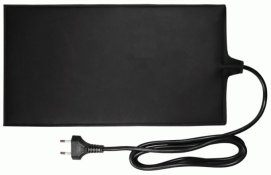
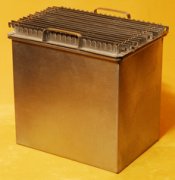
I'd be more concerned with corrosion on the heating elements. How hot do you need it? Some special process? Could you use something like this external heater on a standard 'dip and dunk' SS tank.

cap8_33_g.jpg
small_2.jpg
 
I'd be more concerned with corrosion on the heating elements. How hot do you need it? Some special process? Could you use something like this external heater on a standard 'dip and dunk' SS tank.

attachment.php

attachment.php

Its is B&W process only, so only maintaining temps at 20c for dev, stop and fix so its not getting very hot at all.
For specifics, it will be heated via peltiers and pid thermostat to maintain constant temp with a probe. Due to to the design of the tank they can only be thin strips or rods placed in the baths.

Should edit that I mean silver printing, not film dev!
 
Last edited by a moderator:
Why go through the trouble for a 20C bath? I personally would modify my development time to suit the ambient room temperature in that case.

For instance, through most of the year, my ambient room temperature is 20C. In summer, it can get up to say 25C or higher. In which case, I can adjust processing time or dilution to suit so I don't have to mess around with tempering bathes.

C-41 is different, but obviously as I have to process at a lot higher temperatures.
 
Simply because I can! And convenience, it's just a little experimental project I am working on :smile:

Just to clarify - The heating elements themselves are going to made of SS 316 and/or coated in plasti dip (if possible). The actual tank is not made out of SS but suitable plastics.
 
Last edited by a moderator:
Heating a water bath may work better, and it would be easier to clean a chem tank that doesn't have obstructions like heating elements.
Other than that, B&W chemistry is fine in SS, as noted.
 
Perhaps so but maybe not for the design of this tank, which was to eliminate the need for 'wet areas'.

The elements form part of the base of the tank so no obstruction there. How about for storage though? Say if the chemicals were to sit in the tank for a long period of time..
 
In case you decide to simplify, why not redesign the tank and use a fish tank heater. They are cheap, removable from the tank and replaceable if it breaks. They come in different sizes depending on the volume of water to be heated and should maintain a constant temperature.

http://www.jeffreyglasser.com/
 
All these options have already been considered in the design of the tank, initially it was to use slimline aquarium heaters controlled with a pid. Peltiers allow cooling of chems if required and all around better control.

I appreciate the suggestions but here is the design of the tank just so people have more idea with any suggestions.
attachment.php


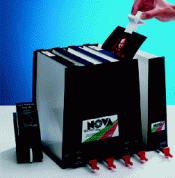
It is a vertical slot processor based off the nova which is was designed to be much sturdier and portable to be used in temporarily set up darkrooms while travelling, hence the need for convenience and heating/cooling. It also uses less chems than the nova. The heating elements are located at the bottom of the slots.

The chems will be staying in the tank for the duration of the stay, anywhere from a week to a month. Now whether that is going to cause corrosion with the SS elements (even coated with plasti dip) any info would be appreciated, otherwise I may have to physically test. If not other options will be reconsidered.

Cheers
 

Attachments

  • Vertical-slot-processor.png
    Vertical-slot-processor.png
    53.9 KB · Views: 231
It looked like a toaster at first, tell I clicked on it for a larger view. Must be for color prints but I'm thinking B&W negs would work also . Looks like it might also be temp. controlled .
 
Ic, that nova processor costs around $1000AUD to get here and it is simply too big for me, I only print 8x10 and need portability. It has fragile glass heating elements.

The one I have designed will cost around 200 AUD or less and can do colour/bw.

Alternatively, I could move the elements to the inbetween slots and fill them with water for water jacket type heating. After some more research turns out this is exactly how nova does it, better be safe than sorry and follow their lead.
 
Last edited by a moderator:
OK, an inexpensive Nova. Looks like a reasonable project. Getting back to the original question about stainless steel. My father had stainless steel dip-and-dunk X-ray tanks in his business that were always filled for about 20 years. I don't recall him ever replacing any of the tanks.
 
OK, an inexpensive Nova. Looks like a reasonable project. Getting back to the original question about stainless steel. My father had stainless steel dip-and-dunk X-ray tanks in his business that were always filled for about 20 years. I don't recall him ever replacing any of the tanks.

Thanks for the info! I will still be using SS elements to be on the safe side from any potential spills or leaks etc..
I will post the results of the build if all goes well, fingers crossed!

Caleb
 
In my darkroom I have two sinks - one stainless, and one plastic. Most photochemicals that I use don't impact either one of the sinks. The one exception is when I bleach prints with potassium ferricyanide which eats stainless, but seems not to affect the plastic.
 
Photrio.com contains affiliate links to products. We may receive a commission for purchases made through these links.
To read our full affiliate disclosure statement please click Here.

PHOTRIO PARTNERS EQUALLY FUNDING OUR COMMUNITY:


Ilford ADOX Freestyle Photographic Stearman Press Weldon Color Lab Blue Moon Camera & Machine
Top Bottom