• Welcome to Photrio!
    Registration is fast and free. Join today to unlock search, see fewer ads, and access all forum features.
    Click here to sign up

Square format, and the feelings it create.

Toby's Bar

H
Toby's Bar

  • Tel
  • Apr 25, 2026
  • 0
  • 0
  • 11
Barber

A
Barber

  • 0
  • 0
  • 33

Recent Classifieds

Forum statistics

Threads
203,486
Messages
2,855,469
Members
101,866
Latest member
Afadjato
Recent bookmarks
0
I think our brain quickly adjusts to any format. When I switched to shooting stills at16:9 to match my 16:9 video clips so all shots took up the same format when showing them later as a "slide show", it took me about 30 minutes to adjust my eye to compose stills compositionally "correct" when I switched from 4:3 to 16:9. Although I don't shoot square. I'm sure it's similar to that format as well.
 
The square as a compositional frame is static, and less dynamic than a rectangle. That does not mean that a square frame isn’t the best choice for a given subject. Still, the dynamics of picture composition depend on the relationship of the subject with the frame. The beauty of the square film frame of Hasselblad, Rolleiflex, Super Ikonta B, etc is that one can compose a rectangular picture within a square, without changing ones grip of the camera. Nonetheless, there is still enough room to later adjust the frame. Holding my 67 and 69 cameras can be awkward if not shooting a horizontal rectangle. 35mm leaves even less choice in changing composition. With Minox 8x11 no wiggle room.
Why anyone would deliberately restrict themselves to a static square frame seems strange.
One of the advantages of Mamiya RB67s that shoots 6x7, is that you don;t have to rotate the camera, only the back holding the film has to be rotated from portrait to landscape mode or vice versa. In fact, the RB in RB67 stands for Rotating Back. Of course, that means the lens has to cover an area of 6x8cm. So the lenses and the camera are heavier than a 6x6 like a Hassie.
 
I wrote a short essay on the square format for a project a few years ago:

SHOOTING SQUARE

There is an inherent equilibrium to the square format. No dimension dominates, it is balanced and solid. That alone brings a certain solace, a settled quality to the com- position. What the photographer does within the square can maintain that peace or disrupt it by how he or she frames the scene.

At the same time, what I discovered when I started shooting square format photos is that the square is not what we expect to see, it is not our natural perspective. So it takes both the photographer and the viewer a bit off-kilter. The edges of the frame are more intrusive as it were--they are equally close, and composition becomes more obvious and important.

The traditional horizontal format feels natural somehow, maybe because we have two eyes positioned horizontally. But even the vertical format is familiar through books, magazines, and today’s smartphones. (I can’t get over the number of vertical videos that are shot, even though many are viewed on a horizontal computer or TV screen.)

Apparently constraining, the square format is actually a liberation. When shoot ing square, classical rules can be ignored, left by the wayside. A flat horizon running through the exact middle of the frame, a horizon that is wildly tilted, elements dead center, all these may become more valid in a square. And these new relations can challenge what we had learned to believe was there when we looked at the world.

Pieter de Koninck

 
One of the advantages of Mamiya RB67s that shoots 6x7, is that you don;t have to rotate the camera, only the back holding the film has to be rotated from portrait to landscape mode or vice versa. In fact, the RB in RB67 stands for Rotating Back. Of course, that means the lens has to cover an area of 6x8cm. So the lenses and the camera are heavier than a 6x6 like a Hassie.
Good point. However, I tend towards choosing the most compact equipment such as Hassy and Rollei, although I do have a Fuji GF 670, Makina 67, and a Medalist 69. Still, among the cameras I always carry with me are Leica, Minox iii ( no batteries needed).
60 years ago I carried a lot of stuff. Now I like traveling light.
 
One of the advantages of Mamiya RB67s that shoots 6x7, is that you don;t have to rotate the camera

Rotating RB67 itself, that sounds easy :D

I cannot count how many times have I looked inside wrong lines with RB67..

My greatest composing struggles come with 6x7, and if I paid attention to how many times I end up cropping my 6x7s to 6x6 I'd probably just stick with square cameras. I like looking through 6x7 viewfinders, but making the compositions work is a challenge!

Yes. It is a bit of a brainf**k to adapt to the lines on the fly. The 10mm doesn't really add anything to the game. It looks like a strange square :smile: (technically it is 5mm per side!)
 
Rotating RB67 itself, that sounds easy :D

I cannot count how many times have I looked inside wrong lines with RB67..


Yes. It is a bit of a brainf**k to adapt to the lines on the fly. The 10mm doesn't really add anything to the game. It looks like a strange square :smile: (technically it is 5mm per side!)
I think the electronic RZ67 automatically adjusts the lines to the selected format - portrait or landscape.
 
The square format makes everything a potential LP cover.
 
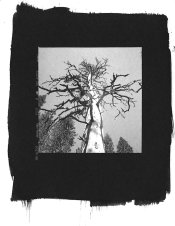
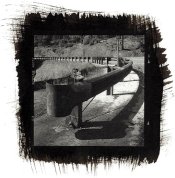
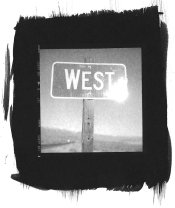
I also have trouble with 6x7, often coping to 6x6. Yes, it's often aid that the square is static, but I've found that it can be less so if the composition includes strong diagonals leaving the frame.
 
The square does circles and circular motion very well, but it can be played with a bit
 

Attachments

  • PlatinumTree.jpg
    PlatinumTree.jpg
    334.3 KB · Views: 197
  • Splash.jpg
    Splash.jpg
    259.7 KB · Views: 182
  • West.jpg
    West.jpg
    370.8 KB · Views: 184
I wrote a short essay on the square format for a project a few years ago:

SHOOTING SQUARE

There is an inherent equilibrium to the square format. No dimension dominates, it is balanced and solid. That alone brings a certain solace, a settled quality to the com- position. What the photographer does within the square can maintain that peace or disrupt it by how he or she frames the scene.

At the same time, what I discovered when I started shooting square format photos is that the square is not what we expect to see, it is not our natural perspective. So it takes both the photographer and the viewer a bit off-kilter. The edges of the frame are more intrusive as it were--they are equally close, and composition becomes more obvious and important.

The traditional horizontal format feels natural somehow, maybe because we have two eyes positioned horizontally. But even the vertical format is familiar through books, magazines, and today’s smartphones. (I can’t get over the number of vertical videos that are shot, even though many are viewed on a horizontal computer or TV screen.)

Apparently constraining, the square format is actually a liberation. When shoot ing square, classical rules can be ignored, left by the wayside. A flat horizon running through the exact middle of the frame, a horizon that is wildly tilted, elements dead center, all these may become more valid in a square. And these new relations can challenge what we had learned to believe was there when we looked at the world.

Pieter de Koninck
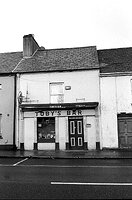
That is precisely the problem with a square format: stability All dynamic composition, that is a composition that forces the eye to move about the contents of the frame, is difficult. The square frame has just too much equilibrium.
A good example is to examine the evolution of the movie screen, which began as almost square and gradually evolved into an ever wider rectangle. Finally reaching to wide screen and cinerama. However, there can be limits. Wide screen is a difficult beast to tame and very few cinematographers and directors have been able to tame it, such as Kurosawa.
The lesson to be learned is that most of our photographs fall short. We don’t have the freedom to adjust and modify our subject matter in the same way as a painter, so as to create a more dynamic relationship with the frame. Clicking the shutter is easy, capturing a great picture is very difficult. The pleasure is in the quest.
 
That is precisely the problem with a square format: stability All dynamic composition, that is a composition that forces the eye to move about the contents of the frame, is difficult. The square frame has just too much equilibrium.
A good example is to examine the evolution of the movie screen, which began as almost square and gradually evolved into an ever wider rectangle. Finally reaching to wide screen and cinerama. However, there can be limits. Wide screen is a difficult beast to tame and very few cinematographers and directors have been able to tame it, such as Kurosawa.
The lesson to be learned is that most of our photographs fall short. We don’t have the freedom to adjust and modify our subject matter in the same way as a painter, so as to create a more dynamic relationship with the frame. Clicking the shutter is easy, capturing a great picture is very difficult. The pleasure is in the quest.
Actually., my experience is that at least for 16:9, and landscapes, you can easily as let';s say 4:3 or 3:2 get proper composition related to the format. Of course videos tend to focus on the actors. So you have to figure out what to do with all that space on each side of the the middle.

Interesting point about painters and creating dynamic images. Here's a 16:9 shot I took of an oil or acrylic painter at work His canvas looks fairly wide. But notice how he shrunk the wide range of mounts in Monument Valley to create a more dynamic image. Proving once again it's easier to be a painter than a photographer. :wink:
DSC01995 edited.jpg
 
I am regular shooter of 6x6, and I noticed that in B&W I almost always end up cropping to a portrait format.

When I shoot slides, then I find I compose more carefully for the square format, because that's how I will project the images.
 
Hasselblad advertised for years that "Square is the Perfect Format".

Sometimes I find the 35mm rectangle a bit too long and I have to crop the end off very often. On the other hand if one uses a square format, they do not have to turn the camera on the side.
 
Hasselblad advertised for years that "Square is the Perfect Format".

Sometimes I find the 35mm rectangle a bit too long and I have to crop the end off very often. On the other hand if one uses a square format, they do not have to turn the camera on the side.
Well, rather self-serving of them to say that. :smile: Of course, with Mamiya RB67, you have a choice. "Landscape or portrait for the discriminating photographer" Don't know what their motto was but this one would have been pretty good.
 
Photrio.com contains affiliate links to products. We may receive a commission for purchases made through these links.
To read our full affiliate disclosure statement please click Here.

PHOTRIO PARTNERS EQUALLY FUNDING OUR COMMUNITY:


Ilford ADOX Freestyle Photographic Stearman Press Weldon Color Lab Blue Moon Camera & Machine
Top Bottom