
• Welcome to Photrio!
    Registration is fast and free. Join today to unlock search, see fewer ads, and access all forum features.
    Click here to sign up

Spotting/bleaching and Thiourea toning sequence

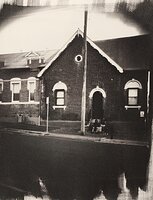
102391040027-2.jpg

A
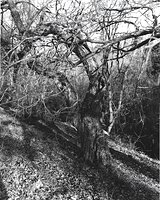
102391040027-2.jpg

  • 4
  • 4
  • 56
Just a Sparrow

D
Just a Sparrow

  • 1
  • 0
  • 39

Recent Classifieds

Forum statistics

Threads
201,776
Messages
2,829,953
Members
100,941
Latest member
McKay
Recent bookmarks
0

MarkL

Subscriber
Allowing Ads
Joined
Jan 5, 2006
Messages
606
Location
Upstate NY
Format
4x5 Format
The thiorcarbamide toned prints I made last night dried with a bit of random patches of residue, which are noticeable when the prints are held at an angle to a light. I thought they might be visible after framed so I rewet them and soaked them for a few minutes each in a 3% acetic acid bath with a little light sponging of the emulsion. I’m new at toning and am hoping this'll have cleared them up. But it got me thinking I better work an acid bath into my thiourea toning routine. Does anyone else do this?

Also, the prints had a black dust worm on a white area so I decided to spot them off with farmer’s reducer. Since I read you should fix after using bleach, I inserted the spotting between my two fixing baths.

So, for everything I needed to do for that print run, can I bounce my sequence off you gurus for any suggestions? This might also help others getting into toning and/or highlight bleaching their prints.

Thank you!!!
Mark


Spotting/bleaching and Thiourea toning sequence:
-------------------------------
Develop
Stop (I do a thorough water rinse)
Fix 1 (TF-4, 1 minute)

<rinse and then into a water holding tray while printing others>

Local or overall bleaching, then rinse off
Fix 2 (TF-4, 1 minute)
Hypo Clear (optional since I use TF-4 but I do it anyway)
15 minutes in archival washer

Thiourea bleach
Wash (a couple minutes of thorough rinsing)
Thiourea tone

<***Do I need a Fix 3 here if only partially toning?***)

<rinse and then water holding tray while toning others>

3% acetic acid bath to clear possible toning residue (2 or 3 minutes)
Wash (a couple minutes of thorough rinsing)
30 minute archival wash

Finally, have a cold beer.
-------------------------------
 

Sparky

Member
Allowing Ads
Joined
Jun 19, 2005
Messages
2,096
Location
Los Angeles
Format
Multi Format
If only partially toning - yes.. you really should fix again - since there will be some un-redeveloped silver halide in the emulsion. Thiox toning is nothing if not a redeveloper...! I've been doing alot of thiourea dioxide toning lately (which, I believe is nearly identical chemically) in preparation for toning some 40" prints (that I'm quite nervous about!) - so I've been getting alot of experience and doing a fair amount of research into. The acetic acid, I'd surmise, would work - though I've never had any problems like that at all among the fifty or so prints I've toned thus far. LA tapwater is super hard too...!

As for the spotting thing - well - I'd be pretty cautious about spotting at that point - as the farmer's reducer may affect the thiourea development in that place. Personally - I'd spot-bleach it AFTER toning - and then spot with appropriate colors to suit. Just my 2 cents.
 

Marco B

Subscriber
Allowing Ads
Joined
Jan 13, 2005
Messages
2,736
Location
The Netherla
Format
Multi Format
Yes, I have had problems with calcareous deposits too, even though rigorous washing and using demineralized water as the last bath of the rinse... Strangely, only about one in 3 prints showed spots (often a lot), while the others were often free of spots.

After an advise of Tim Rudman, I have now also routinely started using an acid (acetic) bath after the thiourea dip. This has resolved the issue completely.
 

tim rudman

Member
Allowing Ads
Joined
May 9, 2006
Messages
694
Format
Medium Format
I think you have it about right Mark. The acetic acid - or similar - is a simple and effective answer if you have the white deposit problem. If you are going to use another acid solution after your thio - most gold direct toners for example - you can often skip the acetic acid step.

I would always do bleach work before toning. Toned prints may not bleach well after an archival toner. Between the 2 fix baths is a good and convenient place to do it. If bleaching down to white, you will have to spot that in afterwards on the dry print.
Tim
 

hka

Member
Allowing Ads
Joined
Dec 21, 2004
Messages
397
Format
Multi Format
Only after using HCA I spot some white deposit(s) on the prints. I don't use this bath anymore. A good water rinse afterwards is in my eyes sufficient.
 
OP
OP
MarkL

MarkL

Subscriber
Allowing Ads
Joined
Jan 5, 2006
Messages
606
Location
Upstate NY
Format
4x5 Format
Thanks everyone! Yes I have to remember to think of thiourea as a developer and fix afterward. I would guess that otherwise the print would be pretty darn unstable, like a very poorly fixed untoned print. Is that true, because I haven't heard much about this (including in the directions in the Photo Forumulary's thiourea kit)?

Well, I should qualify that. Presumably you tone to completion and there's no undeveloped halide to worry about. But really you never know if you've actually toned to completion if the toner is near exhaustion or the time in it is too short. I have gone around 1 minute but I understand that with less activator the toning can take much longer. So fixing after thiourea seems like an important arhcival step.
 
Last edited by a moderator:

Marco B

Subscriber
Allowing Ads
Joined
Jan 13, 2005
Messages
2,736
Location
The Netherla
Format
Multi Format
Thanks everyone! Yes I have to remember to think of thiourea as a developer and fix afterward. I would guess that otherwise the print would be pretty darn unstable, like a very poorly fixed untoned print. Is that true, because I haven't heard much about this (including in the directions in the Photo Forumulary's thiourea kit)?

I don't think you should be to worried. :smile: It is definitely NOT comparable with the instability of a poorly fixed untoned, on the contrary (and even these first 19th centuries salt fixed prints have partially survived...).

Most toning manuals that come with the toner don't even mention the need for fixing, I think it's just an extra precaution. The prints should be stable by itself, if properly toned / redeveloped.

My first sepia / thiourea toned prints, when I was still completely ignorant about the processes going on in the chemicals, are still 100% fine even without fixing more than two years on. OK, that's not so long, but far longer than any time it would need to show a "fixer" type problem.

Most bleach baths contain a mixture of something like potassiumbromide and ferrocyanide. The bleached image actually probably consists of a mixture of silverbromide, and a lot of silverferrocyanide, which is colourless / yellowish a well. The remaining silverbromide after toning in thiourea, is probably not much.
 
Photrio.com contains affiliate links to products. We may receive a commission for purchases made through these links.
To read our full affiliate disclosure statement please click Here.

PHOTRIO PARTNERS EQUALLY FUNDING OUR COMMUNITY:


Ilford ADOX Freestyle Photographic Stearman Press Weldon Color Lab Blue Moon Camera & Machine
Top Bottom