• Welcome to Photrio!
    Registration is fast and free. Join today to unlock search, see fewer ads, and access all forum features.
    Click here to sign up

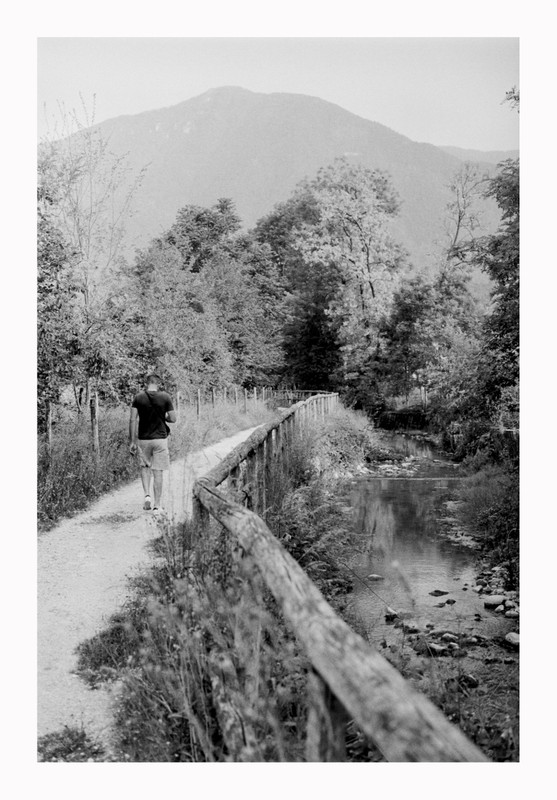
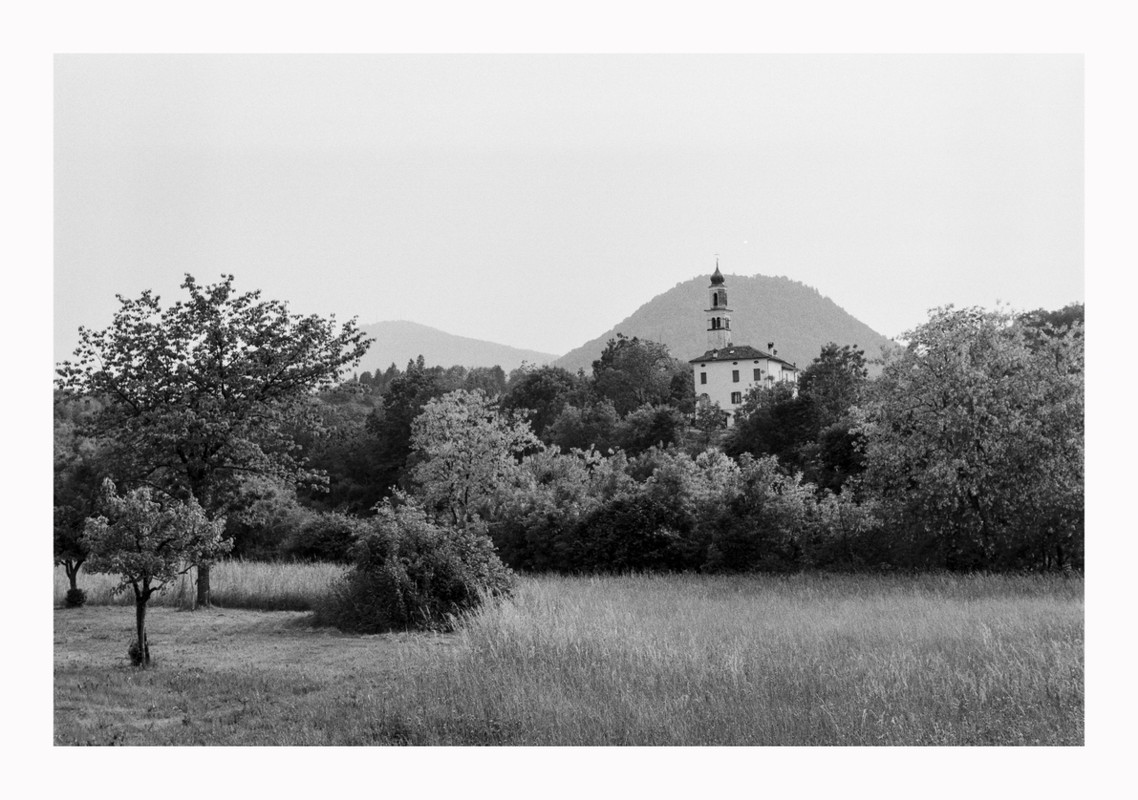
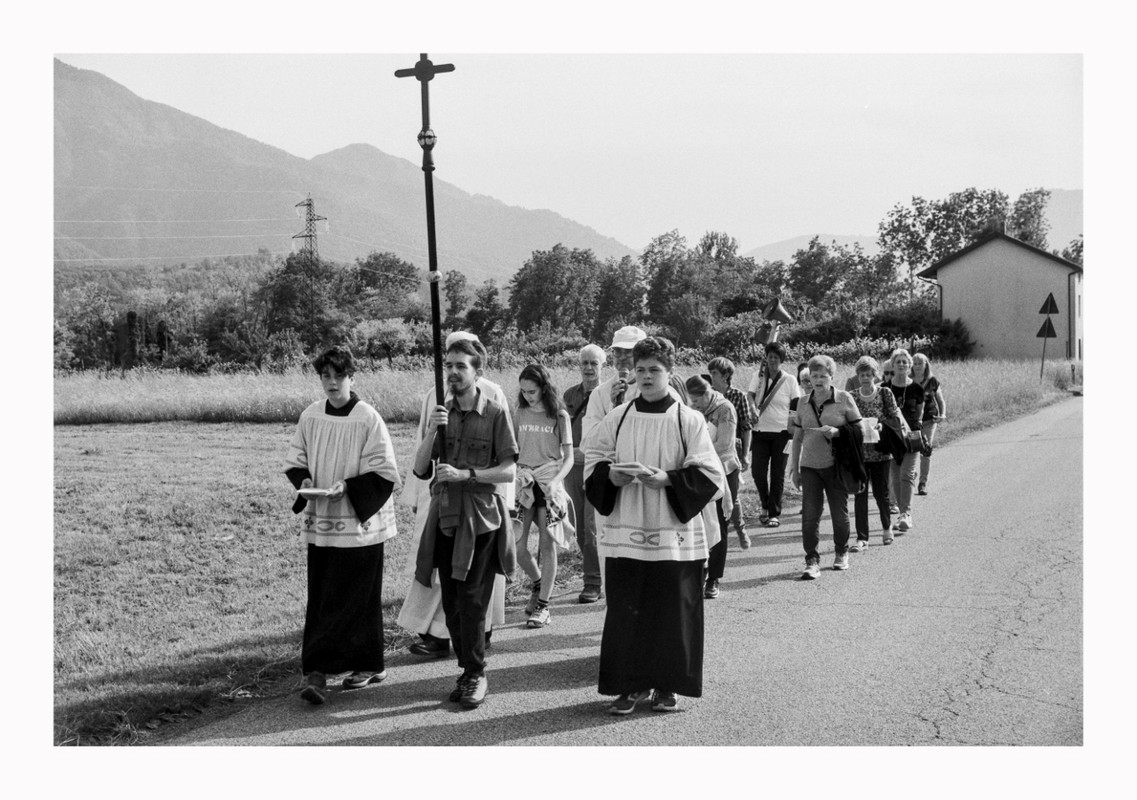
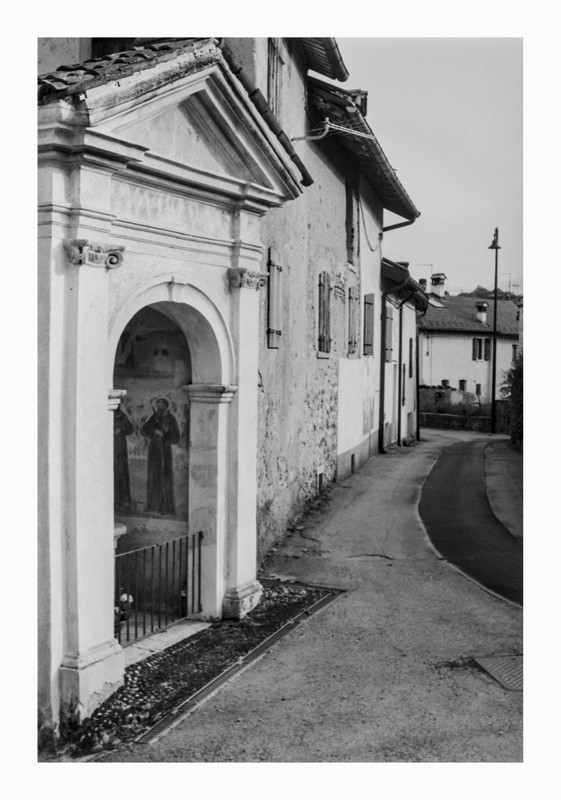
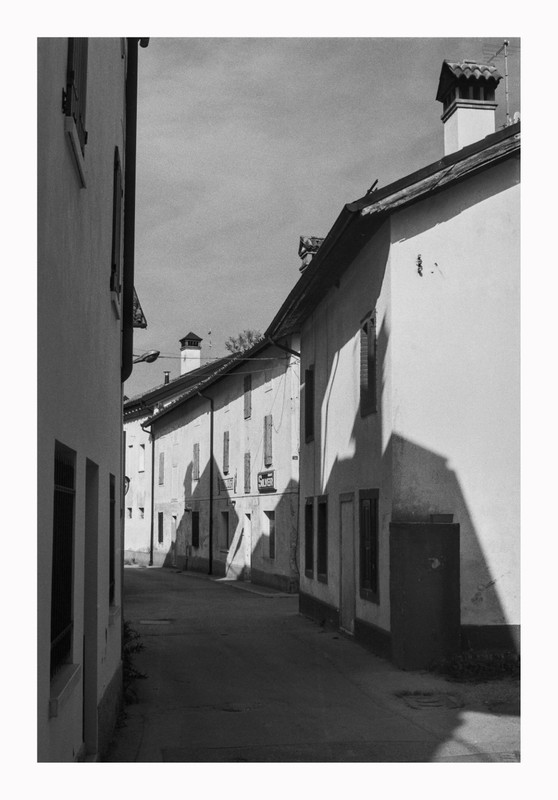
Some pics using my Nikon F, Agfa APX 100, and Extreme Minimal Agitation developing process

Recent Classifieds

Forum statistics

Threads
202,823
Messages
2,845,954
Members
101,547
Latest member
roglem
Recent bookmarks
0

Alfredo Doricchi

Member
Allowing Ads
Joined
Apr 4, 2022
Messages
44
Location
Italy
Format
Medium Format
Hello fellows!

Some days ago I spent a few hours shooting with my Nikon F, armed with his Nikkor 50mm f/1.4. The film was Agfa APX 100, a new one to me, as I usually use Ilford films. The developing process was, this time, what I guess is called Extreme Minimal Agitation, in Kodak HC-110 (6ml HC-110 + 794ml water): first minute continous inversions, 14 minutes stand, two inversions, 15 minute stand, two inversions, 15 minute stand, two inversions, 15 minute stand (total time: 60 minutes).
At the end, I'm pleased about the results with the Agfa APX 100 and this development process: good acutance, fine details, shadows and lights well balanced, in my opinion. Here belove some pics. What do you think about?
My kindest regards from Italy, Alfredo Doricchi

[/url
]


[url=https://postimg.cc/8jfYTdrP][/url
]


[url=https://postimg.cc/23VcxdGF]
upload photo


[/url
]


[url=https://postimg.cc/WD161jf6][/url
]
 
Looks fine on-screen.
Hard to tell if the film was developed to a proper density+contrast for optical printing, as the scanning process is quite tolerant to "thin" negatives.
My peeve about stand or EMA schemes is that sunny scenes look like taken under hazy sun (smog or cirrus). Second pic (procession) only you can tell if it was taken under bright or hazy sun. Last one (village street) the process seems to do a good job of containing extreme brightness values. How was it metered? Just the Nikon center-weighted scheme, aimed same as picture frame?
Finally:
The film was Agfa APX 100, a new one to me, as I usually use Ilford films.
Consensus seem to be that currently sold "APX-100" is made by Kentmere, and might even be identical to Kentmere 100. No too far from Ilford...
 
Hello, thanks for your comment. The sky was sunny but a bit hazy, a lot of sultriness, in fact.
I metered just using the Nikon F Photomic FTn.
 
. The sky was sunny but a bit hazy, a lot of sultriness, in fact.

Yes that is what we in the U.S. call a Rita Hayworth day😎 As Eric has said they all look pretty good. Recently there has been a thread on problems with negative developed in HC110 but whatever caused those problems did not happen here, even with minimal agitation The only common factor that may be encouraging for those others is that your regime involves first min continuous agitation and that is what may be the key part of their solution
 
Eric Rose: thank you so much!

pentaxuser: ahaha interesting to know! Thank you, mate. My actual developing regime with the HC110 is the result of several failures, now I have reached what I guess it's a good workflow, at least for me. BTW, the temperature I use is not 20°C, as usually recommended, but 18°C.
 
Eric Rose: thank you so much!

BTW, the temperature I use is not 20°C, as usually recommended, but 18°C.

As a matter of interest how much if any do you increase the development time to compensate for the 2 degree reduction in temperature?


Thanks

pentaxuser
 
I don't get it. I'm done in 4 minutes then go about the rest of my day. I like your pictures but do not see what that hour spent gives you.
 
Yes I know the photographer has presented the pictures how he likes to print them, and yes I know the internet is not the best place to judge them, but to me they look like they are chemically fogged by exhausted developer. They have a sort of insipid look and especially the one with the guy walking away.
 
250swb: I agree with you about the insipid look of my pics in this thread, in fact it was an insipid sultry day, meteorologically speaking.
 
Yes I know the photographer has presented the pictures how he likes to print them, and yes I know the internet is not the best place to judge them, but to me they look like they are chemically fogged by exhausted developer. They have a sort of insipid look and especially the one with the guy walking away.
I agree with this, that image does not look “done”. And we can’t use the excuse that you cant judge images because they are on the internet, because there are plenty of B&w images posted to this site that look great.

I was serious about my question - what is the benefit of spending an hour developing a roll of film this way?
 
The pics look fine. I'm pretty sure you could get similar results using shorter development times and temps in another developer.
 
Huss: minimal agitation plus tiny amount of developer plus long developing time improves acutance and tonal shift in the negatives. That's chemistry, too long to explain here, but you may find detailed articles in magazines, books and Internet too.
That said, I can speak only for myself. In my experience, that's works: when I use Extreme Minimal Agitation regime, I obtain negatives with more acutance and better tonal shift than when I use the "standard" fast regime.
I was serious too about my answer, mate: if you are able to obtain the same results using a 4 minutes developing time, I'm glad for you. I can't.
 
OP I presume you're talking about Agfaphoto APX 100/Kentmere 100? If so, what a fantastic film. I use it often and have found it pairs well with D76 1+1, D23 and Spur Acurol-N, in all cases using standard agitation patterns (continuous slow inversions 1st minute, then 2x inversions every minute).

OP, which problem found in standard development processing were you trying to solve by altering/reducing agitation?

If you think APX 100 looks good in the examples above wait until you process it as normal :wink:
 
Looks fine on-screen.
Hard to tell if the film was developed to a proper density+contrast for optical printing, as the scanning process is quite tolerant to "thin" negatives.

I'd disagree. Scanning, if done well, is no more or less tolerant of exposure/development errors than darkroom printing. A good (and I stress: good) scan will require its own set of optimisations at exposure+development stage which might or might not match those required by optical printing.

Just to clarify, the density+contrast needed for optical printing is not the 'proper' one. Film photography nowadays is delivered in myriad of ways, and increasingly less via wet lab prints. If one does not print in a darkroom, there are very few reasons to aim to fine tune the negatives for wet lab printing.
 
Last edited:
Huss: minimal agitation plus tiny amount of developer plus long developing time improves acutance and tonal shift in the negatives. That's chemistry, too long to explain here, but you may find detailed articles in magazines, books and Internet too.
That said, I can speak only for myself. In my experience, that's works: when I use Extreme Minimal Agitation regime, I obtain negatives with more acutance and better tonal shift than when I use the "standard" fast regime.
I was serious too about my answer, mate: if you are able to obtain the same results using a 4 minutes developing time, I'm glad for you. I can't.
Thank you for the answer. I would imagine it could reduce the size of grain.
 
Albireo: there is another Agfa APX 100, maybe?
No problem in standard development regime, just, as I said, when I use Extreme Minimal Agitation regime, I obtain negatives with more acutance and better tonal shift than when I use the "standard" fast regime.

Huss: you're welcome, mate.
 
Albireo: there is another Agfa APX 100, maybe?
Yes there is. The old one, the original Agfa APX 100, by many accounts a legendary film, which can still be purchased at times via e.g. old frozen stocks sold on Ebay etc
 
Albireo: thanks, good to know mate. I use a more common AGFAphoto APX 100.

Brian B Bednarek: thank you, fellow.
 
Photrio.com contains affiliate links to products. We may receive a commission for purchases made through these links.
To read our full affiliate disclosure statement please click Here.

PHOTRIO PARTNERS EQUALLY FUNDING OUR COMMUNITY:


Ilford ADOX Freestyle Photographic Stearman Press Weldon Color Lab Blue Moon Camera & Machine
Top Bottom