• Welcome to Photrio!
    Registration is fast and free. Join today to unlock search, see fewer ads, and access all forum features.
    Click here to sign up

Simple metering solution.

Forum statistics

Threads
203,442
Messages
2,854,780
Members
101,845
Latest member
azak
Recent bookmarks
0

Mike Kennedy

Member
Allowing Ads
Joined
Feb 5, 2005
Messages
1,594
Location
Eastern Cana
Format
Multi Format
I am in a bit of a dilemma in regards to metering. A friend of mine has "come in from the cold", shelved her digi and picked up a nice little Pentax K-1000.I have no problem with instructing her in film development and basic darkroom tecniques but my personal way of metering has left her cold.
Over the past number of years I have tweaked the standard metering tecniques to suit my tastes.Its extremely difficult to teach to a very structured thinking person. Any thoughts on a "one-size-fits-all" metering solution?
Thanks,
Mike
 
Mike,

I have a handful of the same camera's. I usually meter off the most important subject, set camera controls and then reframe the shot. Maybe a quick class on using the meter needle and how it apply's to image tones??? Is she going to be using a handheld meter??

I started 3 years ago using pentax K1000 and after self teaching how the thing worked, average film developing times and chemicals, then really got into what would happen when I played with the metering of subjects by a stop or two, keeping things real simple to start until I got a basic understanding of the how's and why's.
 
If you are doing B&W, you will increase the success rate of beginners ( not to mention old pros ) by using generous exposure and slightly less than normal development. This gives you a 'margin of error' so that metering doesn't have to be 'perfect'.

Time honored: cut the ISO rating of a 400 speed film in half. Use D-76, or Diafine. You'll print on a #3 most of the time, but so what ?

Of course, if you're shooting color neg, the film has 4 to 5 stops of overexposure latitude built in, so no problem.

Do this, she'll think you're a genius.

:wink: Which, of course, you are !

.
 
As I recall, a Pentax K1000 has averaging metering (not even center-weighted), which is without doubt the hardest type of metering to explain to a beginner (the readout for a landscape scene will of course vary wildly depending on how much sky you have in the frame). Is it possible to remove the battery from the camera and have your friend use a separate meter? If so. incident-light metering is about the closest thing to "one size fits all" that I know and would be a great place to start - you can then gradually deal with the exceptions to the rule where a little compensation would be useful (subjects which are light all over, dark all over or strongly backlit). What is fact is the metering technique which you use yourself?

Regards,

David
 
df cardwell said:
Of course, if you're shooting color neg, the film has 4 to 5 stops of overexposure latitude built in, so no problem.

Most B&W films have a 3 stop overexposure latitude.
 
What I do with such cameras as the K-1000 when dealing with scenes that contain sky is to meter on the scene without including any sky and then recompose for exposure.
 
I have a K1000 and when time and conditions permit I meter off a gray card to work around the camera's very rudimentary metering system and make my exposures as accurate as possible. Obviously this doesn't lend itself very well to spur-of-the-moment shooting in which case all you can do is rely on your eyes.
 
Grey Card!

Thanks to all for their advice.Guess I will dig out my old grey card and instruct my "student" on its use. Actually thats what I started with way back when. I tend to forget just how puzzling the concept of "full manual metering" was.
Mike
 
Why not use the cameras suggested exposure, and then explain why some didn't work out properly once the film has been developed. Take the teaching in little, steps not one big leap.

Martin
 
Yes, grey card. This is probably the best answer. If all else fails, use the K1000's meter when shooting outside, and be sure to aim slightly down to avoid the high value bias that the sky will give. Tell your student to pay attention to lighting situations which might become overwhelming (ie, backlighting, bright subject on dark background etc.).
 
Teach her the sunny f/16 rule. Once you get the knack of differentiating among the different "degrees" of sunlight, you should always be within a stop of the perfect exposure.

Even if she winds up relying on a meter, knowing the general rule of exposure helps you understand that, in certain situations, your meter is probably lying to you. :wink:

Oh yeah, and she has to do a film speed test first, or else none of this stuff matters.
 
My crude method, and I use this with triX mostly on the street wide angle, is to drop the film speed to 250, meter a shadow full frame, close it 3 stops and shoot. If my subject is in mostly shadow then I open it up 2 stop from the origional shadow meter reading. So I'm only working with two f stops and one shutter speed.
 
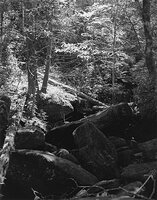
I bought a cheap little CDS meter on ebay with an Incident metering option. I use it pretty much all the time set to Incident. It hasn't let me down yet, even with difficult to meter scenes (like dark painted wood in bright sunlight like this).

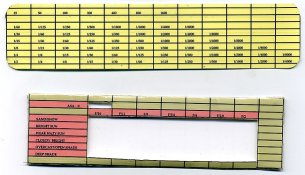
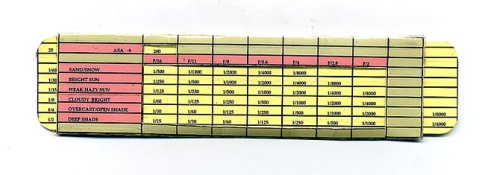
If you can't find a meter, a very cheap and simple method is to make a Sunny 16 Slide Rule. I made one for use with my unmetered Zorki 4K, it took about half an hour in Microsoft Works. See attachment, you slide the top piece into the bottom piece, choose the ASA in the small window, and your f stop and speed settings in the large window (see second attachment).
 

Attachments

  • Sunny16Sliderule.JPG
    Sunny16Sliderule.JPG
    84.9 KB · Views: 168
  • Sunny16SlideRuleAssembled.JPG
    Sunny16SlideRuleAssembled.JPG
    48.8 KB · Views: 142
Last edited by a moderator:
Just explain that we only ever expect to get one printerable frame on a roll of 36, and let her lose with the Sunny 16 rule. When she betters that success rate, she’s hooked for life, and then you can start on the technicalities. KISS.
 
Photrio.com contains affiliate links to products. We may receive a commission for purchases made through these links.
To read our full affiliate disclosure statement please click Here.

PHOTRIO PARTNERS EQUALLY FUNDING OUR COMMUNITY:


Ilford ADOX Freestyle Photographic Stearman Press Weldon Color Lab Blue Moon Camera & Machine
Top Bottom