• Welcome to Photrio!
    Registration is fast and free. Join today to unlock search, see fewer ads, and access all forum features.
    Click here to sign up

Silver gelatin or gelatin silver?

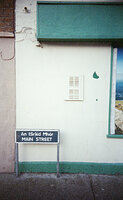
An tSráid Mhór

A
An tSráid Mhór

  • 1
  • 0
  • 39
IMG_1285.jpeg

D
IMG_1285.jpeg

  • 0
  • 0
  • 37

Forum statistics

Threads
203,125
Messages
2,850,218
Members
101,690
Latest member
nisherii
Recent bookmarks
0

PVia

Member
Allowing Ads
Joined
Oct 3, 2006
Messages
1,057
Location
Pasadena, CA
Format
Multi Format
Which is more correct, more commonplace or just your preference?

Or maybe just "silver print"?
 
The term seems to flop depending on which way the wind blows, though I hear and see "Silver Gelatin" the most. I don't think you would get hassled for either way except by the very few that must be right about something, as most likely there is some subtle difference denoted by some obscure nuance of the language. In either case, including the term gelatin is very relevant if you are seeking to describe provenance, as it universally understood what such a description means.
 
The FDA requires for labeling the name contain the most common ingredient first, so it "should" be gelatin silver print. However, exceptions are granted for historical uses...for example "Pork and Beans". But I have no idea what this has to do with anything.

Personally I use silver gelatin.

vaughn
 
I was going to mention ingredient listings but as "proof" that it shouldn't be gelatin silver
We don't eat the stuff

I believe it should be silver gelatin as in
Silvered gelatin ..the addition of silver to gelatin to make an emulsion
gelatinized silver (gelatin silver) seems to be saying that you've somehow turned the silver into a gelatinous substance which I don't believe happens and doesn't sound right, to me
 
I was going to mention ingredient listings but as "proof" that it shouldn't be gelatin silver
We don't eat the stuff

I believe it should be silver gelatin as in
Silvered gelatin ..the addition of silver to gelatin to make an emulsion
gelatinized silver (gelatin silver) seems to be saying that you've somehow turned the silver into a gelatinous substance which I don't believe happens and doesn't sound right, to me

seems logical...
 
Can we give it a new name? How does "Black & White" sound to everyone? Will it fly?

Like a lead balloon, unfortunately. That would be like calling all cars, cars. It works until one wants to talk about a particular type of car (sports, van, sedan, station wagon, et al)..."What kind of car do you have?" "A car with 4 wheels, two doors, a big engine and low to the ground." It is much easier to be able to say "sports car".

So if I am asked after saying I do B&W photography, what type of prints I make, I can say carbon prints and platinum prints, and anyone reasonably knowledgable about photography knows I don't make many silver gelatin prints. I describe silver gelatin prints to those who do not know much about photography as the "regular" type of B&W photographs -- you know, the kind Ansel Adams used to make. Unknowledgable folks usually don't realize that "regular" photos are made with silver, and even if they know that much, don't realize the silver is in gelatin. (Can vegans use film?!)

Vaughn
 
Last edited by a moderator:
Of course, being in the trade, I never heard of silver gelatin until I came to APUG.

PE

And of course, being involved with photography as an art form, I heard about silver gelatin long before coming to APUG.:wink:

I guess that Kodak had pretty much ignored alt. photography for a long while. I suppose if the "trade" can not make money from something, it pretty much pretends it does not exist...which is probably why we got TMax 100 with an UV filtering layer on it. Fortunately someone there at Kodak somehow stumbled across alt photography and decided that leaving the UV filtering layer off the new Tmax 400 sheet film might allow them to sell more film to us alt folks (or else we just got lucky).

Vaughn
 
Kodak and its employees were quite aware of alternate photographic methods. We had a department that studied them, and them alone. Unfortunately, use of a UV layer was quite important at one time for other reasons.

PE
 
Of course, being in the trade, I never heard of silver gelatin until I came to APUG.

I saw it in the art community several years ago (late 1990s), but I certainly didn't think of it as a mainstream description of silver-based photography at the time.

As silver-based photography has become more exotic with the increasing prevalence of digital, I rather like it. It certainly sounds better than "Inkjet". :smile:
 
Can we give it a new name? How does "Black & White" sound to everyone? Will it fly?

That's too ambiguous. A desaturated digital image printed with an ink printer can be black and white.
 
Silver jelly, maybe? :smile:
 
Actually, silver halide was so prominent, it was just called Photography, as that was about 99% of all there was and everyone knew what you meant. The rest of the methods were called alternate photography. Silver gelatin only became a 'name' when digital began to replace silver halide as "Photography" and so it needed a name to distinguish it. Personally, I don't like it as it seems to sideline analog, so I prefer analog and alternate analog.

PE
 
Silver gelatin only became a 'name' when digital began to replace silver halide as "Photography" and so it needed a name to distinguish it.
PE
No not correct, the art world has used the classification "Silver Gelatin" for many years, certainly well before digital came along. It is used along with other labels like, Platinum, Gum Bichromate etc to distinguish the type of print, and is particularly important when items are sold at auction etc.

Photographers like Edward Weston, Irving Penn etc made platinum and silver gelatin prints sometimes off the same negatives, so the classification has been important for a long time.

Ian
 
The trouble with all of this is that the digital world appropriates names with long established meanings and applies them to something else entirely. I don't mean this as digital bashing - I'm talking about language and clear expression. For instance, I recently attended a demonstration of Corel Painter. The program has something I would call a filter that is supposed to make an image print as though it were on one of several types of paper. This filter is called "paper." How can one distinguish, when speaking, between the filter "paper" and the actual paper one has printed on?

Sorry for the digression, but this misappropriation of language astounds me.

I prefer silver gelatin, although I have no logical reason why.
juan
 
Ian;

I'm sure you are correct, but I have never heard it used at RIT seminars or in the halls of George Eastman House let alone in the mainstream trade journals or the mainstream meetings. It is a moot point anyhow as it is being used. We, in the trade, used the simple word Photography (B&W or color) to distinguish silver halide crystals precipitated in gelatin from all others which were alternative. We even called a R&D unit the Alternative Systems Lab.

In any event, there are several "silver gelatin" methods which don't fall under the "classic" precipitated silver halide emulsion. Albumen is a silver gelatin method which is not a classic precipitation but rather takes place in-situ. Albumen is gelatin under another name. So, how do we begin to classify all of the alternates to the alternates?

I don't really care. I make silver halide crystals by precipitation and then coat them. I have done practically all other methods. I refer to the first as photography and the second to alternate photography. Since all others seem to feel otherwise in nomenclature, it is moot as I said.

PE
 
Sorry for the digression, but this misappropriation of language astounds me.
Imagine how I feel, as an Englishman, when I see some of things coming out of your country! :wink:

As to Siver/Gelatin, I'm sticking with Silver Halide. I know what I mean and that's good enough for me.
 
The silver gelatin(e) "label" has been around for some time. Many auction house catalogues selling photographs will distinguish them thus.

Quite often when I was selling work at one London gallery quite some years back I would label my work as 'silver chlorobromide or silver bromide print'. Many of my comtempories were doing this as well.
 
Of course, being in the trade, I never heard of silver gelatin until I came to APUG.

PE

The first time I noticed the label "silver halide gelatin prints" was at the art museum, about 8 years ago.

I assumed that in order for them to be accepted as "art" they needed a technical (artsy fartsy) name attached to them. Does this indicate a rise in status over digital images? I don't think so, they (whoever they are - a committee I presume) will find a special name for the other (fine art) print types, and the debate over what is truly art will continue.

It's not always art, or is it all art? I think every human is an artist to some degree, some are better than others. Art and Artist are generic terms - anyone can say "I'm an artist" and show their work, and who can really make the call?

Of course there are those (art experts) who believe they can educate us.
 
Thanks all...a good range of responses.

I like silver gelatin, however a lot of published descriptions in catalogs and books these days, reverse the terms...

PE, it would be nice to just call it photography, but I think it's important to distinguish from digital inkjet when using traditional materials.

I've handed out a few photos to friends and/or acquaintances recently (without mentioning process) and their reaction has been "Whoa! What is this? Did you do this?" They're blown away by the feel of the paper, the way the image presents itself on the surface of the paper, and not only that, but I think they can't believe that in this day and age that someone would actually take the time to produce the print they are holding.
 
Photrio.com contains affiliate links to products. We may receive a commission for purchases made through these links.
To read our full affiliate disclosure statement please click Here.

PHOTRIO PARTNERS EQUALLY FUNDING OUR COMMUNITY:



Ilford ADOX Freestyle Photographic Stearman Press Weldon Color Lab Blue Moon Camera & Machine
Top Bottom