
• Welcome to Photrio!
    Registration is fast and free. Join today to unlock search, see fewer ads, and access all forum features.
    Click here to sign up

Silberra Color Films

Recent Classifieds

Forum statistics

Threads
203,402
Messages
2,854,153
Members
101,819
Latest member
Mark J Tudyk
Recent bookmarks
0

Ten301

Member
Allowing Ads
Joined
Apr 11, 2008
Messages
215
Location
Boston, Mass
Format
35mm
Does anyone have information on who manufactures these films for Silberra? They really are odd ducks in their color palette, pleasing but unusual. The negatives are unmasked. My boxes state, “Made in Russia”, but my understanding was that only Kodak, Fuji and InovisCoat had the capability to produce color film. Could a Russian manufacturer such as Tasma have quietly stepped into color production? These don’t seem to me to be leftover expired stocks of previously produced films.
 
Well there's lots of info out there on this stuff. There is always lots of info "out there" none of which tells you much that is of use in answering your question and more annoyingly, all of which indicates that no-one seems to care. What alone counts is selling the stuff.

I have a feeling that your very same question has been asked before and I have a feeling that Henning Serger gave an answer. However if that answer made it crystal-clear who the actual maker is, it failed to register with me, unfortunately .

I love the world of film these days where little or nothing is what it seems and the info belongs to the realm of that "old story teller" that sat on Andy Williams "Giant Toadstool " to tell his stories while the bear got its milk and cookies from Andy in return for being properly behaved.

pentaxuser
 
Last edited:
Kodak unmasked CN film has been converted so far in Russia.
 
Kodak unmasked CN film has been converted so far in Russia.
Possibly Kodak. However, the palette of all three (50/100/160) do not in any way resemble anything I’ve ever seen from Kodak. The 100 and 160 are a bit ‘rough around the edges’ for their speeds; a bit grainy and not quite up to Kodak or Fuji tech, imho. They more closely resemble some of the older Agfa C41 emulsions I’ve seen examples of in grain and the way they render blue sky.
 
Aerographic films often have different color palettes from "normal" color emulsions, partly due to no mask, and partly because they're optimized for different purposes -- to make it easier for human analysts to notice and identify objects on the ground in a photo, mostly. And unmasked color negative films are generally only duplicating films (for making prints of movies, for instance) or aerographic (for aerial survey or surveillance).
 
if it is an areographic film, it would be amazing if it is usable to take pictures of people. and the error built into non-masked film would also work against "Normal" results.
 
If it is really an airy film, it means that it does not contain an orange mask, and therefore it can be developed according to the (E6) process and get a roll transparency.
Is there anyone who agrees with this point of view?
I want to know what are the words and signs written on the sides of the negative.

https://www.photrio.com/forum/threads/your-opinion-on-the-results-of-this-film.174843/
These are the results of the aerial film (Kodak), which was being packaged several years ago by the Ukrainian company (Svema), and is no longer available.
 
Last edited:
If it is really an airy film, it means that it does not contain an orange mask, and therefore it can be developed according to the (E6) process and get a roll transparency.
Is there anyone who agrees with this point of view?
I want to know what are the words and signs written on the sides of the negative.

https://www.photrio.com/forum/threads/your-opinion-on-the-results-of-this-film.174843/
These are the results of the aerial film (Kodak), which was being packaged several years ago by the Ukrainian company (Svema), and is no longer available.
The negatives are not completely clear on the developed Silberra film. They do have a very pale orange-ish tint to them, but nothing like the strong orange masks of a Kodak or Fuji color negative.
 
Does anyone have information on who manufactures these films for Silberra? They really are odd ducks in their color palette, pleasing but unusual. The negatives are unmasked. My boxes state, “Made in Russia”,

"Made in Russia" can only refer to confectioning / converting, as there is no colour film manufacturer in Russia left.

but my understanding was that only Kodak, Fuji and InovisCoat had the capability to produce color film.

And Lucky (China) could probably still do it (from a technological point of view). They had done it until about tens years ago, and have continued production of of RA-4 silver halide colour photo paper.
Film Ferrania has at least the general potential to do colour film as well (but they are currently not active in it because of concentrating on BW for economical reasons).

Could a Russian manufacturer such as Tasma have quietly stepped into color production?

Extremely unlikely. There are two Russian silver-halide emulsion manufacturers left: Tasma and Slavich, and both are concentrating on BW for decades (AFAIK Slavich has never been active in colour at all).

These don’t seem to me to be leftover expired stocks of previously produced films.

The colours of the samples I've seen so far remind me very much of the former Agfa-Gevaert aerial colour negative films (which were partly also sold as rebranded Rollei CN 200 film).
It would not surprise me at all if this Silberra film is (again) some leftover expired film material.

Best regards,
Henning
 
If it is really an airy film, it means that it does not contain an orange mask, and therefore it can be developed according to the (E6) process and get a roll transparency.
Is there anyone who agrees with this point of view?

I've done exactly that with the former Agfa-Gevaert aerial colour negative film. It can be done, you get a colour transparency. But the results are really far away from the outstanding and unique results you get with the best current colour transparency films like Provia 100F and Velvia 50 / 100. Also the results of current Ektachrome E100 are much much better than the results of the Agfa aerial CN film cross-developed in E6.

Best regards,
Henning
 
I've done exactly that with the former Agfa-Gevaert aerial colour negative film. It can be done, you get a colour transparency. But the results are really far away from the outstanding and unique results you get with the best current colour transparency films like Provia 100F and Velvia 50 / 100. Also the results of current Ektachrome E100 are much much better than the results of the Agfa aerial CN film cross-developed in E6.

Best regards,
Henning
It looks like a very special experience, even if the results are not the desired quality. I wish I had the conditions to practice this wonderful experience.
 
And Lucky (China) could probably still do it (from a technological point of view). They had done it until about tens years ago, and have continued production of of RA-4 silver halide colour photo paper.
Film Ferrania has at least the general potential to do colour film as well (but they are currently not active in it because of concentrating on BW for economical reasons).
What about Carestream (?) the former Kodak Healthcare department? They also made (make?) RA-4 paper. Or is RA-4 paper much easier than C41 film?
 
It's a matter of scale, the old Kodak plants are so large making a small run of any paper or film is not feasible from a cost stand point. It is possible that someone found cold stored rolls that have been storage for years.
 
What about Carestream (?) the former Kodak Healthcare department? They also made (make?) RA-4 paper. Or is RA-4 paper much easier than C41 film?

Hello Ernst-Jan,
yes, generally production of RA-4 paper is easier compared to colour film.
Concerning the question whether Carestream is still producing RA-4 paper for - now - Sino Promise Holdings (as they have bought the paper and photo chemistry business from Kodak Alaris): It is uncertain at the moment. We will have to wait and see. Here in Europe (where using RA-4 ist still quite popular) it has been almost impossible for about two years now for professional labs to buy any Kodak RA-4 paper. Even the loyal "Kodak lovers" have meanwhile switched to Fujifilm paper, as Fujifilm is available without any problems at very attractive prices. And the Fujifilm papers have excellent quality.

Best regards,
Henning
 
If it is really an airy film, it means that it does not contain an orange mask, and therefore it can be developed according to the (E6) process and get a roll transparency.
Is there anyone who agrees with this point of view?
I want to know what are the words and signs written on the sides of the negative.

https://www.photrio.com/forum/threads/your-opinion-on-the-results-of-this-film.174843/
These are the results of the aerial film (Kodak), which was being packaged several years ago by the Ukrainian company (Svema), and is no longer available.
There is a YouTube channel called "attic darkroom" that cross-processed Silberra 100 and was left with remarkable results. To my eye, it looked almost identical to old slide film.
Here is the video:
 
Someone else who thinks the Orange colour on C41 film is something to do with the base.
 
Someone else who thinks the Orange colour on C41 film is something to do with the base.
A natural assumption if you have ever got back a developed film with blank frames on it.
It is in error, but still.
 
A natural assumption if you have ever got back a developed film with blank frames on it.
It is in error, but still.

Yes it is understandable, and we don’t make it any easier by the wording we often use in the community to describe it. Practically, from a user’s standpoint, it’s mostly harmless and makes sense to talk about the “orange base”, but it is technically incorrect.

The results in that video look cool (though I admit I only scrubbed through without sound because I hate watching videos). Would be fun to try it out and see if you could get something projectable.
 
Last edited:
Well run my first roll of Siberra 100 through the Olympus mu II and they all came out. supposed to be 24 but managed 27. DX worked fine.
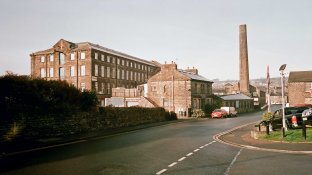
This is actually two photographs put together with Adobe Elements pan feature. By the way mill is Snugpak, they make their top end sleeping bags there, the sort used up Everest or at the south Pole.
silsden_span0102.jpg
 
Well run my first roll of Siberra 100 through the Olympus mu II and they all came out. supposed to be 24 but managed 27. DX worked fine.
This is actually two photographs put together with Adobe Elements pan feature. By the way mill is Snugpak, they make their top end sleeping bags there, the sort used up Everest or at the south Pole.
View attachment 298907
+1
 
Left to right.
Kodak Gold 200: Fuji DL-500 28mm lens
Siberra 100: Olympus mu-II 35mm lens
Lomochrome Metropolis: Rollie 35T 40mm lens
Taken same position same time.
Scanned by film processor as all processed at same time.
Minimal editing on Adobe Elements 2021
Kodak200_silberra100_Lomometropolis_01.jpg
 
Wow. I like the Silberra better than the Kodak Gold...
 
Unless you adjust the results appropriately:
upload_2022-2-22_11-1-1.png
 
Given it's a Golden Hour shot, I still like the Silberra's color better.
 
Photrio.com contains affiliate links to products. We may receive a commission for purchases made through these links.
To read our full affiliate disclosure statement please click Here.

PHOTRIO PARTNERS EQUALLY FUNDING OUR COMMUNITY:


Ilford ADOX Freestyle Photographic Stearman Press Weldon Color Lab Blue Moon Camera & Machine
Top Bottom