
• Welcome to Photrio!
    Registration is fast and free. Join today to unlock search, see fewer ads, and access all forum features.
    Click here to sign up

Shutterbug Magazine August 2004 Issue

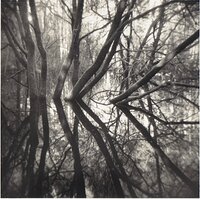
Flooded woodland

Flooded woodland

  • 15
  • 2
  • 111
Babylon

D
Babylon

  • 3
  • 1
  • 94

Recent Classifieds

Forum statistics

Threads
202,843
Messages
2,846,377
Members
101,561
Latest member
SBurns28804
Recent bookmarks
0

david b

Member
Allowing Ads
Joined
Oct 20, 2003
Messages
4,026
Location
None of your
Format
Medium Format
The august 2004 issue of shutterbug has a very interesting letter from the editor and one that I encourage everyone to read (see page 8).

The first part of the letter says that a major photo school is closing down its darkroom and going all digital.

The second part of the letter says that "art shows are increasingly rejecting photographic prints made with ink jet, saying they are mere copies".

I find this quite interesting. The art school is saying no to traditional printing but the art show is saying no to digital printing.

So if you've read this article, please let us know what you think.
 
Here's the biased article Shutterbug - George Schaub. Back when I was doing digital prints, I used his book on B&W digi darkroom - his specialty. Shutterbug relies on ads from an industry that is going digital. So, its only natural that he/they bemoan the trend of art fair directors & gallery curators rejecting digi prints.
 
I have said this somewhere before, but very recently a Gallery owner told me his clients bought my photographs because, "They were the only traditional prints they could find lately." From this I gather that collection of ink jet prints is not in the art "mainstream" yet. But it will come as soon as they (the collectors) figure that there are two distinct art forms involved.
 
The bias shows in the following statement:
This is, to me, a fairly ignorant stance on the part of art committees, but one that exists nonetheless. It fails to recognize that making color prints by digital means is no more or less a copying technique than working from a negative. It is still in how the print is made, and how the artist and craftsperson works the image that makes it unique. One could make dozens of prints from a negative as easily as one could from a scan.
I'm not sure what darkroom printing method he is thinking of that is comparable in ease to loading a printer & pushing a GUI button. I would suspect that the uniqueness of each traditional print is main reason why collectors buy traditional prints & reject digi prints as being copies.
 
Hi All,
Well...my perspective is that the article is fairly well balanced. Even more so, considering the source. Let's not forget how long that it took for silver gelatin printing to be considered an art form. Galleries want something that sells...silver gelatin prints do, photographs don't! Giclee may where inkjet won't? "The fickle politics of art!"

Don't shoot the "bearer of tidings!

Cheers,
Geary
 
Personally, I think that skills can travel both ways -- I feel my understanding of digital printing was enhanced by darkroom experience, but have also found that digital printing experience has influenced my darkroom printing (especially in my pre-visualizations of a wide range of exposure and contrast effects, which I got used to doing rapidly and cheaply via Photoshop etc).

Galleries, however, are not in the business of selling (or defining, save as a marketing ploy) "art." They are in the business of selling art objects — that is, objects which have been declared "artistic." Though we all know that digital silver prints are a reality, the art-buying public generally ignores that sort of thing. A wet print, in their minds, will never be the same as a pic that someone might have grabbed off a web page.
 
I think Schaub's editorial is quite fair and reasonable. Shutterbug is, to me at least, often markedly shrill in it's endorsement of digital products and processes. Some of those who write for that magazine, in fact, were the "ranting pixelidiots" I was referring to on another thread that Les took such exception to (certainly not him, as he's always been well balanced and fair in his views.). I've been disappointed in some of Schaub's prior editorials as well, when he's not had the courage to make a pointed critisism of digital matters when the thrust of the article he was writing would have made such a statement seem the logical endpoint of his thesis. But, in the case cited here, he's making a reasoned argument on behalf of both digital and traditional issues. Now, if he would have the editorial sack to continue to feature articles on traditional matters 'above the fold' instead of relegating a few column inches to Frances Schultz at the back of the magazine, perhaps Shutterbug would help retain a balance between the two art forms and help to head off the derailing of film with the supercilliousness it's being treated with now.
 
This is the quote I liked the most, clearly not balanced or fair IMO:

"One could make dozens of prints from a negative as easily as one could from a scan. Indeed, if archival quality is the issue one could also argue that ink jet prints can be made that last as long, or longer, than dye prints from color negatives."

Not a good print IMO. OTOH, I never looked at Shutterbug for informed or balanced opinions, I liked reading the ads...:smile:
 
In another thread I talked about what Roger Hicks wrote about US photo schools doing away with their darkrooms. The students left and darkroom will be reinstated again. Source:Amateur Photographer (UK) 17th July 2004 issue.
Hans
 
Last edited by a moderator:
The school at which I teach (Art Instititute of Colorado) is going all digital except for two classes I teach. One in the Zone system and another in alternative processes. The feeling here is that without a darkroom students will lose out on key concepts in contrast, dynamic range and many others. Does anyone know what school it is that is getting rid of its darkroom?
 
Answered my own question. I am pretty sure it is the New School in New York.
 
Well, the University of Arizona looks like it will be doing the same. The head of the program is talking about killing the color darkroom and installing a digital lab.

Of course they have 3 excellent digital labs already, and up to 44" printing....

But why not add another?
 
The article about George Dewolf in maybe the july? shutterbug is just as depressing.
 
why do you all read all that stuff? I prefer to have my head down and covered with sand.

lee\c
 
ThomHarrop said:
... without a darkroom students will lose out on key concepts in contrast, dynamic range and many others...

Contrast and dynamic range are not analogue-only concepts -- there are commercial digital cameras with range upwards of 20 stops (far more than any neg), and contrast is control over the distribution spacing between input luminance and output density. These are concepts that can be vividly, cheaply, and quickly taught without film or paper. This includes the correlation between spatial frequency (film size) and dynamic range. This will become increasingly evident as 16-bit and floating-point pixels become the norm (as they already are in the movie world -- see openEXR.org for plenty of examples).

A far better angle on wet process in schools, IMO, is the hand-made nature of the process, resulting in an object driven more by craft than technology. This is not a particularly po-mo idea, but a valid one -- just as playing Beethoven is not an innovative choice, but still a meritable artistic pursuit.
 
I just got back from the Santa Fe workshops where George Schaub spoke tonight and showed some of his work.

Not much to say.
 
bjorke said:
Personally, I think that skills can travel both ways -- I feel my understanding of digital printing was enhanced by darkroom experience, but have also found that digital printing experience has influenced my darkroom printing (especially in my pre-visualizations of a wide range of exposure and contrast effects, which I got used to doing rapidly and cheaply via Photoshop etc).

bjorke, I could not agree more! I've never made a digital photo but I've downloaded sample images from several web sites and played with them in Photoshop. The instant feedback of this process flattens the learning curve right out. I can try and see changes in seconds that would take hours in the darkroom. The flow of learning is smooth and uninterupted.

It has changed and helped in many ways with my traditional work as well. I "see" differently because of this instant feedback.

I'm better at my Photoshop "adjustments" because of my experience with the darkroom and I'm better in the darkroom because of learning speed in digital.

I see digital as a win/win situation for all kinds of photography. And isn't it really "Photogrphy" we all love? After all?

JOHN
 
bjorke said:
Contrast and dynamic range are not analogue-only concepts -- there are commercial digital cameras with range upwards of 20 stops (far more than any neg), and contrast is control over the distribution spacing between input luminance and output density. These are concepts that can be vividly, cheaply, and quickly taught without film or paper. This includes the correlation between spatial frequency (film size) and dynamic range. This will become increasingly evident as 16-bit and floating-point pixels become the norm (as they already are in the movie world -- see openEXR.org for plenty of examples).

I am very curious about a 20 stop digital camera.

I would also like to understand the relationship of the input and output capabilities with regard to colour space. In other words are you saying that the colour space 'foot print' has final gotten larger and that they are not simply slicing the pie thinner and if so how is this being (re)mapped so that it is usable?
 
Mrcallow,

Nice signature though it can't be good for the chair or the keyboard.
 
david b said:
I just got back from the Santa Fe workshops where George Schaub spoke tonight and showed some of his work.

Not much to say.

why not, what did he say?

lee\c
 
Photrio.com contains affiliate links to products. We may receive a commission for purchases made through these links.
To read our full affiliate disclosure statement please click Here.

PHOTRIO PARTNERS EQUALLY FUNDING OUR COMMUNITY:


Ilford ADOX Freestyle Photographic Stearman Press Weldon Color Lab Blue Moon Camera & Machine
Top Bottom
