
• Welcome to Photrio!
    Registration is fast and free. Join today to unlock search, see fewer ads, and access all forum features.
    Click here to sign up

For Sale Shutter testers

9/50

H
9/50

  • 3
  • 3
  • 30

Forum statistics

Threads
201,220
Messages
2,820,688
Members
100,595
Latest member
keithberry
Recent bookmarks
0
Trader history for vfmoto (0)

vfmoto

Member
Allowing Ads
Joined
Jun 10, 2010
Messages
6
Location
Bucharest, R
Format
35mm
Hello,

The shutter testers are built by me. Every shutter tester will be tested before shipping.

1. The 1/1000th of a second box shutter tester:
- You will receive an Audacity file containing a test done at 1/1000th of a second with the actual shutter you bought.
- No loose wires. Everything is soldered onto a board.
- The cable is plug and play to allow you to extend it as much as you want and to prevent accidents in case someone trips over it.
- No battery and no maintenance needed! The tester works just like an electret microphone (a microphone that does not need a power supply). Works on all PCs. Will not work on some Apple computers like the Mac Book Pro.
- Detailed 12 page PDF english manual.
- Very small and easy to use.
- Needs a computer with a sound card and an audio editor for recording. I recommend Audacity because it's free, portable and easy to use. Also, this is the software used in the manual.
- Link with a screen shot of a 1/1000th of a second test in Audacity. (click here)
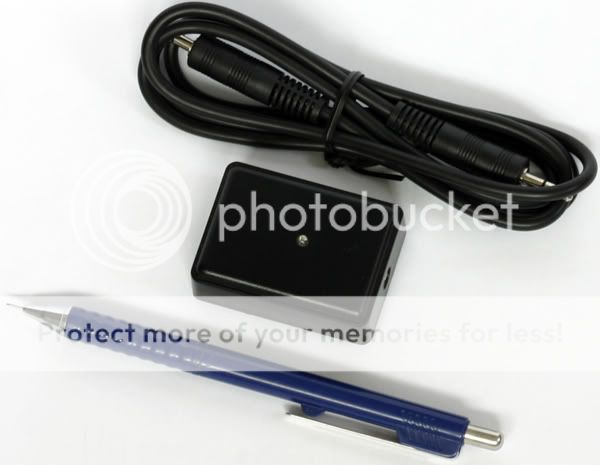
Boxtester.jpg


2. The 1/1000th of a second cable shutter tester:

- You will receive an email with an Audacity file containing a test done at 1/1000th of a second with the actual shutter tester that you bought.
- No loose wires.
- 2.5 meter cable.
- The cable is plug and play. You can extend it as much as you want with an extension cord.
- No battery and no maintenance needed! The tester works just like an electret microphone (a microphone that does not need a power supply). Will not work on some Apple computers like the Mac Book Pro.
- Detailed 12 page PDF english manual.
- Very small and easy to use.
- Excellent for cameras with bellows, TLRs and other cameras that have the shutter far from the edge of the back of the camera. By using a small tube you can place the tester as close to the shutter as you want.
- Needs a computer with a sound card and an audio editor for recording. I recommend Audacity because it's free, portable and easy to use. Also, this is the software used in the manual.
- Link with a screen shot of a 1/1000th of a second test in Audacity. (click here)
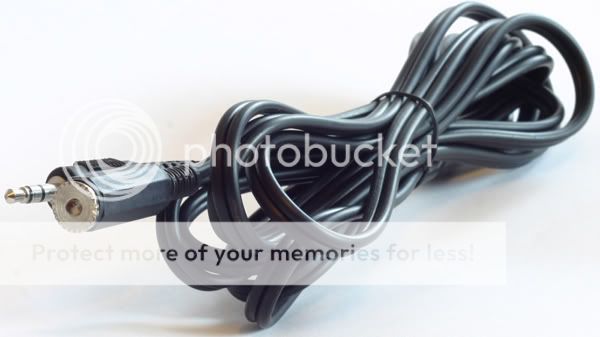
Cabletesterpic.jpg


3. The 1/2000th of a second shutter tester:

- You will receive an Audacity file containing a test done at 1/2000th with the actual shutter tester you bought.
- A lot of people have problems finding a light source for a tester and they never really know how good is the light source they chose. This tester solves both problems by having a light source that was tested with the device for optimal performance. The light source intensity is adjustable so you can tune it according to your camera.
- Needs 2 AA batteries (included).
- Very small and easy to use.
- PDF English manual.
- Will work on all computers (as far as I know) including the Apple computers that are not compatible with the 1/1000th of a second tester.
- Excellent for cameras with bellows, TLRs and other cameras that have the shutter far from the edge of the back of the camera. By using a small tube you can place the tester as close to the shutter as you want.
- Needs a computer with a sound card and an audio editor for recording. I recommend Audacity because it's free, portable and easy to use. Also, this is the software used in the manual.
- Link with a screen shot of a 1/2000th of a second test in Audacity. (click here)
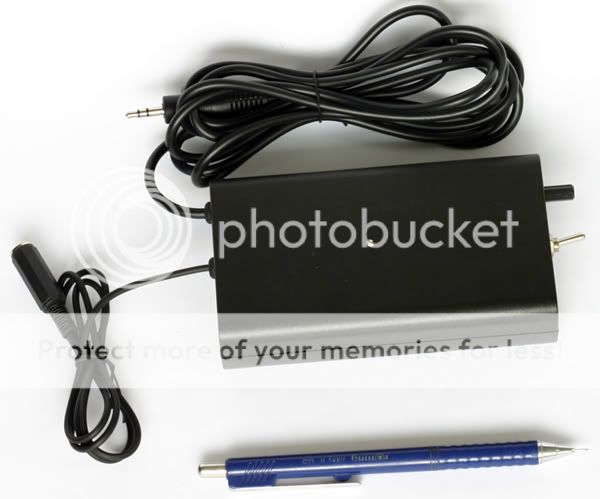
2000tester.jpg


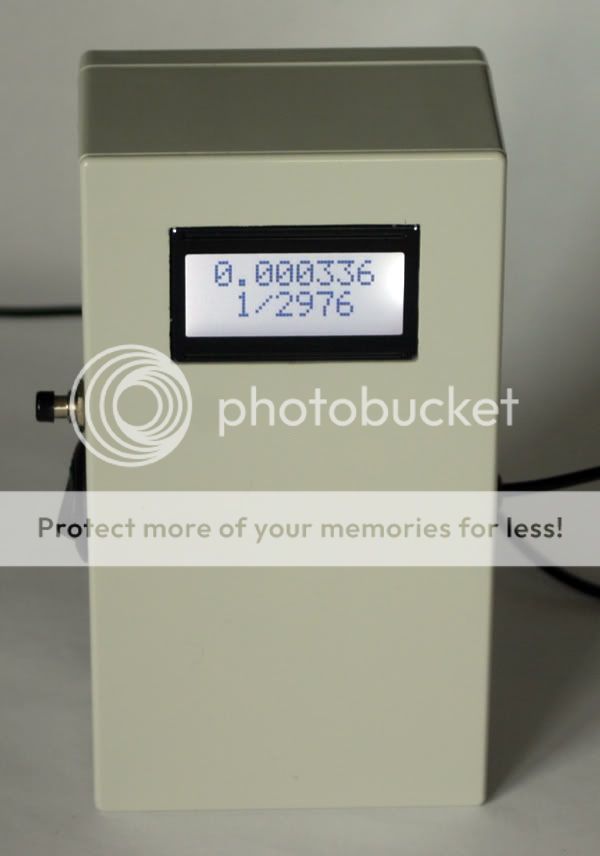
4. The 1/2000th of a second LCD tester:

- The tester will do at least 1/2000th of a second. It was designed to perform at 1/8000th of a second but I have no means of testing over 1/2000th of a second. I have no doubt that it can measure well speeds above 1/2000th of a second.
- No need for a computer. It has a microchip that does all the measurements.
- Excellent for cameras with bellows, TLRs and other cameras that have the shutter far from the edge of the back of the camera. By using a small tube you can place the tester as close to the shutter as you want.
- The LCD has a back light that helps reading the values.
- Has an on/off and a reset button.
- Needs a 9 volt battery (included).
- Can be provided with the receiver mounted on the box instead of the cable.
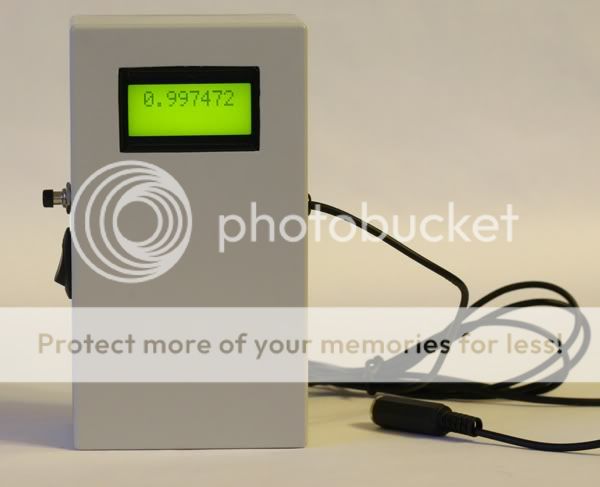
LCD.jpg


Prices:

- The 1/1000th of a second box tester: 11 euros
- The 1/1000th of a second cable tester: 11 euros
- The 1/2000th of a second tester: 25 euros
- The 1/2000th of a second LCD tester: 60 euros

Shipping rates:

- All the prices are in euros. Because there is a character limit to a post I can't add a normal table so I added a photo. The host website reduced the size of the image. If you can't read it, PM me.
- If your country is not on the list, PM me.
- All the testers will be shipped from Bucharest, Romania.
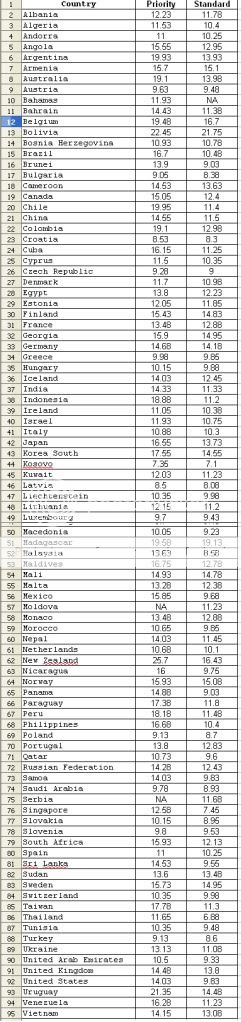
Shipping.jpg


I am eBay user vfmoto. You can find 3 of the 4 testers on eBay and look at my feedback. Also, the eBay auctions have the prices in $ if you prefer $.
You can also find me on the mflenses website. Some users made reviews of my testers. I don't know if I am allowed to post links to other websites so I won't.

For orders PM me.
For questions, ask here or PM me.

Cheers,
Florin :smile:
 
🛡️ Classifieds Safety Reminder: Please stay safe when buying and selling. Scams via hacked accounts are on the rise globally.

Best Practices: Always use a verified payment method with buyer protection (avoid "PayPal Friends & Family"). Services like Escrow.com are highly secure. Be suspicious of random unsolicited contact via Private Message. If you see suspicious behavior, please use the Report link on the post immediately.
OP
OP

vfmoto

Member
Allowing Ads
Joined
Jun 10, 2010
Messages
6
Location
Bucharest, R
Format
35mm
I've had an inquiry trough the PM about the shipping prices and I realized that I completely forgot this part.

Shipping is calculated in 1kg increments. That means that if I ship 10 grams or 1000 grams, the price is the same.

I can send the receipts to show that I am not inflating the prices.

Sadly there is nothing I can do about this. I have no control over the postal service.

I try to minimize the costs by giving accurate shipping for every country instead of slapping a flat fee that would cover the highest price and take some extra cash form the lower prices.

There are 2 good news about this sad and expensive situation:
- You get a tracking code for either shipping option you choose.
- If you plan a group buy with some friends shipping will remain the same. The 1/1000 testers weigh about 100 grams. That means you can get up to 10 and pay no extra shipping cost. The 1/2000th tester weighs under 300 grams and the LCD one weighs around 400 grams (batteries included).

Sending it trough post as a letter in an envelope is not possible. The postal service rules state that anything else except paper is considered a parcel. All envelopes are checked by the postal clerks.

This is the cheapest option by far. DHL wanted 120 euros to ship a tester to Sweden. :smile:

If you have any more questions, don't hesitate to ask.

Cheers,
Florin
 

Revolucion Artistico

Member
Allowing Ads
Joined
Dec 5, 2010
Messages
41
Location
Santa Ana, C
Format
Medium Format
I just purchased one of these a few days ago from Florin on the auction site. I haven't received it yet so no personal experience using it but have talked to various people and read on several forums that they work well. I can attest to Florin being easy to deal with and responsive on his emails. Good luck.
 

benjiboy

Subscriber
Allowing Ads
Joined
Apr 18, 2005
Messages
12,004
Location
U.K.
Format
35mm
How do you know what tolerance in percentage of the marked speeds + or - is within tolerance ?, what is the acceptable margin of error, because unless you know this my training as a test engineer tells me that the digital readout is just numbers, so if the the marked speed is 1/500sec and the tester reads 1/410 sec is it within tolerance ?
 
Last edited by a moderator:

picker77

Member
Allowing Ads
Joined
Feb 24, 2009
Messages
121
Location
Oklahoma, US
Format
Multi Format
I received one of these (the basic version) from Florin a couple of weeks ago (about 3 weeks shipping from Romania). It works great, and is easy to use. I posted a "mini-review" of it on the LF forum a couple of days ago. I've already discovered a couple of eye-opening things about my shutters and lenses using it. Florin is a reliable and honest businessman, and I don't hesitate to recommend him. Just be patient on the shipping, it is what it is from Romania.
 
OP
OP

vfmoto

Member
Allowing Ads
Joined
Jun 10, 2010
Messages
6
Location
Bucharest, R
Format
35mm
First of all thank you for the kind words. I am far from being a businessman. This has started as a fun thing that mixed my 2 hobbies for cameras and electronics. Now, I do it to fund my camera purchases. This way I don't get raised eyebrows from my family when I buy somewhat expensive photo items.

I will be the first one to admit that shipping is the Achilles heel of the deal and most of the time the postal services from both countries are at fault. The only countries that did a top job every time were Japan and UK. Also, I've checked the postal services form other European countries and their rates are just as high. :sad: (except UK)

How do you know what tolerance in percentage of the marked speeds + or - is within tolerance ?, what is the acceptable margin of error, because unless you know this my training as a test engineer tells me that the digital readout is just numbers, so if the the marked speed is 1/500sec and the tester reads 1/410 sec is it within tolerance ?

I don't think I understood your question right so if my answer is different please ask again.

If the tolerance you are talking about is the shutter tolerance than this depends on the shutter type and manufacturer. Some old Compur shutters have a tolerance of 30% (given by the manufacturer). This means that if you take a photo with an exposure of 1 second, everything between 0.7 and 1.3 seconds is within spec. To find the tolerance you need a service manual for the shutter.

The LCD tester in the photo displays only a number. That's the time in seconds the shutter is open. In that photo a 1 second test was done.

So in the 0.997472 test the shutter is 0.002528 seconds faster than the 1 second desired time.

Now let's say you do a test at 1/1000th of a second and you get a reading of 0.001173. This means your tester is running at a speed of 1/852. Now depending on your shutter you might have to fix it or not. If you get a reading of 0.000972 your shutter is running at a speed of 1/1028. If you get a reading of 0.001 than your shutter is running at 1/1000th of a second.

The tester in the photo does not display the 1/852 speed but I plan to change this and have the time on the first row and the camera time in the 1/value format on the second row.

A display of "+17%" or "-17%" that displays the error in percentage is a tricky thing to do because the tester does not know you want to do a test at a speed of 1/125 and after that you want to do a test at 1/500. To do this you have to tell the tester the theoretical speed you are testing your camera at so the tester can calculate an error with your theoretical speed as a reference point. This would require major changes in the code and circuit board of the tester. It would also require multiple buttons that would allow the user to insert the theoretical value.

An easier way would be to have a rotating dial with speeds like 1/60, 1/90, 1/125, 1/250, 1/500 or whatever values you desire but in this case your error display in percentage would be limited to those values.

I could do this but I don't have the time to do it and I doubt many people would be willing to pay the extra price.

Are any of these suitable for 35mm?

Yes, all of them. Most of my cameras are 35mm. I also have TLR cameras and I had customers with Speed Graphic cameras and Calumet shutters from large format cameras.
 

benjiboy

Subscriber
Allowing Ads
Joined
Apr 18, 2005
Messages
12,004
Location
U.K.
Format
35mm
I never needed a shutter speed tester, If I suspect my shutter-speeds are inaccurate I give the camera to the technician who services my equipment, and ask him check it and correct it if necessary, because if you test them yourself and find then inaccurate you're still going to have to get them corrected anyway.
 
Last edited by a moderator:

Revolucion Artistico

Member
Allowing Ads
Joined
Dec 5, 2010
Messages
41
Location
Santa Ana, C
Format
Medium Format
I never needed a shutter speed tester, If I suspect my shutter-speeds are inaccurate I give the camera to the technician who services my equipment, and ask him check it and correct it if necessary, because if you test them yourself and find then inaccurate you're still going to have to get them corrected anyway.

To me this would depend on how far off speeds are and if they're consistent or not. If lets say the slow speeds are consistently off and I now know by how much I would probably just compensate. BTW I just got my tester a few days ago and have been playing with it, it seems to work well and I've been getting good results. Pretty easy learning curve, the only thing I'd say is that with audacity I couldn't find the correct time measurement setting with the newer beta version so I downloaded the older version off the website and it works as described.

Ryan
 
Last edited by a moderator:

Rick A

Subscriber
Allowing Ads
Joined
Mar 31, 2009
Messages
10,006
Location
Laurel Highlands
Format
8x10 Format
I can see the value of these for LF purposes. It is good to find out the actual speed of a shutter for precision exposure settings. I have to only hope the setting will give the desired results with my ancient lenses. This would save on expensive sheet film.
 

David A. Goldfarb

Moderator
Moderator
Allowing Ads
Joined
Sep 7, 2002
Messages
19,991
Location
Honolulu, HI
Format
Large Format
Old LF shutters, even when properly adjusted, can drift with temperature, exercise, and other factors. If you're shooting color transparency with old shutters, testing around the time of making the exposure wouldn't be a bad idea.
 

paul ron

Member
Allowing Ads
Joined
Jan 22, 2004
Messages
2,709
Location
NYC
Format
Medium Format
I think the engineer was asking if the testers were ever compared to a known source or standard to calibrate the "machine" as accurate to a tolerance?... not asking if the shutter measurements are within tolerence, but the actual test machine itself is within a measurable tolerence.
 

benjiboy

Subscriber
Allowing Ads
Joined
Apr 18, 2005
Messages
12,004
Location
U.K.
Format
35mm
I think the engineer was asking if the testers were ever compared to a known source or standard to calibrate the "machine" as accurate to a tolerance?... not asking if the shutter measurements are within tolerence, but the actual test machine itself is within a measurable tolerence.

No, I meant how close the measured shutter speed is to the marked speed on the shutter speed dial, and what margin of error is acceptable, i.e. if the marked speed is 1/1000sec and the measured speed the unit is operating at is 1/807sec,or 1289 sec, is this acceptable or not, what is the acceptable margin of error before the the shutter is sent for re -calibration.
 

paul ron

Member
Allowing Ads
Joined
Jan 22, 2004
Messages
2,709
Location
NYC
Format
Medium Format
I'd still be curious how accurate the actual machine is compared to a know source. I've made several DIY testers and found some introduce noise, appear off but in reality it's how you read the wave forms, or the speed of the photo diode or transistor to react are slow or has memory, the light source is not positioned properly or is not bright enough or varied. I'd like to see repeatability specs.
 

Diapositivo

Subscriber
Allowing Ads
Joined
Nov 1, 2009
Messages
3,257
Location
Rome, Italy
Format
35mm
This is a very good idea. People who sell second-hand items on eBay can check shutter accuracy and give a table with the real shutter times. This can be important for buyers working with slides, like me.

I'll buy one of those sooner rather than later.

Question: is it possible to have the instruction manual? That would allow to understand better the usage of the various devices and choose among them.

Question: would it be possible for you, in the future, to have a opening tester? A device that shows the actual aperture as opposed to the theoretical aperture (the two do not always coincide. Some magazines publish tests on lenses with this kind of examination performed).

Benjiboy, I understand what you mean, but the problem with shutters is that their mistake is not linear. You can have most speeds quite exact and then one single shutter speed too slow, or you might have fast times OK and slow times too slow. This would show as "random" small divergences between expected and actual result. That, in turn, might lead to changes in development time, agitation patterns etc. or adopting a different Exposure Index, and the random problem would go on showing from time to time. I would like to have the comfort of knowing that my shutters are fine, or that only certain speeds on certain cameras require a little compensation.

Last time I brought a camera (Canon Canonet QL19 III) to a laboratory they asked me €30 just to check if the shutter was good enough, and they did not give me a table with actual times. With a device like this, I can routinely check the shutters of all cameras, and bring to maintenance only those that I know are a bit too off.
I have 5 SLR and 2 RF and I know I will recover the costs quite easily.

Good idea, good initiative.

Fabrizio
 
Last edited by a moderator:

FM2N

Member
Allowing Ads
Joined
Jun 23, 2006
Messages
863
Location
Long Island, NY
Format
35mm
Benjiboy if you are shooting B&W film then a shutter that if off by 1/3 or less either way is said to be in good working order. At least this is what I have read over the years and have experienced with my own tested lenses.
Arthur
 

graywolf

Member
Allowing Ads
Joined
Jun 5, 2009
Messages
166
Location
Boone, North
Format
Multi Format
One thing that most of these types of testers don't do is measure a leaf shutter at 70% open as per the spec's. That makes it look like the shutter is running slow at higher speeds. That is where the stories about leaf shutters only doing 1/300 of a second at 1/500 come from. All of the properly CLA'd shutters (post wwii) I have tested have run within 1/6 of a stop at all speeds. If it does not, then it needs to be properly serviced.

I have one of the Calumet Shutter Speed Testers and the instructions tell you to use a dimmer on your light source to make it read that 70% open speed. I do not know it you can use that technique with the sellers testers or not.
 
OP
OP

vfmoto

Member
Allowing Ads
Joined
Jun 10, 2010
Messages
6
Location
Bucharest, R
Format
35mm
First of all I would like to apologize for my lack of activity in this thread. I assumed that I will receive email notifications when someone posts in my thread but I never got any. After the thread dropped to page 10 or so, I thought it was dead.

I never needed a shutter speed tester, If I suspect my shutter-speeds are inaccurate I give the camera to the technician who services my equipment, and ask him check it and correct it if necessary, because if you test them yourself and find then inaccurate you're still going to have to get them corrected anyway.
If that works for you, great! Sadly it's not always black and white. The gray between the 2 can be pretty time consuming and expensive. If you know the error of your shutter you can compensate for it. Some camera repair shops are quite expensive and they charge a fee just to tell you if it works right. Not to mention the time your camera is unavailable (unless they do the tests on the spot). If you have one camera you can keep the fees at a minimum but if you have 10 or 20 a simple test will end up costing an arm and a leg.

People should chose an option that is comfortable for them.

To me this would depend on how far off speeds are and if they're consistent or not. If lets say the slow speeds are consistently off and I now know by how much I would probably just compensate. BTW I just got my tester a few days ago and have been playing with it, it seems to work well and I've been getting good results. Pretty easy learning curve, the only thing I'd say is that with audacity I couldn't find the correct time measurement setting with the newer beta version so I downloaded the older version off the website and it works as described.

Ryan

There is a way to measure the speed on the new versions of Audacity but I find it a bit annoying. The old versions are the best for tests. If you want to know it, I will post it. It was written by a customer.

I can see the value of these for LF purposes. It is good to find out the actual speed of a shutter for precision exposure settings. I have to only hope the setting will give the desired results with my ancient lenses. This would save on expensive sheet film.

This is why I first made the tester. I needed a cheap way of saving my rolls of film.

I think the engineer was asking if the testers were ever compared to a known source or standard to calibrate the "machine" as accurate to a tolerance?... not asking if the shutter measurements are within tolerence, but the actual test machine itself is within a measurable tolerence.

I have often thought about this and what would be the best benchmark. I did the tester to measure my inaccurate mechanical shutters. The problem was I did not have an accurate one to see if the measurements are OK. I got an electronically controlled shutter and I started testing different light sources and photocells. The electronically controlled shutter proved to be very accurate and very consistent. After I finished the first shutter tester I took one of my old cameras with a mechanical shutter and tested the shutter speeds. They were off by a big margin so I sent the camera to a repair shop. I asked for the shutter speed values before and after the CLA. When I got it back I did the test again. I both cases (before and after) the times matched with a +2%/-2% error. I did not have access to a fancy test lab with people running around in white coats, if that's what you're asking.

No, I meant how close the measured shutter speed is to the marked speed on the shutter speed dial, and what margin of error is acceptable, i.e. if the marked speed is 1/1000sec and the measured speed the unit is operating at is 1/807sec,or 1289 sec, is this acceptable or not, what is the acceptable margin of error before the the shutter is sent for re -calibration.

This depends entirely on the shutter specifications. If the manufacturer gives an operating error of +30%/-30% and your shutter is 29% off, the shutter is within the specified limits and everything is OK. Your shutter works fine. If the manufacturer gives an operating error of +3%/-3% and your shutter is 4% off, you need to have it repaired. I mention this in the manual. Try and find the shutter specifications. Last thing you want is to fix a good working shutter.

I'd like to see repeatability specs.

An electronically controlled shutter will give you plenty of those. For the 1/1000th tests I got a lot of 0.000998 results.

Question: is it possible to have the instruction manual? That would allow to understand better the usage of the various devices and choose among them.

Question: would it be possible for you, in the future, to have a opening tester? A device that shows the actual aperture as opposed to the theoretical aperture (the two do not always coincide. Some magazines publish tests on lenses with this kind of examination performed).

I am working on a website for the testers. I have a domain registered that I don't use. I will probably add more details and the manuals there. In the meantime if you want the manual, PM me an email address and I will send it.

Regarding the second question, I don't know when I will have the time to research and develop other testers. This is a hobby of mine. It does not pay the bills.

One thing that most of these types of testers don't do is measure a leaf shutter at 70% open as per the spec's. That makes it look like the shutter is running slow at higher speeds. That is where the stories about leaf shutters only doing 1/300 of a second at 1/500 come from. All of the properly CLA'd shutters (post wwii) I have tested have run within 1/6 of a stop at all speeds. If it does not, then it needs to be properly serviced.

I have one of the Calumet Shutter Speed Testers and the instructions tell you to use a dimmer on your light source to make it read that 70% open speed. I do not know it you can use that technique with the sellers testers or not.

I never tried this but the light intensity has a huge influence on the results. Changing the light intensity will affect the values so I don't see why this won't work.

If you have any more questions, don't hesitate to ask.
 
OP
OP

vfmoto

Member
Allowing Ads
Joined
Jun 10, 2010
Messages
6
Location
Bucharest, R
Format
35mm
Hello,

I've made an upgrade to the LCD tester. It can measure speeds up to 1/4000th of a second and the shutter speed is now displayed in camera speed, too.

The pic below is with a test done at 1/3000th of a second with an electronically controlled focal plane shutter.

tester.jpg


Cheers,
Florin
 

barzune

Member
Allowing Ads
Joined
Mar 28, 2010
Messages
281
Location
Ontario
Format
Multi Format
4. The 1/2000th of a second LCD tester:

I've had the #4. The 1/2000th of a second LCD tester, for a bit over a year, and have been using it on most of my shutters during that time.

It's really quite simple: set the camera up in your darkroom or studio, on a tripod.
Opposite the camera, set up a light ( I use a portable light table, about 10" X 12"). I set it up at a distance of about eight (8) feet, but use your own judgement.
Focus the lens at infinity, directly and square to the light source.
Eliminate extraneous light; I use a big changing bag: I peek the lens through one of the sleeves, and wrap the bag around the camera, then enter through the unzipped bottom.
For a focal plane shutter, I use a small, light tripod behind the camera and with masking tape and a small stick ( I use tongue depressors) set the receptor at the centre of the shutter, about 1cm from the curtains.
Zip the changing bag up most of the way, leaving the wire to the "unit" run through the small opening.
Turn off all the lights in the room, except for the light source directly in front of the lens.
Set the shutter at 1/30, turn on the tester, and fire the shutter. Record the readings. Repeat three (3) times.
Set the shutter at 1/60, turn on the tester, and fire the shutter. Record the readings. Repeat three (3) times.
Set the shutter at 1/125, turn on the tester, and fire the shutter. Record the readings. Repeat three (3) times.
etc until the top speed has been tested.

Then, repeat the procedure, from the top speed ( repeating each test 3 times) until the bottom speed is reached (usually 1 sec.)

Then, repeat the procedure, from the bottom speed ( repeating each test 3 times) until the top speed is reached .

This will give you a good idea of the precision of the shutter, and a good judgement of how to adapt exposure at each shutter setting.

The test system is accurate. The test unit is accurate. :smile:
 

doc_atlas

Member
Allowing Ads
Joined
Dec 13, 2011
Messages
55
Format
Medium Format
I have Florin's #4 tester and have checked it's accuracy on test equipment in my electronics design lab. It greatly surpasses the accuracy needed for testing mechanical shutters, as would be expected from a single chip microprocessor design such as this. The device is well constructed for its application/price/functionality and is easy to use, lot of value in this package.

I have turned a Delrin stepped adaptor stand for the sensor and cap for the light source that fits Copal 0 & 1 and dismount the the lenses for LF, test the naked shutters, put the values in a table, and expose according to the measured speeds. For the MF and 35mm, I measure periodically just to check when/if to CLA. I initially bought Florin's tester for portable use, verifying shutters on the road, and have, since receiving it, given up the bench test setup I built and use my #4 exclusively.

Florin is a great guy to deal with and you will not be disappointed with this useful tool.
 
Photrio.com contains affiliate links to products. We may receive a commission for purchases made through these links.
To read our full affiliate disclosure statement please click Here.

PHOTRIO PARTNERS EQUALLY FUNDING OUR COMMUNITY:


Ilford ADOX Freestyle Photographic Stearman Press Weldon Color Lab Blue Moon Camera & Machine
Top Bottom