
• Welcome to Photrio!
    Registration is fast and free. Join today to unlock search, see fewer ads, and access all forum features.
    Click here to sign up

Shallowest DOF?

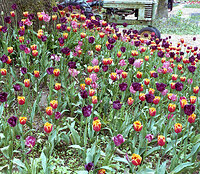
Tractor & Tulips

A
Tractor & Tulips

  • 0
  • 0
  • 12
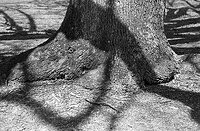
Tree with Big Shadows

Tree with Big Shadows

  • 2
  • 0
  • 71

Forum statistics

Threads
203,456
Messages
2,855,031
Members
101,853
Latest member
Expert Graphics Int.
Recent bookmarks
0

BetterSense

Member
Allowing Ads
Joined
Aug 16, 2008
Messages
3,151
Location
North Caroli
Format
35mm
I'm wondering what it means to have shallow DOF after a certain point. What's the shallowest DOF you can get, possibly?

If you get a large format, with long lens, and use it at an absurdly fast aperture, can you have basically zero DOF, but still have at least ONE plane that is perfect focus, even if that plane is impractically thin? Or does it just fall apart and become unfocusable at a certain point?

Or does it happen that after a certain point, DOF diminishes to a certain depth, and then kind of stops there, no matter how much faster you make the aperture, the dof is just "max shallow" similar to how "infinity" is reached?

My speed graphic has a DOF chart on it, that reads "0" for close distances at large apertures. But what's that supposed to mean anyway? Does the lens not form an image? Of course it does, just at the circle of confusion chosen, the DOF is insignificant.

What are some camera/lens combinations that give extremely shallow DOF?
 
>What are some camera/lens combinations that give extremely shallow DOF?


Dead Link Removed by Mikkel Stegmann is a small program that allows you to explore the relationships for hours and have fun doing so!
 
About the shallowest dof I've seen is with a 100x microscope objective lens, it is only a fraction of a micrometer.
 
I'm wondering what it means to have shallow DOF after a certain point. What's the shallowest DOF you can get, possibly?

If you get a large format, with long lens, and use it at an absurdly fast aperture, can you have basically zero DOF, but still have at least ONE plane that is perfect focus, even if that plane is impractically thin? Or does it just fall apart and become unfocusable at a certain point?

Or does it happen that after a certain point, DOF diminishes to a certain depth, and then kind of stops there, no matter how much faster you make the aperture, the dof is just "max shallow" similar to how "infinity" is reached?

My speed graphic has a DOF chart on it, that reads "0" for close distances at large apertures. But what's that supposed to mean anyway? Does the lens not form an image? Of course it does, just at the circle of confusion chosen, the DOF is insignificant.

What are some camera/lens combinations that give extremely shallow DOF?

None of the above. Depth of field is determined by lens focal length, diameter of the circle of confusion, aperture, and distance to the subject. No, it does not "diminish to a certain depth, and then kind of stops there". It is constantly variable according to the defined parameters. See http://en.wikipedia.org/wiki/Depth_of_field#Depth_of_field_formulae
 
Wirelessly posted (BBBold: BlackBerry9000/4.6.0.297 Profile/MIDP-2.0 Configuration/CLDC-1.1 VendorID/102 UP.Link/6.3.0.0.0)

When I had a macro bellows for my Minolta MD system, I could get well under a quarter inch with the 50mm Rokkor 1.4.
 
You can limit achieve some very impressive limits of DOF confocally, i.e. by placing an aperture at the conjugate focus of the lens. The aperture admits only that light which is very near the object plane. This is the basis for confocal optical microscopy, which allows us to do depth sectioning. In terms of fundamental limits, the DOF cannot be significantly smaller than about half the wavelength of the light you use, so people now use UV light sources to push the limits of DOF down to ~100-200 nm or less. If you wanted even tighter DOF then you'd work in the near field i.e. with evanescent waves generated by surface plasmons. In that case the DOF can be tens of nanometers.

For ordinary photography, though... sure, you use a fast lens, a big format, and you can also apply tilts. Recently for fun I put a 110/2.8 lens on 5x7 and, wide open at 3:1 macro focus, the DOF was extremely tight.
 
If you set up a system with an infinite focal length with a zero subject distance it seems to me you would end up with a vanishingly small depth of field (i.e. zero).

This is something people often do. It goes by the initials C.P.

Denis K
 
I would think that DOF would follow something of an asymptotic curve, nearing, but never reaching zero. Of course it is possible in practice as well as theory to have everything out of focus... (as I have proven many times... :rolleyes::D:D ) but I think that is a topic for a different thread.

Cheers,
 
It may be a tad off topic but if you attach your camera to a microscope as it is frequently done in microscopy, the depth of focus becomes in order of microns. I often run into situations where if I focus on the top side of the organism, the inside goes out of focus.
 
My Fujinon-W 300mm has a razor thin DOF at f5.6 and I love it, worth every penny. I usually shoot this lens wide open.
 
I've had to decide between focusing on a sitters eye lashes or their left or right iris - pretty small DOF I guess :wink:

And it'll sure be interesting putting my 'new' (134 old) 16" F4 Voigtlander on an 11x14" focused to 1:1 mag.
 
I've had to decide between focusing on a sitters eye lashes or their left or right iris - pretty small DOF I guess :wink:

And it'll sure be interesting putting my 'new' (134 old) 16" F4 Voigtlander on an 11x14" focused to 1:1 mag.

sexy
 
It is important to note that DOF is subjective. In normal application there is only one plane of exact focus, and everything in front of and behind is out of focus, and the farther you go the more it is. Because of that, the concept varies with format, focal length, and aperture, and what is considered acceptable sharpness by the individual. There is no real "least depth of field" to be had without first setting parameters on what exactly you are talking about. If two people can agree on a mutual COC for a given format a discussion becomes possible.
 
Last edited by a moderator:
Agreeing on a CoC size is, as you pointed out, not even enough to make a discussion possible.
 
Agreeing on a CoC size is, as you pointed out, not even enough to make a discussion possible.

You are right, I should have written "may make a discussion possible". :smile:
 
Photrio.com contains affiliate links to products. We may receive a commission for purchases made through these links.
To read our full affiliate disclosure statement please click Here.

PHOTRIO PARTNERS EQUALLY FUNDING OUR COMMUNITY:


Ilford ADOX Freestyle Photographic Stearman Press Weldon Color Lab Blue Moon Camera & Machine
Top Bottom
