• Welcome to Photrio!
    Registration is fast and free. Join today to unlock search, see fewer ads, and access all forum features.
    Click here to sign up

Semistand/EMA At 4 Years

Recent Classifieds

Forum statistics

Threads
201,669
Messages
2,828,283
Members
100,881
Latest member
Pat Condon
Recent bookmarks
0

chuckroast

Subscriber
Joined
Jun 2, 2023
Messages
3,087
Location
All Over The Place
Format
Multi Format
A bit over 4 years ago, I descended into a rabbit hole to explore semistand/EMA. There was all manner of debate, discussion and ad hominem about it, I wanted to find out for myself whether "juice was worth the squeeze".

Around that time, I made my lab notes available to anyone else who might want to give this ago. I have maintained these, on- and off, here:


My general goal has been to try these development techniques with a variety of developers (Pyrocat, DK-50, D-76, HC-110, D-23, 510 Pyro, Beutlers) and films (Fomapan 100, Fomapan 200, Efke PL100M, FP 4+, HP5+, Plus-X, Tri-X, TMX, TMY, Agfapan APX 100).

I didn't do this with experimental rigor, a control group, and formal statistical analysis of results from a scanning electron microscope :wink: I just wanted to do my photographic work and see what combinations of things showed promise. The ones that did, I pursued more deeply, the ones that did not, I ignored thereafter.

I say this because these are my subjective anecdotal findings, not a law of nature. I am happy to provide reference images if there are questions, but I am not trying to convince anyone of anything. I am just sharing with the class what I have found for myself. Other people trying this stuff likely will have their own results which may well not align with mine. We all work differently.

Takeaways:
  • How you suspend the film is fundamental to avoiding bromide drag. It has to well above the bottom of the tank and held by either widely spaced reels or with minmal contact clips for sheetfilm. Gravity will do the job, but the more structure that touches the film, the greater the likelihood of developer trapping leading to drag. For reels I do this by placing them on an inverted funnel in a double-height tanks.

  • Semistand/EMA will give you very sharp negatives but it is very much film dependent.

  • Edge effects seem to me to be more evident with older style films like 4x5 Tri-X 320.

  • Fomapan 200 is an excellent film in 4x5 but has observably less resolving power than, say, FP4+ and certainly TMX. This is most noticeable in 35mm. (I had lots of quality problems with F200 in 120, so I no longer touch the stuff.)

  • However, 35mm scenes without a ton of detail - like larger geometries found in abstracts - F200 works just swell.

  • Similarly, while both Tri-X and HP5+ work well in larger formats, I was unhappy with how they handled scenes with detail, like foilage in 35mm. This likely has nothing to do with semisntand/EMA, but is inherent in their makeup. By comparison TMY in 35mm handles this really well.

  • No matter what I did or how I tried, I could not get Double X to give me optimally sharp negatives as compared to Foma 200, FP4+, or TMX. This is kind of a shame because Double X responds really well to Pyro staining.

  • Both semistand and EMA (Extreme Minimal Development) give their best outcomes at around 30 min development time, more-or-less, at least for the dilutions I've been using. Going much beyond this tends to create really thick negatives and difficult to print highlights (though the highlight detail is preserved).

  • I was able to get very good results with longer semistand times by superdiluting 510 Pyro 1:500 and Pyrocat 1.5:1:300. However, I saw no real reason to do so. They didn't give me markedly different results than my usual Pyrocat-HDC 1.5:1:250.

  • While both Pyrocat-HDC and D-23 gave me very good negatives, the Pyrocrat is preferred, particularly for 35mm. The Pyro stain tends to hide film grain very nicely.

  • Tri-X in larger formats in Pyrocat-HDC semistand is a joy to behold.

  • I found that MQ style developers like DK-50, D-76, and HC-110 do work with these development technques but they tend to deliver harsher contrast, presumably because of the rapidity of superadditive development. The only way I got decent results from them was to highly dilute them.
AS ALWAYS YMMV (but I am happy to entertain questions or discussion).
 
Last edited:

Andrew O'Neill

Moderator
Moderator
Allowing Ads
Joined
Jan 16, 2004
Messages
12,863
Location
Coquitlam,BC Canada
Format
Multi Format
It's pretty hard to beat Pyrocat_HD or HDC when it comes to semi-stand/EMA. HP5 sheet film responds exceptionally well to it. I've also gotten excellent results with TMY-2.
Thank you for posting your thoughts on this topic! Mod Hat on: Hopefully some bonehead won't come in and ruin the thread. Mod Hat off.
 

koraks

Moderator
Moderator
Joined
Nov 29, 2018
Messages
26,664
Location
Europe
Format
Multi Format
Fomapan 200 is an excellent film in 4x5 but has observably less resolving power than, say, FP4+ and certainly TMX. This is most noticeable in 35mm.
W.r.t resolving power, what doesn't work to the advantage of Fomapan 200 is its mediocre antihalation in 35mm. It's a totally different animal from 4x5" foma 200 in that sense. Which makes the comparison a little tricky IMO.
Btw, how did you assess/measure resolving power and how do you define it for your own purposes?

No matter what I did or how I tried, I could not get Double X to give me optimally sharp negatives as compared to Foma 200, FP4+, or TMX.

How do you define 'optimally sharp' in this context? I've gone through some double x myself over the last year and I can't really complain of sharpness in the meaning of acutance. But it's pretty grainy and doesn't render a whole lot of fine detail for a film of this speed. Are we talking about the same?
I do notice it makes a lot of difference how it's developed; it looks quite different to me in parodinal vs. xtol vs. pyrocat.

presumably because of the rapidity of superadditive devlopment
Pyrocat HD is a superadditive developer just the same. Hydroquinone and pyrocatechol are very closely related molecules; both are superadditive with metol (pyrocat M-variants) and phenodine ('vanilla' pyrocat HD). Dilution indeed is key since the idea behind the high-acutance nature of reduced agitation development is to exhaust the developer locally.

I personally don't do much stand/semi-stand; I do sometimes develop esp. 35mm film with 3 minute agitation intervals, which is generally a safe practice in terms of avoiding uneven development.
 
OP
OP

chuckroast

Subscriber
Joined
Jun 2, 2023
Messages
3,087
Location
All Over The Place
Format
Multi Format
W.r.t resolving power, what doesn't work to the advantage of Fomapan 200 is its mediocre antihalation in 35mm. It's a totally different animal from 4x5" foma 200 in that sense. Which makes the comparison a little tricky IMO.

I was unaware of this difference, thanks.

Btw, how did you assess/measure resolving power and how do you define it for your own purposes?

For my purposes, I think of resolving power as the ability of the film to hold fine detail. For example,
leaves on trees at a distance.

How do you define 'optimally sharp' in this context? I've gone through some double x myself over the last year and I can't really complain of sharpness in the meaning of acutance. But it's pretty grainy and doesn't render a whole lot of fine detail for a film of this speed. Are we talking about the same?
I do notice it makes a lot of difference how it's developed; it looks quite different to me in parodinal vs. xtol vs. pyrocat.

With Double X, I found - as you mention - that it does not hold fine detail well. I probably shouldn't have written "optimally" sharp, just ... sharp. I actually found Double X to be (subjectively) sharper in D-76 1+1 developed conventionally than in Pyrocat-HD[C] low agitation. But I abandoned it as a film shortly thereafter (having shot hundreds of images through 100' of bulk') since I found Fomapan 200 to be noticeably 'better'.

Pyrocat HD is a superadditive developer just the same. Hydroquinone and pyrocatechol are very closely related molecules; both are superadditive with metol (pyrocat M-variants) and phenodine ('vanilla' pyrocat HD).

Interesting, again, something of which I was unaware.

Dilution indeed is key since the idea behind the high-acutance nature of reduced agitation development is to exhaust the developer locally.

Stipulated. When I got D-76 out to about 1+4 it behaved better in this regard at the expense of more pronounced visible grain in 35mm negatives (this was expected).

HC-110 was a challenge even at 1+128. I got very printable negatives but big SBRs made those negatives very dense. I am pretty sure this was attributable to standing in developer for way too long. The greater curiosity was that even with Arista 100 rollfilm, this scheme yielded more grain than I wanted. Probably dialing back standing time would address both issues.

But taking DK-50 down to even 1+3 still gave me harsher contrast than I like. I have lots of it here and may explore it further because DK-50 gave me killer edge effects with 4x5 Fomapan 200. I think part of the problem is - again - excessive standing time.

I personally don't do much stand/semi-stand; I do sometimes develop esp. 35mm film with 3 minute agitation intervals, which is generally a safe practice in terms of avoiding uneven development.

I've done a lot partially because of this multi-year curiosity adventure I have been on. I will say that, once I more or less dialed it in, I found it to be very forgiving and allowed me to shoot most SBRs at box speed and not have think about it deeply like Zone System demands.

As an aside, far and away the best results I got as defined by sharpness, dynamic range management, and tonal rendering was with the Efke PL100M, R100 family of films. It is tragic this stuff no longer exists. I shot both rollfilm and sheetfilm in 2x3 variants of this and developed in Pyrocat-HD[C] and the images were really great. I have a ton of it squirreled away in 2x3 but only one box fo 4x5 remains. It is ironic that was essentrially a consumer "drugstore" film, was actually a superb emulsion. I do have a bunch of Adox CHS 100 II here in both 2x3 and 4x5 and this is rumoured to be the Efke successor, but I have yet to get to it.

My most recent foray has been to find the sweet spot of FP4+ and the results have been just terrific. Properly handled, it delivers stunning semistand results.

Thanks for your comments.

P.S. @Andrew O'Neill doesn't like boneheads :wink:
 

mzjo

Member
Allowing Ads
Joined
Oct 9, 2023
Messages
14
Location
France
Format
35mm
This post comes at a very timely moment as I have just started using/playing a bit with stand so I will be trying to follow and understand the results here (and avoid going too much into the detail of all these films and developers I don't know). For the moment I restrict myself to Foma FP100 for film and Rodinal for developer (the FP100 is my usual go to film that I get in bulk, being not rich). I use a piece of plastic waste pipe under the spiral to keep a good volume underneath (I don't think I have ever seen this advised, it just seemed like a good idea) and the Rodinal is diluted 1+100. 1 hour development with no agitation apart from at the start. So far so good!

Jo
 

Craig

Subscriber
Joined
Apr 8, 2004
Messages
2,522
Location
Calgary
Format
Multi Format
I find FP4 gives very nice tonalty in several developers. Not the finest grain, but lovely tones.
 

Milpool

Member
Allowing Ads
Joined
Jul 9, 2023
Messages
957
Location
n/a
Format
4x5 Format
What were the agitation intervals during the 4 years?
 

Alan Johnson

Subscriber
Allowing Ads
Joined
Nov 16, 2004
Messages
3,373
Some time ago I made tests in which I photographed a dark grey card on top of a light grey card using various films and developed the negatives semi stand in half strength FX-1. In agreement with the results in post 1 it was found on enlarging the negatives that the Efke films showed the most edge effect and T-Max 100 the least with other films falling in between.
 
OP
OP

chuckroast

Subscriber
Joined
Jun 2, 2023
Messages
3,087
Location
All Over The Place
Format
Multi Format
Some time ago I made tests in which I photographed a dark grey card on top of a light grey card using various films and developed the negatives semi stand in half strength FX-1. In agreement with the results in post 1 it was found on enlarging the negatives that the Efke films showed the most edge effect and T-Max 100 the least with other films falling in between.

Have you tried Adox CHS II for comparison?
 
OP
OP

chuckroast

Subscriber
Joined
Jun 2, 2023
Messages
3,087
Location
All Over The Place
Format
Multi Format
This post comes at a very timely moment as I have just started using/playing a bit with stand so I will be trying to follow and understand the results here (and avoid going too much into the detail of all these films and developers I don't know). For the moment I restrict myself to Foma FP100 for film and Rodinal for developer (the FP100 is my usual go to film that I get in bulk, being not rich). I use a piece of plastic waste pipe under the spiral to keep a good volume underneath (I don't think I have ever seen this advised, it just seemed like a good idea) and the Rodinal is diluted 1+100. 1 hour development with no agitation apart from at the start. So far so good!

Jo

I would recommend a brief midpoint agitation as well. I found that not doing this increased the chances of drag.
 

Craig

Subscriber
Joined
Apr 8, 2004
Messages
2,522
Location
Calgary
Format
Multi Format
When I see EMA the fist thing that comes to mind is East Midlands Airport. Somehow I don't think it's the same thing!
 

koraks

Moderator
Moderator
Joined
Nov 29, 2018
Messages
26,664
Location
Europe
Format
Multi Format
Thanks @chuckroast; reduced agitation schemes are something that continue to stimulate my imagination, so from time to time I try something out. So far I personally haven't found something in there that I can reliably say 'works' for me, at least not any better than more frequent agitation. Then again, I haven't spent 4 years of intensive trialing with it!
 

loccdor

Member
Joined
Jan 12, 2024
Messages
2,546
Location
USA
Format
Multi Format
Thanks for sharing your results.

When I do a 10 minute Rodinal semi-stand with Agfa Scala 50/HR-50, I don't get bromide drag or uneven development in a normal 3 reel Paterson tank. There is a 30 second initial agitation and then one very gentle inversion at the 5 minute mark. 22C and 1+25.

There are scenes I would expect unevenness to show up, if it was present. I think I have done about 20-30 rolls with this recipe now. It was devised by Ruediger Hartung.
 

Attachments

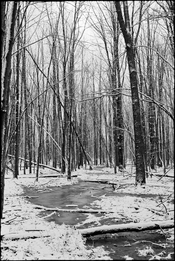
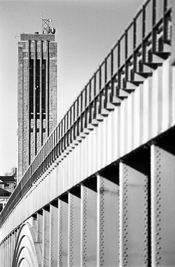
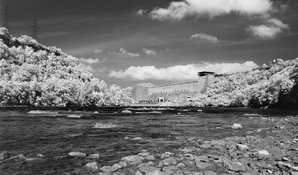
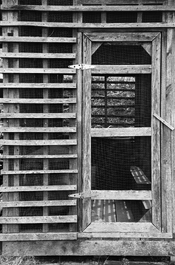
  • 54236560416_fad70b92e1_k.jpg
    54236560416_fad70b92e1_k.jpg
    1 MB · Views: 42
  • 54233159300_58042149a4_k.jpg
    54233159300_58042149a4_k.jpg
    575.1 KB · Views: 46
  • 54047261219_a8c1b84ace_k.jpg
    54047261219_a8c1b84ace_k.jpg
    656.8 KB · Views: 41
  • 54464006430_0fbe6dc471_k.jpg
    54464006430_0fbe6dc471_k.jpg
    878.8 KB · Views: 37
  • 54235277530_6e55eb67ce_k.jpg
    54235277530_6e55eb67ce_k.jpg
    375.2 KB · Views: 45
OP
OP

chuckroast

Subscriber
Joined
Jun 2, 2023
Messages
3,087
Location
All Over The Place
Format
Multi Format
Thanks @chuckroast; reduced agitation schemes are something that continue to stimulate my imagination, so from time to time I try something out. So far I personally haven't found something in there that I can reliably say 'works' for me, at least not any better than more frequent agitation. Then again, I haven't spent 4 years of intensive trialing with it!

It's probably worth summarizing what I have found viz the claims made for this technique. I've included a link for each of these that I think demonstrates the claim - all are scans of silver prints:

  • Achieves full box speed
  • Compensated highlight development
  • Enhanced edge effects
  • Improved mid-tone local contrast

Note that my comments are in context of being a silver printer using a diffuse VC cold light head that does best with negatives of somewhats greater CI than you'd probably want for scanning.

Full Box Speed

This was borne out for pretty much every film/developer combination noted. When film sits in developer a long time, even at high dilutions, you pretty much get full shadow speed. At most, I've added 1/3 stop exposure when I wasn't sure where I wanted a particular shadow to fall.


Compensated Highlights

Yes, but ... the theory is that if you do not agitate, the highlights will develop very quickly to completion and then stop, thereby limiting how developed they get. In practice, what I found is that there is indeed a compensation effect but it's not as much as I would have expected and it varies a fair bit by film/dev combo. My only explanation is that too much initial agitation and or the midpoint agitation found in semistand is sufficient to kick the highlights very noticeably into further development. I have been systematically reducing my initial agitation time and mid-point agitation for semistand to see if I can promote better highlight compensation.

In no case have I seen outright highlight blocking and detail is preserved there. The problem is that some image geometries to not lend themselves to burning/dodging even whilst using split VC techniques.


Enhanced Edge Effects

Highly variable depending on film type. Most evident in Efke, Tri-X, and Fomapan 200 sheet films. Almost nonexistent in TMX, Agfapan APX 100, and FP4+. As I recall, there was some hint of this in Plus-X.

Most noted with Pyrocat-HD and DK-50. Essentially not present with D-76, HC110, and D-23 BUT ... I didn't pursue any of those to see if they had an edge effect "sweet spot", so they may all well be fine with the proper dilution and film type.

I did also find that Double X 35mm could be made to show good edge effects, but I didn't like the overall sharpness of the film (previously discussed as a likely anti-halation artifact), so I've not done further work with it.


Enhanced Mid-Tone Local Contrast

Consistently found for every film/developer combination I tried. The long development time seems to improve mid-tone separation and local contrast very visibly. This is mostly why I even use the technique. It is usually in the mid-tones that a monochrome image gets its soul.


Enhanced Sharpness

Though not claimed specifically for stand/EMA, the fact that we're diluting so highly tends make most of the developers in question more biased toward emphasizing acutance. This is a lovely effect for sheet films and 120 formats, but can cause objectionable grain (to me, anyway) in 35mm images.


Further Exploration Needed

There are things I just didn't get around to - mostly alternatives to semistand and trying other films:

  • SLIMT
  • Digging more deeply into EMA to see if can be made to enhance edge effects more visibly
  • Two bath development
  • Initial testing with Lucky SHD 100 is very promising but needs more exploration
  • Old Plus-X sheet film. It's in my freezer begging to be used
  • Acros II - I loved the original, so this is of interest
 
Last edited:

tezzasmall

Member
Allowing Ads
Joined
Dec 29, 2013
Messages
1,176
Location
Southend on Sea Essex UK
Format
Plastic Cameras
Whenever I use one of my VERY basic 35mm point and shoot cameras, that is one shutter and one aperture and yesterday a new 35mm pinhole camera, I've been using home-mixed D76 / ID11 to develop the films. I use the concentration of 1+5 for both films and the times as quoted on The Digital Truth development chart, which are 30 minutes for HP5+ and 23 minutes for FP4+. I give 30 seconds agitation at the start, and again half way through development. This system seems to even out exposures a bit, and so far negatives have been easy to print. I've used these variations mostly on holiday films, so usually quite sunny negatives, but yesterday it was FP4+, used in cloudy to occasional sunny spells, in the usual UK weather in November. The film is drying and looks good at first glance.

I've not done anything more fancy, as this all suits my needs, but I will be interested to read what others have to say about their 'experiments'.

Terry S
 

John Wiegerink

Subscriber
Allowing Ads
Joined
May 29, 2009
Messages
4,006
Location
Lake Station, MI
Format
Multi Format
Thanks for sharing your results.

When I do a 10 minute Rodinal semi-stand with Agfa Scala 50/HR-50, I don't get bromide drag or uneven development in a normal 3 reel Paterson tank. There is a 30 second initial agitation and then one very gentle inversion at the 5 minute mark. 22C and 1+25.

There are scenes I would expect unevenness to show up, if it was present. I think I have done about 20-30 rolls with this recipe now. It was devised by Ruediger Hartung.
Those are some very nice shots and it seems your routine is spot on!
 

loccdor

Member
Joined
Jan 12, 2024
Messages
2,546
Location
USA
Format
Multi Format
Photrio.com contains affiliate links to products. We may receive a commission for purchases made through these links.
To read our full affiliate disclosure statement please click Here.

PHOTRIO PARTNERS EQUALLY FUNDING OUR COMMUNITY:


Ilford ADOX Freestyle Photographic Stearman Press Weldon Color Lab Blue Moon Camera & Machine
Top Bottom