
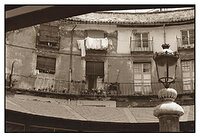
I'm looking to try out some matt papers - having only been a glossy kind of person until now, I'm not 100% sure what is good and what isnt. I've tried Ilford MGIV Matt which is far too mat for my taste, and also the MGFB warmtone semi matt which is the perfect surface, but I dont want the warmtone base - so a kind of cross between the two would be in the right direction. Any suggestions? It's got to be available in the UK also and in a 91/2 x 12 size too.
-
Welcome to Photrio!Registration is fast and free. Join today to unlock search, see fewer ads, and access all forum features.Click here to sign up
You are using an out of date browser. It may not display this or other websites correctly.
You should upgrade or use an alternative browser.
You should upgrade or use an alternative browser.
semi matt paper suggestions?
-
A
- Thread starter Leon
- Start date
Recent Classifieds
-
For Sale Set of 3 glass beakers
- Started by Jon Shiu
-
For Sale 4x5 and 5x7 Black and white sheet film
- Started by Peter Schrager
-
For Sale Set of 4 stainless beakers Leedal, Vollrath
- Started by Jon Shiu
-
For Sale Hasselblad Distagon FE 50mm
- Started by Jammoh
-
Want to Buy Jobo CPP-3
- Started by lifeandmylens
Forum statistics

I don't use RC much but I really, really like Kentmere semi-matte fiber paper.
Leon
Have a look at Kentmere WT fineprint. Lovely surface. I use it with eukbrom and both NA and WA nuetol. I also like the way it will lith as well.
Have a look at Kentmere WT fineprint. Lovely surface. I use it with eukbrom and both NA and WA nuetol. I also like the way it will lith as well.
Eric - I never use RC for printing anything other than contacts
Thanks David - can you comment on how it responds to thio toning? I find the Ilford warmtone can have a sickly yellow in the highlights which I find really unpleasant - the neutral papers seem to have a nicer effect when using thio?
Thanks David - can you comment on how it responds to thio toning? I find the Ilford warmtone can have a sickly yellow in the highlights which I find really unpleasant - the neutral papers seem to have a nicer effect when using thio?

Leon,
I'll second the Fomatone MG matt, which has a bit of a sheen, more like semi-gloss.
Regards,
Trevor.
I'll second the Fomatone MG matt, which has a bit of a sheen, more like semi-gloss.
Regards,
Trevor.

Leon
I'm pretty much sold on Kentmere FB paper in 'Finegrain' I use both the warmtone and the neutral one (which, unlike Ilford, are the same speed). It tones well, too and (at the moment, at least) is still a bit cheaper than Ilford.
Happy Printing!
Rob
I'm pretty much sold on Kentmere FB paper in 'Finegrain' I use both the warmtone and the neutral one (which, unlike Ilford, are the same speed). It tones well, too and (at the moment, at least) is still a bit cheaper than Ilford.
Happy Printing!
Rob
Leon
Kentmere fineprint WT responds v.well to most toners. Processed in eukobrom it cools off well in 1+15 selenium, and reacts well to gold. I also get good warmtones using neutol WA and then fotospeed sepia toner, sometimes followed by selenium. The only combination I didnt like was the recent Ilford cooltone dev, this appeared to give a slight yellow tint to the base, which would clash with any subsequent toning. Prolonged selenium after lith processing is also interesting.
Kentmere fineprint WT responds v.well to most toners. Processed in eukobrom it cools off well in 1+15 selenium, and reacts well to gold. I also get good warmtones using neutol WA and then fotospeed sepia toner, sometimes followed by selenium. The only combination I didnt like was the recent Ilford cooltone dev, this appeared to give a slight yellow tint to the base, which would clash with any subsequent toning. Prolonged selenium after lith processing is also interesting.
In the end, I opted for a warmer base and bought several packs of the fomatone mg matt, and it is superb - perfect for the job I'm doing. I've used it before in the glossy finish, but I must say the matt version is much much nicer. The only problem is the paper speed is so slow, but a small price to pay. It responds beautifully to a light thio highlight toning. I much prefer it to the ilford warmtone matt. The blacks are in no way compromised with the foma matt as they are with the ilford papers - although this is only based on visual asessment. Aesthetically, I dont think this would work as well for large prints - the Ilford MG warmtone glossy seems to hold it's own in that department, but a series of 8x8 prints on the 9 1/2 x 12 foma paper look good enough to eat.
thanks for all the tips everyone - they were most helpful
thanks for all the tips everyone - they were most helpful

I'm looking to try out some matt papers - having only been a glossy kind of person until now, I'm not 100% sure what is good and what isnt. I've tried Ilford MGIV Matt which is far too mat for my taste, and also the MGFB warmtone semi matt which is the perfect surface, but I dont want the warmtone base - so a kind of cross between the two would be in the right direction. Any suggestions? It's got to be available in the UK also and in a 91/2 x 12 size too.
From what you're looking for the Fomatone semi-matt may also be too warm. Maybe the Foma Variant in semi-matt? This is a VC paper with a good contrast range & a bright white base.
http://www.silverprint.co.uk/paper13.html#Variant

I gotta second those suggesting Kentmeres' Fineprint paper. Kentmere characterizes it as a neutral tone paper but I find the word soft to be more descriptive. The blacks are downright lusty.
I'm printing TMax 100 negs with Dektol and that may be part of it.
I'm printing TMax 100 negs with Dektol and that may be part of it.
i thought I'd update this thread as I've been on a small journey here. Originally I didnt want a warm base, but decided in the end that was what I was after, so I ordered a couple boxes of the fomatone mg matt paper. I liked it a lot, but it was far too slow for me. My flash exposures were on the maximum limit of my RH paper flasher - standing around for that long just to flash paper is too much of a pain, also I got lots of uneven blotchyness in areas of even tone - this was accentuated when I did any bleach back toning (nothing to do with processing or washing as I dont get it with any other paper than the foma ones). I understand it is a common problem with the paper and has something to do with quality control not being as it should be. I found the same problem with the Fomabrom Variant matt paper.
So now I've got some of the Kentmere warmtone stuff as suggested here, and so far so good. I find it very curly out of the packet ... hopefully this wont also be the case once it's dried. It feels thinner than the Ilford paper, much less yellowy that the fomatone. thanks for the tips everyone.
So now I've got some of the Kentmere warmtone stuff as suggested here, and so far so good. I find it very curly out of the packet ... hopefully this wont also be the case once it's dried. It feels thinner than the Ilford paper, much less yellowy that the fomatone. thanks for the tips everyone.

Leom, how about Oriental WT? It has a less glossy surface nowadays. It behaves similarly to Ilford WT, but has the slightly duller, but not MATT surface.
I love that paper Andwew - and still have some left from when it was available here, but sadly it isnt anymore. Not sure why it is there and not here. but there you are! I dont have enough for the series I want to print on matt paper so I need alternatives. the kentmere is looking best bet so far.
Paul Verizzo
Member
"Funny" this topic comes back up today
Just last night I finally got a bit of darkroom set up in the garage. All I wanted to do was anything and I thought I would see what the Foma/Arista.edu ultra "semi-matte" surface is like.
At this very moment I have a Kodak Photographic Papers book from the fifties open to Kodabromide N. With the Arista, I don't think you can get any more similar without the real thing. I had some paper scraps in the paper safe from 1999 that I think ARE the real thing, a polycontrast II Rapid on N. Emphasis on "I think." If I am correct, they are virtually indestinguishable.
Tonight I hope to see what the Forte Matte and Varycon "Matt" are like.
I am also going to weigh a sheet, 11 x 14, of each on the Ohaus. Man, that Arista is some kind of anorexic thin. I don't think I've ever seen such a thin paper, or so it seems.
I know none of this has anything to do with image characteristics.
Oh yeah, the weird thing about the Arista "semi-matte" is that the Foma equivalent - allegedly - is called matte. No way. It has a definite sheen and if "semi-matte" isn't right, I'd say "smooth luster." Which just happens to be what Kodak has called the N surface from time to time, although they tend to go with "semi-matte" as they are nowadays with color print paper.
More tomorrow.
Just last night I finally got a bit of darkroom set up in the garage. All I wanted to do was anything and I thought I would see what the Foma/Arista.edu ultra "semi-matte" surface is like.
At this very moment I have a Kodak Photographic Papers book from the fifties open to Kodabromide N. With the Arista, I don't think you can get any more similar without the real thing. I had some paper scraps in the paper safe from 1999 that I think ARE the real thing, a polycontrast II Rapid on N. Emphasis on "I think." If I am correct, they are virtually indestinguishable.
Tonight I hope to see what the Forte Matte and Varycon "Matt" are like.
I am also going to weigh a sheet, 11 x 14, of each on the Ohaus. Man, that Arista is some kind of anorexic thin. I don't think I've ever seen such a thin paper, or so it seems.
I know none of this has anything to do with image characteristics.
Oh yeah, the weird thing about the Arista "semi-matte" is that the Foma equivalent - allegedly - is called matte. No way. It has a definite sheen and if "semi-matte" isn't right, I'd say "smooth luster." Which just happens to be what Kodak has called the N surface from time to time, although they tend to go with "semi-matte" as they are nowadays with color print paper.
More tomorrow.
The Ilford Pearl surface has a slight luster that many people like. The Kentmere semi-matte surface have a bit less, which is also nice.
The Ilford Pearl surface has a slight luster that many people like. The Kentmere semi-matte surface have a bit less, which is also nice.
the ilford pearl is an RC paper
Paul Verizzo
Member
The Ilford Pearl surface has a slight luster that many people like. The Kentmere semi-matte surface have a bit less, which is also nice.
Yes, I've used that in both "real" photo paper and inkjet. A very good finish.

Bergger VCB Style.
Very warmtoned, the surface is actually a bit more like a semi-gloss, but a very toned down gloss even compared to normal air dried fiber prints.
I'm in love with it.
Unfortunately, its not yet available again after the coating-line-switch.
Here's hoping...
Very warmtoned, the surface is actually a bit more like a semi-gloss, but a very toned down gloss even compared to normal air dried fiber prints.
I'm in love with it.
Unfortunately, its not yet available again after the coating-line-switch.
Here's hoping...

Dennis S
Subscriber
Paper
I've tried the Ultrafine pearl which prints a very nice pic. I've just received their paper in 11 X 14 which makes me think. Now I'm going to need a larger scanner & more room on my walls so I'm going to have to find a larger place. When does this madness end ? I haven't told the wife about the moving part but she'll probably have a different plan. Try the paper though
I've tried the Ultrafine pearl which prints a very nice pic. I've just received their paper in 11 X 14 which makes me think. Now I'm going to need a larger scanner & more room on my walls so I'm going to have to find a larger place. When does this madness end ? I haven't told the wife about the moving part but she'll probably have a different plan. Try the paper though
Paul Verizzo
Member
Further paper surface tests.
Look, it's not even tomorrow on the east coast, the envelope, please......
All papers are RC, nominally white base.
I weighed a sheet of 11x14 of each paper I recently purchased, plus extrapolated a 5x7 of Kodak Polycontrast II. Yes, I found the writing on the back that says Kodak and I know by era what I was using.
Arista.edu Ultra/Foma 22.2 grams
Forte Polygrade V RC 25.7
Kodak Polycontrast II 25.9
Varycon VC RC 29.0
So truly, the Arista/Foma is the underweight fashion model of the paper world.
The Varycon had a totally different feel right out of the envelope. Sort of limp, more like ordinary paper. It was hard to tell the emulsion side from the other. Little would I guess what came later.
I then put a piece of each paper right into the fixer and, uh, fixed it and dried. Again, the Varycon was very different. It took much longer to dry with the hair dryer, maybe 3:1 over the others. It was very limp, but then dried became very three dimensional. Wow, I'm thinking, this is fiber based. I looked at the envelope, and it did say "double weight matt." I've never heard that term for RC paper, but the weight per above is certainly more than other papers. I checked now on Freestyle and it definitely says RC. Is it possible that it is PE on one side only? I'm at a loss to explain this.
As to surface finish, the Kodak is, of course, N "semi-matte." As said previously, the Arista/Foma is a virtual dead ringer, although under the blue box Foma, they call it "matte." The Varycon is matte by my definition, as they claim. The Forte is also a ringer for the Kodak N, yet they call it "matte."
As for whiteness, here are some shocks. The whitest, absolutely, was the Arista/Foma. In second place was the weird Varycon. Oddly, though claiming no whiteners IIRC, the emulsion side is whiter than the back. Howz dat?
Third place went to the 1980's Kodak Polycontrast II. At that age, I'm not expecting anything. The most off white, as you've guessed by now, went to the Forte, although not much worse than the ancient Kodak. I even ran this one twice. Folded over, the paper base is whiter than the emulsion side. Dud paper? Too old? I might take up Freestyle on their generous returns policy.
Summary:
1. Weights do vary considerably. Some combination of paper and the poly layer. Claims of so many grams per square meter do not include the poly and the emulsion, I presume.
2. There is a lot of real world variation with descriptions of matte and semi-matte. I don't understand why marketing can't call finishes what they are. Even Arista/Foma can't get their acts together.
3. Varycon is one weird paper. Did they put fiber base into my RC envelope?
4. Forte came up even, um, creamier than my ancient Polycontrast. Wazzup?
5. Mostly, don't trust catalog/manufacturer's descriptions!
Next, actual printing of negatives! Wow, what a concept.
Just last night I finally got a bit of darkroom set up in the garage. All I wanted to do was anything and I thought I would see what the Foma/Arista.edu ultra "semi-matte" surface is like.
At this very moment I have a Kodak Photographic Papers book from the fifties open to Kodabromide N. With the Arista, I don't think you can get any more similar without the real thing. I had some paper scraps in the paper safe from 1999 that I think ARE the real thing, a polycontrast II Rapid on N. Emphasis on "I think." If I am correct, they are virtually indestinguishable.
Tonight I hope to see what the Forte Matte and Varycon "Matt" are like.
I am also going to weigh a sheet, 11 x 14, of each on the Ohaus. Man, that Arista is some kind of anorexic thin. I don't think I've ever seen such a thin paper, or so it seems.
I know none of this has anything to do with image characteristics.
Oh yeah, the weird thing about the Arista "semi-matte" is that the Foma equivalent - allegedly - is called matte. No way. It has a definite sheen and if "semi-matte" isn't right, I'd say "smooth luster." Which just happens to be what Kodak has called the N surface from time to time, although they tend to go with "semi-matte" as they are nowadays with color print paper.
More tomorrow.
Look, it's not even tomorrow on the east coast, the envelope, please......
All papers are RC, nominally white base.
I weighed a sheet of 11x14 of each paper I recently purchased, plus extrapolated a 5x7 of Kodak Polycontrast II. Yes, I found the writing on the back that says Kodak and I know by era what I was using.
Arista.edu Ultra/Foma 22.2 grams
Forte Polygrade V RC 25.7
Kodak Polycontrast II 25.9
Varycon VC RC 29.0
So truly, the Arista/Foma is the underweight fashion model of the paper world.
The Varycon had a totally different feel right out of the envelope. Sort of limp, more like ordinary paper. It was hard to tell the emulsion side from the other. Little would I guess what came later.
I then put a piece of each paper right into the fixer and, uh, fixed it and dried. Again, the Varycon was very different. It took much longer to dry with the hair dryer, maybe 3:1 over the others. It was very limp, but then dried became very three dimensional. Wow, I'm thinking, this is fiber based. I looked at the envelope, and it did say "double weight matt." I've never heard that term for RC paper, but the weight per above is certainly more than other papers. I checked now on Freestyle and it definitely says RC. Is it possible that it is PE on one side only? I'm at a loss to explain this.
As to surface finish, the Kodak is, of course, N "semi-matte." As said previously, the Arista/Foma is a virtual dead ringer, although under the blue box Foma, they call it "matte." The Varycon is matte by my definition, as they claim. The Forte is also a ringer for the Kodak N, yet they call it "matte."
As for whiteness, here are some shocks. The whitest, absolutely, was the Arista/Foma. In second place was the weird Varycon. Oddly, though claiming no whiteners IIRC, the emulsion side is whiter than the back. Howz dat?
Third place went to the 1980's Kodak Polycontrast II. At that age, I'm not expecting anything. The most off white, as you've guessed by now, went to the Forte, although not much worse than the ancient Kodak. I even ran this one twice. Folded over, the paper base is whiter than the emulsion side. Dud paper? Too old? I might take up Freestyle on their generous returns policy.
Summary:
1. Weights do vary considerably. Some combination of paper and the poly layer. Claims of so many grams per square meter do not include the poly and the emulsion, I presume.
2. There is a lot of real world variation with descriptions of matte and semi-matte. I don't understand why marketing can't call finishes what they are. Even Arista/Foma can't get their acts together.
3. Varycon is one weird paper. Did they put fiber base into my RC envelope?
4. Forte came up even, um, creamier than my ancient Polycontrast. Wazzup?
5. Mostly, don't trust catalog/manufacturer's descriptions!
Next, actual printing of negatives! Wow, what a concept.
Paul Verizzo
Member
Extreme egg on my face...
Looking back on my Freestyle order, I did order the FB VC paper, not RC.
I shoulda suspected as much.
Sorry for my error.
Looking back on my Freestyle order, I did order the FB VC paper, not RC.
I shoulda suspected as much.
Sorry for my error.
Dennis S
Subscriber
FB
FB paper reminds me of Toast. The place I get ultrafine is on the west coast (North America) Where we are still in your yesterday !! They are a sponsor here but I like the look and contrast of their paper (price is nice too)
FB paper reminds me of Toast. The place I get ultrafine is on the west coast (North America) Where we are still in your yesterday !! They are a sponsor here but I like the look and contrast of their paper (price is nice too)
FB paper reminds me of Toast.
what on earth does that mean?

I guess I should have been a bit more specific in my OP - this thread was started in my search for a new semi matt fibre paper.
plastic papers are fine for work prints or contact sheets - but for a fine print, it's got to be FB all the way - well, that's my approach anyway.

Gary Holliday
Subscriber
Sorry I missed this thread the first time round Leon, but my suggestion would be Adox polywarmtone FB or RC. Which is of course Forte...clean whites, almost sepia in WT developer. It is available in the UK via Retrophotographic from fotoimpex.de.
I'll be placing an order shortly in 9.5x12.
I'll be placing an order shortly in 9.5x12.
| Photrio.com contains affiliate links to products. We may receive a commission for purchases made through these links. To read our full affiliate disclosure statement please click Here. |
PHOTRIO PARTNERS EQUALLY FUNDING OUR COMMUNITY:  |