
• Welcome to Photrio!
    Registration is fast and free. Join today to unlock search, see fewer ads, and access all forum features.
    Click here to sign up

Seeing in Black and White

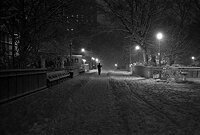
Tompkins Square Park

A
Tompkins Square Park

  • 8
  • 0
  • 81
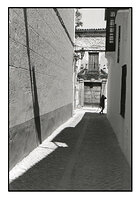
Siesta Time

A
Siesta Time

  • 2
  • 1
  • 63

Recent Classifieds

Forum statistics

Threads
202,860
Messages
2,846,709
Members
101,574
Latest member
JRSCollection
Recent bookmarks
0

AlexBC

Member
Allowing Ads
Joined
Nov 21, 2015
Messages
29
Location
Kansas City, Missouri
Format
Medium Format
Hello, I'm a long time lurker, and I have a question about what I think is the stuff of science fiction. I recall seeing in some magazine (PDN, American Photo, Outdoor Photographer, etc.) sometime back that there was an eyeglass, rather like a loupe in appearance that allowed you to look at a scene and see what the tones and light would look like exposed in black and white. I assume it's not totally black and white, but some kind of color filter which renders it close enough to imagine total grayscale. Did I imagine this device or does it really exist? If it is real, is it worth the trouble for me? I am experienced enough with color films and color exposing, but very new to black and white.
 
I have looked thru them, but never found them useful. Part of it is that the viewing filters are pretty dark and not easy to use in the forest. Plus in the forest, everything is fairly monochromatic (greens, with some browns) so it is easier to judge. I do not even think color much after 35+ years of B&W, except when it comes to using a filter.
 
I have one and use it occasionally. I can pretty well judge the tonal separations by eyeball. I suppose that if you want to check a scene before exposing your film you could use a phone camera or such set to monochrome to get as good if not better sense of the tones than with the filter.

http://www.jeffreyglasser.com/
 
If you can't find a dedicated viewing filter, you could try a B+W Schneider blue POP filter. Search the B+W catalogue for 'Pop Filter 480 Blue [Schott BG 12]'.
It will turn any scene almost monochrome blue, helping you to assess contrast.
 
Thanks guys, I might give it a go. Any help I can get while learning to think in black and white will be a help for me.

The Kodak Wratten #90 monochrome viewing filter is the one that best approximates the tonal separation that you get with film. Peak and others make them. I use a Zone VI viewing filter, which incorporates the #90 filter in a viewing frame to help with composition. They come up on the used market from time to time. That said, the "monochrome effect" of this amber-colored filter lasts for only a few seconds till your eye adjusts. It is helpful though.

As for learning to see in B&W: I found it useful to view various scenes through strong filters; red, green and blue and observe which colors darken and lighten. This helps with learning to use the filters as well.

The most helpful for me in my learning years, however, was to make a "Zone Ruler" (do a search here and on the LF forum for a description) or get some sort of grey scale from black to white that goes in 1-stop increments. Then, using your meter and with Zone Ruler in hand, "place" a shadow value (i.e., meter it and assign it a dark stripe on your Zone Ruler, say II or III). Then meter various parts of the scene and see where they "fall" in relation to the value you have placed. Close your eyes and try to imagine how two or three areas of your print will look in relation to each other in a final print. After a while, you'll be able to really imagine what will happen vs what you want and then know what you have to do to get to your preferred image. (This visualization, IM-HO is the main advantage of the Zone System).

Best,

Doremus
 
B&H Carries the filter. http://www.bhphotovideo.com/c/buy/Viewing-Filters/ci/17800/N/4026728329 3rd one down.
Recently, I was asking the same question myself. I still haven't decided on getting one yet. One of the tricks with B&W is, looking for contrasting colors. If you want to shoot a scene that has green hosta plants, next to a green lawn, you may not be happy. Even a red rose wouldn't be much darker. That's were using contrast filters on the lens can save the image.
 
Not to worry, the more you shoot B&W the more you'll understand it. It's not like shooting colour. All my experience was w/ colour too, and I can't tell you how often I was disappointed when I would take a great shot of, for instance, a beautiful red flower in green foliage, only to end up w/ a shot that was a sea of grey.

One way to help figure this out, as well as shooting B&W regularly, is to buy a basic filter set of green, yellow, and red filters. Then load the camera w/ a 36 exp roll of B&W film and go out and shoot a sample shot, and on each shot use all three filters. Take something to write down what each shot is about (red barn, yellow flowers, green grass, etc), and shoot the filtered shots in the same order so you know which filter gave which effect. The results will surprise you. You'll also get a feel for which filter, if any, you like on the camera under normal circumstances. I almost always have a yellow filter screwed onto whichever lens I am shooting, but a red one will bring out the clouds and sky better.

Now I understand that if I want to shoot that red flower w/ green foliage, a red filter will give an almost white flower that will stand out, and a green one will lighten up the foliage so much that I also get a flower that stands out.
 
I have one, got it from a member. It's a really dark green filter, and I guess it does what it's supposed to do, but I actually ended up not using it. I'd be willing to part with it for the cost of shipping if you're interested.
 
Like Vaughn, Jeffrey, and Kirk, I have one somewhere, but never use it. Experience teaches one to do well without. As Doremus says, viewing a scene through common B&W filters is a good teaching aid.
 
Some old plate cameras had a blue viewing filter in the eyepiece for the sports finder.
 
I appreciate all the feedback. I have been doing a little searching on google for figuring out which lens filters I would benefit from the most. I do mostly urban landscapes of streets and buildings, but I would also like to do some portraiture in black and white as well. I think maybe a red, green, and orange filter would be a decent start. Thanks again for all the good advice on this site. I'm not sure that we can undo digital, but it sure is nice to be connected with so many other analogue shooters!
 
Last edited:
I think of yellow, orange, red as a progression, I start with the yellow, look through it, move it aside to compare. For me, it's mostly to reduce contrast, especially with clouds. My frequency of use follows that as well... yellow more than orange more than red, a little goes a long way... all of them render the scene as 'b&w', I meter thru them too...
 
Last edited:
Hello, I'm a long time lurker, and I have a question about what I think is the stuff of science fiction. I recall seeing in some magazine (PDN, American Photo, Outdoor Photographer, etc.) sometime back that there was an eyeglass, rather like a loupe in appearance that allowed you to look at a scene and see what the tones and light would look like exposed in black and white. I assume it's not totally black and white, but some kind of color filter which renders it close enough to imagine total grayscale. Did I imagine this device or does it really exist? If it is real, is it worth the trouble for me? I am experienced enough with color films and color exposing, but very new to black and white.


I have viewing filters and use them as needed. As has been mentioned earlier, you just use the filter for a few seconds, take it down from your eye, then hold it up again for another second or two. It doesn't take long to learn how. And, as has been said before, it you don't use it correctly, your eye will attempt to correct the color and the B&W effect will vanish. If you can find used Zone VI viewing filters, they were also made to show the different formats and give you the added benefit of helping you see what your lenses see. i.e. 35mm, mf. and lf.. After a while you will probably learn to read the scene with only your eyes, but when in doubt, it sure is nice to have the viewing filter to help out......Regards!
 
You might have a look at the B&H event space, Seeing in Black and White with Eileen Rafferty:


Frans Rutten
 
Hello, I'm a long time lurker, and I have a question about what I think is the stuff of science fiction. I recall seeing in some magazine (PDN, American Photo, Outdoor Photographer, etc.) sometime back that there was an eyeglass, rather like a loupe in appearance that allowed you to look at a scene and see what the tones and light would look like exposed in black and white. I assume it's not totally black and white, but some kind of color filter which renders it close enough to imagine total grayscale. Did I imagine this device or does it really exist? If it is real, is it worth the trouble for me? I am experienced enough with color films and color exposing, but very new to black and white.
They do exist but IMO, they are rather useless. I i have a blue and a dark red version and that is exactly what they make the scene look like blue and dark red; no help whets ever.
 
The short answer is that viewing filters are used for the most part in cinematography, which explains why Tiffen still makes them. Cinematography faces different exposure problems than the still photographer, whose exposures are viewed one at a time. The cinematographer needs consistency of image.
 
In the 60 while in college I took a summer workshop with Minor White, we spent a lot of time looking through a wratten. It took some time to "see in black and white, not sure if I really saw in black and white, more like anticipated. I never attended an Ansal Adams workshop, but have been told by those who did that he used the same process. I have set of Zone VI viewing filter, have used them in years.
 
Hello, I'm a long time lurker, and I have a question about what I think is the stuff of science fiction. I recall seeing in some magazine (PDN, American Photo, Outdoor Photographer, etc.) sometime back that there was an eyeglass, rather like a loupe in appearance that allowed you to look at a scene and see what the tones and light would look like exposed in black and white. I assume it's not totally black and white, but some kind of color filter which renders it close enough to imagine total grayscale. Did I imagine this device or does it really exist? If it is real, is it worth the trouble for me? I am experienced enough with color films and color exposing, but very new to black and white.

Hi Alex, I have a Zone VI viewing filter which I'm told is like what Ansel Adams used to use a long time ago. It's of a yellowish monochromatic appearance to the eye, mine is 4x5 format. It was sold when they were around but they are on eBay occasionally. I use it frequently for determining filter impact to a scene for B&W film.

I am local to you here in KC. If you would like to grab coffee sometime and check out what it does, PM me.
 
Smartphone to the rescue.

Mark II Artist’s Viewfinder for the iPhone lets you frame a scene using user-specified focal lengths and film sizes. The app uses the phone’s camera with framing lines for the lens’s focal length to show a preview of the scene. Its best feature, IMO, is its ability to display the scene in black and white. You get a direct view of tonal relationships that’s much better than what you get with a Wratten 90.
 
Yes, if you don't mind the electronic assistance of an iPhone, this app is really terrific. Especially handy when you have several lenses to choose from.

I have it with me at all times anyway, especially as it also serves as the “keys” to my car.
 
Seeing/imaging in B&W is a bit like seeing the image upside down on the ground glass of a LF camera ore left-right reversed through the chimney viewer of a MF camera. After a while your brain is switching on some kind of auto pilot and you forget about it...
An other way is: reed about "previsualization" in Ansel Adams's books and it might help you a little bit more.

BTW, if you, on any occasion, might be applying the famous 'Zone-System' this helps you see and evaluate in grey tones/zones...
 
A viewing filter is like looking at the scene under a sodium lamp.

Why not use your phone? The Lightme exposure meter app has the option to view the scene in B/W. It is surprisingly useful, IF you have time to consider the scene before snapping it.
 
Photrio.com contains affiliate links to products. We may receive a commission for purchases made through these links.
To read our full affiliate disclosure statement please click Here.

PHOTRIO PARTNERS EQUALLY FUNDING OUR COMMUNITY:


Ilford ADOX Freestyle Photographic Stearman Press Weldon Color Lab Blue Moon Camera & Machine
Top Bottom
