• Welcome to Photrio!
    Registration is fast and free. Join today to unlock search, see fewer ads, and access all forum features.
    Click here to sign up

Seeing in Black and White

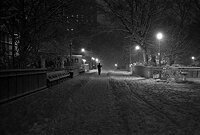
Tompkins Square Park

A
Tompkins Square Park

  • 8
  • 0
  • 81
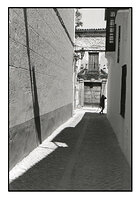
Siesta Time

A
Siesta Time

  • 2
  • 1
  • 63

Recent Classifieds

Forum statistics

Threads
202,860
Messages
2,846,709
Members
101,574
Latest member
JRSCollection
Recent bookmarks
0
Yes. It’s possible to make a garish mess by overdoing Photoshop adjustments. The key is to do only what’s needed and not overdo it.

I found resisting to the temptations of 'messing' with the adjustments sliders harder than the YMCK corrections/conversions I used to do, and, by extension, the whole (hasty-) 'Photoshopping job'...
That is why I turned me back to the analogue doing as it brings me so much peace of mind.

And, as they say: "B&W is the real colour".

Festina lente!
 
Well second one isn't that bad at all, it's already Viradon toned!

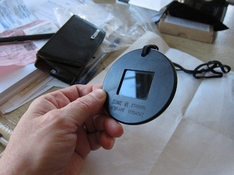
But that's a strange colour, mine, a Zone VI (which a hardly use), is completely different, somewhat more bluish/purple and less coloured.

The Zone VI, and alike, is lighter, doesn't eat electricity and is easy to use, and if you forget it, your wife can still call you when dinner is ready...

Did zone vi make 2 viewing filters?
Nothing is coming up on Google
 
Hello, I'm a long time lurker, and I have a question about what I think is the stuff of science fiction. I recall seeing in some magazine (PDN, American Photo, Outdoor Photographer, etc.) sometime back that there was an eyeglass, rather like a loupe in appearance that allowed you to look at a scene and see what the tones and light would look like exposed in black and white. I assume it's not totally black and white, but some kind of color filter which renders it close enough to imagine total grayscale. Did I imagine this device or does it really exist? If it is real, is it worth the trouble for me? I am experienced enough with color films and color exposing, but very new to black and white.

Those devices exist and I own several but they are all useless. As you say, they are color filters,turning the scene into a dull amber or greenish image, not even close to grayscale. The best I've seen is using a digital camera in B&W mode. However, training your brain to see in B&W is even better!
 
However, training your brain to see in B&W is even better!

Perhaps brains do need training nowadays, but not long ago people were reading magazines and newspapers with B&W images in them, watching B&W TV, and going to the cinema to watch B&W movies. 'B&W' was the norm and people knew what things looked like rendered in B&W, and while maybe no having the words would know if a photo of Clark Gable was 'bad' because it was pasty and washed out.
 
I have/had a viewing filter…doubt if I could find it now. Never really used it.
One way to see in black and white is to put camera aside and make sketches with black ink or black crayon. As others above have already noted, take enough BW photos and your eyes will see BW.
 
Those devices exist and I own several but they are all useless. As you say, they are color filters,turning the scene into a dull amber or greenish image, not even close to grayscale. The best I've seen is using a digital camera in B&W mode. However, training your brain to see in B&W is even better!

The amber version suggested by AA is like looking at everything under sodium lighting. Back in the 19th century, artists toyed with deep blue glass viewers to better appreciate tones. Someone else up-thread mentioned violet. My faint interest in the idea crumbled when I realised that there is not even consensus on which colour to use.

Best options these days are to use a phone app like Lightme set to b/w; or to screw your eyes up and consider the scene through your eyelashes.
 
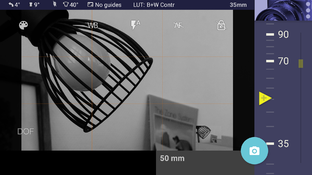
On android I sometimes use the app "Magic film ViewFinder". It's main feature is to emulate different focal length (quite handy), but you can also switch to a B&W preview. Screenshot attached
 

Attachments

  • Screenshot_20240721-135739.png
    Screenshot_20240721-135739.png
    747.9 KB · Views: 53
I have to admin that I rarely use my Zone IV B&W view filter, it's only handy because the format of the frame is the same as my 6x9cm camera and on rare occasions it helps while previewing a scene and I have only one hand free...
 
I have/had a viewing filter…doubt if I could find it now. Never really used it.
One way to see in black and white is to put camera aside and make sketches with black ink or black crayon. As others above have already noted, take enough BW photos and your eyes will see BW.

Just a thought on this. If your mind's eye cannot or has not been already trained to see in b&w then isn't making a sketch a problem in that your untrained-in-b&w eye/brain perceives the depth of say red and green differently from the way a panchromatic film see those colours, so the issue of training the eye first still arises, doesn't it?

pentaxuser
 
There are certainly above average numbers of old curmudgeons around here, but I guess that is the nature of the analog/film demographic...

....digital has now been around long enough that curmugeons exist in that realm too.
 
Just a thought on this. If your mind's eye cannot or has not been already trained to see in b&w then isn't making a sketch a problem in that your untrained-in-b&w eye/brain perceives the depth of say red and green differently from the way a panchromatic film see those colours, so the issue of training the eye first still arises, doesn't it?

pentaxuser

Being trained to make a decent sketch would be an issue...which gets us right back to the need to train the eye. Not just with how colors are translated into B&W by the films (and how filters alter this), but also taking a 3-D space and rendering it in 2-D. Out of habit I'll close an eye when looking at a scene just to make sure that a form I am interested in won't lose its importance when I drop a dimension.

Just a thought of mine: All that scattered blue light in the distance landscape will not be focusing on the same plane as the rest of the colors (when using a non-APO lens). Would a film that is more sensitive to blue light be significantly less sharp in the distant landscape than other films in this case? (since the blue sensitive film would be using a higher percentage of unfocused light to make the image)

Drew -- with TMax100 -- do you know if the UV blocking also on roll films?
 
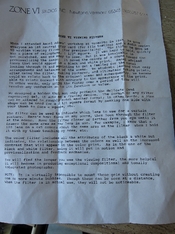
I have the Zone VI for 6x7. Don;t use it anymore. I ought to sell it.
 

Attachments

  • Directors viewfinder instructions Zone VI IMG_2395 1080.jpg
    Directors viewfinder instructions Zone VI IMG_2395 1080.jpg
    791.7 KB · Views: 51
  • Director viewfinder Zone VI  IMG_2394 1920.jpg
    Director viewfinder Zone VI IMG_2394 1920.jpg
    888.5 KB · Views: 54
Those devices exist and I own several but they are all useless. As you say, they are color filters,turning the scene into a dull amber or greenish image, not even close to grayscale. The best I've seen is using a digital camera in B&W mode. However, training your brain to see in B&W is even better!

but then you'd have to own a digital camera.....
oops this is the analog forum 😆
 
At the end of the school year, I was almost prevented from passing to the 1st grade because I couldn't pass the color test.
My sympathies. Other than preventing you from, I assume, continuing your education what would the school have done to help you? Cure your colour blindness, perhaps? 🤨

Sorry if this sounds like I am being sarcastic but I just have great difficulty working out what they had in mind or indeed what colour blindness has or had to do with your education. It sounds as if the educationalists needed help with whatever form of blindness they had.

The above has been prompted by sheer mind-boggling curiosity on my part

pentaxuser
 
Perhaps they were blind to color blindness...color recognition was one of the goals in kindergarten. I do not remember when testing for color blindness became standard in our schools. Relatively new routine eye testing of students probably caught my bad eyesight (near-sighted) at age 11.

I find it fascinating how our brain handles all the visual stuff. I have been looking at negatives on light tables for so long that I understand what I am seeing as a positive. And there are rare times under the darkcloth when I see the image on the GG as right-side up, but I usually just work with it as if it was right side up. YBMD (your brain may differ)

I do not work with viewing filters, although I make Ls with my fingers to get a quick idea of what a lens might cover.
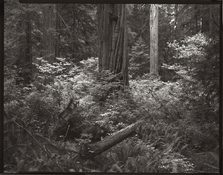
I keep an eye on colors within the scene, considering if a color filter could blend or differentiate forms. For example, a yellow filter under the redwoods in the Fall can help to create depth (Redwood, Vine Maples, 8x10 carbon print)
 

Attachments

  • WSRedwoodVineMaple.jpg
    WSRedwoodVineMaple.jpg
    709.7 KB · Views: 62
Last edited:
Perhaps they were blind to color blindness...color recognition was one of the goals in kindergarten. I do not remember when testing for color blindness became standard in our schools. Relatively new routine eye testing of students probably caught my bad eyesight (near-sighted) at age 11.

Thanks Vaughn It's probably a test used in U.K. schools as well for good reasons in regard to children's well being It's just that it sounded as if Tim was at least hinting that being colour blind was a potential barrier at least in terms of making educational progress and it was that aspect that provoked my post

Perhaps all will be clear when Tim replies

pentaxuser
 
I have difficulty seeing in colour.
 
I went to second grade twice,
green and brown still look very similar

Because you were colour deficient? 😟 I wonder what progress Albert Einstein might have made under such a system had he had a colour deficiency under such a system 😟

Imagine two educationalists discussing him. One says : When he grows up we can't let him loose with house rewiring but he should be safe with mathematics. He can't do any harm there can he? 😁

pentaxuser
 
If there was testing that helped determine placement, there could very well be an inadvertent built in testing disadvantage for those who have trouble differentiating between colours. For example, people with a colour differentiation issue may have trouble understanding certain types of questions that are based on graphics that themselves depend on colour.
Constructing tests that are fair for a lot of different people, from a lot of different backgrounds, with a lot of difference in ancillary abilities, is not a trivial task.
Reminds me of some friends of mine who invested a fair amount of energy, dedication and money into trying to learn how to print using Cibachrome/Ilfochrome materials.
Unfortunately, no-one thought to canvass certain issues with them, so the fact that my friend was partially colour blind did not come up until they were a frustrating distance into their Cibachrome adventures! 😲
 
Photrio.com contains affiliate links to products. We may receive a commission for purchases made through these links.
To read our full affiliate disclosure statement please click Here.

PHOTRIO PARTNERS EQUALLY FUNDING OUR COMMUNITY:


Ilford ADOX Freestyle Photographic Stearman Press Weldon Color Lab Blue Moon Camera & Machine
Top Bottom