• Welcome to Photrio!
    Registration is fast and free. Join today to unlock search, see fewer ads, and access all forum features.
    Click here to sign up

School or Trial by fire

IMG_1779.JPG

H
IMG_1779.JPG

  • 0
  • 0
  • 0
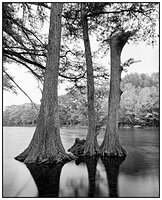
Frio River

A
Frio River

  • 0
  • 0
  • 0

Recent Classifieds

Forum statistics

Threads
203,577
Messages
2,856,630
Members
101,908
Latest member
lokiloki
Recent bookmarks
1
I was a working (poor) photojournalist in Canada and Europe, but I moved to New York to assist some of the better know photographers there to up the game, including Albert Watson, Heinz Kluetmeier, Robert Clark and then Martin Schoeller.
What I learned in those days from those photographers...wonderful. I used to interview college kids looking to intern and was shocked at how little they knew, but they had an important foundation. To be able to assist a heavy hitter during summer break while getting a degree...now that would be amazing.

The greatest lessons I learned were in production...being able to work with budgets and work fast. I have never seen anyone problem solve so quickly as Albert Watson did. A master. When it came to printing, having access to great labs and being able to pick their brains...that was great. Marathon sessions in the darkroom.
 
Last edited:
You can read and study all you like. But you got to get your hands wet to really learn.

As the Germans say...you grasp by grasping.
 
I would say there is definite value in an art degree. If you're wanting to make fine art prints that people will take seriously, you'll need to know what those people are looking for. It helps to be able to speak the language of the fine art world, both literally and figuratively. Plus an art degree gives your work credance and it can give you connections. The art world places a heavy stigma on outsiders without accredited training.

I don't think you need a photography degree specifically though. Photography is pretty easy to learn on your own. The technical stuff can be learned in less than a year on your own. The hard parts are composition, style, where your work fits in historically, and creating something that's unique, yet relevant. What impresses Instagram and the general public won't often do much for curators.

Now if your more interested in doing portraits, wedding photography, fashion, and stuff like that to pay the bills, I dont think you'd even need an art degree. A marketing or business degree would probably do you more good.
 
Most of the successful photographers I know come from business families. The moves, the attitude are more integral allowing the rest to get more focus.
 
Very few photographers that I admire have much if any formal training. You can get there either way of course, but the topic reminds me of that age old internet question: Neil Young or Bob Dylan?
 
I was mentored by my dad (a photographer and photography teacher), then continued learning through experience, experimenting, reading, working, basically taking pictures. I never intended to become a full time professional, so it was always hobby driven. I think an apprentice type system would be ideal for photography; though formal education also works. As I have mentioned in other threads my dad went through Clarence A. Bach's Fremont High (Los Angeles)) photography vocational program in the 1940s. This was a unique program and model to study.

 
I was mentored by my dad (a photographer and photography teacher), then continued learning through experience, experimenting, reading, working, basically taking pictures. I never intended to become a full time professional, so it was always hobby driven. I think an apprentice type system would be ideal for photography; though formal education also works. As I have mentioned in other threads my dad went through Clarence A. Bach's Fremont High (Los Angeles)) photography vocational program in the 1940s. This was a unique program and model to study.

Photography was considered a "vocation" many decades ago.

"Vocation" as a term rarely even spoken of because few people have held any position longer than a couple of years in the last several decades.

In fact the whole concept behind "a position" of any sort is dead.

As well, the vast majority of serious photographers have long been entrepreneurs, not employees. Modern times.
 
hello berkeley mike

school for foundation knowledge like basics
apprenticeships for more real life putting into action what was learned
and self taught everything else...
i haven't mastered any sort of craft. as soon as i think i understand
something, i realize there is always more to understand because im scratching the surface.
 
Serious question: Does anybody here know any "successful" photographer who owes any part of her/his success to school? Brooks turned into a scam and failed years ago. What does that tell us about the utility of a "school" for basics/fundamentals?

A REAL photo school would be recognized as a photo school. Name one.

If it's not recognized as a photo school (can you name one?), someone wanting to pursue a photo career (for some reason) is better off as a volunteer assistant in a place like NYC or LA, or studying something that might arguably contribute to aesthetic/art thinking or marketing skills (which refers back to Internet and video)....
 
Ok, Chiba University in Tokyo for another. Valued by Fuji and Konishiroku back in the day and now moving to digital. RIT was great, and brought us our own Bob Shanebrook.

PE
 
School or trial by fire?
It is not an either/or proposition? Generally, if education is pursued, it is followed by trial by fire.

I am currently taking the Studio Lighting I course at my local community college. I am not saying I couldn't learn it on my own, but learning it is a structured environment with all of the equipment at hand, and an instructor to guide me, is definitely a benefit.
 
Last edited:
Ryerson University (was Polytechnic). Ed Burtynsky is an alum. David Heath taught there as well.
 
That some of my most profound friends studied at RIT is irrelevant in 2019.
It is not an either/or proposition? Generally, if education is pursued, it is followed by trial by fire.

I am currently taking the Studio Lighting I course at my local community college. I am not saying I couldn't learn it on my own, but learning it is a structured environment with all of the equipment at hand, and an instructor to guide me, is definitely a benefit.

IMO that's a very sensible approach, assuming one is not already fully employed. There are all sorts of online courses and mini lessons, and Calumet used to offer classes in Chicago and LA. Lessons won't help much unless you already have a little experience, digital camera, and some of the basic equipment (reflectors etc).
 
Serious question: Does anybody here know any "successful" photographer who owes any part of her/his success to school? Brooks turned into a scam and failed years ago.

I worked for 2 Brookies in 1984-5 SF. they had migrated to The Emporium crew, built some muscle and went out on their own. I consider both of them successful; developed client lists, built studios (hiring me to do it), and made money. One is now in NY, one in LA.

That was then....
 
Serious question: Does anybody here know any "successful" photographer who owes any part of her/his success to school? Brooks turned into a scam and failed years ago. What does that tell us about the utility of a "school" for basics/fundamentals?

A REAL photo school would be recognized as a photo school. Name one.

If it's not recognized as a photo school (can you name one?), someone wanting to pursue a photo career (for some reason) is better off as a volunteer assistant in a place like NYC or LA, or studying something that might arguably contribute to aesthetic/art thinking or marketing skills (which refers back to Internet and video)....
That's a pretty tough demand. The best photo schools are not exclusively photo schools, but part of a larger institution. Most major art schools have pretty-good to excellent photo programs. A lot of community colleges have good vocational photo departments, but they usually don't venture into the art photo arena. There really is no great demand for an exclusively photo school now that would turn out graduates that could jump right into the professional market, as screwed-up as it is today.
 
I have a friend who had community college photographic training and then worked his entire career on staff as a photographer at a University - mostly in support of operations in the faculty of dentistry.
Toward the end of his employment (he is retired) a lot of his tie was spent shooting video.
There are people who work as staff photographers for large organizations who need people with technical skills.
 
Fanshawe College in London was where the seed of photography was planted in my DNA , yes indeed it was huge influence on me.
 
A bit of everything - some self-taught, some formal instruction at an art school (Maryland Institute College of Art aka MICA, back in the day when analog was still king and digital was in its infancy), and classes and workshops from people who I admired. Lots of continuous education - I never stop reading, learning, and trying things out.
 
Photrio.com contains affiliate links to products. We may receive a commission for purchases made through these links.
To read our full affiliate disclosure statement please click Here.

PHOTRIO PARTNERS EQUALLY FUNDING OUR COMMUNITY:


Ilford ADOX Freestyle Photographic Stearman Press Weldon Color Lab Blue Moon Camera & Machine
Top Bottom