

• Welcome to Photrio!
    Registration is fast and free. Join today to unlock search, see fewer ads, and access all forum features.
    Click here to sign up

Saving negs from underexposure

Recent Classifieds

Forum statistics

Threads
201,849
Messages
2,831,116
Members
100,984
Latest member
Larrygaga00
Recent bookmarks
0

mooseontheloose

Moderator
Allowing Ads
Joined
Sep 20, 2007
Messages
4,110
Location
Kyoto, Japan
Format
Multi Format
As some of you may know, I have a huge backlog of negatives from my European trip this past summer than I am currently processing. The majority of what I shot was on my fairly new-to-me Mamiya 6. I did use and test the camera prior to my trip, realized the problems it can have with metering and took measures to counter that, often double-checking with my handheld meter to make sure the readings were correct (they were). Unfortunately, it has become clear with every roll I develop that a lot of my negatives suffer from underexposure, which I know is one of the most difficult things to deal with at the printing stage. In many cases, there is detail in the shadows, but it's very thin. I have this problem in all kinds of lighting, but it is more problematic in less contrasty light (indoors, or in a forest, for example). I have been trying to adjust developing times to compensate but I don't want to overdevelop my negatives too much and create another kind of problem.

In any event, I know there are some things I can try AFTER the negatives have been developed (selenium is my most likely choice), but I was wondering if there was something I could do AT the developing stage to deal with negs, that in all likelihood, will be underexposed. In the worse case scenarios, the whole roll in underexposed, but in other cases, it is sometimes only 1-4 frames out of 12. So far I've tried D-76, Xtol, Diafine, and Rodinal (for Acros) but the only negs I am happy with are the ones in Diafine (but I shot those rolls at 1250/1600 specially to be developed in Diafine, and they were shot with a Holga). Of course, I have no way of knowing which rolls will be worse than others, but I think I can kind of guess based on what's come out so far. Anyway, this is what I have:

Films: HP5+ (at 200, 400, 800), Acros (mostly at 80), and Tri-X (almost finished, the rolls that remain were shot at 320/400). The majority of the rolls were shot at (or near) their box speed, ISO was cut in half for contrasty light, and sometimes shot at 800 in very low light.
Available developers I have at home: D-76, Xtol, TMAX, Diafine, R09 Rodinal, Finol (this is new to me, haven't tried it yet). Also available to me in Japan are various Fuji developers (Microfine, etc. - but I haven't used these either), HC-110 (at $80 a bottle!) and ID-11 and Microphen. Mixing my own developers is not possible (I'd have no idea where to source a lot of the chemicals) and more exotic developers like pyro are things that I would like to try (but haven't), and are also not available in Japan either (I'm not against using pyro either, but if Finol (or Tanol, which I can also get here in Japan) could work just as well, that would be great.

Generally speaking my developing process is pretty normal (1 minute initial agitation, 10 sec every minute thereafter) and I usually develop most films a little longer (10-15%) than official times state, which gives me a nicer neg to work with my diffuser enlarger. I have done some stand/semi-stand development with Rodinal but not much. I like the idea of using greater dilutions (1+2 or 1+3 with D-76 or Xtol) and extending development times while reducing agitation, but I'm not sure where to start, or if that would help me much. Right now my tap water is at a perfect temperature for developing (20-23 degrees Celsius) but that won't last long. That said, if raising or lowering developing temperatures (I try to stay around 20 C) would make a difference, I'd be interested in knowing that too.

I am well aware that if there wasn't enough exposure to begin with that there isn't much I can do, but if there is a way to tease out what shadow detail is there I'd appreciate whatever advice people can give me. If there is nothing I can do now, you'll hear from me again in the printing forum. :wink:
 

Athiril

Subscriber
Allowing Ads
Joined
Feb 6, 2009
Messages
3,062
Location
Tokyo
Format
Medium Format
I came from Japan recently and there are some chemicals you can buy even at Yodobashi, and I know a few others have mixed up stuff over there. Anyway, bleaching back a negative and redeveloping with a staining developer is one thing that may help.

I'm not sure if post-flashing before development is as useful as pre-flashing prior to exposure which helped gain a few stops while pushing. I haven't tried post-flashing but I have always meant to and see if it is comparable to pre-flashing at all (if it is, it gains a lot of shadow detail that normally doesn't develop). If you were to try this, obviously use a new roll for testing purposes, and be careful not to ruin the film if you go forward with it.

You can also pre-flash the paper when you are printing however, and/or use SLIMT to bleach the paper after exposure very weakly to help print it.

I'd stick to Xtol to get the most speed in the shadows.


How did they end up underexposed? If you're saying you rated at near box speed, shouldn't be much of an issue, faulty meter?
 

Kirks518

Member
Allowing Ads
Joined
Oct 5, 2013
Messages
1,494
Location
Flori-DUH
Format
Multi Format
Do you know how many stops underexposed the negatives that you have developed are? If they were consistently the same number of stops, or close (ie, 1.5-2.5), couldn't you just develop them as pushed film for the number of stops they have been underexposing?

Or is it only occasionally underexposing? If so, then it's really just a crap shoot I would think.

The big question I have, is what's causing the underexposure even after you hand meter? Is there a fault with the camera, aside from the problem it has with metering? Is the shutter not firing properly, etc? I'd be looking into that asap.
 
OP
OP
mooseontheloose

mooseontheloose

Moderator
Allowing Ads
Joined
Sep 20, 2007
Messages
4,110
Location
Kyoto, Japan
Format
Multi Format
Kirks518: Your question is a good one - it is more than occasionally underexposing, but the values are all over the place - at least a stop in most cases, maybe up to 2 or 3 in others (I have no method to test for certain). I mean, part of it could be sloppy metering on my part - I didn't double check with the hand meter for every exposure, just the important ones. Generally speaking I tried to avoid the sky in any capacity and pointed the camera towards the shadows in most cases. There are a number of variables that could have caused it, once I have some free time I'm going to go out and test the camera again to try to figure out if it was mostly the camera, or mostly me. I've never had such consistently poor results though, and the films from my other cameras (Holga, Nikon FE) are fine so...

Athiril: You're right, there are chemicals at Yodobashi, but there may not be everything I need to mix my own, and as it is something I have never done, nor have the equipment to do so, I'm not too keen on doing it, especially with chemicals labelled in a foreign language. I'd rather stick to tried-and-true commercial developers. As for the underexposure...I don't know. If anything, they should be slightly overexposed since I deliberately tried to do so to get lots of shadow detail, and in fact the opposite happened. In the end it's either me or the camera, and regardless of how it happened, what I mostly care about now is what I can do for the 60+ rolls I have yet to develop.
 

Athiril

Subscriber
Allowing Ads
Joined
Feb 6, 2009
Messages
3,062
Location
Tokyo
Format
Medium Format
I'll see if I can do a post-flash test, and see if it gains like pre-flash + pushing does. If it works, it is definitely worth using on the 60+ rolls.
 

bernard_L

Member
Allowing Ads
Joined
Feb 17, 2008
Messages
2,133
Format
Multi Format
Among the developers you list, three might, IMO, be useful to gain speed. I mean real speed gain, as measured at the toe, not lifting the mid-tones density by increasing contrast to "compensate" the under-exposure
- Microphen, might gain 1 stop at most.
- Diafine, possibly a little more effective, but (IMO) poor tonality (loss of mid and highlight separation).
- Xtol or Tmax, see http://www.kodak.com/global/en/prof...wFilmProcessing/selecting.jhtml?pq-path=14053 understanding that "shadow detail" equates to (real) speed gain.

I was once in the same situation, and used Microphen; made tests before commiting the actual roll.
Good luck.
 
Joined
Sep 10, 2002
Messages
3,676
Location
Eugene, Oregon
Format
4x5 Format
Before you do anything, take one of your most underdeveloped negatives and print it. You might be surprised at the results and decide you don't need to do much at all. One of my best prints is from a TMX negative that has really thin shadows...

If you think you do, there are a couple of approaches.

First, use a developer that gives you the most effective film speed. Xtol is probably the best general-purpose developer in this respect. Maybe Diafine will work as well. Many swear by it; I've never used it.

Someone above mentioned bleach-redevelop in a staining developer. You say you don't have access to one... However, this is the method I would recommend first. It's easy, you do it only to the negatives that need it (no messing with an entire roll) and it works gratifyingly well. I use PMK, but any staining developer will work. Pyrocat seems to be easy to get in many places and should work well too. Overview: The entire process can be done with the lights on. Using a bleach made from potassium ferricyanide and potassium bromide, you bleach the image back to transparent silver bromide. This is easy to see; the image disappears. You rinse and then redevelop in your staining developer to completion (i.e., at suggested developing time plus 15% or so for a safety factor). Wash and you're done. You now have all the silver density plus the added density of the stain. This gives more shadow detail as well as ups the contrast about a Zone.

FWIW, I did a lot of selenium toning of negatives to boost contrast before I switched to staining developers. It won't get you much more shadow detail at all, so it's not really a fix for underexposing...

Athril mentions above about post-flashing. He's done some interesting work with his flashing technique (I only have seen the color stuff) and that would be worth a try. In theory, post-flashing works exactly the same as pre-flashing. That said, and especially with black-and-white negative films, flashing, while raising the threshold and giving you more shadow detail, does so at the expense of contrast in the lower values. In any case, this would be something that would take a bit of testing and maybe a sacrifice (or at least risk) of a roll or two from your trip. Once you get the flashing dialed in and decide it's something that would work, then maybe it would be a possibility for you.

But, again, before you start in on all this, try printing some of your underexposed negs and see...

Best,

Doremus
 

ic-racer

Member
Joined
Feb 25, 2007
Messages
16,729
Location
USA
Format
Multi Format
T-max developer can promote usable detail in underexposed negatives.
 
OP
OP
mooseontheloose

mooseontheloose

Moderator
Allowing Ads
Joined
Sep 20, 2007
Messages
4,110
Location
Kyoto, Japan
Format
Multi Format
Thanks everyone for the suggestions so far.

T-max developer can promote usable detail in underexposed negatives.

At normal dilutions/agitation schemes?

Before you do anything, take one of your most underdeveloped negatives and print it. You might be surprised at the results and decide you don't need to do much at all. One of my best prints is from a TMX negative that has really thin shadows...

Someone above mentioned bleach-redevelop in a staining developer. You say you don't have access to one... However, this is the method I would recommend first. It's easy, you do it only to the negatives that need it (no messing with an entire roll) and it works gratifyingly well. I use PMK, but any staining developer will work. Pyrocat seems to be easy to get in many places and should work well too. Overview: The entire process can be done with the lights on. Using a bleach made from potassium ferricyanide and potassium bromide, you bleach the image back to transparent silver bromide. This is easy to see; the image disappears. You rinse and then redevelop in your staining developer to completion (i.e., at suggested developing time plus 15% or so for a safety factor). Wash and you're done. You now have all the silver density plus the added density of the stain. This gives more shadow detail as well as ups the contrast about a Zone.

But, again, before you start in on all this, try printing some of your underexposed negs and see...

Best,

Doremus

You're absolutely right - printing is the next thing I will do before I process any more. Maybe things are not as bad as I fear. I do like the idea of using pmk/pyrocat in general, but I think I'd have to do a fair bit of testing before I committed to developing the negs I have. Xtol has been alright, it's hard to know since I can't really do a side-by-side test with D-76 since the negs are all different. Once I print and get similarly-lit negs/prints side-by-side I may actually get a better idea.

Among the developers you list, three might, IMO, be useful to gain speed. I mean real speed gain, as measured at the toe, not lifting the mid-tones density by increasing contrast to "compensate" the under-exposure
- Microphen, might gain 1 stop at most.
- Diafine, possibly a little more effective, but (IMO) poor tonality (loss of mid and highlight separation).
- Xtol or Tmax, see http://www.kodak.com/global/en/prof...wFilmProcessing/selecting.jhtml?pq-path=14053 understanding that "shadow detail" equates to (real) speed gain.

I was once in the same situation, and used Microphen; made tests before commiting the actual roll.
Good luck.

Well, microphen is easily available for me - how were you using it? (I know everyone's experiences are different but it might give me a good place to start).

I'll see if I can do a post-flash test, and see if it gains like pre-flash + pushing does. If it works, it is definitely worth using on the 60+ rolls.

Thanks - I'd be interested in knowing how this turns out.
 

Gerald C Koch

Member
Allowing Ads
Joined
Jul 12, 2010
Messages
8,131
Location
Southern USA
Format
Multi Format
When dealing with underexposed negatives you can use the following. First see if you can get good prints on the equivalent of grade 3 paper. Another possibility is to use a toner on the negatives to increase density.

http://www.knepp.org/photo60b/Process/sepia_1.pdf
 

RobC

Member
Allowing Ads
Joined
Nov 5, 2007
Messages
3,880
Location
UK
Format
Multi Format
Microphen will give you a speed boost so should give you extra detail in shadows but beware of increased grain so a few tests might be worth doing before committing to it.

I would also try some Tetenal Ultrafin Plus which gives a very short toe, straight curve and hence better shadow separation and is a fine grain developer. Again test to see if its what you want before committing to it.
 
Last edited by a moderator:

Sirius Glass

Subscriber
Joined
Jan 18, 2007
Messages
50,835
Location
Southern California
Format
Multi Format
Among the developers you list, three might, IMO, be useful to gain speed. I mean real speed gain, as measured at the toe, not lifting the mid-tones density by increasing contrast to "compensate" the under-exposure
- Microphen, might gain 1 stop at most.
- Diafine, possibly a little more effective, but (IMO) poor tonality (loss of mid and highlight separation).
- Xtol or Tmax, see http://www.kodak.com/global/en/prof...wFilmProcessing/selecting.jhtml?pq-path=14053 understanding that "shadow detail" equates to (real) speed gain.
I was once in the same situation, and used Microphen; made tests before commiting the actual roll.
Good luck.

If you use XTOL with 15% extra time, it should not cause a problem with the properly exposed frames other than raise the contrast and it would raise the contrast of the under exposed frames.

Also if you can get pyro use it as one shot developer. For any temperature develop to completion [until Solution A soaked up by the film is used up] and wear nitrile gloves!:
  1. Use Solution A for five minutes, drain and save it.
  2. Use Solution B for seven or eight minutes, drain and dispose.
  3. Pour the used Solution A for one minute, drain and dispose. This adds proportional stain to the negative.
  4. Use water as stop bath.
  5. Fix with TF-4 or TF-5. Regular hypo will not work.
 

RobC

Member
Allowing Ads
Joined
Nov 5, 2007
Messages
3,880
Location
UK
Format
Multi Format
Ilford DDX wil also give you approx 1/3 stop speed increase and short toe with very straight curve so should also be good for extracting shadow detail.
 
Last edited by a moderator:

removed account4

Subscriber
Allowing Ads
Joined
Jun 21, 2003
Messages
29,832
Format
Hybrid
hi rachelle

so sorry to hear of your thin negatives
i have 15-20 years worth of thin negatives,
vc paper will be your friend ! :smile:

i have NEVER had good luck getting un-thin film out of xtol
if your negatives look thin that would be the LAST developer i would use.
i am sure others have no issue with xtol LOVE it, get nice contrast and density from it
but in a couple - several years worth of use it didn't do that for me, who knows, maybe
that is your problem too ?
if it was me, i'd use something like d76 and do a test roll to see what your development looks like.
it might not be your camera or meter at all, but the developer ...

good luck !
john
 

Athiril

Subscriber
Allowing Ads
Joined
Feb 6, 2009
Messages
3,062
Location
Tokyo
Format
Medium Format
Going to run a test on some HP5+


edit: With a push of about ~25%, it doesn't really do much at all, whether it is preflash or postflash, and just ends up being a bit milkier in shadows when the flash is high enough. The other roll I did ages ago, the flash improved contrast and jumped up the image etc - that was over 100% extra developer time iirc.
 
Last edited by a moderator:

piu58

Member
Allowing Ads
Joined
May 29, 2006
Messages
1,545
Location
Leipzig, Germany
Format
Medium Format
Postflashing the film may be an solution. You have to find out the right amount of light with fresh film before.
 

bernard_L

Member
Allowing Ads
Joined
Feb 17, 2008
Messages
2,133
Format
Multi Format
Well, microphen is easily available for me - how were you using it? (I know everyone's experiences are different but it might give me a good place to start).
Rachelle,

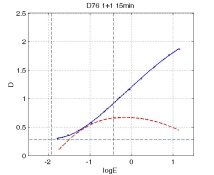
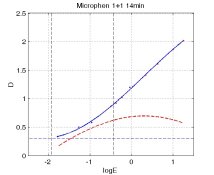
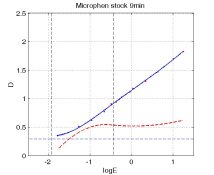
Below I'll post the results of the tests I made before I developed a roll of FP4 that I knew was undexposed. Each of the HD curves is for one recommended developer/time combination supposed to process FP4 to ISO200. The origin of the logE scale is arbitrary, i.e. you can use these graphs to decide which combination gives the most effective speed, not the absolute speed (which anyway is with a standard developer to a standard contrast). Blue curve is usual D versus logE, red curve is local contrast. Horizontal dotted line is B+F. Times are at 20°C.

My reading of these results is that not one combination stands out as clearly superior. Possibly Microphen Stock. Since I had bought Microphen expressly to salvage that film, I decided I might as well use it.

20141115(D76_1+1).jpg 20141115(MicroP_1+1).jpg 20141115(MicroP_Stock).jpg
 

bernard_L

Member
Allowing Ads
Joined
Feb 17, 2008
Messages
2,133
Format
Multi Format
Another possibility is to use a toner on the negatives to increase density.
Tried this for under-developed negatives (Neopan 400, crazy time from Fuji). Tried both Selenium toning and (rehalogenating) bleach followed by thiocarbamide toning. Neither gave me any significant density increase. Chromium intensification, after some tuning, achieved significant and truly proportional intensification. Not that I would recommend going that route.
 

Athiril

Subscriber
Allowing Ads
Joined
Feb 6, 2009
Messages
3,062
Location
Tokyo
Format
Medium Format
Almost every time I've tried chromium intensifier with Potassium Dichromate and Hydrochloric Acid, I got an uneven image afterwards.
 
OP
OP
mooseontheloose

mooseontheloose

Moderator
Allowing Ads
Joined
Sep 20, 2007
Messages
4,110
Location
Kyoto, Japan
Format
Multi Format
Thanks everyone so far for the suggestions. At the moment I'm busy with school and I'll be away for the 5-day weekend coming up, but after that I'll work on doing some testing. So far Xtol and D-76 haven't impressed me much so I'll see what happens with Microphen and TMAX.
 

RobC

Member
Allowing Ads
Joined
Nov 5, 2007
Messages
3,880
Location
UK
Format
Multi Format
Thanks everyone so far for the suggestions. At the moment I'm busy with school and I'll be away for the 5-day weekend coming up, but after that I'll work on doing some testing. So far Xtol and D-76 haven't impressed me much so I'll see what happens with Microphen and TMAX.

Use Microphen at STOCK dilution for full speed increase effect.
 
Photrio.com contains affiliate links to products. We may receive a commission for purchases made through these links.
To read our full affiliate disclosure statement please click Here.

PHOTRIO PARTNERS EQUALLY FUNDING OUR COMMUNITY:


Ilford ADOX Freestyle Photographic Stearman Press Weldon Color Lab Blue Moon Camera & Machine
Top Bottom