• Welcome to Photrio!
    Registration is fast and free. Join today to unlock search, see fewer ads, and access all forum features.
    Click here to sign up

Rollei Retro 100

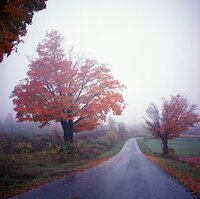
Rainy Day Trees

A
Rainy Day Trees

  • 1
  • 0
  • 25
One Way

A
One Way

  • 0
  • 0
  • 18

Forum statistics

Threads
203,144
Messages
2,850,513
Members
101,695
Latest member
zzbao
Recent bookmarks
0

Alan9940

Member
Allowing Ads
Joined
Jun 17, 2006
Messages
2,541
Location
Arizona
Format
Multi Format
Hi Folks,

Sorry if this has been asked before, but I tried searching the "B&W: Film, Paper, Chemistry" forum to no avail...

I'm getting the itch to try something new! Has anyone tried this film? Is the tonality and overall quality similar to APX 100 as reported? I'm thinking of souping it in Rodinal...what's your favorite developer for this film?

Thanks for any help provided.
 
Agfa made an emulsion batch before they shut down production of APX 100. Rollei bought this emulsion and coated it onto a different film base (Maco?). It is the same, or incredibly similar to, APX 100, but the base curls like crazy. I've heard of people curing that by rolling the film roll up against its natural curl and store it like that for a while, but haven't tried it myself. If you really liked APX 100 (I did) you'll like this one. Rodinal sounds good, but I've had equally good results with Pyrocat, D76, Ilfotec DDX, and Neofin Blue.
- Thomas
 
Thomas is correct. Rollei retro 100 is made for Rollei by Maco using the last batch of Agfa APX100 emulsion made prior to the Agfa doors closing. I have had great results with it using Tetenal Ultrafin (NOT Ultrafin Plus). Rate the film at 100, and dilute 1:30 and use a 12 minute dev time at 68 deg F. Presoak for 3 minutes, and agitiate for the first minute, then for 5 seconds every 30 seconds until done. Great negs, wonderful tonal range and controlled highlights will result.
 
I heard something slightly different.
Rollei Retro is the last batch of APX 100, which Rollei bought as uncut coated roll(s).
This roll(s) had been coated on the 35mm film base, so is thicker than the APX 120.
The Roll(s) were then sent to Zagreb (EFKE) for confectioning (cutting and packing)
So yes it is APX, behaves in a similar manner to the 120 Agfapan I have, works well in Rodinal (looks purple/blue when chemical is poured out) .
I have used quite a lot of the emulsion and apart from the thickness issue is the same as APX.
Mark
 
Mark is right.

(The 35mm version was converted in Germany by Photo Star on former Agfa machines.)
 
That explains the different film base... Thanks for the explanation!
- Thomas
 
Thanks to all for your considered replies. I don't like the sound of the curling issue, but I so enjoyed the tonality of APX 100 when available that I may have to give Retro 100 a try, anyway.

Thomas - thanks for the suggestion of Pyrocat...I've got some on hand so will try this developer, too.
 
I only discovered APX-100 fairly recently, just in time for it to be discontinued, and I love it! Anyway, I develop it in HC-110, dilution B for 7 mins at 20C, and I really like the tonality and grain I get from that combination.

Alan
(Down to my last 50 rolls of APX-100)
 
The Agfa APX 100 type 120 had a Non-Curling layer on the backside of its base. Something which of course the Rollei Retro 100 type 120 does not have.
 
FWIW, 120 may or may not be curly (I've never handled Retro 100 in 120), but Retro 100 in 35mm is nice and flat. Don't know which format the OP was looking for...
 
I use RR100 in 120, and it does indeed curl like all get out.

I develop it in Rodinal 1+50 and 1+100, and I get really lovely results, excellent detail, yadda yadda. Lovely film, but...

I'm open to suggestions for low-tech methods to mitigate the curl...
 
could be wrong here but i suspect that by loading the film emulsion side out on the reel, then processing and drying out on the reel might mitigate the curl somewhat...
 
The premium-quality films from vendors such as Kodak, Ilford and Fuji all have anti-curl coatings on the base side. This is, in essence, a another layer of gelatin, but not sensitized. As the film drys the gelatin emulsion contracts, this causes the curl. With a gelatin emulsion on both sides (only one is light sensitive), then the curl is eliminated, as both emulsions contract when drying, thus equalizing each other out. You will probably never get other films to dry as flat as the ones from the "big" three manufacturers.
 
FWIW, 120 may or may not be curly (I've never handled Retro 100 in 120), but Retro 100 in 35mm is nice and flat. Don't know which format the OP was looking for...

I am primarily interested in the 120 roll film. To those of you who've used this film and mentioned how much it curls: Is the curl so bad that you can't get it to load properly and/or lay flat in a neg carrier? I use a Beseler 4x5 enlarger and those neg holders are fairly large in diameter. I successfully printed some fairly curly film with this enlarger in the past...though in recent years I've stuck mostly with Ilford and, sometimes, Kodak films. No curl there!

So, when you say "curly" just how much curl are we talkin'??

Thanks.
 
I have never seen a negative curly enough it wouldn't lay flat in a negative carrier - for an enlarger anyway. For some scanners with flimsy film holders (most of them are CRAP!) it becomes an exercise in patience.
My main concern with curling film is that if you don't harden the emulsion at the fixing stage and handle the film with extreme care, I have had film with curl so bad that if I let go of the film accidently, it will curl back to its normal state so fast and so violently that one of the corners of the film strip scratched another piece of the film. I curse my Foma 120 film every time I need to scan it or put it back into the negative sleeves. It's damned near impossible to do either.
I hear, though, that you can coil the film up against its natural curl, on a film developing spool or something like that, and let it sit for a while, and that's supposed to make it better.
Best of luck. The film itself makes gorgeous negatives, but it is bad to handle.
- Thomas
 
they're a nightmare to do proper proofs with though...

...or, if you really love puzzles, try to print contact sheets with such a film. Such a film drives me to distraction.

Why are so many space cadets still psyched about an outdated film from a company that was a basket case many years ago and passed away THREE years ago?

That emulsion is not better today than in 2005. Scrawling it on a layer that is even worse than the original layer does not improve it either. It's "mystery meat".

A new name, packaging and some stories from la la land? Kick-ass new skins, old wine inside, DOA. If you want to save money, use quality, my teacher told me, 40 years ago. He was right.

So, why do you bark up the wrong tree? Why don't you just use good, modern, fresh film made by Kodak, Fuji or Ilford?

*Peace out*
 
Klopstock;669618 That emulsion is not better today than in 2005. Scrawling it on a layer that is even worse than the original layer does not improve it either. It's "mystery meat".[/QUOTE said:
Be fair,

Agfa set milestones in the history of photography. It sure is technically a decent company. Come and have a look at the plants and you will be impressed.
And obviously here at Apug many members love APXs (or "old wine"...).

A panchromatic film redesigned some years ago and coated in 2005 and decently stored is anything but outdated by now.

Again, there is no emulsion "scrawled" on a base, but an emulsion on a state-of the-art base applied beyond the intended use of that base and a converting applied of 2nd standard.


Yes, all this should have been communicated by the re-converting/-branding company instead of disclosing. (Meanwhile the companies strategy in Germany concerning these and some of their other films seems to have changed.)


But at least this forum should be the place to discuss the pros & cons. And who does not like like those type 120 conversions can still try to get hold of the original types or switch to something else.
 
Curl sounds like something for a glass neg carrier (correct this relative newbie if he's wrong).
 
Agfa set milestones in the history of photography.

And that's long ago. I remember a milestone, a 400 ASA film in the 80's, golfball size grain, no shadow or highlight detail. Portriga paper was not bad, I admit.

A panchromatic film redesigned some years ago and coated in 2005 and decently stored is anything but outdated by now.

Do you know the difference between a good and a bad restaurant?

In a good restaurant the waitor asks you "Did you find everything alright?"

In a bad restaurant he might ask "Did you find everything was still alright?"

For some reason, I prefer fresh food and films from companies that are more future-proof than a dead man walking. I prefer products with the original tally, so I know what I am dealing with.

Again, there is no emulsion "scrawled" on a base, but an emulsion on a state-of the-art base applied beyond the intended use of that base and a converting applied of 2nd standard.

I read that twice and don't understand it.

Yes, all this should have been communicated by the re-converting/-branding company instead of disclosing. (Meanwhile the companies strategy in Germany concerning these and some of their other films seems to have changed.)

Picking over the bones and selling remnants of a glorious past is not a great story for the front page.

But at least this forum should be the place to discuss the pros & cons.

I still don't see the pro: old emulsion on a curly layer, handled by more than one company for coating, cutting, packaging... where is the edge over the original? If you prefer old wine, do you say that adulterated wine is better than booze in primal barrel? Sounds like it's swill in a speakeasy.
 
hi .. i use both retro 100 and 400 in 120 ...
as already mentioned by members :
both the 100 and the 400 seems to be coated on exact same base ... in comparison to apx100 the base is thicker and a bit less clear (just a bit) and reminds a bit the apx400 base (but doesnt seem exact)...
curling of the retro (both 100 and 400): i can see that after just couple of days curling is no problem at all, and a couple of weeks of storage it is quite perfectly streight.
immediately after drying: it depends on drying conditions (water, air, time). basically, it is "normal" and not much different from ilford fp/hp curling, and not as good as say acros or tmy-2 that come very streight rite after drying. still, i dont see it as problem... the apx was curling too, and if i remember properly, even a bit more ...

now about quality ... nothing much to say ... for me - the KING of black and white films ... ya, it is apx100... though apparently not the same base, but the results are as seductive as was apx100... (the same about 400 too).
i dont have a single roll of original apx100 any more, so i cannot make side to side comparison, but no need for it ... developing times are the same basically, and the look is unmistakably - apx100.
rodinal is a natural choice for this film... and so is id-11/d-76 ... try both. rodinal will give bolder look with a little grain (in 120 u will need to go for serious enlargement to see that beautiful grain of this emulsion in rodinal). id-11/d-76 will give a cleaner, smoother and sharper negative.
the differances in developer choice are more dramatic with retro 400 ... id-11/d-76 can push this film to 800 very well if u need the speed or the look of such push (honestly i was not doing it with apx400, but now rediscovered this emulsion and its fantastic push look).

quality of product... no problems basically.
apparently, kodak and fuji films seem to have better product quality and control and so iflord ... i would say - reminds efke (also one of the fines emulsions).

 
Photrio.com contains affiliate links to products. We may receive a commission for purchases made through these links.
To read our full affiliate disclosure statement please click Here.

PHOTRIO PARTNERS EQUALLY FUNDING OUR COMMUNITY:


Ilford ADOX Freestyle Photographic Stearman Press Weldon Color Lab Blue Moon Camera & Machine
Top Bottom