• Welcome to Photrio!
    Registration is fast and free. Join today to unlock search, see fewer ads, and access all forum features.
    Click here to sign up

Rodinal 10 ml, myth or true?

Filling In

H
Filling In

  • 1
  • 2
  • 32
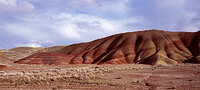
Painted Hills # 3.jpg

H
Painted Hills # 3.jpg

  • 4
  • 0
  • 79

Recent Classifieds

Forum statistics

Threads
203,208
Messages
2,851,415
Members
101,724
Latest member
Pituck
Recent bookmarks
0
Rodinal tends to oxidize pretty quickly once diluted...

One day (30 years ago) I tested that to find out for myself.

If you care to test it for yourselves, you'll likely find that Agfa gave VERY conservative recommendations for using Rodinal, and that there are lots of errors that keep re-appearing in thread after thread.
 
One day (30 years ago) I tested that to find out for myself.

If you care to test it for yourselves, you'll likely find that Agfa gave VERY conservative recommendations for using Rodinal, and that there are lots of errors that keep re-appearing in thread after thread.

Please, don't hold us in suspense. Tell us the answers.
 
Please, don't hold us in suspense. Tell us the answers.

:rolleyes:


[YOUTUBE]http://www.youtube.com/watch?v=LQqq3e03EBQ[/YOUTUBE]


.
 
Don't understand where 260 comes from. 1+50 is a somewhat unclear writing for 1 in 50. It doesn't mean make 51.
But then you would still have 255. Not 260.

Still:
5ml rodinal makes 250. 275 can be had from 5.5ml. You better mix 300 from 6ml rodinal to allow for some spill. And it costs very little.

This minimum 10ml is complete nonsense. It is not a nuclear process :smile:
Important is to have enough active component for the square area of the film.
A minox film can be processed in 60ml.
A 135 takes 125 in a Jobo 1510 rotating tank. And 250ml in a standing 1510 tank.
 
This minimum 10ml is complete nonsense. It is not a nuclear process :smile:
Well 10ml is Agfa somewhat conservative recomendation. You can do with a lot less developer but to be on the save side.... And it helps selling a bit more too :smile:
Important is to have enough active component for the square area of the film.
A minox film can be processed in 60ml.
Yes its the amount of active component translated into ml of Rodinal/film as has been stated many times before in this thread.
A 135 takes 125 in a Jobo 1510 rotating tank. And 250ml in a standing 1510 tank.
That is the amount of ready developer needed to cover the film and has only slightly to do with the amount of developing agent needed to develop the film. If you use 125ml of 1/50 you will only have 2,5 ml rodinal in the solution.
It might be enough or it might not, some have had success with as little as 2ml and I have used 3ml/film butI certainly wont try 1/100 (1,25ml rodinal) in such a low volume.
Best regards
 
Don't understand where 260 comes from. 1+50 is a somewhat unclear writing for 1 in 50. It doesn't mean make 51

I would think 1+50 does mean you make 51. 1 in 50 means a total of 50. The usual area of confusion is with 1:50 where most of us would make 51, 'real chemists' would make 50.


Steve.
 
1+50 = 51 parts
1:50 = 50 parts
1/50 = 50 parts

It makes sense to me that Agfa means 1+50. How is someone practically going to measure 49 parts of a working solution?
 
1+50 = 51 parts
1:50 = 50 parts
1/50 = 50 parts

It makes sense to me that Agfa means 1+50. How is someone practically going to measure 49 parts of a working solution?

By adding enough water to the original 1 part to bring the total to 50 parts.

That is how I measure 6 ml of HC110 concentrate - I add enough concentrate to 20ml of water to bring the total volume to 26 ml.
 
In photographic chemistry it's meant 1 part Rodinal plus 50 parts water, so 1+50.

Kodak is often written: 1:9 which also means 1 part chemical + 9 parts water.

In pure chemistry it's different but here we are talking about photographic applications.

With Rodinal you only have to take care that the minimum amount of concentrate is not going under 5ml pro 135-36 or 120 roll film area.
 
In the case of Rodinal, the point is for all practical purposes moot. 1+50 or 1+49 makes very little difference in the scheme of things. The effect of a 10 ml. difference in the amount of water is easily swamped by other factors like temperature and agitation, and even when you start and stop the timer. Don't sweat it so much. Work out your personal development times for the results you want, and be consistent with your practices. That will serve you far better than worrying about a few extra or fewer ml. of water. There are only a couple of films that I like with Rodinal, so I don't use it much. But for those couple of films, Foma 100 and what's left of my APX 100, the stuff works great. For the record, I use 1+49 or the strict chemists interpretation of 1:50.

 
5mL (1+100 for 500mL to process Acros 120 in Patterson) usually works but I have some denser rolls where the highlights have no detail and I'm pretty sure it's due to developer exhaustion. They look completely flat even when printed at crazy-high contrast so I won't be making that mistake again :sad:

I think if you have largely unexposed frames, e.g. night shots, then the recommendation is too conservative. If you're shooting high key though, you will run into problems unless you follow the minimum guidelines.
 
I used 1+50 for a couple years (10ml soup added to 500ml water) but recently went back to 1+100. My negs do appear sharper. I agitate gently for the first minute, then two gentle inversions each minute. As a rule of thumb I down rate my film a stop anyways regardless of developer so any speed loss (I STILL can't understand how developer affects film speed) is moot.
 
Myth, I use 3ml in 300ml 1+100 Stand for 35mm, great.

5ml for 500ml for 120... the image in my image gallery is 1+100 stand with 5ml.
 
I used 3ml to process two rolls of 35mm Tech Pan last week, and they are definitely not underdeveloped.
 
My 'take' on dilutions of Rodinal is as follows
The Agfa folk are selling developer. True, it is cheap but that is another issue.
To dilute is to mostly expose (!) oneself to a pH different to that designed for standard development. One could add NaOH at the rate of 62.5555555555555555 mg/L (one pinch) to keep the alkalinity close to design and yet have a reducing agent that will exhaust in highlights and continue working in the shadows (compensation development). Did someone say the highlights would lack detail? I am more worried about losing shadow detail which dilute/stand development promotes?
Alternatively go the Borax way and be re-assured the pH will be constant. It isn't really Rodinal anymore, tho.
Bottom line - I use as much as the dilution needs and don't worry myself.
Murray
 
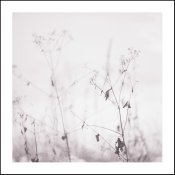
The attached picture was printed using a normal contrast filter on Fomabrom Variant 112 from an Agfa APX 100 (120) negative that was processed in Rodinal 1+200 (total volume 500ml, and 2.5ml concentrate). Processing time 30m, agitation at 10m and 20m.

Rodinal is an extremely powerful developer.
 

Attachments

  • 2008-12_02-01_apug.jpg
    2008-12_02-01_apug.jpg
    88.2 KB · Views: 267
Five pages of posts and no one has posted a characteristic curve to demonstrate preservation of the toe densities when developing with1/2 or 1/4-capacity solutions of Rodinal.

I would conclude that not only is it not a myth that they recommend 10ml/8x10, but using less developer than that will result in loss of toe density due to developer exhaustion during processing, as would be expected of any other developer. Seeing as no one has posted any data to the contrary.
 
Photrio.com contains affiliate links to products. We may receive a commission for purchases made through these links.
To read our full affiliate disclosure statement please click Here.

PHOTRIO PARTNERS EQUALLY FUNDING OUR COMMUNITY:


Ilford ADOX Freestyle Photographic Stearman Press Weldon Color Lab Blue Moon Camera & Machine
Top Bottom