
• Welcome to Photrio!
    Registration is fast and free. Join today to unlock search, see fewer ads, and access all forum features.
    Click here to sign up

Resistors: Color code training for electronics technicians and repairers

Valencia

A
Valencia

  • 1
  • 1
  • 47
Tied to the dock

D
Tied to the dock

  • 4
  • 0
  • 91

Recent Classifieds

Forum statistics

Threads
203,092
Messages
2,849,725
Members
101,659
Latest member
Dirksen
Recent bookmarks
0
Joined
Nov 19, 2017
Messages
4,863
Location
Vienna/Austria
Format
35mm
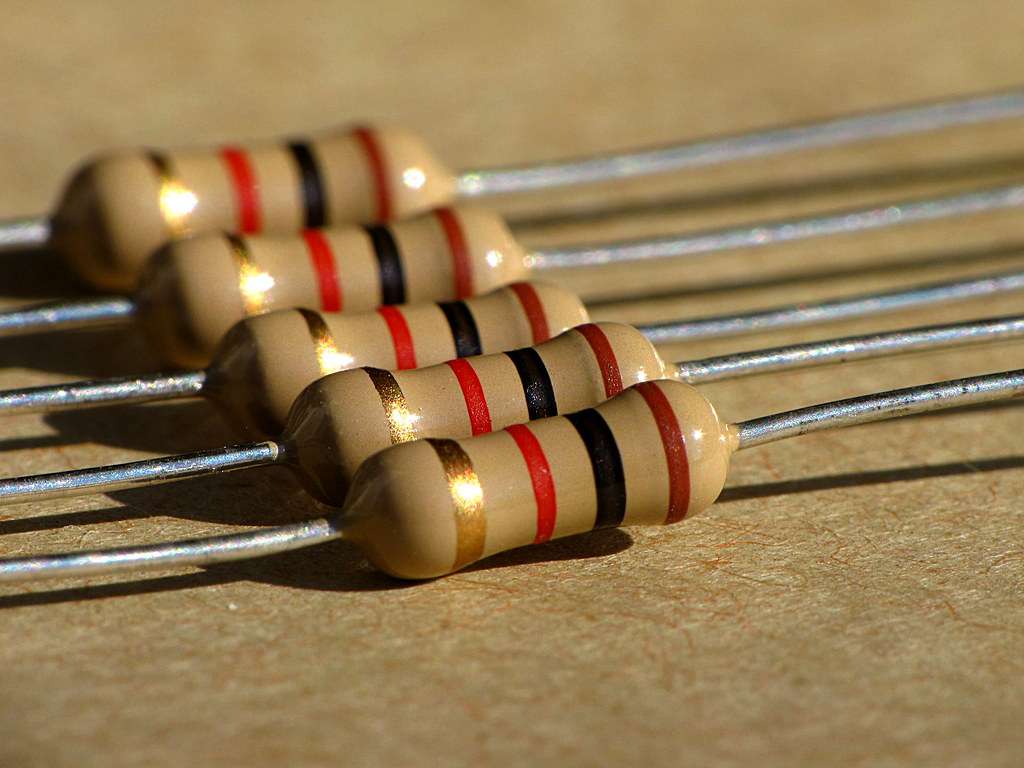
Anyone who deals with older electronic devices and cameras (e.g. Canon AE-1) will find wired resistors with colored rings. These rings give the resistance value, the tolerance and, if necessary, the temperature coefficient.

Those who are experienced can read the codes directly, everyone else uses tables or apps.

The TU Berlin offers a nice online training tool free of charge for reading the color codes:


The language is German but I think dealing with it comes naturally. Simply select the level of difficulty, enter the value read of the shown resistor and you will receive feedback whether it is correct or incorrect.

Ideal for the time between projects to stay fit 👍

The color codes should be internationally valid.
 
Last edited:
Anyone who deals with older electronic devices and cameras (e.g. Canon AE-1) will find wired resistors with colored rings. These rings give the resistance value, the tolerance and, if necessary, the temperature coefficient.

Those who are experienced can read the codes directly, everyone else uses tables or apps.

The TU Berlin offers a nice online training tool free of charge for reading the color codes:


The language is German but I think dealing with it comes naturally. Simply select the level of difficulty, enter the value read of the shown resistor and you will receive feedback whether it is correct or incorrect.

Ideal for the time between projects to stay fit 👍

The color codes should be internationally valid.


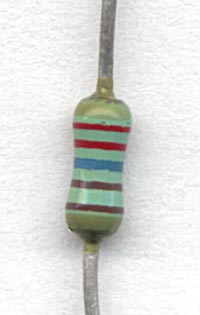
If a resistor is in good condition simply measure it would be easy. If the resistor is damaged mostly due to overheating the color may be very difficult to make out.
 
Anyone who deals with older electronic devices and cameras (e.g. Canon AE-1) will find wired resistors with colored rings. These rings give the resistance value, the tolerance and, if necessary, the temperature coefficient.

Those who are experienced can read the codes directly, everyone else uses tables or apps.

The TU Berlin offers a nice online training tool free of charge for reading the color codes:


The language is German but I think dealing with it comes naturally. Simply select the level of difficulty, enter the value read of the shown resistor and you will receive feedback whether it is correct or incorrect.

Ideal for the time between projects to stay fit 👍

The color codes should be internationally valid.


When I was in the USAF in the 1960 learning electronics, we learned this to remember the color code number equivalents.

Bad Beer Rots Our Young Guts But Vodka Goes Well
There was a dirty one as well, but I don't think it's appropriate to post here :wink:

Numerically the value (0-9) of a resistor via the color-coded bands:
Black (0), Brown (1), Red (2), Orange (3), Yellow (4), Green (5), Blue (6), Violet (purple, 7), Gray (8), and White (9)
 
You've seen all those sleek silver jets and their test pilots? 😎

Nah. I was never on a USAF plane except on Armed Forces Day like the rest of the tourists.
 
Nah. I was never on a USAF plane except on Armed Forces Day like the rest of the tourists.

But as an electronics engineer, you maybe had cockpits as a topic, with their analogue displays and electromechanical controls?

 
If in situ (soldered in a circuit) a real measurement is not possible.

Yeah, although it depends on the circuit. Without knowledge of the particular circuit, a measurement can indeed not be trusted to determine the value. It'll still say something, but that's another story.
 
I just remembered tolerances. gold= 5%; silver=10%; and nothing I think was 20%

Gold 1%
Silver 5%
Nothing 10% or as we said a Hughes Aircraft, "Good enough for Government work."
 
Interestingly, the USAF tested you for color blindness before entering and wouldn't allow you to be in electronics if you were.
I used to assemble video systems for editing, broadcast, etc. A new guy started and I was checking his work and found everything miswired. Which was strange because he was in school as an engineer and was a smart guy. Turns out he was colorblind! We made him a board with samples of every cable, splayed out with text labels for each color wire. With this, everything went smooth. I think that there are different types of colorblindness but his at least meant that if you told him a particular color was, say, red, everything got wired up fine.
 
I used to assemble video systems for editing, broadcast, etc. A new guy started and I was checking his work and found everything miswired. Which was strange because he was in school as an engineer and was a smart guy. Turns out he was colorblind! We made him a board with samples of every cable, splayed out with text labels for each color wire. With this, everything went smooth. I think that there are different types of colorblindness but his at least meant that if you told him a particular color was, say, red, everything got wired up fine.

Touching 🙂
 
When I was in the USAF in the 1960 learning electronics, we learned this to remember the color code number equivalents.

Bad Beer Rots Our Young Guts But Vodka Goes Well
There was a dirty one as well, but I don't think it's appropriate to post here :wink:

Numerically the value (0-9) of a resistor via the color-coded bands:
Black (0), Brown (1), Red (2), Orange (3), Yellow (4), Green (5), Blue (6), Violet (purple, 7), Gray (8), and White (9)
I learned the "dirty" one in a high school electronics class :smile:


..., "Good enough for Government work."
A coworker told me that phrase was once considered high praise, as Government specs were precise.
 
I learned the "dirty" one in a high school electronics class :smile:

I learned the inappropriate one first as well :wink: There are many other, more
sanitized ones here - we can't have people getting triggered and sobbing in the corner:


A coworker told me that phrase was once considered high praise, as Government specs were precise.

Yabut govt spec also was way OVER specified. I heard this story years ago ...

In the early days of integrated circuits, the govt specified that certain chips should be ceramic encapsulated so that they could be sent to space and be more protected against cosmic radiation (in theory, anyway).

The chips exhibited an unusually high failure rate. When disassembled, it was discovered that the little gold wires between the actual chip and the external pins of the package were breaking. Why? Because the thermal coefficient of expansion/contraction for the external packaging was significantly different than the wires which broke when the chip exterior expanded sufficiently.
 

Has anyone an idea where to find information regarding cockpit electronics of those days?

Countless discrete electronic components and cables must be installed behind the instruments.

Fascinating!

Were there computers in fighter planes in the 1960s?
 
Has anyone an idea where to find information regarding cockpit electronics of those days?

Countless discrete electronic components and cables must be installed behind the instruments.

Fascinating!

Were there computers in fighter planes in the 1960s?

There were certainly some version of computers on aircraft carriers and early versions of fighter target acquisition systems of the day. They may have be analog or hybrid, I don't know. The big contractors of the era were companies like Ratheon, Hughes Aerospace, Fairchild, Boeing, McDonald Douglas and the like. Certainly, by 1968, computers built out of discrete chips were in use. See:

 
But as an electronics engineer, you maybe had cockpits as a topic, with their analogue displays and electromechanical controls?


I was a cryptographic technician. Never got out of the communications center.
 
Yeah, although it depends on the circuit. Without knowledge of the particular circuit, a measurement can indeed not be trusted to determine the value. It'll still say something, but that's another story.

We used to unsolder one lead and then take a measurement.
 
Gold 1%
Silver 5%
Nothing 10% or as we said a Hughes Aircraft, "Good enough for Government work."

I may be wrong, but back when I was doing these, it was 20%. This chart infirns the 5% and 10% for gold and silver but it seems to depend on the resistor type.
 
Photrio.com contains affiliate links to products. We may receive a commission for purchases made through these links.
To read our full affiliate disclosure statement please click Here.

PHOTRIO PARTNERS EQUALLY FUNDING OUR COMMUNITY:


Ilford ADOX Freestyle Photographic Stearman Press Weldon Color Lab Blue Moon Camera & Machine
Top Bottom