
• Welcome to Photrio!
    Registration is fast and free. Join today to unlock search, see fewer ads, and access all forum features.
    Click here to sign up

Removing fungus and crack like threads from negatives

Millstone, High Water

A
Millstone, High Water

  • sly
  • Dec 17, 2025
  • 2
  • 5
  • 66
The Party

A
The Party

  • 0
  • 0
  • 51

Recent Classifieds

Forum statistics

Threads
201,243
Messages
2,821,101
Members
100,614
Latest member
generic
Recent bookmarks
0

Richard1985

Member
Allowing Ads
Joined
Jan 9, 2020
Messages
22
Location
United Kingdom
Format
35mm
Hi everyone,

There have been many threads posted about the removal of fungus from film with varying degrees of success. One recommended approach is water with Kodak Photo Flo. Another recommendation has been to use Flexicolor Stabiliser IIII but I cannot seem to find this anywhere.

Has anyone tried water with Kodak Photo Flo and were you successful in removing fungus and crack like threads from film? If so, what ratio of Kodak Photo Flo to demineralised water did you use?

As I am new to this approach, specific details or protocols would be appreciated.

Thank you.

Richard
 

koraks

Moderator
Moderator
Allowing Ads
Joined
Nov 29, 2018
Messages
26,140
Location
Europe
Format
Multi Format
Photoflo is a wetting agent; it won't remove fungus magically. Fungus can be removed through thorough washing, but it works best when combined with (cautious!) mechanical removal - think q-tips. Some form of alcohol may also be used in combination with mechanical removal, and a final rinse with a fungicide/antifungal (hence the stabilizer, or a very weak solution of formalin) will protect against further deterioration.
 
OP
OP

Richard1985

Member
Allowing Ads
Joined
Jan 9, 2020
Messages
22
Location
United Kingdom
Format
35mm
Hi koraks,

How would you wash your negatives? Perhaps leave the negatives in cold tap water for 10 minutes and then transfer them to a bowl with distilled water for a few minutes before transferring them to a bowl with Photoflo mixed with distilled water?

Can I use Photo Flo on color film or is it just for B&W film?

Do you think Tetenal Mirasol 2000 would be a good choice for the final rinse?

Kind Regards,

Richard
 
Last edited:

Sirius Glass

Subscriber
Joined
Jan 18, 2007
Messages
50,717
Location
Southern California
Format
Multi Format
PhotoFlo is only for black & white negative. Color uses stabilizer.
 

koraks

Moderator
Moderator
Allowing Ads
Joined
Nov 29, 2018
Messages
26,140
Location
Europe
Format
Multi Format
Hi koraks,

How would you wash your negatives? Perhaps leave the negatives in cold tap water for 10 minutes and then transfer them to a bowl with distilled water for a few minutes before transferring them to a bowl with Photoflo mixed with distilled water?
Letting the film sit still will not likely remove fungus. Go at it carefully with a q-tip or something like it. That'd be my approach.

Can I use Photo Flo on color film or is it just for B&W film?
Yes you can, but especially for older negatives, it doesn't offer optimal protection. Older C41 films required a formalin-containing final rinse. The dyes are apparently less stable if there's no formalin. The formalin also helps with the fungus of course.

Do you think Tetenal Mirasol 2000 would be a good choice for the final rinse?
Same story as Photoflo. Mirasol is an antistatic agent (and not unique in this sense), but doesn't offer much in the way of protection against fungus. Just like Photoflo, Adoflo, etc.etc.
 
OP
OP

Richard1985

Member
Allowing Ads
Joined
Jan 9, 2020
Messages
22
Location
United Kingdom
Format
35mm
What would be a good product to remove or reduce the appearance of fungus from color film and slides?
 

grat

Member
Allowing Ads
Joined
May 8, 2020
Messages
2,044
Location
Gainesville, FL
Format
Multi Format
PhotoFlo is only for black & white negative. Color uses stabilizer.

Modern C41 stabilizer has Photo-Flo in it, as I recall-- it's a slightly different formulation, but it's still the same stuff. Also has an anti-fungal.
 

foc

Subscriber
Joined
Jun 30, 2010
Messages
2,569
Location
Sligo, Ireland
Format
35mm
I think the advice you have received about removing the fungus with a q-tip is a very good idea.
If you can't get stabilizer then you could try Fuji Conditioner tablets FSC100. They are not expensive and one tablet can be mixed with 5LT of water (use filtered de-ionized water)
 
OP
OP

Richard1985

Member
Allowing Ads
Joined
Jan 9, 2020
Messages
22
Location
United Kingdom
Format
35mm
OK this is what I'm planning to do:

I'm going to use Kodak Pro-Stabiliser/Final Rinse for C41 & E6 for B&W film.

Rinse the negative under cold tap water for about 10 minutes, possibly use q-tips as well. Then transfer the negative to a bowl of distilled or de-ionized water for a few minutes, then lastly to a bowl of de-ionized water mixed with Kodak Pro-Stabiliser/Final Rinse for C41 & E6.

Where would be a good place to dry the negatives? How about a shower cubicle?

Many thanks.
 

koraks

Moderator
Moderator
Allowing Ads
Joined
Nov 29, 2018
Messages
26,140
Location
Europe
Format
Multi Format
Shower cubicle is fine. Anywhere without too much dust and draft will do.
I think the qtips are really going to be a necessity but see how it goes.
 

Wallendo

Subscriber
Allowing Ads
Joined
Mar 23, 2013
Messages
1,414
Location
North Carolina
Format
35mm
I had fungus problems with a roll of Kodachrome that had been poorly stored for a few decades. I used Q-tips and PEC-12 (Back when B&H would ship this), I basically had to wipe off the fungus which did leave some depigmented areas on my slides., but at least has prevented further damage. If possible copy or scan your images prior to cleaning (that is what I did) in case your cleaning makes things worse.

I did find several references to removing fungus by freezing the film, but never found any description of the actual technic.
 
Joined
Sep 10, 2002
Messages
3,653
Location
Eugene, Oregon
Format
4x5 Format
Remember to keep your processing solutions within a degree or so of each other. You can cause damage to the emulsion (reticulation/cracking) if you don't. Cold tap water, e.g., under 65°F, is likely not a good idea, since the cooler temperature may slow down the cleaning process. Normal b&w processing temp is 20°C/68°F. Color materials are usually processed at higher temperatures, but for what you're trying, 20°C or thereabouts seems good to me (not so much temperature drift).

Doremus
 
OP
OP

Richard1985

Member
Allowing Ads
Joined
Jan 9, 2020
Messages
22
Location
United Kingdom
Format
35mm
If I use a square hanging garment bag, can I dry the film in a bedroom cupboard instead? Has anyone tried this?
 

koraks

Moderator
Moderator
Allowing Ads
Joined
Nov 29, 2018
Messages
26,140
Location
Europe
Format
Multi Format
The bag won't allow the moisture to dissipate, so drying will take longer and may not be complete. I'd also be wary of lint in the bag if it's been used for storing clothes.
 

MattKing

Moderator
Moderator
Allowing Ads
Joined
Apr 24, 2005
Messages
54,740
Location
Delta, BC Canada
Format
Medium Format
Moving air is your (drying) friend.
 
OP
OP

Richard1985

Member
Allowing Ads
Joined
Jan 9, 2020
Messages
22
Location
United Kingdom
Format
35mm
I poured some cold water into a cup and left it for a few hours. I placed a thermometer in the cup and the temperature read 20°C, which was the same reading as soon as the water was poured from the cold tap. For some reason I don't believe this, the water seems colder than 20°C. I also placed the thermometer in warm water to make sure it is working correctly - it is.

What's a good way of ensuring that the water stays at around 20°C if I am working at room temperature? Could I boil the water and then leave it to cool to obtain a 'more accurate' 20°C reading?

Or am I making a mountain out of a molehill?
 
Joined
Sep 10, 2002
Messages
3,653
Location
Eugene, Oregon
Format
4x5 Format
More important is not to temperature shock the film by moving it from a bath of one temperature to one that is several degrees different. As long as you are within a degree or two of a reasonable processing temperature, you should be just fine.

Doremus
 
OP
OP

Richard1985

Member
Allowing Ads
Joined
Jan 9, 2020
Messages
22
Location
United Kingdom
Format
35mm
I hope everyone had a nice Christmas.

Quick update. Can I use de-ionized water with the Kodak Stabilizer instead of distilled or deminerialized water?

Which type of water is best for use with Kodak Stabilizer out of these three?
 

koraks

Moderator
Moderator
Allowing Ads
Joined
Nov 29, 2018
Messages
26,140
Location
Europe
Format
Multi Format
Can I use de-ionized water with the Kodak Stabilizer instead of distilled or deminerialized water?
Yes.

Which type of water is best for use with Kodak Stabilizer out of these three?
Distilled is best, but don't sweat it; all three will work just fine. Even though distilled is best, it's way overkill.
 
OP
OP

Richard1985

Member
Allowing Ads
Joined
Jan 9, 2020
Messages
22
Location
United Kingdom
Format
35mm
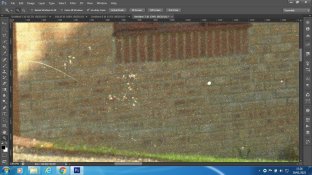
Does anyone know what these white marks are?
 

Attachments

  • Spots.jpg
    Spots.jpg
    422 KB · Views: 133
Photrio.com contains affiliate links to products. We may receive a commission for purchases made through these links.
To read our full affiliate disclosure statement please click Here.

PHOTRIO PARTNERS EQUALLY FUNDING OUR COMMUNITY:


Ilford ADOX Freestyle Photographic Stearman Press Weldon Color Lab Blue Moon Camera & Machine
Top Bottom