

• Welcome to Photrio!
    Registration is fast and free. Join today to unlock search, see fewer ads, and access all forum features.
    Click here to sign up

Red dots on Ektachrome

Beach walkers

A
Beach walkers

  • 0
  • 0
  • 41
Romy

A
Romy

  • 3
  • 1
  • 46

Forum statistics

Threads
204,412
Messages
2,868,164
Members
102,255
Latest member
brianalog
Recent bookmarks
0

vjuliano

Member
Joined
Feb 6, 2021
Messages
65
Location
Seattle, WA
Format
35mm
I make my own E6 chems and have been having relative success working off the 1982 BJP Annual formulas. I recently acquired a copy of the 1988 BJP Annual and decided to try using those formulas.

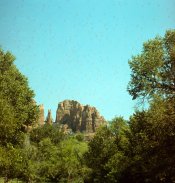
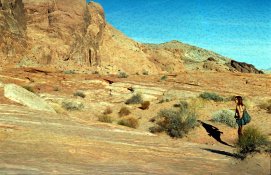
In many ways the new formulas seem to be an improvement, except I am getting small red dots in the light areas, especially the sky. This essentially ruins the photo, unless I go through and try to digitally remove them.

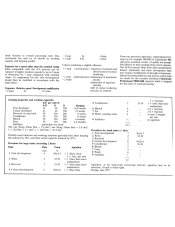
I have attached 2 sample photos to show what is happening, as well as the 1988 formulas that are causing the issue. I have developed 3 rolls so far, all having the same issue. While they are expired, they are different ektachrome stocks from different sources, and I have had good success with them using my old process, so it seems unlikely that it is just an issue of being expired. These have gone through some color correction, so they appear slightly softer and less bright red then they actually do on the slide. I havent had time to rescan the samples without any corrections. I have tried cleaning the film, even right after development with no luck, so I dont think its just sediment on the film.

Unless someone has had similar issues in the past and knows the cause, I guess my next steps will be to make a new set of the 1982 and 1988 chems, subbing out a single chem at a time from 1988 to try and isolate the guilty chem.

Any help is greatly appreciated.
Thank you
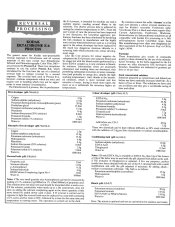
E6_BJP_1988.jpg E6_BJP_1988.jpg E6_BJP_1988.jpg 2022-01-10-0015.jpg2022-01-07-0015.jpg
 
Last edited:
Possibly unrelated to my original question, but for the CD Crowley says we can use CD-3 or CD-4. I had thought these were fairly different chemicals with different applications. I remember some posts from PE discussing this but cant find them right now. Does anyone know if I should expect some different behavior or results when using one instead of the other?
 
Sorry, no experience with E6 DIY chemistry here, but having looked at your examples, my money would be on the incomplete dissolution of a chemical in most likely the first developer. The phenidone would be the prime suspect. Do you use a concentrate (e.g. in glycol or some kind of alcohol) or dry powder when making your E6 developer?
 
This is an excellent suggestion. I just mixed straight dry powder in. I was worried at the time that it wouldnt dissolve correctly, and then promptly forgot all about it. I will whip up a new FD, this time with the phenidone in glycol and see if that solves the issue.
 
I make my own E6 chems and have been having relative success working off the 1982 BJP Annual formulas. I recently acquired a copy of the 1988 BJP Annual and decided to try using those formulas.

In many ways the new formulas seem to be an improvement, except I am getting small red dots in the light areas, especially the sky. This essentially ruins the photo, unless I go through and try to digitally remove them.

I have attached 2 sample photos to show what is happening, as well as the 1988 formulas that are causing the issue. I have developed 3 rolls so far, all having the same issue. While they are expired, they are different ektachrome stocks from different sources, and I have had good success with them using my old process, so it seems unlikely that it is just an issue of being expired. These have gone through some color correction, so they appear slightly softer and less bright red then they actually do on the slide. I havent had time to rescan the samples without any corrections. I have tried cleaning the film, even right after development with no luck, so I dont think its just sediment on the film.

Unless someone has had similar issues in the past and knows the cause, I guess my next steps will be to make a new set of the 1982 and 1988 chems, subbing out a single chem at a time from 1988 to try and isolate the guilty chem.

Any help is greatly appreciated.
Thank you
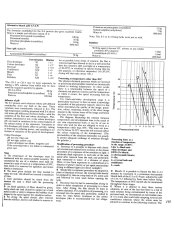
View attachment 295340 View attachment 295341 View attachment 295342 View attachment 295339View attachment 295343
hello
I encountered that problem once.
- I think that the problem lies in the bleaching. I think that the time was not enough or the speed of stirring was not enough, or that the temperature of the bleaching solution was lower than what was required, or perhaps the pH of the bleaching solution was not accurate.
- You can re-bleach again, then repeat the Fixxing stage, then the final rinse.

Excuse me my friend, do you have a PDF copy of that formula, I will be very thankful to you.
Accept my greetings
 
Last edited:
I have it as a pdf, but it is too large to attach here, which is why I turned it into several down res'd jpgs. Il throw it up on a server so you can get to it.
 
Photrio.com contains affiliate links to products. We may receive a commission for purchases made through these links.
To read our full affiliate disclosure statement please click Here.

PHOTRIO PARTNERS EQUALLY FUNDING OUR COMMUNITY:


Ilford ADOX Freestyle Photographic Stearman Press Weldon Color Lab Blue Moon Camera & Machine
Top Bottom