
• Welcome to Photrio!
    Registration is fast and free. Join today to unlock search, see fewer ads, and access all forum features.
    Click here to sign up

Red #29 filter help please!

MIT. 25:35

MIT. 25:35

  • 0
  • 0
  • 0
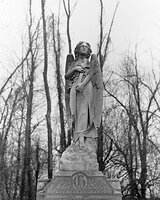
Lutheran Cemetery Angel

H
Lutheran Cemetery Angel

  • 0
  • 0
  • 28

Recent Classifieds

Forum statistics

Threads
202,945
Messages
2,847,961
Members
101,550
Latest member
Paris-Belle
Recent bookmarks
0

alex gard

Member
Allowing Ads
Joined
Nov 9, 2013
Messages
85
Location
Tasmania
Format
Multi Format
I have been shooting a lot of b/w film on this road trip with a red #29 filter. Fomapan 200 8x10 and HP5+/Tmax 400 in 4x5

The manufacturer said it was a 3 stop filter, a fellow photographer metered my filter on a light table and his conclusion was that it was in fact a 5 stop filter.

Now a couple of questions;

I have always metered this filter at 3 stops compensation. So far my negatives have all come out with incredibly heavy contrast but no "underexposed" highlights, as far as I can tell, and in fact the results have so far been quite pleasing.

given the advice of this fellow photographer to push the sheet film 2 stops to make up for the extra 2 stops i did not take into account;

So... If I push this huge batch of negatives another 2 stops in development, will i "blow out" the highlights if this conclusion is not correct? Is it worth the risk to try this? Or should i just develop them as i metered? I have found only one thread after some extensive googling researching this uncommonly used filter, only some people saying they rated it as a 3.5-4 stop filter

Help!


Sent from my iPhone using Tapatalk
 
I ask because i'm still on the road and have a rare chance to develop some negs in the next few days on this stopover in byron bay and want to make sure i'm doing it ight and cant afford to stuff up these great shots


Sent from my iPhone using Tapatalk
 
http://flic.kr/p/p5Te6L

Here is an example of a shot with same filter on foma 200 with the filter only considered as 3 stops

I think it turned out ok? Few more shots in my flickr feed there with same filter/film and processing. Seems ok to me? Again, rated at 3 stops yesterday but after light table test told it was a 5 stop filter?


Sent from my iPhone using Tapatalk
 
If you like the results at 3 stops ignore advice.

If you want to try 5 stops expose for 5 stops.

Underexposing and over development will leave you with black shadows and 'fun' printing.
 
It appears three stops is correct. I would follow manufacturers directions and not metered incandescent light. I always rate film at half box speed in incandescent light, and have found filters do not work under it as they should, they are designed for daylight use.
 
If you would have metered the shadows and compensate just 3 stops for the red-filter, then I think you are on safe side.

May I know your exposure index? Foma 200 is happy at E.I. 100 mostly.
 
You mentioned that the manufacturer said 3 stops but it would be helpful if you told us which manufacturer made your filter. Also, check the film bulletins. Filter factors are different for different films using the same filter. In the end, you could bracket and see which works best for you.
 
the strongest rd filter I've ever used was a#25,which is definately a 3-stop filter.Nevertheless,You can't trust a densitometer reding from a light tablebecauseof the unknown spectral output of the lighttable. the filter manufacturr's filter factor is more reliableand you already have some pleasing test results.why not go with that.Also,if you have lots of film left to develop,try pushing a roll and see.Remember:if in doubt over expoe and underdevelop:whistling::wink:
 
Methinks

Methinks that your pal did not test the filter in the real world -- the one that you take photos in. So I would not get my undies in a twist over such a test. If you are on the road you could bracket your exposures, some for the 3-stop thing, some for the 5-stop. Film looks cheap when you are back home and won't be in those locations any time soon.
 
Methinks that your pal did not test the filter in the real world -- the one that you take photos in. So I would not get my undies in a twist over such a test. If you are on the road you could bracket your exposures, some for the 3-stop thing, some for the 5-stop. Film looks cheap when you are back home and won't be in those locations any time soon.

Um... that still gets kinda pricey when you're shooting 4x5 and 8x10.
 
I always assume 3 stops (with reasonable success). It seems to me this "test" could be skewed not only by the spectral emission of the light table, but also the meter's spectral characteristics; after all, red is out there at one end of the visible spectrum.
 
Beyond considering future use of the filter, you seem to be suggesting that changing your development would give you better negatives that are already exposed. As they are already exposed, you cannot get more shadow information out of them; you can only extend the contrast by pushing the whites up the curve. And you already say they have incredibly heavy contrast.
Push processing doesn't really correct an incorrect exposure.
 
...So far my negatives have all come out with incredibly heavy contrast but no "underexposed" highlights, as far as I can tell, and in fact the results have so far been quite pleasing....

The question is how do your shadows look? That tells you if your exposure is good.

What process will you be using to produce prints? Let that drive your development.
 
For the two specific films you mention, a three stop factor for a 29 is correct. What you might not have correctly estimated is the relatively
miserable reciprocity correction factor needed for Fomapan 200 at even modestly long exposures. If your shutter speeds are correct, and you
have a consistent metering method, it is easy enough to test these films in small format before shooting more expensive sheet film. At least
that will get you in the ballpark. "Pushing" does nothing to help a negative which is underexposed in the first place. The basic rule is still,
"expose for the shadows, develop for the highlights".
 
Oh... one more point, while Kodak TMY400 appears to be a true 400-speed film in many developers, I don't know anyone who tries to shoot Foma
200 at anything even close to its box speed. I personally use 100, not counting any reciprocity issues, which slow it down even way more.
 
Beyond considering future use of the filter, you seem to be suggesting that changing your development would give you better negatives that are already exposed. As they are already exposed, you cannot get more shadow information out of them; you can only extend the contrast by pushing the whites up the curve. And you already say they have incredibly heavy contrast.
Push processing doesn't really correct an incorrect exposure.

This lesson has really come home to me shooting pinhole. You MUST ensure you have enough exposure, testing under various conditions is the only way. Then adjust your processing to get the highlights you want. If you like the results you've been getting, stick with your settings.

I think pinholes and photons have a special agreement. When exposing shadows, some of the photons just 'go away.'

:D
Steve
 
The ONLY way to determine the compensation is to test the filter with film.
Generally metering through a filter is inaccurate. The meter's not going to have the same response as film.
 
Ah yes I did not take into account his use of light table.

I compensate 2 1/3 or 2.5 stops depending on light for my #25 filter

The red #29 filter (Formatt Hitech) is noticeably darker and also a 4mm thick piece of glass.

I am not hand printing my negatives, only scanning at this stage.


Sent from my iPhone using Tapatalk
 
Updated: I just saw your prior response!


may I ask which company made your Red 25A filter, so that I may buy the same! Not a brand snob, however, I used to own a Zeiss CPL that produced no issues that my eye's could detect, however, it was on a DSLR 5D MK2 and, I wouldn't have a clue how well the Zeiss worked versus any other. Tahk you, nice flickr images!
 
The #25 is also a Formatt Hitech. I've never had any issues with it although I might look into a Lee one soon enough.

I am exposing the foma 200 at box speed, but have been told by many to shoot at least at 100, which I will do from now on.


Sent from my iPhone using Tapatalk
 
Methinks that your pal did not test the filter in the real world --

I was the one to test Alex Gard's #29 dark red filter on my light-table and, yes, it was not a real world test. But I tried hard to get a meaningful result without actual film testing. Here's what I did:

The #29 filter went on the light-table next to my #25 red filter that had been previously film tested at exactly 3 stops (for panchro film and daylight subjects). The #29 looked dramatically darker than the #25. I spot-metered through these filters with a Sekonic L-758D meter and the #29 read two stops darker than the #25. The main anxiety was that the light-table is not a true daylight source and the Sekonic L-758D is over sensitive to red. The hope was that because this was a comparative test rather than an absolute measurement the confounding factors would be the same for both filters and the measured density difference would be valid. Later a colleague measured the difference between the #29 and #25 filters using a Pentax Spotmeter with the Zone VI spectral correction modifications and again noted a two stop difference.

I reckon this #29 filter needs 5 stops compensation for daylight subjects and if the subject includes large areas of important shadow detail lit by blue sky it needs 6 stops.

And snapguy and the other commentators are right: there's no substitute for actual film testing to prove filter factors exactly.
 
For the two specific films you mention, a three stop factor for a 29 is correct. What you might not have correctly estimated is the relatively
miserable reciprocity correction factor needed for Fomapan 200 at even modestly long exposures. If your shutter speeds are correct, and you
have a consistent metering method, it is easy enough to test these films in small format before shooting more expensive sheet film. At least
that will get you in the ballpark. "Pushing" does nothing to help a negative which is underexposed in the first place. The basic rule is still,
"expose for the shadows, develop for the highlights".

The Kodak tech bulletin indicates that 3 stops are for red #25. There is no reference to red #29. But it would seem that additional stops might be required. In any case see pg 5.
http://www.kodak.com/global/en/professional/support/techPubs/f4016/f4016.pdf
 
Very thin negatives, yes. Maris hand developed a couple of my negs from last cpl of weeks and first comment was how thin they were. I do like that very rich contrast and black sky etc however would like to be at least aware of technical correctness


Sent from my iPhone using Tapatalk
 
A quick perusal of my old Kodak Wratten Filters Handbook shows that the #29 filter has a similar transmission spectrum to the #25, just a little bit sharper cut and a little less of the near red transmitted. The #25 transmission curve shows 50% transmission at about 600nm, climbing rather steeply to 75% at 610nm and 85% at 630nm. The #29 transmits 45% at 620nm and 87% at 650nm.

Filter factors always depend on the interaction between the transmission characteristics of the filter and spectral response of the film. Metering off a light table might give you an idea, but simply looking through the filter in daylight will too. The only way to quantify is to use a good gray card in the light you need the factor for (daylight, tungsten, etc.) and do density tests. Filters with this sharp a cut in the red may give hugely different factors with different films depending on the red sensitivity of the film. If the Foma 200 has a rather weak red sensitivity, you may be grossly underexposing.

The #29 filter was designed for making color separation negatives for four color printing from Ektachrome transparencies. For general landscape work, there may not be much difference to a #25; possibly a bit more contrast due to slightly less of the shorter red wavelengths being transmitted. Again, it depends on the film.

At first glance, the spectral curves of the #25 and #29 seem close enough to suggest that the factors may be close as well. On the other hand, if there is a sharp drop in the film's red sensitivity somewhere between the 600nm and 650mn range, then the factor for the #29 could be significantly higher.

With any extreme filters (especially tri-color filters), a test is a good idea to ensure you are getting close to the right factor. Sharp-cut filters also often have an effect on the contrast of the film as well; again, depending on the film. It's a good idea to test that as well.

Best,

Doremus
 
Something that might be of interest: http://www.karmalimbo.com/aro/pics/filters/transmision of wratten filters.pdf - See page 3 and it gives you the transmission numbers for most Wratten filters including #25 and #25.

Interestingly, sources such as B&H quote a 3 stop correction for the #29 and also for a #25 filter - Definitely a case for testing. If you were shooting roll film, I'd suggest bracketing (one at +3 stops, another at +5), but doing that with sheet film can get expensive very quickly.
 
Photrio.com contains affiliate links to products. We may receive a commission for purchases made through these links.
To read our full affiliate disclosure statement please click Here.

PHOTRIO PARTNERS EQUALLY FUNDING OUR COMMUNITY:


Ilford ADOX Freestyle Photographic Stearman Press Weldon Color Lab Blue Moon Camera & Machine
Top Bottom
