
-
Welcome to Photrio!Registration is fast and free. Join today to unlock search, see fewer ads, and access all forum features.Click here to sign up
You are using an out of date browser. It may not display this or other websites correctly.
You should upgrade or use an alternative browser.
You should upgrade or use an alternative browser.
Recommendation needed - 'best' B&W roll film/developer combo :-)
-
A
- Thread starter Paul Ozzello
- Start date

Recent Classifieds
-
For Sale Job Lot of Out of Production B&W Paper - UK only.
- Started by Gary Holliday
-
Sold Rollei RPX 135-36
- Started by Roger Thoms
-
For Sale Black & White Paper Sale - Open box - UK only
- Started by Gary Holliday
-
Sold Efke PL 100 M
- Started by Roger Thoms
-
For Sale Omega C760 XL Medium Format Condenser Enlarger with Schneider Enlarger Lens - UK
- Started by Gary Holliday
Forum statistics

I've offered you some experience and examples on your previous (there was a url link here which no longer exists), which you seem to have abandoned. But to be fair, they were only analog based and not hybrid.
OP
OP

Paul Ozzello
Member
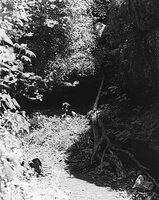
Wow, thanks everyone for all the feeback - what a great forum ! The two images in my post are recent trials with Efke 25 and Rodinol (1:50). I quickly scanned them on an old Epson flatbed but haven't looked at them with a loop yet, but I really like the tonality - on another thread I was told either Rodinol or a Pyro with Efke 25. Will Pyro make that much of a difference ?
I'm surprised no one mentioned any other iso 25 films, how does their grain compare to 100 speed t-grain films like Delta/TMAX ?
I had always assumed tmax and delta were the same, I'll add it to my list of combinations And thanks !
I never had any luck with XTOL with Delta 100- my negatives were always severely overdeveloped, and I'm very careful with process temps, shutter speed calibration, dilution ratios... maybe I just had a bad batch of xtol - will give it another try.
And yes - from Montreal
Hi Bill, your suggestion sounds interesting, how do I determine proper exposure ? Should I measure and expose for a different zone than 18% gray ?
As for 4x5, unless type 55 film becomes available again, I just don't have the patience !
Great article ! My hands are going to be full the next few weeks !!
Thanks !
Here's another one from the series
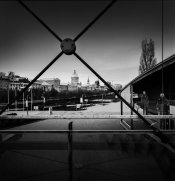
Dying to try it. I used Techpan for large prints developed in Technidol - one of my favorites... it will be missed
Paul
I'm surprised no one mentioned any other iso 25 films, how does their grain compare to 100 speed t-grain films like Delta/TMAX ?
It's not going to get much finer grained than TMAX 100/Delta 100 in Xtol. That's your best bet. To be honest, Delta 100/D-76 isn't too far behind. I'd stick with it... Great work by the way!!
I had always assumed tmax and delta were the same, I'll add it to my list of combinations
And thanks !Hi fatso:
By the way are you from Montreal?
Michael
I never had any luck with XTOL with Delta 100- my negatives were always severely overdeveloped, and I'm very careful with process temps, shutter speed calibration, dilution ratios... maybe I just had a bad batch of xtol - will give it another try.
And yes - from Montreal
I can't imagine finer medium format combination than a tabular grain 100 speed film.
We haven't been offered a tabular grain 50 speed or 25 speed film so I don't know how you can do much better.
I'd experiment at least a bit with same film but 4x5 or 8x10 see if that is more satisfying.
Otherwise take some of the fine suggestions here.
Your example shows adequate shadow detail without evidence that you rated the film at half speed. But I want to point out that for the finest results, I believe you need to absolutely give the minimum exposure that provides shadow detail (instead of the safer "half box speed" technique that guarantees results but with potential for overexposure... which would mean more grain).
Hi Bill, your suggestion sounds interesting, how do I determine proper exposure ? Should I measure and expose for a different zone than 18% gray ?
As for 4x5, unless type 55 film becomes available again, I just don't have the patience !
And the answer is... Diafine. Or a similar two-bath developer. I could list the reasons why this is the "magic bullet" but no less an authority than Sandy King has already done so in View Camera magazine, the article which you can find here.
I used Diafine with TMAX 400, flatbed scans and pigment prints. After being back in the darkroom for over a year, I recently pulled these prints out of the file and realized... gulp... they may be the nicest prints I've ever made.
Great article ! My hands are going to be full the next few weeks !!
That is one nice image.
Thanks !
Here's another one from the series
Concerning technical film, this stuff is also said to be amazing, but I have no personal experience with it:
http://www.adox.de/english/ADOX Films/Premium/ADOX_Films/ADOX_CMS_Films.html
Dying to try it. I used Techpan for large prints developed in Technidol - one of my favorites... it will be missed
Paul
OP
OP
Paul Ozzello
Member
I've offered you some experience and examples on your previous (there was a url link here which no longer exists), which you seem to have abandoned. But to be fair, they were only analog based and not hybrid.
I developed my roll of Efke 25 with Rodinol 1:50 as suggested by Роберт and made some pretty good negatives and thanked him - I didn't have that much else to add
But I'm very curious about trying Pyro again. I used it a few years ago with Delta 100 but didn't notice much difference in my prints, but then again I didn't do any real world comparisons. Now that I want to make some really large prints every detail counts and with the demise of Techpan I need to try something new.... adding Efke 25/Pyro to the list...
Paul

- removed account8
- Deleted
OP
OP
Paul Ozzello
Member
Pyro will be sharp, but grainier than moderately diluted solvent developers such as XTOL, D76 etc. That's the tradeoff. It won't do anything special from a tonality perspective. Stain density can also vary from film to film so you'd have to experiment. It depends on what kind of printing you are doing.
Regarding slow films in the 25ISO range, they are typically higher in contrast and/or have a shorter scale. That's the great thing about a film like TMax 100 if you like fine grain. It will be as, or near as fine grained as a conventional 25ISO film, but with a very long scale.
Regarding XTOL, it is only a high contrast developer if you develop that way. It is a general purpose solvent developer. You can get any level of contrast you want out of it. It gives good film speed and very fine grain at a variety of dilutions. Very flexible.
You're kind of all over the map here. In your original post you wanted fine grain and a long tonal scale. But you're talking about all sorts of different films, Rodinal, Pyro etc. First ask yourself what image characteristics you are really looking for, and how you will be printing. Based on that, choose a film. Then, to build on the characteristics of the film, choose the developer. Then, it requires practice to get the most out of the film/developer combination.
If the combo you just tried looked good stick with it.
I was very happy with Delta 100 and D76 and used if for years, but that was when I was doing my own darkroom work and printing no larger than 20 x 24. I've 'discovered' inkjet printing from film negatives and love the control I have using Photoshop and the amazing tonal scale achievable with modern inkjets (I don't want to start a debate about which printing method is superior - it's a personal choice). I'm reassessing my film and developer choices to get the best possible results from drum scans. If I had the patience I would switch to 4x5 but I don't want to deal with the hassle of sheet film; I will be travelling by bike for a year to take pictures through out eastern Europe and need to keep it relatively light. I've considered medium format digital and if I can sell all of my personal belongings before I leave it might be an option - either way I will still be bringing my film camera
So for now I'm experimenting with different films and developers so that I can make the most of my trip.
- Joined
- Feb 9, 2010
- Messages
- 9,556
- Format
- 4x5 Format
Hi Bill, your suggestion sounds interesting, how do I determine proper exposure ? Should I measure and expose for a different zone than 18% gray ?
Paul
When you measure and expose for 18% gray, it's similar to incident metering. That is a good way to get consistent results. Keep at it but increase your Exposure Index until you are dangerously close to losing shadow detail. Use great care when metering to reduce the risk, but live on the edge.
If I was seeking the least grain, I'd use sensitometry to keep track of the Contrast Index. I would aim for a relatively "low CI" that would be expected to require a Grade 4 paper to print properly. I'd spotmeter shadows and double-check expected vs. actual densities on the negatives and then I would adjust my Exposure Index as needed to make the spotmetered shadows fall where I want them to be. [I am omitting where this is because describing where shadows should fall is confusing].
I see why Pyro's a good choice because the stain that contributes to effective printing density in the highlights is grain-free. This may require a special densitometer to test (Darkroom Automation's got one). Another way (literally the best way) to determine effective density is to print step wedges onto the paper you plan to print on.
My post here is mostly thinking out loud, not based on experience. Experienced Pyro users are free to say I'm wrong.
I don't like to tease underexposure or develop to low CI because I personally dislike and fear thin negatives that have to be printed on Grade 4. But I believe they might be where you will find freedom from grain.
In short, if the negatives that you weren't happy with are full, rich, dense negatives... You may not have to change developer or film to reduce grain. Maybe you only need to expose a little less and develop a little less.

I thought the reason no one mentioned 25 ASA films was because they are all discontinued? I thought Pan F+ 50ASA was the slowest film still in production, sure you can get other films for a while from stock but inevitably they are going to run out... Other than that its all 100 ASA films.
PLEASE correct me if I'm wrong, is efke25 still produced?
~Stone
The Noteworthy Ones - Mamiya: 7 II, RZ67 Pro II / Canon: 1V, AE-1 / Kodak: No 1 Pocket Autographic, No 1A Pocket Autographic
Sent from my iPhone using Tapatalk
PLEASE correct me if I'm wrong, is efke25 still produced?
~Stone
The Noteworthy Ones - Mamiya: 7 II, RZ67 Pro II / Canon: 1V, AE-1 / Kodak: No 1 Pocket Autographic, No 1A Pocket Autographic
Sent from my iPhone using Tapatalk
- Joined
- Feb 9, 2010
- Messages
- 9,556
- Format
- 4x5 Format
I don't know but I believe traditional grain 25 and 50 speed films will always be available. Sorry I haven't discussed them.
100 speed CCG controlled crystal growth films allegedly give 32 speed traditional grain a run for it's money*
It's too bad that slow films sell slowly. I know in my heart the real reason... It's slower to shoot, (requires methodical work), so you don't go through as much of it.
(*I haven't proved to myself yet but am giving it a fair chance right now. I really like 4x5 TMY-2 so this drew me to give 35mm 100 TMAX a chance.)
p.s. I work for Kodak, but not in film. The positions and opinions I take are my own and not necessarily those of EKC.
100 speed CCG controlled crystal growth films allegedly give 32 speed traditional grain a run for it's money*
It's too bad that slow films sell slowly. I know in my heart the real reason... It's slower to shoot, (requires methodical work), so you don't go through as much of it.
(*I haven't proved to myself yet but am giving it a fair chance right now. I really like 4x5 TMY-2 so this drew me to give 35mm 100 TMAX a chance.)
p.s. I work for Kodak, but not in film. The positions and opinions I take are my own and not necessarily those of EKC.
My favorite: Verichrome Pan 120 developed in Microdol X is really crisp. Also, very partial to Panatomic X.
~Steve
~Steve

Helinophoto
Member
PLEASE correct me if I'm wrong, is efke25 still produced?
Nope, as far as I can gather from (there was a url link here which no longer exists), what you find of EFKE and ADOX (25, 50, 100) out there is the remaining rolls from the final stock.
The only 25 ISO film I know of that is in production and avaiable is Rollei Ortho 25 ISO , never tried it though, but if it is in the same class as Rollei retro 80s regarding grain and resolution it could be very good. Digitaltruth has some info on it
Found a review here it may be something that the OP is looking for perhaps...?
Nope, as far as I can gather from (there was a url link here which no longer exists), what you find of EFKE and ADOX (25, 50, 100) out there is the remaining rolls from the final stock.
The only 25 ISO film I know of that is in production and avaiable is Rollei Ortho 25 ISO , never tried it though, but if it is in the same class as Rollei retro 80s regarding grain and resolution it could be very good. Digitaltruth has some info on it
Found a review here it may be something that the OP is looking for perhaps...?
Thanks I did see that film before actually but it's ortho, so I would need an actual dark room and a red light to develop it properly wouldn't I? And I don't have that, I have a sink and a light tight Patterson tank...

~Stone
The Noteworthy Ones - Mamiya: 7 II, RZ67 Pro II / Canon: 1V, AE-1 / Kodak: No 1 Pocket Autographic, No 1A Pocket Autographic
Sent from my iPhone using Tapatalk
My favorite: Verichrome Pan 120 developed in Microdol X is really crisp. Also, very partial to Panatomic X.
~Steve
Those are long since expired and unavailable
I have some in 116/616/70mm but its expired as hell...~Stone
The Noteworthy Ones - Mamiya: 7 II, RZ67 Pro II / Canon: 1V, AE-1 / Kodak: No 1 Pocket Autographic, No 1A Pocket Autographic
Sent from my iPhone using Tapatalk
Helinophoto
Member
Thanks I did see that film before actually but it's ortho, so I would need an actual dark room and a red light to develop it properly wouldn't I? And I don't have that, I have a sink and a light tight Patterson tank...
~Stone
The Noteworthy Ones - Mamiya: 7 II, RZ67 Pro II / Canon: 1V, AE-1 / Kodak: No 1 Pocket Autographic, No 1A Pocket Autographic
Sent from my iPhone using Tapatalk
No, you develop the film as any other black and white film.
Ortho just means that the film isn't very sensetive to red, making reds dark in the photo (and blue skies probably goes towards white if you're not using a filter on your camera).
I only have a toilet-room and paterson tanks, works very very well, should work just as well with the Rollei film too, nothing special is needed.
No, you develop the film as any other black and white film.
Ortho just means that the film isn't very sensetive to red, making reds dark in the photo (and blue skies probably goes towards white if you're not using a filter on your camera).
I only have a toilet-room and paterson tanks, works very very well, should work just as well with the Rollei film too, nothing special is needed.
Right but Ortho film would be what you could use in a darkroom with a red light to get the PERFECT development and stop just at the right time, I guess I'm just a bit of a nut that if I had ortho I would feel an injustice not using it in a darkroom with safety light since its an option with ortho, so perhaps I'll shoot that when I have a full darkroom someday
I have 50 feet of 70mm Kodak ortho in my freezer and I'm waiting for a darkroom to shoot that as well, always waiting...lol
~Stone
The Noteworthy Ones - Mamiya: 7 II, RZ67 Pro II / Canon: 1V, AE-1 / Kodak: No 1 Pocket Autographic, No 1A Pocket Autographic
Sent from my iPhone using Tapatalk
Helinophoto
Member
Indeed, I've heard about such processing as well.
I do think that developing the film "by eye" will prove to be much more difficult than it might seem.
The light is dimmer, which will make it harder to judge the density, most likely forcing you to shoot a lot of ortho-film before you get the "eye" adjusted.
- I am also unsure if you can actually develop the whole time in a red safe-light, or if you can just safely inspect it shortly during development.
It may be that normal development in a closed tank will be just as (in)effective to home in on the perfect development for it.
(Rollei Ortho 25 is also supposed to be pretty contrasty, so from what I read on the links, you'd need to use a compensating developer to "flatten out the curve" on it a bit).
I actually do have a roll of Rollei Ortho 25 on thawing from the freezer right now, planning on shooting it tomorrow, as it is very foggy and non-contrasty over here this weekend, so it should be good........probably.....
I do think that developing the film "by eye" will prove to be much more difficult than it might seem.
The light is dimmer, which will make it harder to judge the density, most likely forcing you to shoot a lot of ortho-film before you get the "eye" adjusted.
- I am also unsure if you can actually develop the whole time in a red safe-light, or if you can just safely inspect it shortly during development.
It may be that normal development in a closed tank will be just as (in)effective to home in on the perfect development for it.
(Rollei Ortho 25 is also supposed to be pretty contrasty, so from what I read on the links, you'd need to use a compensating developer to "flatten out the curve" on it a bit).
I actually do have a roll of Rollei Ortho 25 on thawing from the freezer right now, planning on shooting it tomorrow, as it is very foggy and non-contrasty over here this weekend, so it should be good........probably.....
Indeed, I've heard about such processing as well.
I do think that developing the film "by eye" will prove to be much more difficult than it might seem.
The light is dimmer, which will make it harder to judge the density, most likely forcing you to shoot a lot of ortho-film before you get the "eye" adjusted.
- I am also unsure if you can actually develop the whole time in a red safe-light, or if you can just safely inspect it shortly during development.
It may be that normal development in a closed tank will be just as (in)effective to home in on the perfect development for it.
(Rollei Ortho 25 is also supposed to be pretty contrasty, so from what I read on the links, you'd need to use a compensating developer to "flatten out the curve" on it a bit).
I actually do have a roll of Rollei Ortho 25 on thawing from the freezer right now, planning on shooting it tomorrow, as it is very foggy and non-contrasty over here this weekend, so it should be good........probably.....
I like contrary, that's why I like slow film
~Stone
The Noteworthy Ones - Mamiya: 7 II, RZ67 Pro II / Canon: 1V, AE-1 / Kodak: No 1 Pocket Autographic, No 1A Pocket Autographic
Sent from my iPhone using Tapatalk

The Rollie appears to be panchromatic.
http://www.freestylephoto.biz/pdf/product_pdfs/rollei/Rollei_Ortho.pdf
http://www.freestylephoto.biz/pdf/product_pdfs/rollei/Rollei_Ortho.pdf
The Rollie appears to be panchromatic.
http://www.freestylephoto.biz/pdf/product_pdfs/rollei/Rollei_Ortho.pdf
Irony... Haha. (And before I meant I like contrasty... Silly auto correct).
~Stone
The Noteworthy Ones - Mamiya: 7 II, RZ67 Pro II / Canon: 1V, AE-1 / Kodak: No 1 Pocket Autographic, No 1A Pocket Autographic
Sent from my iPhone using Tapatalk

Thanks I did see that film before actually but it's ortho, so I would need an actual dark room and a red light to develop it properly wouldn't I? And I don't have that, I have a sink and a light tight Patterson tank...
~Stone
The Noteworthy Ones - Mamiya: 7 II, RZ67 Pro II / Canon: 1V, AE-1 / Kodak: No 1 Pocket Autographic, No 1A Pocket Autographic
Sent from my iPhone using Tapatalk
The term you are looking for is "development by inspection".
And that process is really only particularly useful for sheet film, because otherwise how are you going to customize development for each individual shot?
It is still a very useful process (think of most of Karsh's iconic work), but it isn't necessary - time and temperature in a light tight tank will work just peachy.
- Joined
- Feb 9, 2010
- Messages
- 9,556
- Format
- 4x5 Format
The term you are looking for is "development by inspection".
And that process is really only particularly useful for sheet film, because otherwise how are you going to customize development for each individual shot?
It is still a very useful process (think of most of Karsh's iconic work), but it isn't necessary - time and temperature in a light tight tank will work just peachy.
It's sometimes necessary...
I shot a third of a roll of 35mm TMAX 100 under difficult conditions. It was the fastest film I had on hand when I went to shoot a scene on a stage from the audience. No meter because both my spotmeters were temporarily out of commission. Even if I guessed right, I had to shoot at 1/60th second or higher anyway.
So I am going to develop by inspection. (I have an IR viewer). After the normal time, I'll pull the roll out and snip where concert ends and normal photography begins, then I'll fix the normal stuff and continue development on the thin stuff until I feel I have gotten everything possible.
Thanks Matt and Bill
Yea I just feel like it should be done, you can always cut 120 as it is developing and you can discern the lines, then stop some as they are ready while keeping others developing longer.
But I was just thinking that it would just be fun to see it appear, and that I should just do it BECAUSE its ortho.
But MOSTLY the ortho I have frozen is OLD so I don't know when to stop it, so being able to see it develop and stop it when necessary would be a great advantage.
Thanks guys, good info all around.
~Stone
The Noteworthy Ones - Mamiya: 7 II, RZ67 Pro II / Canon: 1V, AE-1 / Kodak: No 1 Pocket Autographic, No 1A Pocket Autographic
Sent from my iPhone using Tapatalk
Yea I just feel like it should be done, you can always cut 120 as it is developing and you can discern the lines, then stop some as they are ready while keeping others developing longer.
But I was just thinking that it would just be fun to see it appear, and that I should just do it BECAUSE its ortho.
But MOSTLY the ortho I have frozen is OLD so I don't know when to stop it, so being able to see it develop and stop it when necessary would be a great advantage.
Thanks guys, good info all around.
~Stone
The Noteworthy Ones - Mamiya: 7 II, RZ67 Pro II / Canon: 1V, AE-1 / Kodak: No 1 Pocket Autographic, No 1A Pocket Autographic
Sent from my iPhone using Tapatalk
If you are going to drum scan and print digitally, why not use Portra 160? You can then apply colour filters digitally, instead of having to mount them on the lens and lose light.
If you have to use black and white, then either Acros 100 or TMax 100 are great films with very fine grain, developed in Xtol or TMax developer. I have a buddy that shoots with the SWC, and he uses Acros developed in Caffenol. His results are really good, but I have only seen them as scans, not as 40" prints. As far as an experimental entry fee, that won't set you back much, as Acros is the most affordable 120 film, and Caffenol is very easy to make and the ingredients are mostly in your kitchen. Give it a go with three rolls or so, then decide whether it works for you or not.
If you were going for darkroom prints, then I would have recommended TMax 100, as it is slightly easier to print with good highlights. Off-topic, I know, but I have seen fine 40" darkroom prints from 35 mm TriX developed in D76. I am not equipped to print that large, but I do print from TriX to 16", and the grain doesn't bother me in the least. It is the image that determines whether the grain is helpful or not. If you get a bit of grain at 40" with whatever film you use, it is not the end of the world, provided the image itself is really good.
If you have to use black and white, then either Acros 100 or TMax 100 are great films with very fine grain, developed in Xtol or TMax developer. I have a buddy that shoots with the SWC, and he uses Acros developed in Caffenol. His results are really good, but I have only seen them as scans, not as 40" prints. As far as an experimental entry fee, that won't set you back much, as Acros is the most affordable 120 film, and Caffenol is very easy to make and the ingredients are mostly in your kitchen. Give it a go with three rolls or so, then decide whether it works for you or not.
If you were going for darkroom prints, then I would have recommended TMax 100, as it is slightly easier to print with good highlights. Off-topic, I know, but I have seen fine 40" darkroom prints from 35 mm TriX developed in D76. I am not equipped to print that large, but I do print from TriX to 16", and the grain doesn't bother me in the least. It is the image that determines whether the grain is helpful or not. If you get a bit of grain at 40" with whatever film you use, it is not the end of the world, provided the image itself is really good.
- dorff
- Deleted

Sirius Glass
Subscriber
If you are going to drum scan and print digitally, why not use Portra 160? You can then apply colour filters digitally, instead of having to mount them on the lens and lose light.
Actually NOT. If the photograph is taken with distant haze due to ultraviolet light, a UV filter or Sunlight filter will reduce the haze. If a UV filter or Sunlight filter was not used, no analog or digital process will remove the haze. The light loss due to a UV filter or Sunlight filter is insignificant.
- Joined
- Nov 25, 2012
- Messages
- 277
- Format
- Multi Format
Rollei PAN 25, Rodinal 1:100 stand developing
Rollei PAN 25 is still available. This is really fine grain stuff.
Try one hour stand developing with Rodinal ≈1:100 and Acros ISO 100, Efke 25, Rollei Pan 25, and Ilford PAN F+. All come out great. I like Efke and Rollei PAN but because of price I buy a lot of Acros 100. I haven't experimented much with Kodak TMAX. You can be pretty cavalier with Rodinal storage and it will last forever at full strength. You don't have to mix up and use liters of it. It is dirt cheap. For one hour stand developing I use 4 mL of Rodinal per a roll of 120 or 35mm. I put the 4 mL of Rodinal in whatever volume of distilled water is appropriate for what I'm developing. The beauty of it is you can develop Efke and Acros in the same tank at the same time. The dilution and time are the same for everything. I invert the tank very gently for 30 seconds at the beginning and then I just leave it alone for an hour. I use a water stop bath and then fix. Give it a try. Allegedly minimizing the agitation helps to reduce grain.
I did not have good results with this technique and 400 ISO film. 100 ISO or slower is beautiful with Rodinal stand.
I thought the reason no one mentioned 25 ASA films was because they are all discontinued? I thought Pan F+ 50ASA was the slowest film still in production, sure you can get other films for a while from stock but inevitably they are going to run out...
Rollei PAN 25 is still available. This is really fine grain stuff.
I developed my roll of Efke 25 with Rodinol 1:50 as suggested by Роберт and made some pretty good negatives and thanked him - I didn't have that much else to add
Try one hour stand developing with Rodinal ≈1:100 and Acros ISO 100, Efke 25, Rollei Pan 25, and Ilford PAN F+. All come out great. I like Efke and Rollei PAN but because of price I buy a lot of Acros 100. I haven't experimented much with Kodak TMAX. You can be pretty cavalier with Rodinal storage and it will last forever at full strength. You don't have to mix up and use liters of it. It is dirt cheap. For one hour stand developing I use 4 mL of Rodinal per a roll of 120 or 35mm. I put the 4 mL of Rodinal in whatever volume of distilled water is appropriate for what I'm developing. The beauty of it is you can develop Efke and Acros in the same tank at the same time. The dilution and time are the same for everything. I invert the tank very gently for 30 seconds at the beginning and then I just leave it alone for an hour. I use a water stop bath and then fix. Give it a try. Allegedly minimizing the agitation helps to reduce grain.
I did not have good results with this technique and 400 ISO film. 100 ISO or slower is beautiful with Rodinal stand.
| Photrio.com contains affiliate links to products. We may receive a commission for purchases made through these links. To read our full affiliate disclosure statement please click Here. |
PHOTRIO PARTNERS EQUALLY FUNDING OUR COMMUNITY:  |