
• Welcome to Photrio!
    Registration is fast and free. Join today to unlock search, see fewer ads, and access all forum features.
    Click here to sign up

RC prints look dull

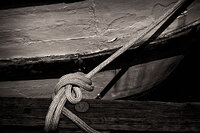
Tied to the dock

D
Tied to the dock

  • 4
  • 0
  • 68
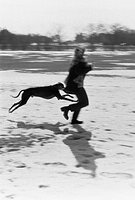
Running in the Snow

H
Running in the Snow

  • 1
  • 2
  • 83

Recent Classifieds

Forum statistics

Threads
203,085
Messages
2,849,637
Members
101,652
Latest member
Mayorbeez
Recent bookmarks
0

Wade D

Member
Allowing Ads
Joined
Feb 15, 2006
Messages
897
Location
Jamul, CA
Format
Multi Format
I haven't had a darkroom for 24 years and just started printing again this year. Long story so suffice it to say raising 3 kids and working left little time.
Anyhow, I bought a 100 sheet box of Arista Edu RC VC to get the hang of printing again. After a number of sessions the results are less than what I expected. The prints look dull or even might be described as muddy.
Fresh chemicals mixed according to directions were used. Test strips were made. Dev/fix according to directions.
I did a safelight test before starting. There is no fog even at 15 minutes.
Compared to the Polycontrast FB prints made years ago the RC paper has no 'snap' or crispness.
I've never tried RC paper before so I must be missing something either in exposing or processing.
Any suggestions or tips are welcomed.
Thanks,
Wade
 
What surface are you using - glossy, pearl or semi-matte?
 
Well, it sounds like your paper is bad.
RC paper, altough plastic and very unpleasant to touch (the glossy kind), can be a pleasure to look at. Behind a glass you are not supposed to see a difference VS. FB.
 
It's possible that your negatives are under-exposed or under-developed or that you are printing at too soft a grade. I'm not familiar with the Arista product (I use Ilford MG RC) but check your filtration settings and what grade that gives you. It sounds like you may need to print on a harder grade to bump up the local contrast, possibly combined with dodging/burning to keep global contrast within the paper's range.
 
Are you using contrast filter or a color head for contrast control?
 
To get a bit of a confidence level about the negs, make a contact print such that the film-base is almost (but not quite) completely black at Grade 2. You'll easily be able to see if the negs are too thick/thin/flat etc etc. compared to a sort of average result that would print ok at Grade 2. Remember of course not to pull any prints too soon from the developer, they'll probably be needing at least a minute or 90s depending on the dev.

Have fun.
 
Muddy = low contrast, is that correct?
Are you using the Ilford Filter set with the paper or are you using a dichroic head? If using the dichroic head, is the yellow swinging all the way out of the way and does the magenta move?
 
There are two common causes for the muddy look - underdevelopment and bad paper. I have bought packs of supposedly new paper that have been bad. Chemical fog is the usual suspect, and it can give that look to the prints. So can old paper.

Even when the print is good, RC looks a bit more dull than its corresponding FB surface. I like the look, but it may be slightly different than you might expect.
 
What paper developer are you using, at what dilution, for how long and at what temperature?
 
A couple of things come to mind. Others have mentioned your negatives and of course the problem may be there. Here's a test I have conducted whenever I work with a new paper, new chemistry or in a new darkroom. I also advise my student to do this. I take two small pieces of paper, fresh from the package. I develop and fix one without exposure. The second piece I expose to bright room light for a couple of seconds and then develop and fix that. Assuming your paper fresh and your chemistry fresh and properly mixed, the first piece should be pure white the second should be pure black. If this is the case, then compare one of your prints to those two test pieces. If you don't see similar blacks and whites in your prints, it's probably your negatives.

Also, my experience has been that Ilford Multigrade contrast filters fade over time. I have seen this numerous times. I've never used Arista paper, but Ilford RC paper has a good reputation. My technique has always been to develop it 2 minutes with typical B&W developers.

One more thing, the best way to do a safe light test is to expose a piece of paper first. Put the paper under the enlarger and expose it for one second. Then put a coin on top of the piece of paper and leave it for 10 - 15 minutes, then develop it. The paper may not remain pure white, but any sign of the coin means the safe light is causing fog. Exposing the paper increases it's sensitivity and gives a more typical working condition.

Good luck. If possible you may want to post an image.
 
Even if your safelight test did not fog the paper the contrast can be influenced. Develop an exposed sheet in total darkness to check.
 
The paper is Arista Edu RC VC Glossy bought new in Feb.
Developer is Dektol used 1:2 for 90 sec. and was mixed fresh.
Ilford Multigrade #2 filter as a start in a Beseler 45MCRX condenser enlarger. Filters are new.
Negatives of average contrast and density. The same negatives printed great years ago.

I think another safelight test is in order using an exposed sheet partially covered as suggested. The room is completely dark and safe for film loading.
If the test is good then another batch of chemistry is the next step. Cheapest things 1st of course. After that I will buy some Ilford paper. If I place an order with Freestyle I receive it the next day so it's very convenient.

Thanks to all for the suggestions so far. It's just a matter of eliminating the variables now.
 
Kodak lists development times for Dektol 1+2 that range from 1 to 4 minutes depending on the particular paper. If your prints are dull you may be pulling them before they are completely developed. Many photographers do not watch the clock when making prints but watch the print instead. Prints are said to be "developed to completion" although this term is not completely correct. What is meant is that there is a point where there is little change in contrast and density with extended development. It is at this point where the print is transfered to the stop bath. Try this method or increase your time to 2 or 3 minutes and see if this improves your prints.

It has been my experience that people tend to under develop their prints, sometimes this is for fear of safelight fog. This should never be a problem if you observe these things.

o The safelight filter is one suitable for the paper.
o The safelight bulb is of the proper wattage.
o The safelight filter has not faded.
o The distance from the safelight to the work area is correct.
o The recommended exposure time for the safelight is not exceeded.

Filters are not permanent and should be replaced at regular intervals.
 
Last edited by a moderator:
Also make sure that the developer didn't get contaminated by something in the tray. I've had that happen to me before.

In addition, the Foma / Arista papers, especially the RC ones, don't necessarily have the same contrast as the Kodak you're used to. I would recommend working with higher contrast filters, and it would also make sense to dilute your developer less for more contrast.
 
Sounds to me like you may need to print at grade 3. See if that solves the problem, or at least improves it.

RC paper should be fine with a 90-second development in Dektol 1:2. Extending to 2:00 or so could be tried, but shouldn't affect your quality. If it does, definitely stick with the longer time. FB paper will need 2:00 or more, of course.
 
Unsafelight

I have had good results with this paper, but I had to go to a red safelight to do it. My brownie safelight badly fogged the paper, but you have to pre-fog the paper to see it. Place paper under your enlarger with no negative and expose to zone whatever, light gray. Then do your safelight test to see how much effect the additional safelight produces. I was surprised to find out my safelights were useless. Good luck.

Best regards,
Chris
 
Again, many thanks for the suggestions. My next darkroom session will be in about 2 weeks. I'm moving my darkroom into an unused bathroom so I can have running water. New paint, plumbing and flooring then back to printing. I'll eliminate the variables and post my findings.
 
Could well be safelight fogging, as mentioned above. The paper may be from Foma and their standard recommendation is a dark-red safelight, not the more usual orange or amber. If you are using an Ilford-safe colour then it may well not be safe for Foma paper. I bought a red filter for a second safelight which replaces the amber one when needed and solves the problem. If you have a safelight using a large, flat, surface then a sheet of rubylith over it will probably save you changing filters (as the orange or amber ones are so much brighter to work in you may prefer them).
 
Could well be safelight fogging, as mentioned above. The paper may be from Foma and their standard recommendation is a dark-red safelight, not the more usual orange or amber. If you are using an Ilford-safe colour then it may well not be safe for Foma paper. I bought a red filter for a second safelight which replaces the amber one when needed and solves the problem. If you have a safelight using a large, flat, surface then a sheet of rubylith over it will probably save you changing filters (as the orange or amber ones are so much brighter to work in you may prefer them).

If you read the original post carefully you will find that safelight testing has been done.
 
There is more than one way to, incompletely, check a safelight :wink: Indeed, my usual bright safelight checks out fine for 25 minutes on Ilford, but fogs Foma papers - we don't even know if this specific box/brand of paper was used for the test that was mentioned, let alone the details of how that test was made.

If the paper is not exposed to a mid-tone during the test then the safelight-illumination alone might not get to the level where you can see it on it's own, while still being enough in combination with print-exposure to have an effect on the highlights.

Counting up the topics across the posts, the safelight looks to be the most popular possible cause, especially as this varies between paper manufacturers.
 
Photrio.com contains affiliate links to products. We may receive a commission for purchases made through these links.
To read our full affiliate disclosure statement please click Here.

PHOTRIO PARTNERS EQUALLY FUNDING OUR COMMUNITY:


Ilford ADOX Freestyle Photographic Stearman Press Weldon Color Lab Blue Moon Camera & Machine
Top Bottom