
If the inside of the lid is truly "foam" that could be the problem. Foam would be the last material I would use to seal out anything. Show us the inside of the lids. There are much better materials than foam for sure. Oh, I store my stuff in an upright 5 shelf cabinet. No problems so far. Knock on wood!Here's a picture showing what the vapors did to the labels. The bottles had more residue than this. I had already wiped them with a damp paper towel.
-
Welcome to Photrio!Registration is fast and free. Join today to unlock search, see fewer ads, and access all forum features.Click here to sign up
You are using an out of date browser. It may not display this or other websites correctly.
You should upgrade or use an alternative browser.
You should upgrade or use an alternative browser.
Raw chemical storage/separation
-
A
- Thread starter MarkL
- Start date
Recent Classifieds
-
For Sale Saunders VT-1400 11x14 Easel
- Started by Roger Thoms
-
For Sale Canon F1n with Power Winder, 50/1.4 S.S.C, and some extras [EU]
- Started by Laurent
-
Free New bellows for Linhof Super TECHNIKA 6x9
- Started by Simon Benton
-
Want to Buy LVT printer/developer machine in EU, Durst rhino or similar.
- Started by ScandiPhoto
-
For Sale Ilford hp5 7x17 plus contact printing frame
- Started by Ales'
Forum statistics
OP
OP

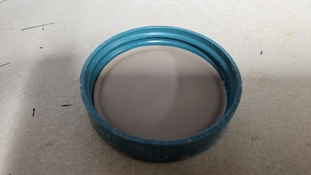

That looks like it might work OK for stuff like sodium carbonate, potassium bromide and other fairly innocuous powders and crystals. Anything that is prone to oxidization or offgassing/evaporating should not be stored under those lids.
I'd preferably not use them either for anything strongly hygroscopic.
I would not waste time, money and ultimately chemistry on trying to get these to work with stuff like acetic acid, ammonia etc.
I'd preferably not use them either for anything strongly hygroscopic.
I would not waste time, money and ultimately chemistry on trying to get these to work with stuff like acetic acid, ammonia etc.

You may also conside some new caps? For Example, https://www.calpaclab.com/28-400-wh...-bonded-ptfe-silicone-septa-each/qp-cap-00343
They have a list of many kinds of Liners:
Caps with Foam Liners
Caps with Foil Liners
Caps with Solid PE Liners
Caps with PTFE Liners
Caps with Rubber Liners
Caps with Vinyl Liners
Cone Lined Caps
They have a list of many kinds of Liners:
Caps with Foam Liners
Caps with Foil Liners
Caps with Solid PE Liners
Caps with PTFE Liners
Caps with Rubber Liners
Caps with Vinyl Liners
Cone Lined Caps
OP
OP
You may also conside some new caps? For Example, https://www.calpaclab.com/28-400-wh...-bonded-ptfe-silicone-septa-each/qp-cap-00343
They have a list of many kinds of Liners:
Caps with Foam Liners
Caps with Foil Liners
Caps with Solid PE Liners
Caps with PTFE Liners
Caps with Rubber Liners
Caps with Vinyl Liners
Cone Lined Caps
Excellent, I will measure my thread size.
There are also these on Amazon:
Square Reagent Bottle HDPE Wide Mouth Plastic Bottle, 2 pcs of 500ml Sample Sealing Storage Container for Laboratories, Classrooms, or Storage at Home, LVAM002
- Joined
- Jul 14, 2011
- Messages
- 15,025
- Format
- 8x10 Format
Does anyone know what picric acid might have been used for in printmaking? Two liters of it were discovered last week in an old basement darkroom in a nearby neighborhood, and two entire blocks were evacuated while hazmat and the bomb squad were doing their thing. It's explosive.
It has been used as an etching compound, and sometimes people have used picric acid to make interesting crystal microscope photos; but all the photo chemical bottles they found down there and posted for sake of news coverage look very old, as if some antique method were in play.
It has been used as an etching compound, and sometimes people have used picric acid to make interesting crystal microscope photos; but all the photo chemical bottles they found down there and posted for sake of news coverage look very old, as if some antique method were in play.

I'm evidently the wrong person to talk to. Everything is right next to each other in my cabinet. As long as the containers are suited to the purpose, in good condition and properly capped/shut, there's no practical problem. What are the contingencies you are trying to manage for? Massive earthquake with everything toppling over? Home fire? Darkroom riddled with .50 cal. ammunition? How does the overall impact of these events relate to the potential mixing of the contents of the sodium carbonate jar with those of the acetic acid bottle?
I do the same thing;all together, stored in the dark, cool and dry in their proper, closed containers and clearly labeled and dated with time of prchase.I never saw a need to do more and never had an issue.
I do the same thing;all together, stored in the dark, cool and dry in their proper, closed containers and clearly labeled and dated with time of prchase.I never saw a need to do more and never had an issue.

If it ain't broke, don't fix it! That's the way I operate, but I admit that I have been fouled once or twice.
Does anyone know what picric acid might have been used for in printmaking? Two liters of it were discovered last week in an old basement darkroom in a nearby neighborhood, and two entire blocks were evacuated while hazmat and the bomb squad were doing their thing. It's explosive.
It has been used as an etching compound, and sometimes people have used picric acid to make interesting crystal microscope photos; but all the photo chemical bottles they found down there and posted for sake of news coverage look very old, as if some antique method were in play.
Yellow dye for materials such as silk and wool
That’s a bit frightening, but TBH seems a bit overkill. As long as it’s in a glass jar, it shouldn’t have gotten contaminated and would be *relatively* stable.Does anyone know what picric acid might have been used for in printmaking? Two liters of it were discovered last week in an old basement darkroom in a nearby neighborhood, and two entire blocks were evacuated while hazmat and the bomb squad were doing their thing. It's explosive.
It has been used as an etching compound, and sometimes people have used picric acid to make interesting crystal microscope photos; but all the photo chemical bottles they found down there and posted for sake of news coverage look very old, as if some antique method were in play.
My question is what do you need all this stuff for? I worked for 20 years with conc. acids, 50%sodium hydroxide solutions, solvents etc etc This stuff is nasty stuff. I would encourage all the people without training to not collect this stuff.
For developer, stop and fixer none of the strong acids are required. Wal-Mart sells 30% vinegar (30% acetic acid) 1 quart is enough to make a lifetime supply of Kodak SB-1 stop bath.
The hydrochloric acid is what's probably causing the white. Ammonia fumes from old school Windex and HCl will form ammonium chloride on everything
If you need to be told how to handle this stuff you're probably not gonna need it.
MHOFWIW, a unscathed chemist.
For developer, stop and fixer none of the strong acids are required. Wal-Mart sells 30% vinegar (30% acetic acid) 1 quart is enough to make a lifetime supply of Kodak SB-1 stop bath.
The hydrochloric acid is what's probably causing the white. Ammonia fumes from old school Windex and HCl will form ammonium chloride on everything
If you need to be told how to handle this stuff you're probably not gonna need it.
MHOFWIW, a unscathed chemist.
Which reminds me. I need to get rid of some stuff.
- Joined
- Jul 14, 2011
- Messages
- 15,025
- Format
- 8x10 Format
Yes, I was aware that picric acid has fabric dye applications. But what would hundred year old jars of it be doing in a primitive photo darkroom? Could someone have been experimenting with some color photography invention using it?
As for seeming over-reaction by the hazmat team, keep in mind that in this area multiple houses have burned down all at once due to exploding naughty artiste chemicals, including ether used in certain alt photo techniques (as well as meth labs). In this case, the basement darkroom was in a rather spiffy neighborhood of very expensive older homes. I once photographed the gardens one of those, and much earlier actually lived in one in exchange for restoration work - a lovely Julia Morgan classic home; she was America's finest woman architect ever, who was also behind Hearst Castle. Those kinds of houses simply cannot be replaced; and the twisty streets are hard to evacuate in an emergency.
As for seeming over-reaction by the hazmat team, keep in mind that in this area multiple houses have burned down all at once due to exploding naughty artiste chemicals, including ether used in certain alt photo techniques (as well as meth labs). In this case, the basement darkroom was in a rather spiffy neighborhood of very expensive older homes. I once photographed the gardens one of those, and much earlier actually lived in one in exchange for restoration work - a lovely Julia Morgan classic home; she was America's finest woman architect ever, who was also behind Hearst Castle. Those kinds of houses simply cannot be replaced; and the twisty streets are hard to evacuate in an emergency.
It may be used to color gelatin. And Glafkide's book mentions that Lumière et al. discovered that picric acid can be used as desensitizing dye, reducing blue light sensitivity by 2000 times, but only reducing red light sensitivity by 100 times.
Might as well be someone with an overall interest in chemistry who picked up whatever he could get hold of, and happened to store it the chemistry cupboard in the basement darkroom.
There's no particular reason why someone in the modern age in a home darkroom would keep any quantity, especially not a significant one, of picric acid around. But given that there's 8 billion of us now, variety comes in spades.
There's no particular reason why someone in the modern age in a home darkroom would keep any quantity, especially not a significant one, of picric acid around. But given that there's 8 billion of us now, variety comes in spades.
That much picric acid, if I'm hazmat I would evacuate the area. By itself it could blow up a house, I would be concerned about what else might be laying around.
This stuff is reasonably safe if it doesn't dry out.
This stuff is reasonably safe if it doesn't dry out.
OP
OP
My question is what do you need all this stuff for? I worked for 20 years with conc. acids, 50%sodium hydroxide solutions, solvents etc etc This stuff is nasty stuff. I would encourage all the people without training to not collect this stuff.
For developer, stop and fixer none of the strong acids are required. Wal-Mart sells 30% vinegar (30% acetic acid) 1 quart is enough to make a lifetime supply of Kodak SB-1 stop bath.
The hydrochloric acid is what's probably causing the white. Ammonia fumes from old school Windex and HCl will form ammonium chloride on everything
If you need to be told how to handle this stuff you're probably not gonna need it.
MHOFWIW, a unscathed chemist.
Right, I really don't need most of this stuff. They are all to make various bleaches and redeveloping "toners", some of which I have used and very much like. Also Amidol paper developer, which I have not yet tried. I kind of went nuts on chemicals after looking through the formulary sections of Eddie Ephraums and Tim Rudman books years ago.
Right, I really don't need most of this stuff. They are all to make various bleaches and redeveloping "toners", some of which I have used and very much like. Also Amidol paper developer, which I have not yet tried. I kind of went nuts on chemicals after looking through the formulary sections of Eddie Ephraums and Tim Rudman books years ago.
Well the first thing that you can do is to get the ammonium hydroxide out of your area. That's what is reacting with the HCl to cause the white film on everything.
The HCl is excellent toilet bowl cleaner
 . The nice thing about hydrochloric is you can buy pretty strong version of HCl as muriatic acid anytime at Home Depot, same with lye. You don't need to store for just in case.
Sounds like you are making a plan, that's great.
I got rid of a bottle of liver of sulfur flakes. That stuff would need to be in a double walled NASA designed container. I should have put outside where I could get to it because it is handy for toning. Outside in nice weather with a breeze at your back 
Picric acid is/was used in making microscope slides of very delicate subjects.
Lucky for me I never got round to purchasing any of the stuff when I used to make micro specimen slides.
I believe that it is reasonably safe when liquid. DO YOUR OWN RESEARCH ON THAT.
The problem occurs when the fluid dries out leaving dry crystals around the lid.
The dry crystals are very sensitive to percussion and abrasion. So when a crystal bound lid or cap is removed the chances of an explosion are tremendous.
A couple of serious text books I read at the time recommended in the presence of crystals not to touch, evacuate the area, and call the bomb squad.
Thanks to the original poster for the idea of bring up chemical safety here.
My acids and accelerators are stored in locked metal lockers in the padlocked garden shed.
I do keep a small amount of potassium permanganate in the darkroom along with glycerin, but the permanganate is kept in the suppliers plastic bottle and that is placed inside a wide mouth, screw lidded poly
beaker.
Lucky for me I never got round to purchasing any of the stuff when I used to make micro specimen slides.
I believe that it is reasonably safe when liquid. DO YOUR OWN RESEARCH ON THAT.
The problem occurs when the fluid dries out leaving dry crystals around the lid.
The dry crystals are very sensitive to percussion and abrasion. So when a crystal bound lid or cap is removed the chances of an explosion are tremendous.
A couple of serious text books I read at the time recommended in the presence of crystals not to touch, evacuate the area, and call the bomb squad.
Thanks to the original poster for the idea of bring up chemical safety here.
My acids and accelerators are stored in locked metal lockers in the padlocked garden shed.
I do keep a small amount of potassium permanganate in the darkroom along with glycerin, but the permanganate is kept in the suppliers plastic bottle and that is placed inside a wide mouth, screw lidded poly
beaker.
Last edited:
Store frt stuff in those glass coffee jars that have a glass top with tight polythene plug seal...

Store frt stuff in those glass coffee jars that have a glass top with tight polythene plug seal...
Those are generally not very tight and definitely not tight enough in the long term for stuff like HCl etc., let alone anything that could build a little pressure (e.g. peroxide). NOT a good idea to default to these.
Those are generally not very tight and definitely not tight enough in the long term for stuff like HCl etc., let alone anything that could build a little pressure (e.g. peroxide). NOT a good idea to default to these.
Tight enough to give me trouble to get the top off

..
| Photrio.com contains affiliate links to products. We may receive a commission for purchases made through these links. To read our full affiliate disclosure statement please click Here. |
PHOTRIO PARTNERS EQUALLY FUNDING OUR COMMUNITY:  |