• Welcome to Photrio!
    Registration is fast and free. Join today to unlock search, see fewer ads, and access all forum features.
    Click here to sign up

RA-4 negative/reversal process.

Somewhere...

D
Somewhere...

  • 3
  • 1
  • 71
Iriana

H
Iriana

  • 6
  • 1
  • 137

Recent Classifieds

Forum statistics

Threads
202,745
Messages
2,844,974
Members
101,494
Latest member
FlyingDutchman
Recent bookmarks
0

Mozzafiato

Member
Joined
Mar 13, 2026
Messages
1
Location
Portugal
Format
4x5 Format
Hello everyone, hope finding you well.

I'm interested in starting to experiment with RA-4 process, specificaly photographing with a 4x5 camera instead of making prints out of the paper.

My question is about exposure. I know that many bw photo papers don't provide an ISO indicator. The same happens with the RA-4 paper.

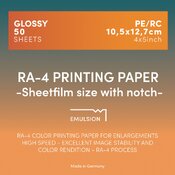
I will use the ADOX RA-4 Printing Paper 10,2x12,7 CM (4x5 INCH) / 50 Sheets and don't know what ISO use for exposure.

Can Anyone give me a clue or advice?

Thank you all for your attencion.

Greetings from Portugal.
 

Attachments

  • adox_printingpaper.jpg
    adox_printingpaper.jpg
    521.8 KB · Views: 8
Welcome aboard @Mozzafiato !

There's no 'ISO' speed for paper because it is a typical apples & oranges situation. The curve of paper is so different (much, much steeper) than for film that an ISO speed rating would not be comparable to that of film. However, you can use ISO 10-25 as a starting point. You'll have to experiment to get a desirable result; this is in general always the case with direct paper positives. So in the end it doesn't matter that much; just do an experiment and adjust on the basis of the outcome.
 
Generally speaking, the film speed of RA-4 photo paper we test ranges between ISO 3 and ISO 5. Extending the development time for black and white can achieve around ISO 10. This is also related to the filter you choose, as some filters with strong light transmittance can slightly increase the ISO.
 
The slowest emulsion is the red sensitive layer, approximately EI3 is a good starting point for that layer. Blue is the fastest and about 5 stops faster or EI100. You must attenuate Blue heavily and green roughly half as much to achieve a balanced image. so metering through your filter pack at iso 3 will be a good starting point
 
The slowest emulsion is the red sensitive layer

Good point; the layers are separated in speed as this is how RA4 paper works. https://tinker.koraks.nl/photograph...r-film-and-paper-are-fundamentally-different/

I've done a quick & dirty test; this is the cyan layer at around ISO 6:
1773489726070.png


Each layer has a dynamic range of ca. 3 stops, so heavy filtering (or separate R, G and B exposures) is needed to get all layers to develop an image with full gradation in one go.
 
this is the cyan layer at around ISO 6:
Is this DPII? Most of my experience is with Endura. I should test DPII, I have some in the fridge but haven't gotten around to it until I've built my paper slitter.

Regular crystal archive however, wouldn't touch that with a 10ft pole again. rubbish Dmax.
 
Yes, DPII. Endura would be a little slower typically. Regular crystal archive does produce meek 'blacks' that are more of a deep brown. It's OK IMHO as long as the image doesn't contain large patches of a solid, dark hue.

I'll see if I can share a few more later tonight that are more neutrally balanced.
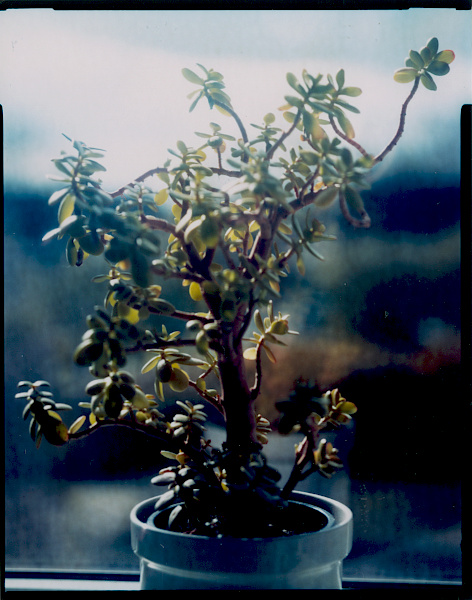
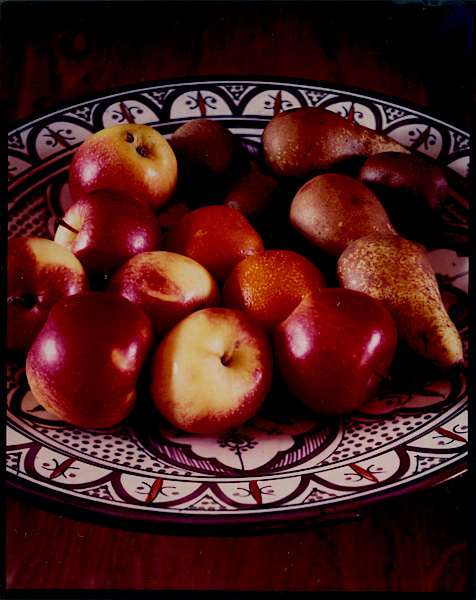
Edit: here they are:
2603RDP_DPII_ID62_RA4_01w.jpg
2603RDP_DPII_ID62_RA4_02w.jpg


Filtering was with a piece of processed (and rather expired/dense) Portra 400 and some additional Foma color printing filters; in total something like 60CC of both M and Y. Development was 45 seconds in ID62, then stop, wash, redevelopment to completion in room light with RA4 developer, then blix to remove the silver veil.
Exposures were in the EI3-6 range, give or take a bit.
 
Last edited:
You might find some of the information in this old thread helpful (assuming you didn't find it already).

 
Photrio.com contains affiliate links to products. We may receive a commission for purchases made through these links.
To read our full affiliate disclosure statement please click Here.

PHOTRIO PARTNERS EQUALLY FUNDING OUR COMMUNITY:


Ilford ADOX Freestyle Photographic Stearman Press Weldon Color Lab Blue Moon Camera & Machine
Top Bottom