
I'm trying to wrap my head around something so verbalizing it out loud might help.
I'm a new printer, just a year or two in the darkroom. I normally print by trying to squeeze all of the tones onto the page; lightest highlight, darkest shadow area.
Up until now, my prints have been fine. Many have been unexciting. All of the tones are there but they lack snap or sparkle. I shoot for a #2 filter pack when shooting and printing.
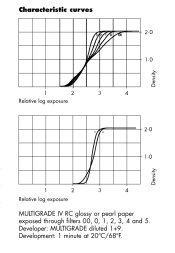
I was printing just now, a still life negative that was pretty flat, no real dark shadows in it and no real bright whites. I made one print as I normally would have and it was sort of bland. Printed with grade 2 filter pack. Then for fun I printed one with a grade 4 filter pack and the tones, midtones and such, moved waaaay down the tonal scale, in effect, the print was too dark. So I shortened the time up to move the shadows back up to where they'd be tonal wise and let the highlights go off the other end. Well, color me surprised when the print looked great! The highlight that I was afraid would be just a toneless blob looked ok and the other tones where much more punchy.
So this brings me to my question; when printing and placing highlights and shadows, do all of the tones slide up and down the scale sort of like piano keys? You know, C next to D, which is next to E...etc. C is the highlight, D and E are the mid tones, F is the shadows...
As I changed filter packs it seemed that the mid tones moved down the tonal scale into an area that I didn't like and removing time moved them back to where they belonged and the snap from using a grade 4 filter was retained.
I hope that makes some sense.
I'm a new printer, just a year or two in the darkroom. I normally print by trying to squeeze all of the tones onto the page; lightest highlight, darkest shadow area.
Up until now, my prints have been fine. Many have been unexciting. All of the tones are there but they lack snap or sparkle. I shoot for a #2 filter pack when shooting and printing.
I was printing just now, a still life negative that was pretty flat, no real dark shadows in it and no real bright whites. I made one print as I normally would have and it was sort of bland. Printed with grade 2 filter pack. Then for fun I printed one with a grade 4 filter pack and the tones, midtones and such, moved waaaay down the tonal scale, in effect, the print was too dark. So I shortened the time up to move the shadows back up to where they'd be tonal wise and let the highlights go off the other end. Well, color me surprised when the print looked great! The highlight that I was afraid would be just a toneless blob looked ok and the other tones where much more punchy.
So this brings me to my question; when printing and placing highlights and shadows, do all of the tones slide up and down the scale sort of like piano keys? You know, C next to D, which is next to E...etc. C is the highlight, D and E are the mid tones, F is the shadows...
As I changed filter packs it seemed that the mid tones moved down the tonal scale into an area that I didn't like and removing time moved them back to where they belonged and the snap from using a grade 4 filter was retained.
I hope that makes some sense.