• Welcome to Photrio!
    Registration is fast and free. Join today to unlock search, see fewer ads, and access all forum features.
    Click here to sign up

Pyro and farmers reducer

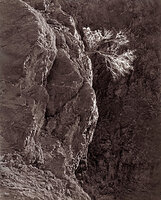
Bush on Canyon Wall

A
Bush on Canyon Wall

  • 2
  • 1
  • 20
double portrait

A
double portrait

  • 1
  • 0
  • 48

Forum statistics

Threads
203,260
Messages
2,852,027
Members
101,749
Latest member
frieMo
Recent bookmarks
0

Jarvman

Member
Allowing Ads
Joined
Sep 9, 2006
Messages
791
Location
Cardiff, Uni
Format
Multi Format
I have some slightly dense pyro negs and planned on using some farmers reducer to cut down some of their density. What effect does this have upon the stain? I read somewhere that it will reduce the silver but will leave the stain intact. What kind of effect will this have on base fog? I hoped to clear some of the veiled shadow density. Cheers
 
I would think that because the amount of pyro stain is proportional to silver density, that the base fog is comprised primarily of silver and very little stain. Test it on a negative you don't care about first. Farmer's reducer is a one-way trip, and it will reduce the density of all the silver in the negative, not just the shadows. It is good to dilute the reducer, too, as it works very quickly at full strength.

Depending on the pyro developer used, you may be able to remove some of the stain without affecting the silver density. PMK pyro stain is vulnerable to acid if I remember correctly, and can be reduced with an acid stop bath or acid fixer. Both methods are a little tricky and best tested on a spare negative first.

Peter Gomena
 
Farmer's will have no effect on the stain.

Farmer's when made up of a mixture of Ferri & Hypo is a 'cutting' reducer - removing the same amount of silver from highlights and shadows and rapidly causing loss of shadow detail. When used on prints it will clear highlights or fog without effecting midtones.

Farmer's when used as a two step process, first Ferri and then Hypo, is a (semi) 'proportional' reducer - removing the same proportion of silver from highlights and shadows. A proportional reducer can also be made from permanganate and persulfate, the action can be tuned to your needs by varying the proportion of the two ingredients.

Am. Persulfate by itself is a super-proportional reducer that will attack a negative's highlights while leaving the shadows, relatively, alone.

Google for more information - most of the information on reducers is in very old photographic texts. Reducers and intensifiers were much more popular in the days before we had light meters, modern emulsions and reliable developers.

Practice first on scrap negatives. It is a good idea to create some negatives identical to the ones you want to reduce for use as practice. Determine the time/temperature that gives the results you want, don't reduce the real negatives by sight.

The pyro stain is permanent. It can be stopped from forming by the presence of sulfite, and it is intensified by an alkaline bath after fixing. The phenols formed by staining developers polymerize with the gelatin protein - it takes a while for the polymerization process to take place but by the time the film is dry after processing the deed is done.

The famous 'pyro fog' is entirely stain. It is formed when the developer as a whole oxides in air and when the developer oxidizes it forms the above mentioned poly-phenols. When it forms image stain it is because the developer is oxidized in the action of reducing the silver salts to metallic silver, and thus the amount of stain produced is in direct proportion to the amount of silver that is developed.
 
Last edited by a moderator:
Thankyou Nicholas, that's cleared things up a lot for me. In that case, proportionally reducing the silver is still going to leave me with base fog so it's not really worthwhile. I'll just move on and try to improve on my metering and developing technique.
 
Last edited by a moderator:
If it's slightly dense, just print through it and like you say, work on technique in making the negs for next time.
 
Nicholas,

I've removed stain from pyro(gallol)-developed negatives by treating them with selenium toner. The stain very visibly disappears in the treated areas. I was originally trying to locally intensify, a procedure which works well with conventionally-developed negs. The loss of stain was approximately equal to the intensification effect of the selenium.

I imagine a sulfite bath or something else could be used to remove the stain as well. It is also possible that the "lost" stain could be restored somehow; I've still got some testing to do with this.

As to the OP's question, it's not clear to me whether the negatives are overexposed or overdeveloped. If the former, and the highlights are not too blocked up, just print through and live with the longer enlarging times. If the latter, I would recommend other contrast-reducing techniques before treating the negative. Low-contrast developer or water-bath development with very dilute print developer would be my first tries.

Best,

Doremus Scudder
www.DoremusScudder.com
 
Doremus, they are overexposed, hence the blocked up shadows. I'm printing them in pt/pd so dense highlights are welcomed as it means a lower contrast mixture can be used but its taking forever to print through to get an acceptable black. I tried a sulfite bath and that had no effect on the stain. I'll try selenium toning one out of curiosity though. Cheers
 
Photrio.com contains affiliate links to products. We may receive a commission for purchases made through these links.
To read our full affiliate disclosure statement please click Here.

PHOTRIO PARTNERS EQUALLY FUNDING OUR COMMUNITY:



Ilford ADOX Freestyle Photographic Stearman Press Weldon Color Lab Blue Moon Camera & Machine
Top Bottom