• Welcome to Photrio!
    Registration is fast and free. Join today to unlock search, see fewer ads, and access all forum features.
    Click here to sign up

pushing film HARD!

Recent Classifieds

Forum statistics

Threads
201,760
Messages
2,829,674
Members
100,929
Latest member
WBM
Recent bookmarks
0

Bobby Ironsights

Member
Allowing Ads
Joined
Oct 14, 2007
Messages
127
Location
Thunder Bay,
Format
35mm
Hi guys!

When I started photography I was obsessed with lack of grain, tonal scale and blah blah blah.

Well, now I've changed my ways, and I've ignored that last roll of ISO25 in the bottom of the fridge for months.

Instead, I've started pushing my film to take photo's in low light situations like get togethers with my friends, and started to enjoy (perversely) that grainy photojournalism look.

So, the only real data I've got is Anchell's cookbook, and it worked quite nicely.

I pushed a roll of arista 400 to 800, and a roll of tri-x 400 to 1600.

My negatives were overly dense, if anything. I realise now that it should be easy to push the arista 2 stops, and the tri-x 3.

But anchell stopped with 3 stops in new tri-x.

Now I'm curious, just how fast CAN film be pushed and still get a useable image?

Iso 6400?, ISO 12800? ISO 25,600? ISO 50,200?

How fast is TOO fast? And is there a limit with my D-76/tri-x 400 combo

This isn't idle foolishness, I'm really interested! (so it's non idle foolishness)

I know I may have to do some personal testing, but I'd rather not re-invent the wheel if I can help it.
 

Mark Antony

Member
Allowing Ads
Joined
Mar 27, 2007
Messages
789
Location
East Anglia,
Format
Multi Format
If maximum EI is your goal, then a film like Kodak T-Max 3200 (TMZ) can be pushed in XTOL to EI 25,000 (19 mins) Ilforld Delta 3200 can also be pushed to 12,500 if processed in DD-X or Microphen (17 min).
I have pushed TMZ to 12,500 and the results were OK, I have a little test of TMZ at 3200 here:
http://photo-utopia.blogspot.com/2007/07/kodak-t-max-3200.html
If maximum grain 'photojournalist' look is what you want then Tri-x will get you there at 3200 in D-76/ID11 but I prefer TMZ/Delta the Delta has better tone with more grain IMHO.
test:
http://photo-utopia.blogspot.com/2008/02/ilford-delta-3200.html
Mark
 

panchro-press

Member
Allowing Ads
Joined
Nov 25, 2007
Messages
122
Location
Cleveland
Format
Large Format
I've often wondered if it were really possible to 'push' film. Certainly, film can be over-developed. However, if the initial exposure was not enough to reach the film's minimum exposure threshold, all that will happen is the density will build up in areas which are above the threshold but not below it.
 

cotdt

Member
Allowing Ads
Joined
Feb 17, 2008
Messages
171
Format
4x5 Format
I've often wondered if it were really possible to 'push' film. Certainly, film can be over-developed. However, if the initial exposure was not enough to reach the film's minimum exposure threshold, all that will happen is the density will build up in areas which are above the threshold but not below it.

you can use extremely dilute developer to combat this, though
 

Paul Howell

Subscriber
Allowing Ads
Joined
Dec 23, 2004
Messages
10,091
Location
Scottsdale Az
Format
Multi Format
My negatives were overly dense, if anything. I realise now that it should be easy to push the arista 2 stops, and the tri-x 3.

When pushing expose for the highlights and let the shadows fall where they may, but pushing will increase base fog so the negative may look dense.

Iso 6400?, ISO 12800? ISO 25,600? ISO 50,200?

I tested TMAX 3200 in Acufine, Clayton F76, and Edwal 12, I was able to push to 25,000 with Acufine, 3200 in Clayton and Edwal 12. Tri X to 3200 in Acufine. A year or so someone posted that he pushed Tri X in Dinafine to 3200 by running it though A and B a second time after a long wash. I have not tired this tech but may be plausible.

How fast is TOO fast? And is there a limit with my D-76/tri-x 400 combo

I think tri-x and D76 will work at 800 or perhaps 1600 but I dont know if D76 is the best choice for pushing, I would try a couple of developers that were developed for max film speed such as Acufine or Dinafine. Xtol gets good reviews for pushing. In the 70s I pushed TriX in Rodinal to 3200, a very distintive look when printed on grade 4 paper.
 

kman627

Member
Allowing Ads
Joined
Nov 2, 2006
Messages
101
Format
Medium Format
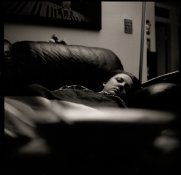
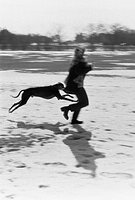
A while back I pushed Neopan 400 to 3200 in HC-110 Dilution B for 18 and had very minimal grain. I think I could have easily gone 6400 or 12500 and had reasonable grain. Shadow detail was pretty null, but the negs were not too dense and printed easily. So far though it only seems to work with 3200, I tried pushing neopan 400 to 1600 and 800 and both times there was far more grain than at 3200, very strange. I'll soon try 6400.
 

Attachments

  • 2008904331_8980ac549c.jpg
    2008904331_8980ac549c.jpg
    43.1 KB · Views: 208
  • 2000988960_6c8f6fd875.jpg
    2000988960_6c8f6fd875.jpg
    62.4 KB · Views: 236

Murray@uptowngallery

Member
Allowing Ads
Joined
Sep 24, 2003
Messages
1,041
Location
Holland, MI
Format
Pinhole
There is a guy on rangefinderforum.com who has been pushing film into the 5-figure range.

Whether it meets the definition of pushing or not I can't argue, but there are some threads there about how he does it .

I think he uses very dilute Rodinal and what someone else labeled accelerated stand development - basically long development time with long-spaced agitations that are more like normal development agitation.

He'll answer questions if you can find him.

His avatar has a tagline something like 'I'm your pusher'.
 

CBG

Member
Allowing Ads
Joined
Nov 21, 2004
Messages
889
Format
Multi Format
I've often wondered if it were really possible to 'push' film. Certainly, film can be over-developed. However, if the initial exposure was not enough to reach the film's minimum exposure threshold, all that will happen is the density will build up in areas which are above the threshold but not below it.

There's always an argument over whether pushing involves a change of speed or whether it is just over-developing. I'm not sure it's not a very useful argument. Whatever you call it, additional development takes an abbreviated subject scale - abbreviated by minimal exposure - and boosts it to make a more standard density scale on the negative.

In this case it sounds like the OP also may enjoy the graphic effects that vigorous development can create.

Both are valid goals, even if many attempts to use them fall short. The best work resulting from seriously pushed processing validates the process.

C
 
Joined
Mar 18, 2005
Messages
451
Location
Toronto
Format
Medium Format
You often read threads about people pushing film to 25000, or whatever crazed speed, and I always wonder the same thing: How were they metering? Unless I know what they were metering for, I don't buy the claims. We've all seen what happens to shadow detail when you push more than 3 stops; it just disappears. I'm not a big zone system guy, but you show me what zone V looks like at ISO 25000. Pretty garbage, is my bet.

Regardless of that, I too like the look of pushed film much more than the lazy tonality of a overexposed / underdeveloped photo. Grain and contrast appeal to me. Tri-x at 800 or 1600 in hc110 is right up my alley. I push more for the look than I do for the boost in speed. I reckon if you're shooting in light that requires iso 25000, than you're better off getting a fast lens like a noctilux, and shoot wide open. Or grab a tripod. Or learn to shoot at 1/8. That sort of thing.

It is a wonderful revelation, though, when you realize that grain and tonality are not the end all and be all of an image!

Good luck,
 

Paul Howell

Subscriber
Allowing Ads
Joined
Dec 23, 2004
Messages
10,091
Location
Scottsdale Az
Format
Multi Format
You often read threads about people pushing film to 25000, or whatever crazed speed, and I always wonder the same thing: How were they metering? Unless I know what they were metering for, I don't buy the claims. We've all seen what happens to shadow detail when you push more than 3 stops; it just disappears. I'm not a big zone system guy, but you show me what zone V looks like at ISO 25000. Pretty garbage, is my bet.


The general rule is the more you push the more shadow details you lose. I shot one roll of TMax at 25000 and developed in Acufine, I used my Sigma SA 9 with both spot and martix metering, no shadow detail, moderate grain, but a printable negative.
 

RoBBo

Member
Allowing Ads
Joined
Jan 26, 2007
Messages
255
Location
Chicago, IL
Format
Multi Format
The general rule is the more you push the more shadow details you lose. I shot one roll of TMax at 25000 and developed in Acufine, I used my Sigma SA 9 with both spot and martix metering, no shadow detail, moderate grain, but a printable negative.

I wouldn't call that a general rule so much as I would say thats what you're doing. Destroying shadow detail.
The only reason you 'push' film is to increase the contrast so you can make the lack of shadow detail acceptable.
I've never seen a 'push' result in increased shadow detail, of course, it wouldn't because you are simply underexposing and overdeveloping.
You aren't making some magic in your film canister, you're misshandling your film on purpose to achieve a trick of the eye.
That trick being that Zones 3-10 look good enough on their own.

Now, some developers (Diafine+Tri-X) give increased shadow detail, but that doesn't mean you're pushing when you expose at 1250 ISO with that combination, you're just using your proper EI for that combination.

All you do when you push is sacrifice shadow detail for either depth of field or motion stop. The less you can get away with 'pushing' the better. Don't worry about the EI, just know what you can hand hold, and what you need for depth of field, and note how many stops that is from your normal speed, because thats how much black you'll have to fill in, either with overdevelopment or higher filters.
 

cotdt

Member
Allowing Ads
Joined
Feb 17, 2008
Messages
171
Format
4x5 Format
during printing you could also decrease the contrast to get some of the shadow detail back. it's there on the film, the film records everything.
 

RoBBo

Member
Allowing Ads
Joined
Jan 26, 2007
Messages
255
Location
Chicago, IL
Format
Multi Format
during printing you could also decrease the contrast to get some of the shadow detail back. it's there on the film, the film records everything.

But no...it's not there on the film. To get it there on the film, you need to expose more.
I don't see what's so hard about this?
If proper shadow detail was there on the film, you wouldn't be pushing. You'd just be exposing at your normal EI.
 

jeroldharter

Member
Allowing Ads
Joined
Nov 6, 2005
Messages
1,955
Location
Wisconsin
Format
4x5 Format
Pushing film is increasing the developing time. If you increase the developing time from your normal time, you are effectively increasing the film speed. Exposing the film normally and then pushing the development should result in slightly overexposed shadows, blocked highlights and increased contrast.

Overdeveloping film has a relatively small effect on the shadow areas and relatively large effects on the highlights. Exposing the film normally and then pushing the development should result in slightly overexposed shadows, blocked highlights and increased contrast.

So if you simply "expose for the highlights" you might lose shadow detail because you need to meter and process for both shadows and highlights.
 

RoBBo

Member
Allowing Ads
Joined
Jan 26, 2007
Messages
255
Location
Chicago, IL
Format
Multi Format
Pushing film is increasing the developing time. If you increase the developing time from your normal time, you are effectively increasing the film speed. Exposing the film normally and then pushing the development should result in slightly overexposed shadows, blocked highlights and increased contrast.

Overdeveloping film has a relatively small effect on the shadow areas and relatively large effects on the highlights. Exposing the film normally and then pushing the development should result in slightly overexposed shadows, blocked highlights and increased contrast.

So if you simply "expose for the highlights" you might lose shadow detail because you need to meter and process for both shadows and highlights.

No...
Increasing development time is increasing contrast, not 'pushing'.
Pushing is the process of trying to get more film speed out of your film by underexposing, and then overdeveloping so that you can hide the lack of shadow detail in some nice rich blacks.

Here's a wonderful example of a pushed negative.

No ammount of further development would have given me shadow detail in this shot.

Overdevelopment on a normally exposed shot may have some effect on increasing shadow density, but that's in no way relivant to pushing film, since you're underexposing to begin with, I mean, that's the whole point.
 

jeroldharter

Member
Allowing Ads
Joined
Nov 6, 2005
Messages
1,955
Location
Wisconsin
Format
4x5 Format
I suppose this is a matter of semantics.

My understanding has been that "push processing" is done independent of the exposure time of the negative with a resulting increase in film speed, contrast, and highlight density. For example, if you take film to a lab and ask for "push processing" they will do so independent of your exposure of the negative.

If you define "pushing" as underexposure and over-development then so be it. From my perspective of your definition of pushing, pushing is not so much "underexposure" but simply placing the low values lower. In my mind, "underexposure" implies inadequately low exposure rather than the purposeful placement of low tones.
 

RoBBo

Member
Allowing Ads
Joined
Jan 26, 2007
Messages
255
Location
Chicago, IL
Format
Multi Format
I think "a purposeful placement of low tones" is probably the best way to describe pushing film to someone that doesn't want to get swamped with our geek-talk.
I use the term "underexposure" to describe anything less than ideal shadow detail.
I was just confused as to how your original post would help the OP with their question, since it didn't relate to film speed at all and that's what they were asking about, sorry if I came off...well...how I think I may have come off.
 

jeroldharter

Member
Allowing Ads
Joined
Nov 6, 2005
Messages
1,955
Location
Wisconsin
Format
4x5 Format
No problem. Sometimes I learn a lot ironing out the language as much as anything.
 

glbeas

Member
Allowing Ads
Joined
Sep 25, 2002
Messages
3,957
Location
Marietta, Ga. USA
Format
Multi Format
I've found I have better results pushing B&W film if I use a lower contrast developer like D23 or Ethol/Acufine. It gives you more room to push. Stand development is also a good technique to use when pushing film.
 

Chris Breitenstein

Member
Allowing Ads
Joined
May 29, 2007
Messages
226
Location
Tucson Az
Format
Multi Format
In my experience Efke films have an amazing lattitude, and be in the developer for almost an hour before chemical fog becomes a problem. I have heard the same about tri-x. Ilford fp4 not so much. development almost ceases at about 30 minutes, and shadow density increases rampantly.

If you are shooting 35, then buy a few rolls all different types and try them out.

yours:
 
Photrio.com contains affiliate links to products. We may receive a commission for purchases made through these links.
To read our full affiliate disclosure statement please click Here.

PHOTRIO PARTNERS EQUALLY FUNDING OUR COMMUNITY:


Ilford ADOX Freestyle Photographic Stearman Press Weldon Color Lab Blue Moon Camera & Machine
Top Bottom