
I use Fuji Provia 100 as my go to color film in all 7 of my Canon manual focus cameras. I have noticed that when I use Provia in my A-1 and F-1n cameras, the film tends to overexpose by about 1/2 stop in a bright sunlight situation. I haven't noticed it in my AE-1 or AV-1. Does anyone know if there has been a change in Provia 100? Any other comments? Thanks.Steve Walter
-
Welcome to Photrio!Registration is fast and free. Join today to unlock search, see fewer ads, and access all forum features.Click here to sign up
- Home
- Forums
- Analog Workflow Forums (100% Analog/Traditional)
- Darkroom
- Color: Film, Paper, and Chemistry
You are using an out of date browser. It may not display this or other websites correctly.
You should upgrade or use an alternative browser.
You should upgrade or use an alternative browser.
Provia 100F
-
A
- Thread starter mlphotographer
- Start date
Recent Classifieds
-
For Sale Cable Release Adapters for Leica, Nikon, Yashica, Rollei
- Started by Jon Shiu
-
Free Stoesser Pin Registration Punch
- Started by Roger Thoms
-
Want to Buy 4 x 5 Back for Agfa Ansco Universal View Camera
- Started by sharpnikkor
-
For Sale Set of 3 glass beakers
- Started by Jon Shiu
Forum statistics
As I understand it Fuji - Kodak and others too, will make formulation changes usually without making any announcements.
Camera meter accuracy, scene lighting, metering and exposure modes can all contribute to variations in exposure. To verify, fill your viewfinder with a gray card with controlled light source and see if they all meter the same.
Camera meter accuracy, scene lighting, metering and exposure modes can all contribute to variations in exposure. To verify, fill your viewfinder with a gray card with controlled light source and see if they all meter the same.
I must admit that I haven't been using slide film on a regular basis for two years or so, but the first thing to do in an odd result like this would be to directly compare the meters in the cameras - probably with artificial light indoors so that it doesn't change during the metering session.
Of course there is no need to make any exposures when comparing the metering. If each camera meters precisely the same (unlikely!), or you have been using the same handheld meter for all the shots, then make/buy/borrow a shutter-speed tester and compare the indicated speeds with what you actually measure. On electronically timed shutters they should be pretty accurate and repeatable.
Other variables may be the processing the films have received (accidental small pull and/or push at different labs, or between different home-processed batches), or some metering being done with older light sensors that are more affected by colour-temperature of the light, or even a DX-sensor fault, or . . . ?? In any case, if the difference is consistent, then it would be possible to 'simply' make a compensation when you use the affected cameras.
Of course there is no need to make any exposures when comparing the metering. If each camera meters precisely the same (unlikely!), or you have been using the same handheld meter for all the shots, then make/buy/borrow a shutter-speed tester and compare the indicated speeds with what you actually measure. On electronically timed shutters they should be pretty accurate and repeatable.
Other variables may be the processing the films have received (accidental small pull and/or push at different labs, or between different home-processed batches), or some metering being done with older light sensors that are more affected by colour-temperature of the light, or even a DX-sensor fault, or . . . ?? In any case, if the difference is consistent, then it would be possible to 'simply' make a compensation when you use the affected cameras.

sounds like your internal meters(or shutter speeds on the gear train/transmission in the camera) are a bit slow. I'd be hesitant to call foul on the part of Fuji. More likely your lab(aforementioned "push process" by someone else), or a slightly slow shutter in-camera.
one word:
TEST
Another reason(if you can afford to do it) is to buy in bulk, and freeze until you consume(shoot) it. Not very hard to do, just convince yourself(or if you have a better half, them ) that you "NEED" a film freezer, and they can put the extra frozen veggies in there in case they need some room
-Dan
one word:
TEST
Another reason(if you can afford to do it) is to buy in bulk, and freeze until you consume(shoot) it. Not very hard to do, just convince yourself(or if you have a better half, them
) that you "NEED" a film freezer, and they can put the extra frozen veggies in there in case they need some room -Dan

Your titles says Provia100F but in your post you say Provia100 ... two different films... are you perhaps using two different versions and that's causing it? as in you recently bought some Provia100f and you've BEEN using Provia100?
I use Fuji Provia 100 as my go to color film in all 7 of my Canon manual focus cameras. I have noticed that when I use Provia in my A-1 and F-1n cameras, the film tends to overexpose by about 1/2 stop in a bright sunlight situation. I haven't noticed it in my AE-1 or AV-1. Does anyone know if there has been a change in Provia 100? Any other comments? Thanks.Steve Walter
Nothing to do with Provia 100F. These are quite old cameras you are speaking of and I suspect the meters are out of whack.

He means provia 100F. They don't make a version w/o the F.
He means provia 100F. They don't make a version w/o the F.
They DID....
"Provia 100F [RDP III] was developed to replace Provia 100 [RDP II] "
Wikipedia (I know not a GREAT source but legit enough).
Sent w/ iPhone using Tapatalk
Not all cameras will meter the same scene exactly the same. (For several reasons) There are procedures to calibrate one camera against another by adjusting the ISO speed. This statement is valid as long as the difference is consistent. You could compare your cameras to a light meter by metering a gray card under a continuos non changing light source. The differences could be as small as 1/3 stop or as big as 1 stop or more.
Stone, w/o reading into it we have to assume the op wouldn't be using film that's 15yrs past it's expiration date while expecting flawless results.
Stone, w/o reading into it we have to assume the op wouldn't be using film that's 15yrs past it's expiration date while expecting flawless results.
I wasn't aware the update came out 15 years ago, the only chromes I shot were Kodachrome until 2010...
The info I read didn't say when the change happened.
- Joined
- Sep 22, 2012
- Messages
- 91
- Format
- Multi Format
You sure?Stone, w/o reading into it we have to assume the op wouldn't be using film that's 15yrs past it's expiration date while expecting flawless results.
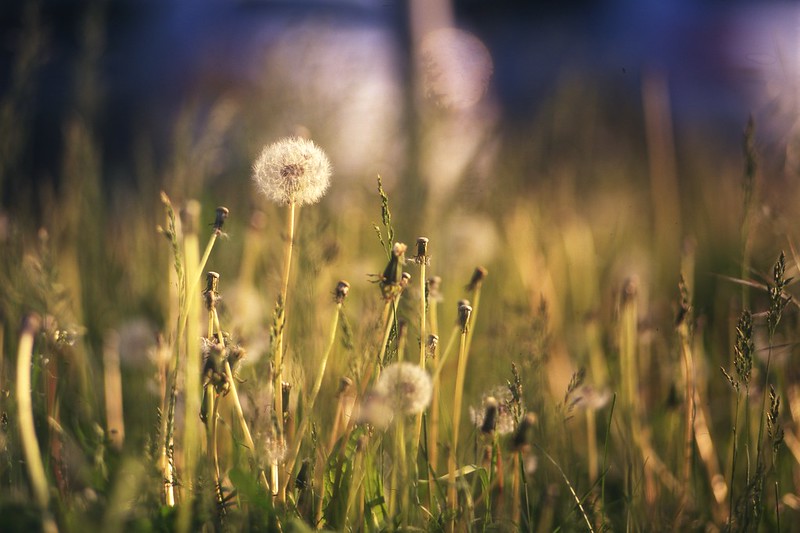
The Dandelion Cropped ver của Kyon Thinh, trên Flickr
Provia RDP II 97 with Pentacon Six.
You sure?
The Dandelion Cropped ver của Kyon Thinh, trên Flickr
Provia RDP II 97 with Pentacon Six.
Beautiful!
You must have a very large deep freezer
- Joined
- Sep 22, 2012
- Messages
- 91
- Format
- Multi Format
Thanks and no Stone, I don't have freezer. All my films are stored in fridge, since my student budget doesn't allow to buy a freezer.
The change of Provia to Provia 100F is 1998 or 1999 I think.
The change of Provia to Provia 100F is 1998 or 1999 I think.
kyon, yes I'm sure. you aren't the op who started the thread. I'm currently using rdp and rvp that's older than that and it's perfect. 1999 was the last year for provia 100.
kyon, yes I'm sure. you aren't the op who started the thread. I'm currently using rdp and rvp that's older than that and it's perfect. 1999 was the last year for provia 100.
+1
Multiple Cameras
I don't think that it is the cameras. The film overexposes to the same extent with three different camera - F1n, AE-1, A-1. I am totally convinced that the film emulsion has changed and does not have the same response in bright light situations. Provia users beware of bright lite situations, and decrease exposure by 1/3 - 1/2 stop.
I don't think that it is the cameras. The film overexposes to the same extent with three different camera - F1n, AE-1, A-1. I am totally convinced that the film emulsion has changed and does not have the same response in bright light situations. Provia users beware of bright lite situations, and decrease exposure by 1/3 - 1/2 stop.
- Joined
- Jul 14, 2011
- Messages
- 15,084
- Format
- 8x10 Format
Probably some old or poorly stored film. The ASA of Provia has been identical for all three generations of the product. The "latitude" did change
a bit with 100F. This is most noticable in the way the current products pulls poorly.
a bit with 100F. This is most noticable in the way the current products pulls poorly.
I don't think that it is the cameras. The film overexposes to the same extent with three different camera - F1n, AE-1, A-1. I am totally convinced that the film emulsion has changed and does not have the same response in bright light situations. Provia users beware of bright lite situations, and decrease exposure by 1/3 - 1/2 stop.
Post some examples.
I've been shooting provia for 12+ years with emulsions dating back to the early 90's and I haven't had this issue you speak of. I also use a spot meter.
- Joined
- Jul 14, 2011
- Messages
- 15,084
- Format
- 8x10 Format
For critical work or film testing per se I would never use TTL metering. Just too many variables. Always a properly calibrated spotmeter and a
high-quality target. And never assume that a camera store gray card is accurate. Few of them are. I always use the MacBeath color checker
chart, which is very carefully manufactured, and under properly balanced lighting.
high-quality target. And never assume that a camera store gray card is accurate. Few of them are. I always use the MacBeath color checker
chart, which is very carefully manufactured, and under properly balanced lighting.
For critical work or film testing per se I would never use TTL metering. Just too many variables. Always a properly calibrated spotmeter and a high-quality target. And never assume that a camera store gray card is accurate. Few of them are. I always use the MacBeath color checker
chart, which is very carefully manufactured, and under properly balanced lighting.
I agree with this recommendation. There is no substitute for spot metering when used competently. Additionally, all the Velvia emulsions require accurate metering, best with 0.5 steps (0.3 steps are either too small and lost to the print process, or too much e.g. 0.6, pushing the film toward blowouts). Can't' recall when I last used a grey card; a creature of habit, I seek out a mid-tone in the scene I am metering (it must be said though this does not come easily to people just starting out with a spot meter). As a last resort, I can always meter my greying hair...
| Photrio.com contains affiliate links to products. We may receive a commission for purchases made through these links. To read our full affiliate disclosure statement please click Here. |
PHOTRIO PARTNERS EQUALLY FUNDING OUR COMMUNITY:  |