• Welcome to Photrio!
    Registration is fast and free. Join today to unlock search, see fewer ads, and access all forum features.
    Click here to sign up

processing film in 2 film developers, can it be done ?

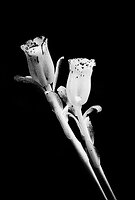
Indian ghost pipe plant.

H
Indian ghost pipe plant.

  • 2
  • 0
  • 23
2026-01-136.jpg

A
2026-01-136.jpg

  • 0
  • 0
  • 30

Forum statistics

Threads
202,940
Messages
2,847,811
Members
101,546
Latest member
Milanw
Recent bookmarks
0

removed account4

Subscriber
Allowing Ads
Joined
Jun 21, 2003
Messages
29,810
Format
Hybrid
i know you can 2 developers when making prints, can you use 2 different developers when processing film ?

just wonderin' ...

- john
 
jnanian said:
i know you can 2 developers when making prints, can you use 2 different developers when processing film ?

just wonderin' ...

- john

I would imaginge if you used a short stop of water between the developers, why not?
 
That was almost "standard procedure" back in the days of glass plates - before the first reliable light meters were made. Willi Beutler recommended a 3-developer setup where plates were started in one developer, then moved to one of the others depending on needed contrast expansion or contraction, or increased or decreased shadow density.
 
jnanian said:
i know you can 2 developers when making prints, can you use 2 different developers when processing film ?

just wonderin' ...

- john

Sure. I don't know how often it is of any use !

One case that has been sometimes handy for me is using Xtol + Rodinal.

(there was a url link here which no longer exists)

Like print developers, you can either mix them or use them in sequence.

The use of XTOL + RODINAL with Neopan is a very specific application.

The film gives a fairly low shoulder with XTOL, and a practical high one with RODINAL. I needed something in between. The third developer in my darkroom is Aculux 2: it fits comfortably in between.

I was out of Aculux, and waiting to find some... which may be a problem to cope with in the future ! But the blend of XTOL and RODINAL gave me what I needed.

Another way to solve the problem would have been to use TMY instead of Neopan 400. But I had what I had, lacked what I lacked, and needed to shoot a job.

Next time I'm out of TMY and Aculux, and have Neopan 400 on hand... I'll mix up some XTOLINAL and get to work. But until then, there other, simpler ways.

d

 
John, in what way did you want to use them? Lots of folks will blend two different kinds of devs together, but using them in sequence is a different animal.

There was quite a lengthy thread about this somewhere and the general feeling was that it would not work. As a dev reduces the silver halide in the emulsion, it becomes exhuasted and slows down its work in the shadow areas of the image, but continues to work in the highlight areas. By dumping out the old dev and replacing it with new, the shadows won't receive enough development and the highlights too much.

I don't recall if anybody actually tried using two devs in sequence and I suppose it could work with highly diluted devs, Rodinal and HC-110 1+100 or more comes to mind. You don't have too much to lose if you do try tho'.
 
hi -

thanks for all the responses!

ole- i had a feeling it was standard proceedure in "ye olde days of yesterday"
, seeing that plates were ortho, kind of like paper emulsions of today- and seeing that is how i sometimes process my paper negatives, i figured it would have been the same way back in the day.

i must have missed the acuxtinol thread don, i'll have to read it :smile: i've never used aculux or rhody - but maybe i should try'em sometime <g>

jim\ i was wondering about this whole thing because i've used caffinol-c with some success, but sometimes i want a beef-ier negative with a bit more contrast, and i was wanting to finish the film off in a little ansco130 for laughs. maybe i'll do a test run, and see how things look. i think it might not be good, seeing one developer is a staining developer and the other is "the other kind" (whatever that is called) ...

thanks again !

-john
 
I suppose you could try something like a pretty concentrated short first bath of rodinal to get the highlights where you want them, and them dump that and go to a really dillute HC110 or maybe XTOL 1-3 or 1-4 and then stand develop the rest of the way to slowly bring up the lower shadow densities.

I read about something similar in a pretty old book IIRC was titled Extreme Black and White Darkroom Techniques probably from the mid 60s. It was before the time of XTOL but I do recall the discussion of using rodinal and HC110.

As with so many things today, such a procedure may have been better suited to older type emulsions. I don't know what advantage there would be compared to regualr stand development, unless it would help with some seperation of middle values. In that case I can see where it might work with films that have more contrast to begin with like Neopan.
 
Bruce Barnbaum wrote an article in Photo Techniques magazine sometime in the past two years or so regarding his use of two different developers to manipulate a difficult scene. One developer favored shadow detail, the other was to keep highlights under control and midtones from losing contrast. I don't remember which issue or the names of the developers he used, however. I seem to remember the image was taken in Mexico and was of a woman standing in front of a large backlit doorway. I remember the article distinctly, perhaps because I'd never heard of such a thing and had never heard of one of the developers.

Peter Gomena
 
pgomena said:
Bruce Barnbaum wrote an article in Photo
Techniques ... and had never heard of one of
the developers. Peter Gomena

Does Perfection XR-1 ring a bell. Perfection is
famous for boosting ISOs. I've read that Bruce
does or did use it. Dan
 
i processed film this morning using caffenol C as well as my usual film developer ( ansco 130 ). i shuffled the sheets of film ( 33 ) in a water-bath first for 3 minutes then constant shuffle in the coffee for 11 minutes. from the coffee it went into ansco 130 - instead of 73º 1:5 i used it 1:4 at about 68º so it would be strong, but it wouldn't be as active --- glycin likes it warm. i constantly shuffled in ansco 130 for 4 minutes. from the developer it went to a water bath for 3 minutes and finally into the fixer.

my film has a nice even stain from the coffee, and the additional time in the ansco 130 boosted the contrast a wee-bit. i love the funky grain &C from the coffee but unfortunately it lacks in the contrast department ( sometimes ), so i used the second developer. the tonality of the film is beautiful. it has a glow to it that my negatives don't usually have.
 
Last edited by a moderator:
jnanian said:
i processed film this morning using caffenol C as well as my usual film developer ( ansco 130 ). i shuffled the sheets of film ( 33 ) in a water-bath first for 3 minutes then constant shuffle in the coffee for 11 minutes. from the coffee it went into ansco 130 - instead of 73º 1:5 i used it 1:4 at about 68º so it would be strong, but it wouldn't be as active --- glycin likes it warm. i constantly shuffled in ansco 130 for 4 minutes. from the developer it went to a water bath for 3 minutes and finally into the fixer.

my film has a nice even stain from the coffee, and the additional time in the ansco 130 boosted the contrast a wee-bit. i love the funky grain &C from the coffee but unfortunately it lacks in the contrast department ( sometimes ), so i used the second developer. the tonality of the film is beautiful. it has a glow to it that my negatives don't usually have.

I believe pyro and Glycin work well together - has no one tried adding glycin to Pyrocat?

Lachlan
 
I would add one caveat. Use any may developers as you wish. DO NOT USE A STOPBATH..other than water..in between developers. Although i have not developed in more than 1 developer, I am all but certain that the stopbatch would lead to severe staining.
 
Photrio.com contains affiliate links to products. We may receive a commission for purchases made through these links.
To read our full affiliate disclosure statement please click Here.

PHOTRIO PARTNERS EQUALLY FUNDING OUR COMMUNITY:


Ilford ADOX Freestyle Photographic Stearman Press Weldon Color Lab Blue Moon Camera & Machine
Top Bottom