
I have recently started trying the Foma Reversal Kit with both Scala 160 and Foma R-100. My first two attempts with a Paterson tank left me with black debris "floating" on the film, some of which I was eventually able to wash off. Since the Foma instructions require continuous agitation even when washing, I decided to try the reversal kit with an Aura rotor assistant using "oscillation" mode. After looking at my slides it is apparent that I probably should have reduced first development time since most of my images were fairly washed out. That is a problem I can fix with practice.
What is bothering me, however, is that most of the slides seem to have a layer of grunge adherent to the film. This is most noticeable in highlight areas, and almost has a dirty soap bubble appearance.. Looking at the slides, there are a few areas where the emulsion side looks clear, but many where there seems to be a rough layer of something adherent to most of the film. I tried re-fixing with a regular fixer and rewashing with no change. I tried soaking in PhotoFlo and gently trying to wash this layer off with my fingers on a disposable image with no change.
I know I probably need to reduce first development time due to rotary agitation, but it seems like I am making a significant error somewhere else in the process.
I mixed the chemicals immediately prior to development.
I have attached a photograph of the worst offender, as well as a scan which demonstrates the bubble-like pattern. Does anyone have any suggestions about what I am doing wrong.
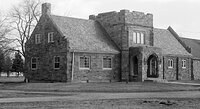
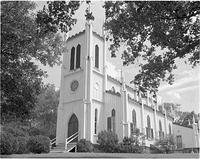
First picture is scan of a slide and the second is a photograph of the worst offender.
What is bothering me, however, is that most of the slides seem to have a layer of grunge adherent to the film. This is most noticeable in highlight areas, and almost has a dirty soap bubble appearance.. Looking at the slides, there are a few areas where the emulsion side looks clear, but many where there seems to be a rough layer of something adherent to most of the film. I tried re-fixing with a regular fixer and rewashing with no change. I tried soaking in PhotoFlo and gently trying to wash this layer off with my fingers on a disposable image with no change.
I know I probably need to reduce first development time due to rotary agitation, but it seems like I am making a significant error somewhere else in the process.
I mixed the chemicals immediately prior to development.
I have attached a photograph of the worst offender, as well as a scan which demonstrates the bubble-like pattern. Does anyone have any suggestions about what I am doing wrong.
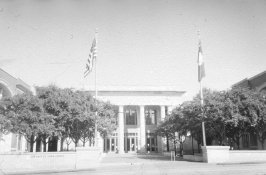
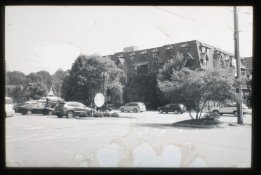
First picture is scan of a slide and the second is a photograph of the worst offender.

