

• Welcome to Photrio!
    Registration is fast and free. Join today to unlock search, see fewer ads, and access all forum features.
    Click here to sign up

Presto 400 - massive grain - WTF?

Bush on Canyon Wall

A
Bush on Canyon Wall

  • 2
  • 1
  • 20
double portrait

A
double portrait

  • 1
  • 0
  • 48

Forum statistics

Threads
203,260
Messages
2,852,027
Members
101,749
Latest member
frieMo
Recent bookmarks
0

IloveTLRs

Member
Allowing Ads
Joined
May 22, 2007
Messages
1,132
Location
Boston
Format
Sub 35mm
The other day I shot a roll of Fuji Presto 400 (Neopan 400 to the rest of the world?)

I developed it in fresh Super-Prodol, using the time listed according to temp.
Water stop bath, clean fixer, and Fuji QuickWash at the end.

For some reason, the film came out massively grainy. I've attached a 100% crop of a 3200dpi scan.

The grain is on the film, not the result of the scanner. I noticed when taking the film out of the final wash, it felt thick and slight sticky. The area around the sprocket holes was clear, while all the frames were slightly cloudy, resulting in the grain you see. When I rubbed some blank frames, the film/emulsion/whatever seemed to smear. Not the frames themselves, but the surface of the film.

I developed a roll of Acros and Neopan SS today in the same chemistry, but did not get the same results. :confused:

Truth be told, I like the look a lot. It reminds me of the B&W shots from some of the Nikon Photo Contest books from the 1970s. However Presto is usually much smoother.

Does anyone know what might have caused this??
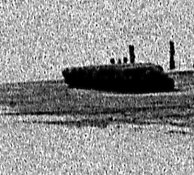
 

Attachments

  • 1.jpg
    1.jpg
    141.7 KB · Views: 201
Looks like it might be reticulation more than grain although it is a little tough to tell. I've heard that neopan 400 is very sensitive to temperature changes in processing and to high pH developers (like Rodinal). I'm not familiar with Super-Prodol. I've induced reticulation by putting film in a hot, high pH solution and plunging it into cold stop bath. Also, there was a thread about this so you may want to search for it.
 
There's a very recent thread about how this film is prone to reticulation, it's a temperature problem with as Mark says, keep each step within about +/- 1°C of you chosen dev temperature.

Ian
 
Looks more like incipient reticulation than grain to me and I like the look, too!..... but maybe both.... above explanations of how to get reticulation are correct tho they do not always work, especially when you wnat them to!

Logan
 
Yes, this is reticulation caused by a sudden change of temperature in one of the chemical baths (or wash procedure).
Neopan 400 is a film pretty sensitive for this feature.

About changes of pH I wouldn't say because one of my favorite developer combinations with Neopan 400 is Rodinal 1+50 and I had never any problem with this fenomina.


Anyhow take care of the temperatures next time :smile:
 
Neopan 400 is a film pretty sensitive for this feature.

Lets make that extremely sensitive to this problem. Meaning that I reticulated Neopan 400 using processes that are significantly more temperature controlled than I normally use, and I have NEVER had reticulation with any other film. I have found that in Rodinal 1+50, you CAN get wonderful fine grain results from this film, but I would certainly be sure to keep it +- 1 degree C all the way through including the photoflo rinse. I'm still not sure if it's worth the risk, that if my thermometer drifts by a couple degrees C, or I make one small mistake then my film is ruined. I will probably switch back to a more robust film like, well, anything but Neopan 400 really.
 
At the risk of delving into digital subjects, how big would a print be to show the sort of pattern seen above? In other words, how does a "100% crop of a 3200dpi scan" translate to a paper size?

I ask because I've been shooting Neopan 400 for over ten years in 35mm, I never get my wash water to same temperature as the developer, it comes direct from the cold tap and I've never seen this affect. Do I need to be making very large prints to see it?
 
Steve,

When making a regular print from 13x18cm you can see it immediately.

Another film which you can make easy to reticulate is Efke. When going real higher in temperature the emulsion is simply peeling off.

But I learned 42 years ago to keep the whole process +/- 1-2 degrees C in constant temperature so normally only in case of an accident you will have these things. Films on Polyester layer are also more robust for this feature.
 
Robert, Thanks. The biggest I print is 10x8 and most of the time I go no bigger than 5x7. I may have been reticulating my film for years without realising!
 
At the risk of delving into digital subjects, how big would a print be to show the sort of pattern seen above? In other words, how does a "100% crop of a 3200dpi scan" translate to a paper size?

I ask because I've been shooting Neopan 400 for over ten years in 35mm, I never get my wash water to same temperature as the developer, it comes direct from the cold tap and I've never seen this affect. Do I need to be making very large prints to see it?

The same experience for me Steve. While the difference in dev and fix temp has probably been within 2degrees C, I have used water in a jug direct from the cold tap. It has sat there for a few moments before being used for the Ilford rinsing routine so may have wrmewd up slightly but I am sure it has been more than 1-2 degrees C below the dev/fix temps.

It may very well be more inclined to reticulation than say HP5+ which is a very tough film but I'd hate anyone to be put off using it in case he doubted his ability to control all temps to within 1 degrees C.

Based on my experience the margin for temp range is quite a bit greater than that and doesn't require the kind of rigid control that others are citing here. Simple care is all that's needed

pentaxuser
 
Thank you for the replies :smile:

I use warm water to rinse the film after fixing, then cold QuickWash, then warm water for another 5 minute wash. That would probably explain it - although this is the first time it's done that.

I'll be more careful in the future ... or maybe I won't :wink: now that I know how to get really coarse grain :D
 
There have been increasing numbers of comments about reticulation with Fuji films. I am not able to comment on this in a reasonable manner on several levels, but I know that Fuji can produce very hard, durable films. So, somewhere things have changed. The current films appear to be too soft for whatever reason so I suggest extreme caution when processing.

As has been said above, keep the temperatures at 68 F (20 C) for the process, and keep it within about 1 degree or less.

Let Fuji know.

PE
 
I've never had an issue with 400PR being extremely sensitive to reticulation and I've processed plenty of it. You don't need to keep chemicals within 1C of each other. It's possible things have changed as PE mentioned, but it would seem odd to me.

I'll be more careful in the future ... or maybe I won't :wink: now that I know how to get really coarse grain :D

Develop it in Dektol if you'd like grain - or crop. The whole Moriyama look isn't hard to duplicate.
 
Photrio.com contains affiliate links to products. We may receive a commission for purchases made through these links.
To read our full affiliate disclosure statement please click Here.

PHOTRIO PARTNERS EQUALLY FUNDING OUR COMMUNITY:


Ilford ADOX Freestyle Photographic Stearman Press Weldon Color Lab Blue Moon Camera & Machine
Top Bottom
