• Welcome to Photrio!
    Registration is fast and free. Join today to unlock search, see fewer ads, and access all forum features.
    Click here to sign up

Press / Field / View camera alternatives on a budget

Posters

A
Posters

  • 0
  • 0
  • 30
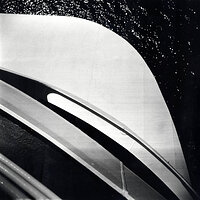
Abstract of ship stern

A
Abstract of ship stern

  • 1
  • 0
  • 36

Forum statistics

Threads
202,503
Messages
2,841,624
Members
101,355
Latest member
Mitterscarf
Recent bookmarks
0
ineffablething said:
... We conversed a bit about lenses and life, and he ended up throwing in his entire lens collection...

Now that we've conversed a bit, any chance you'll follow his lead should I win another of your ebay auctions? :smile:

Joe
 
It was called a "Speed Graphic" because of the 1/1000 second focal plane shutter, not because it was quick to open. Those of us who used them before the "Crown Graphic" was introduced, and even after, rarely closed them so rapid set-up was not a problem.
 
Jim Jones said:
I like the versatlity of LF for macro photography. Enlarger lenses or lenses from 35mm cameras reverse mounted on a 4x5 are a quick way to get 4X magnification on big film. A framing guide and electronic flash help in capturing moving subjects. Where DOF doesn't matter, reverse mounting movie camera lenses really boosts magnification.
Interesting advice, Jim.

Do you use a focusing frame? I ask not to be obnoxious but because I've wondered abouts problems setting them up. Fascinating tools, touted highly for use with very simple little 35 mm cameras plus a diopter in Kodak Publication N-12 (I think that's the number) Closeup Photography.

Cheers,

Dan
 
Dan Fromm said:
Interesting advice, Jim.

Do you use a focusing frame? I ask not to be obnoxious but because I've wondered abouts problems setting them up. Fascinating tools, touted highly for use with very simple little 35 mm cameras plus a diopter in Kodak Publication N-12 (I think that's the number) Closeup Photography.

Cheers,

Dan

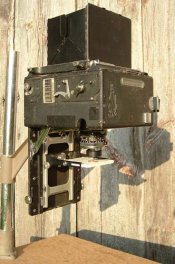
Here a focusing frame is improvised from a spare front standard from a Century Graphic and mounted on the rail of a somewhat modified 4x5 Anniversary model Speed Graphic. This outfit accomodates a wide variety of lenses and magnification ratios. Here it is set up to shoot a full frame image of a penny with the reverse mounted Super-Angulon f/3.4 21mm from my Leica M4. For shooting mobile subjects the white foam core could be removed and any framing device substituted. According to information (which I can't locate at the moment) by Lennart Nilsson, the wider the coverage of the lens, the greater the possible depth of field. Some of his macro- and micro-photographs have spectacular DOF. If my calculations are correct, some of this depth is lost when using retrofocus wide angle lenses, although much lens-to-subject clearance is gained. Enlarger lenses are an inexpensive source of quality micro lenses when reverse mounted. Some have rather large minimum apertures, though.
 

Attachments

  • SpeedG05.jpg
    SpeedG05.jpg
    55.4 KB · Views: 113
Jim, thanks very much for the reply. I'm more puzzled now than I was before.

As I look at the picture of your rig, I see a speciman holder, not a device that indicates where the plane of best focus is and that shows the area the film will see.

When I think of a focusing frame, I see two rather different devices.

One is a copy stand for a screw mount Leica. These stands have four legs. When the stand is placed on the subject, usually a document to be copied, the legs' feet define the rectangle that the film will see. And when the camera, with the right lens and diopter mounted, is laid in the copy stand the subject will be in good focus.

The other is a rectangular wire frame somehow held in front of, e.g., an Instamatic with a diopter lens attached. The frame is in the plane of best focus, makes it and the area the film will see visible. In practice, one holds the camera so that the frame surrounds the subject, e.g., a flower and pushes the button.

I'm sorry to be so obtuse. What am I missing?

Thanks again, regards,

Dan

 
Try to find a reasonably priced monorail with removeable bellows. You can take the bellows off and fold the standards flat, so they line up with the monorail. Then you can stuff the whole thing in an attache case and the rig becomes very portable, if maybe a little heavy.
I started with an Omega D, but that's so long ago now that I can't remember if the bellows came off. Dean
 
As for bellows on Toyo or Omega (same camera, different names, all made by Sakai special camera Co. LTD.)

45 A, AX, AII, CF, D and E the bellows do not come off of the standards. If you pull the rail to backpack with a D or E purchase a second rail and cut a piece just long enough (about 5 inches) to place in the standards so they don't move in the pack and damage the bellows. Or cut the original rail if you don't use the full length. This works well. I have done this with my kids several times. I don't trust them with my AII yet but an E in good shape is only about $150.00.

45 C, CX G, GII, VX125 and all 810. Have interchangeable bellows so just pull the bellows when you pack it. I think the 45F is interchangeable but I am not sure.
 
Dan Fromm said:
Jim, thanks very much for the reply. I'm more puzzled now than I was before.

As I look at the picture of your rig, I see a speciman holder, not a device that indicates where the plane of best focus is and that shows the area the film will see.

When I think of a focusing frame, I see two rather different devices.

One is a copy stand for a screw mount Leica. These stands have four legs. When the stand is placed on the subject, usually a document to be copied, the legs' feet define the rectangle that the film will see. And when the camera, with the right lens and diopter mounted, is laid in the copy stand the subject will be in good focus.

The other is a rectangular wire frame somehow held in front of, e.g., an Instamatic with a diopter lens attached. The frame is in the plane of best focus, makes it and the area the film will see visible. In practice, one holds the camera so that the frame surrounds the subject, e.g., a flower and pushes the button.

I'm sorry to be so obtuse. What am I missing?

Thanks again, regards,

Dan
It wasn't you that was obtuse, it was me. I didn't take time to improvise a device like the old Leica "spider legs" that you mention. The speciman stage can be set for correct focus of stamps, coins, etc. It would be easy to replace the foamcore in it with four prongs like the Leica "spider legs," or a rectangular or U shaped frame. A Speed Graphic with such a device is versatile. It takes a little more set-up than the Leica Spider legs (which I've used and like) or any of the other simple macro adaptors, but it can be used with a variety of lenses and framing adaptors.
 
Found a starter camera

Jeff Wiseman, a member here, has kindly offered me a Bender 4x5 for very little. Once it arrives, I will look out for a cheap lens to begin with and then as I experiment, read some more and ask some more naive questions :smile:

I am afraid there's no turning back now :smile: Thanks Jeff.

-A
 
Photrio.com contains affiliate links to products. We may receive a commission for purchases made through these links.
To read our full affiliate disclosure statement please click Here.

PHOTRIO PARTNERS EQUALLY FUNDING OUR COMMUNITY:


Ilford ADOX Freestyle Photographic Stearman Press Weldon Color Lab Blue Moon Camera & Machine
Top Bottom