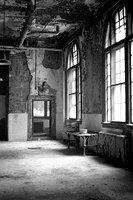
Pre-flashing film affects the shadow densities most, reducing contrast and separation in the lowest values by moving the base exposure up a bit. Although an overall exposure is given the film, it is miniscule and able to be disregarded in the higher values. Stand developing or any type of compensating development develops the shadow areas to completion and "compensates" for too much scene contrast by "underdeveloping" the higher values in relation to "normal" development.
This is exactly the opposite of what is usually desired in a "push" situation, in which film is intentionally underexposed and then overdeveloped to increase density (and contrast) in the very-low-on-the-exposure-scale-recorded high values.
Compensating development after pre-flashing may get you a really flat, useless neg...
Just thinking out loud here.
BTW, preflashing was a useful tool for me when shooting Kodachrome (and still is, I assume, for those shooting color reversal materials).
Best,
Doremus