• Welcome to Photrio!
    Registration is fast and free. Join today to unlock search, see fewer ads, and access all forum features.
    Click here to sign up

point-and-shoot with a normal prime?

Tompkins Square Park

A
Tompkins Square Park

  • 4
  • 0
  • 68
Siesta Time

A
Siesta Time

  • 2
  • 0
  • 52

Recent Classifieds

Forum statistics

Threads
202,859
Messages
2,846,679
Members
101,573
Latest member
IanSeehorn
Recent bookmarks
1
Leica AF-C1 is an excellent auto focus P&S with a 40mm 2.8 prime lens that adds a teleconverter w a flick of a switch to make it 80mm. I never use it at 80mm.

Here’s the best part. The price for one now is about $250+
The identical Minolta AF Tele Super is under $20!
 
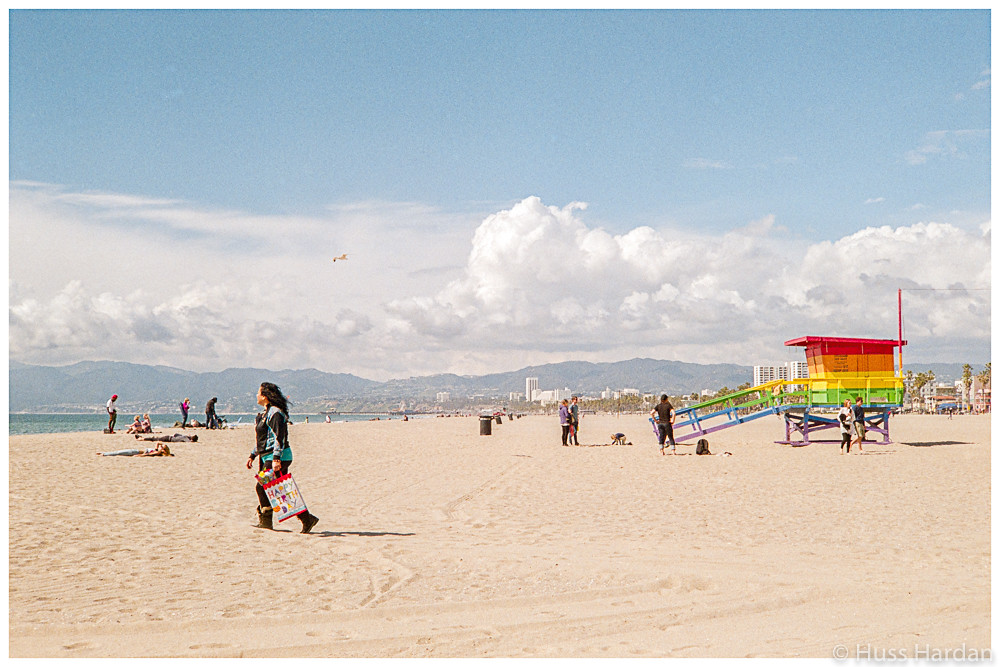
Leica AF-C1 (Minolta Freedom Tele), Fuji C200, Z7 scan, negativelabpro.com


And 1:1 crop:


The top image is 7700 x 5100 pixels
 
I bought an Olympus IS10 point and shoot on eBay for 1 GBP (postage did cost more). Anyhow it is a true SLR and it has a fixed 28 to 110 zoom and picture quality is much the same as my Olympus mu2 35mm lens only. There is plenty of interesting stuff out there.
 
Contax G1 or G2 with 45mm Planar in AF+P mode.
I would not trade either my G1 green label or my standard G1 for any other 35mm. I have the 28mm, 45mm, 90mm and someday the 21mm. I have shot 35mm with Alpa, Leica, Nikon, Canon, Minox 35mm, Rollei and just about all other 35mm cameras and I'd have to say the Contax G series beats them all. Does the system have any faults? Yes, it ain't perfect, but what camera is. JohnW
 
I am planing to het G1 with 45/f2, never used G cameras. One Leica friend told me that 45/f2 has only one flaw - it is too sharp :smile:.
In some instances your friend is right about the 45mm f2. Remember, it's always easier to make a super-sharp lens softer than it is to make a soft lens sharper. Years back my favorite 35mm combo was a rather well used Leica M2 with 50mm dual range Summicron. It was plenty sharp enough, but had a certain smoothness to the image also. Later I bought a 50mm f2.8 Elmar and I was in heaven. The shots from the Elmar were more to my liking. I guess I'm a Tessar type person? Back to the "G" series Contax. The cameras are great except in a couple of areas. One is the viewfinder. It's a little small if you're coming from an "M" series Leica, but with autofocus it really doesn't matter that much since it's basically only used for framing in AF mode. The other bug is that the top LCD's will bleed after time. I changed out one of my LCD squares already and have a couple of spares just in case. Yes, I did it myself and it wasn't that bad of a job. I have never been tempted to go for the G2 since I'm very used to the G1 and the fact that the G1 is slightly smaller. Of course if a G2 feel in my lap??? If I had only one 35mm it would be.................................... JohnW
 
If you are looking for a pocketable point and shoot that has a 50mm lens then you will have to go with a zoom. Some of the cameras with short 2x zooms are pretty nice. I have a few myself. The Contax TVS isn't very expensive for what it is. The Leica Z2X is surprisingly good. The Fuji DLSuper Mini Zoom is also pretty dang nice. I forget the length of the zoom on the Leica, but the others are 28-56mm.
 
My original question was more curiosity that actively seeking a p&s with a 50. I will also add that there is maybe a bit of a linguistic confusion. In the US (at least in my experience) “point and shoot” specifically means a small, self contained, auto-everything camera. We wouldn’t consider a Canon Rebel or Contax G1 a point and shoot because they are a different class of camera. Point and shoots are Olympus MJU, Contax TVS, Pentax IQZoom, Nikon L35AF. According to Wikipedia, other countries use the term somewhat differently: https://en.m.wikipedia.org/wiki/Point-and-shoot_camera#Name_confusion

As far as me finding a point and shoot with a 50mm, right now I’m using a Zorki 1 and hyper focal focusing. Not really what I asked about, but around here it works since it’s always sunny 16 around here.
 
I'd opt for a Pentax IQ Zoom. While they all have zoom lenses, you can find them with a fairly narrow zoom range (e.g. 38-60mm). A fixed FL lens in a true P/S is a tall order.

I opted for manual focus, and I have a couple of Yashica Electro 35's (GSN, GTN). Both fill the bill.
 
  • AgX
  • Deleted
I do have a Pentax 35-70 IQZoom that I bought for $15. It takes ok pictures, but the viewfinder is tiny, and its not that nice to use. My Olympus XA has a much larger viewfinder. I wonder if primes have larger viewfinders because they don't need to incorporate the zoom optics in the finder?
 
I find that shooting style easier with a lens closer to 35mm easier. Some 'P&S' cameras I have and like include the Konica C35, Olympus 35 RC, Konica Auto S3, Minolta Hi-Matic 7SII and Canon QL17. For longer focal length lenses I like the Konica Auto S1.6, Canon QL 19, Olympus 35 SP, Minolta Hi-matic 7S,
 
As far as me finding a point and shoot with a 50mm, right now I’m using a Zorki 1 and hyper focal focusing. Not really what I asked about, but around here it works since it’s always sunny 16 around here.
I don't think there was a 50mm P&S camera. Previous generations of the point and shoot theme often had standard lenses, but they were not the fully automated type. Your Zorki is a good shout for the job. If you sacrifice some combination of size, automation and style to reach your definition of "point and shoot", there's lots of choice.
 
What was the focal length of the lenses used in the 100-series Kodak Instamatic cameras?

With a 26x26mm image, the "normal" focal length should be 35mm.

The Instamatic 500 had a 38/2.8 Xenar, but was much more sophisticated than a point-and-shoot.
 
Early generation point and shoots (fully automated cameras, in the sense the OP means) had pretty crude autofocus, typically active autofocus. By that I mean they often had infrared distance ranging. That's as opposed to passive autofocus where some kind of optical rangefinder and contrast detection (edit: or phase detection) system is used, like the AF in a AF SLR. Anyway, an early P&S would typically have only several focus zones, that is the AF would measure the range and set to the closest one of say about 3-7 preset zones (like 3 feet, 5 feet, 7 feet, 10 feet, 15 feet, infinity).

What that boils down to is that early P&S autofocus wasn't accurate enough to focus a longer, faster lens. If you have a 35/4.5 lens, depth of field covers up focus inaccuracies, but it cannot for a 50/2.8 (roughly, depth of field goes as focal-length squared / f-number, so the 50/2.8 has 3.3x less depth of field wide open than a 35/4.5). Faster glass was also larger and more expensive. By the time AF got more accurate, zooms also became practical and it was harder to sell a midprice P&S without a zoom. So there was no market for a fast normal P&S (there were some decent P&S that had 35mm fixed lenses, and enthusiast P&S like the Yashica T4, which I guess is a high-demand item now).

If you've ever used an Olympus XA2, it has a 35/3.5 lens rather than the 35/2.8 of the XA, and 3-zone manual focusing. Obviously 3 zones is rather crude and probably not good enough for precision wide open, but in bright light, it stopped down and was close enough due to the wide lens.
 
Last edited:
The same time the older, active autofocus compacts could focus in the dark too.
 
"P&S 35mm SLR" is a term new to me, but I think the term "P&S" is not well defined in first place.
 
To me, "point and shoot" means the user has no way of setting shutter, aperture, or focus. At most, flash can be selected as on or off but I would expect that to be automated as well.
 
To me, "point and shoot" means the user has no way of setting shutter, aperture, or focus. At most, flash can be selected as on or off but I would expect that to be automated as well.
If you set the camera on "P" or "A", you've got a P&S. Just don;t use the manual controls.
 
If you set the camera on "P" or "A", you've got a P&S. Just don;t use the manual controls.

Well, such a camera is being treated as a P&S. But that's not what the camera is.

... and, for the meaning of what "is" is, consider the Spanish estar and ser: the former describes a current state or condition, the latter describes something inherent.

A Nikon F6 can be treated as a P&S, but that's not what it is.

A Kodak Brownie Bullet is a P&S and that's all it can ever be.
 
Photrio.com contains affiliate links to products. We may receive a commission for purchases made through these links.
To read our full affiliate disclosure statement please click Here.

PHOTRIO PARTNERS EQUALLY FUNDING OUR COMMUNITY:



Ilford ADOX Freestyle Photographic Stearman Press Weldon Color Lab Blue Moon Camera & Machine
Top Bottom