• Welcome to Photrio!
    Registration is fast and free. Join today to unlock search, see fewer ads, and access all forum features.
    Click here to sign up

Plus-X

Cigar again

H
Cigar again

  • 1
  • 0
  • 23
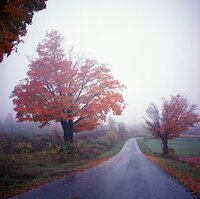
Rainy Day Trees

A
Rainy Day Trees

  • 8
  • 1
  • 116

Recent Classifieds

Forum statistics

Threads
203,167
Messages
2,850,768
Members
101,706
Latest member
FreddieH
Recent bookmarks
0

Rick-in-LB

Member
Allowing Ads
Joined
Aug 16, 2008
Messages
57
Location
Long Beach C
Format
35mm
Is there really an advantage of using Plus-X or FP4+ film. I know they are 125 ISO but is this better to use than a 100 ISO or in other words whyor when would I use this instead of a 100 ISO rated film.

 
When you prefer the tonal characteristics
 
Dear Rick-in-LB,

The advantage is that Plus-X and FP4+ look different than TMX or Delta100. Try a few rolls and see for yourself. It doesn't cost much and it's fun to do.

Neal Wydra
 
I have been using Delta 100 and 400 for a while. I am taking a B&W film class and the instructor wants us to use Kodak, she likes it. I was just wondering because I need some 120 film and just might try some also. Tonal ranges, not really sure about all that. When I hear tonal ranges I think of portrait shots or having people in it. I guess you can have tonal ranges in Landscape or Architecture, that is the project this weekend. 2 rolls shot of Natural and Urban landscapes. I guess I will try some and find out.
Thanks
 
Whaddya got to lose? That's one of the beauties of analog photography--each film has its own personality; each film+developer combination has its own, further, "couples" personality. Getting to know them is much of the fun.

Do this long enough and you'll have two or three films, and one or two developers, locked. You'll know them like the back of your hand, and know what to reach for for a given effect.
 
One warning, if you try Plus-X, you may fall in love :smile:.

Matt
 
The original question sounds like it's mainly about the speed of these films specifically. The difference between 100 and 125 ASA is negligible for practically all purposes; there are reasons why one might want to use one of these films, but the nominal speed gain over 100 ASA is not really one of them.

(I kind of assume 125 might be related to the tendency for shutter speeds to go 1/60, 1/125, 1/250 rather than 1/50, 1/100, 1/200.)

In comparing Plus-X or FP4 to Delta 100 or TMX, a lot of the differences will be due to traditional vs. t-grain emulsions. People's tastes differ---personally, I've never much liked the results I've gotten with t-grain films, but of course lots of people have terrific success with them. Experiment.

-NT
 
In my mind there is to start with no difference in quality in between all the films mentioned. They are all high quality films, with good quality control making the film reliable in terms of response to ...
What differs is the film curves given the combinations with a certain developer at a given dilution, temperature and dev. time. So in all there's quite a lot to play with. Also, the more modern films (TMX and Delta 100) have better reciprocity characteristics, i.e. they don't need that much compensation for long exposures as their "old school" counterparts.

The 1/3 stop difference have no real significance in terms of usage. All the films mentioned above are in the same film speed category.

In the end, what is really important is that you learn how to get good consistent results with one of these films, preferably with one developer. Persistence and patience is the key to learning the characteristics of a film. (I.e. if you get poor performance, try to find the real problem and solve it before changing film brand etc.)

//Björn
 
Surprised your teacher is having you use Plus-X and not Tri-X. Note that you can get either one as a private label from Freestyle (as their Arista "Premium" brand), to the best combined knowledge of the internet, for half the price of the Kodak label.

Many people I know prefer the older tech films over the newer tech (TMax, Delta, or Acros).
 
Bjorn, thanks for your comments. Sam the funny thing is last assignment I used Tri-X instead of T-Max, she had Tmax on the sheet but she is lenient on the film brand . Actually she is having us use 100,125 and 400 ISO film depending on the project. Almost done with one role of film on the urban landscape and tomorrow I will do the Natural scene. I plan on developing the first roll at home using Rodinal, sort of like this now, to see how they come out.
 
Fantastic film

Plus-x is a fantastic film i use it in 120 and whis it also was in 4x5". Today i go to africa on a assignment, the bag is filled with multiple pro packs of plus x, a few TMYII and some E100G. I have never done any serious tests og PX125 in 135 format, but it seems like an other film, to the better in facts. But the 120 film is superb for my portraits and urban shootings. I also use a lot of Verichrome pan, whitch also give me results very close to PX125. I use HC110, XTLO or D76 in dev process. U can see a lot of PX used here: www.tmax100.com
 
Plus-X has been like a slow Tri-X for me. Smooth when I want it to be or grainy when I want it to be.
 
I used 35mm Plus-X back in the 1960s or so. I'm sure Kodak has done a few tweaks for upgraded manufacturing since then, but I ran some rolls of 120 this summer and it was like coming back to an old friend. There are three roll's worth here, taken with a Perkeo II folder, no less. They are those admittedly evil negative scans, but I have made prints of the 1939 Farmall Tractor that look about as close to the scan as one can get. Plus-X just has a certain look that I like. That said, I've also been shooting a lot of Acros 100, and some occasional Kodak Tri-X 400 (another old friend from decades ago). And there's some Ilford Pan-F queued up on the shelf here, recently acquired for another grand experiment ...

DaveT
 
I have been using Plus-X 120 in my Fuji 645 and developing it TFX-2 from Photographers Formulary. I do semi-stand for an hour (agitate at the beginning and the middle). Great tones, minimal grain and easy to print. It has been real find for me.

Scott
 
Plus-X was the film I used in my first "serious" camera 40 years ago. I liked it then, and I like it now. I'm really happy that Freestyle is offering it under their private label, 'cause I'm a cheapskate. It's really beautiful stuff, and I like it a lot better than FP4+. Now if Freestyle would only offer it in 120... But I'm dreaming.
 
Kodak's and Ilford's film selections almost mirror one another.

Each brand has a medium and a fast random-grained film, and a medium, fast, and super-speed T-grained film. Ilford adds Pan-F and SFX-200.

Plus-X/FP4 are comparable
Tri-X/HP5 are comparable
T-Max/Delta are comparable

Each has different looks; even the comparable products from each company.

Your teacher might want everyone to use the same film to make judging problems easier. However, in general, don't pick a film based on someone else's preference. Each film has different contrast, different grain, different sharpness, and different spectral sensitivity. Each has a use. You should try them all, eventually.

As for the "advantage" or Plus-X/FP4 over T-Max/Delta 100, I would just say that they are different films in many ways, but as far as sensitivity to light, they are close enough to be considered the same: medium speed.
 
Actually I'm also surprised she has chosen Tmax for class, instead of Tri-X or Plus-X
Tri-X/Plus-X is a lot more forgiving when it comes to operator errors (ie students learning how to shoot film).
Tmax is a little more tempramental and even some pros don't like it for that reason.

But give Plux-X a try. It's a great film. Expose at 100asa.
 
Nice, Dave. Like them all. I first used PX with my brand new (for me) Retina 1a in 1953. At high school. With D-76 (ID-11) even I couldn't ruin it! :smile:
This young feller is probably on the old age pension now!

Murray

I used 35mm Plus-X back in the 1960s or so. I'm sure Kodak has done a few tweaks for upgraded manufacturing since then, but I ran some rolls of 120 this summer and it was like coming back to an old friend. There are three roll's worth here, taken with a Perkeo II folder, no less. They are those admittedly evil negative scans, but I have made prints of the 1939 Farmall Tractor that look about as close to the scan as one can get. Plus-X just has a certain look that I like. That said, I've also been shooting a lot of Acros 100, and some occasional Kodak Tri-X 400 (another old friend from decades ago). And there's some Ilford Pan-F queued up on the shelf here, recently acquired for another grand experiment ...

DaveT
 

Attachments

  • Boy-on-Cannon02.jpg
    Boy-on-Cannon02.jpg
    119.8 KB · Views: 130
Last edited by a moderator:
Actually I'm also surprised she has chosen Tmax for class, instead of Tri-X or Plus-X...

I'm not. More than a few youngsters taking photo classes these days have told me that their teachers specified TMax 400 as the film of choice. With the recent reformulation of TMY, I can see why.
 
I'd understand specifying the Tmax films if they were going to be scanning the negatives, the Tmax films seem to scan easier and better. If they are doing traditional printing, then I'd too think Tri-X or Plus-X. Perhaps the Instructor works with T-Max films and knows them better and went with what they know.

jZ
 
I've shot both and find Tri-X to be far more forgiving when it comes to exposure and development errors. Even with the new TMAX2 400 the highlights are a lot more delicate. As far as scanning goes TMAX2 scans nicely, but so does Tri-X (at least on my Nikon scanners)
 
Photrio.com contains affiliate links to products. We may receive a commission for purchases made through these links.
To read our full affiliate disclosure statement please click Here.

PHOTRIO PARTNERS EQUALLY FUNDING OUR COMMUNITY:



Ilford ADOX Freestyle Photographic Stearman Press Weldon Color Lab Blue Moon Camera & Machine
Top Bottom