
• Welcome to Photrio!
    Registration is fast and free. Join today to unlock search, see fewer ads, and access all forum features.
    Click here to sign up

Platinum Vs. Palladium

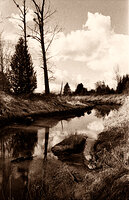
Bend in the river

H
Bend in the river

  • 0
  • 0
  • 16
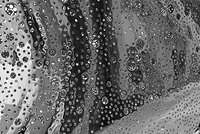
Wheels within Wheels

D
Wheels within Wheels

  • 1
  • 0
  • 28

Recent Classifieds

Forum statistics

Threads
203,227
Messages
2,851,721
Members
101,734
Latest member
pihuating
Recent bookmarks
0

Neil Poulsen

Member
Allowing Ads
Joined
May 28, 2005
Messages
528
Format
4x5 Format
What are the issues related to Platinum versus Palladium? For example, do they have the same archival properties?

In the workshop I attended, we used ferric oxalate with with a pt and pd mixture. Are there issues with using only platinum with this sensitizer? Or, is it necessary or advisable to always have some palladium included?

What are other compounds that can be used for sensitizers, besides ferric oxalate? Is there something that works best, when using only platinum? For example, are there sensitisers that give a platinum print (no palladium included) a warm tone? I see from another thread that it's more difficult to turn platinum compounds into platinum metal.
 
from the bit of reading and actually printing Ive done in palladium and palladium/platinumit seems common that even a "platinum print" in most circumstances has at least some palladium in it to make it easier to print. from what others have told me making a completely straight platinum print is noticeably difficult.

in regards to the warm tone v. cooler tone. a noticeable difference can be made by using different developers. I started out doing palladium prints with ammonium citrate as my dev. Then have moved on to pot oxalate as my main developer. The tone in a straight palladium print developed in pot ox was noticeably warmer looking then an identical print dev in ammon citrate. Ive also noticed that in the recent pt/pd prints Ive been doing the tone is alot warmer in the pot ox in comparison to the ammonium citrate. I have settled on the pot ox because Im noticing it seems to work better with my prints.

Ferric oxalate is the main ingredient in the B&S solution 1 and 2. While in two chlorate is added for the contrasting agent to help with negatives that dont print "right" with a straight ferric ox mixture.
Clay and mateo have mentioned to me the usage of NA2 as a contrasting agent for pd and or pd/pt prints as well. There is a good article (albeit very technical) about this method on the bostick and sullivan website under the technical papers. (check the sponsors page here on APUG)
I believe if you were to make straight platinum prints you may be able to get a slightly warmer tone depending on the developer used but from what Ive read the easiest way is to add some palladium to the emulsion mixture to increase the warmness.

hope that helps.
 
You can also heat your developer to give you a warmer print. I've been using the microwave, but need to pick up a cheap coffee pot to keep the developer hot.
 
Pure platinum is difficult to print. Most everyone uses a mixture of platinum and palladium or just palladium. The more platinum added to the sensitizer the cooler the tone of the image.

Avoid using chlorate as a contrast control agent. The NA2 is far superior
 
Now you guys are confirming what I thought I knew about plt/pld printing..ie the more plt there is the cooler the image tone is. But I think those that have seen the ziatypes I have sent out recently will agree that they have a very neutral to cool tone to them, yet are palladium (LiPd for ziatypes), which has always made me wonder if I was doing something wrong, since I expected them to be a bit warmer...though I know I can use sodium tungstate to warm the image up a bit.
 
photomc said:
they have a very neutral to cool tone to them, yet are palladium (LiPd for ziatypes), which has always made me wonder if I was doing something wrong, since I expected them to be a bit warmer...though I know I can use sodium tungstate to warm the image up a bit.

Interestingly enough, I had the opposite effect without using sodium tungstate and thought I was doing something wrong as I expected a bit more neutral tone, my ziatypes always came out very warm.. It turns out my exposures werent long enough, adding a bit longer exposure seemed to bring in the cooler more neutral tones, I dont understand why that is but it happened...
 
Why is it that pure platinum is more difficult to print?
 
Neil, I might be using the wrong term but pure Platinum will reverse or solarize in local areas within a print. This will depend on the negative and amount of UV exposure. A drop or two of Pd. will correct that. If your developer has been used for Pd. before you might not get the reversing unless you switch to a new developer.
 
Neil Poulsen said:
Why is it that pure platinum is more difficult to print?
Photobum - you have them backwards. Palladium alone can 'solarize'. Adding a little platinum helps prevent that. Pure platinum is more difficult to get a nice, smooth print with because it has a much shorter scale and tends to produce gritty/grainy results - although there are ways (like brush development) that can yield good results. Just the nature of the beast. It is also about 3x the cost of palladium. I've always preferred warmer toned prints, so I've not spent much time trying to make pure platinum prints.
 
Kerik said:
Pure platinum is more difficult to get a nice, smooth print with because it has a much shorter scale and tends to produce gritty/grainy results - although there are ways (like brush development) that can yield good results.

I've made two pure platinum prints in my life, both done with brush development as described by Sullivan and Weese in 'The New Platinum Print'.

Amazingly I nailed the exposure on my very first print and then immediately made a second. The tones were very smooth (printed on Platine.) But because of the expense I've not made any others. Also as Kerik points I prefer warmer toned prints.

Don Bryant
 
Ooops, Bassackwards. That's what I get for violating my own rule of facts before acts. In any case I've gone over to Pd. NA2 method. 1. Cheaper 2. Warmer 3.You can adjust print grades for almost any negative without the grain increase of Pt.
 
Photrio.com contains affiliate links to products. We may receive a commission for purchases made through these links.
To read our full affiliate disclosure statement please click Here.

PHOTRIO PARTNERS EQUALLY FUNDING OUR COMMUNITY:


Ilford ADOX Freestyle Photographic Stearman Press Weldon Color Lab Blue Moon Camera & Machine
Top Bottom
